Retail PVC garment Bags Unit Cost is rarely set by one factor. Thickness, zipper style, hanger opening, print coverage, and carton packing all affect the quote. Once a buyer changes the spec, the price usually changes with it.
For apparel programs, the bag has two jobs: protect the garment and present it cleanly on a rack, in storage, or in transit. Thin film lowers cost but can tear more easily. Better clarity helps merchandising but can raise material cost. Smaller orders also cost more per piece because setup, waste, and inspection are spread across fewer bags.
A low quote is not a good quote if the bags arrive with weak seams, warped zippers, or inconsistent clarity. Replacements and complaints usually cost more than paying a little extra up front.
Why Small Orders Cost More Than Buyers Expect
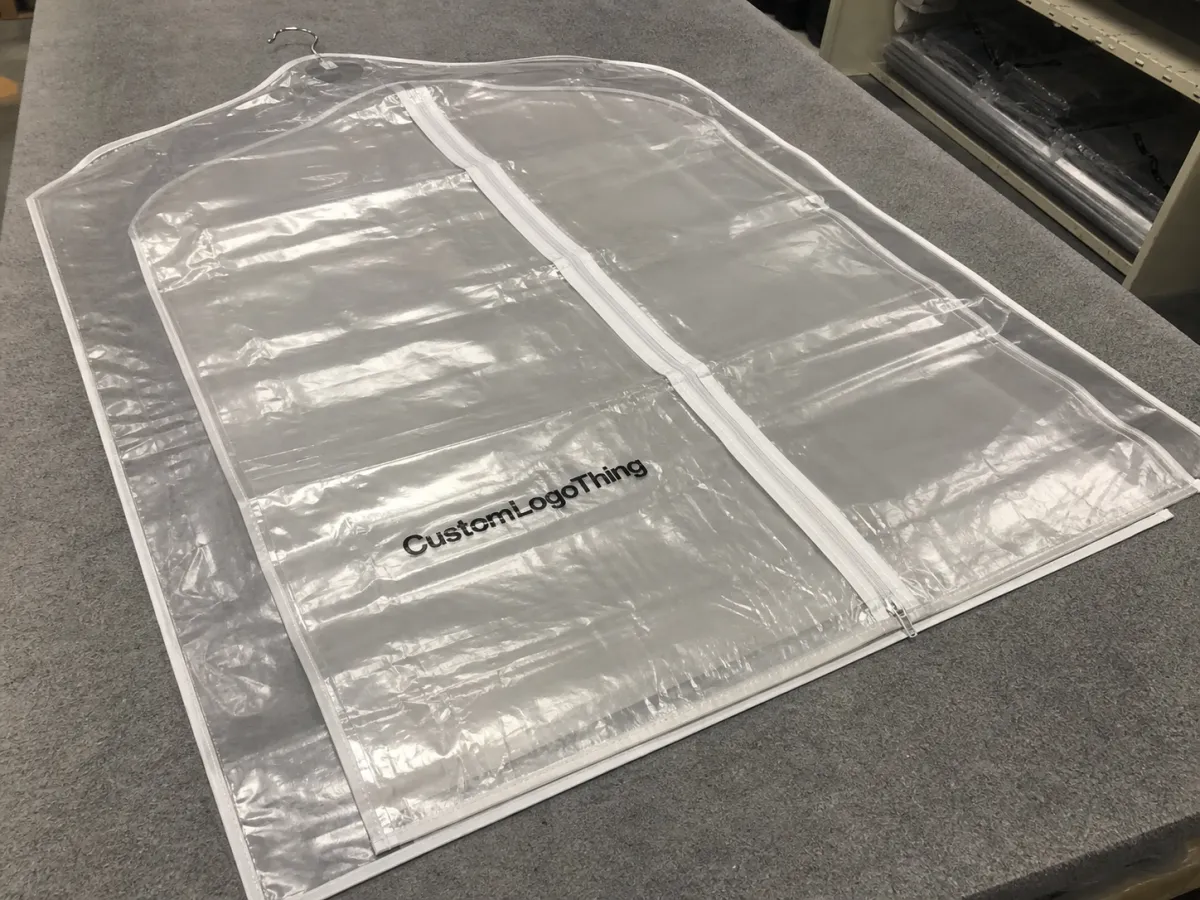
Small runs carry fixed costs that do not shrink much. Cutting, sealing, alignment, sample approval, and pack-out take similar effort whether the order is 300 pieces or 3,000. That is why the unit price often looks high at low volume, even when the material itself is not especially expensive.
A 500-piece order can require nearly the same setup as a larger run. If the design uses a custom height, reinforced hanger cutout, or printed front panel, the supplier may need additional tooling or tighter line control. The quote reflects that labor and setup, not just resin cost.
There is also a retail reality behind the price. Clear garment covers help staff identify SKUs quickly, reduce dust and scuffing, and keep the presentation uniform. If the bag fails, the cost is not limited to the packaging line. Store labor, handling time, and damaged presentation all become part of the expense.
Rework is another hidden cost. A flimsy zipper, a mis-sized opening, or film that scratches too easily can create receiving issues and store complaints. Good buyers compare prices against the risk of rehandling, not just the number on the factory quote.
Start with the use case. A bag for short-term display is priced differently from one that must handle repeated back-room use or heavier garments. Coats, uniforms, and premium apparel usually need more durable construction than a simple pressed-shirt cover.
What Retail PVC Garment Bags Are Designed to Protect
Retail PVC garment bags are used for suits, dresses, coats, uniforms, promotional apparel, and other items that benefit from visibility and light protection. The goal is simple: keep the garment identifiable and reduce handling damage without adding a complicated packing step.
In display programs, clear or lightly frosted PVC keeps the silhouette visible and makes item selection faster. In storage or transit, the same bag may need stronger seams and better puncture resistance. Those are different requirements, so a visual-first bag is often lighter and cheaper, while a transport-oriented bag usually needs more material or better sealing.
PVC also behaves differently depending on the resin and formula. Cheaper films can haze, stiffen in cold conditions, or feel brittle at the seams. Better material typically costs more, but it improves clarity, handling, and consistency across the run. Buyers often notice that difference only after production if they skip a sample review.
A garment bag should be judged honestly. It is not archival storage and not a substitute for climate control. It helps against dust, light rubbing, and minor moisture exposure. If the shipment will face rough transit, the carton and outer packaging matter as much as the bag itself.
For premium retail programs, the bag can also reduce handling time. Staff can place the garment, close the zipper, and move it directly to the rack. That matters when multiple SKUs arrive together and every extra touch adds friction.
Thickness, Size, and Closure Specs That Change the Quote
Thickness is usually the first spec to lock down because it affects clarity, strength, and feel at the same time. Many retail programs sit around 0.10 mm to 0.18 mm, though heavier builds are used for coats, uniforms, and repeated handling. Thinner film reduces cost, but it also increases the chance of seam stress and stretching.
Size affects the quote in a different way. Width, length, gusset depth, hanger opening, and zipper length all influence material use and cutting efficiency. A long coat cover consumes more film than a short sleeve cover, and a gusseted pattern creates more waste than a simple flat sleeve. That is one of the clearest reasons the price changes between similar-looking designs.
Common spec choices buyers compare
- Fully clear film for maximum visibility and easy SKU recognition.
- Frosted finish for a softer look and better masking of light scuffs.
- Zipper closure for repeated access and better item retention.
- Snap or hook options for lighter hardware and simpler assembly.
- Heat-welded seams for cleaner construction and more consistent edge strength.
Print changes the quote more than many buyers expect. A small one-color logo is different from a full warning panel, barcode zone, or two-sided branded layout. Ink coverage may require setup time, plate work, or a different production flow. If the artwork includes legal copy or size references, confirm whether pricing includes one side or both and how proof revisions are handled.
Closures deserve the same scrutiny. A standard zipper is the most familiar option, but zipper grade, track width, and pull-tab style all affect cost. Reinforced hanger openings add strength, but they also add cutting and finishing steps.
There are tradeoffs. A thicker bag may improve durability but reduce transparency if the resin is not clean. A frosted finish can hide marks but make color matching harder. A generous gusset improves fit but increases material use. Good buying decisions usually come from Choosing the Right compromise rather than discovering it later.
| Spec Level | Typical Use | Relative Unit Cost | Buyer Tradeoff |
|---|---|---|---|
| Thin clear sleeve | Short-term retail display | Lowest | Less durability, simpler look |
| Mid-gauge zipper bag | Most retail apparel programs | Moderate | Better handling, more assembly |
| Heavier gusseted cover | Coats, uniforms, premium apparel | Higher | More material, stronger performance |
| Printed branded bag | Promotions and premium retail | Highest | Extra setup, ink coverage, approvals |
Retail PVC Garment Bags Unit Cost, MOQ, and Breakpoints
The main price drivers are resin grade, thickness, dimensions, closure hardware, print coverage, and carton pack-out. After those, the quote moves because of labor steps and order structure. A custom small order often absorbs the same tooling fees or setup charges as a much larger run, so the first volume jump usually produces the biggest drop in unit cost.
MOQ is not arbitrary. It reflects how the line is organized. A standard size with a simple closure can sometimes stay in the low hundreds. A nonstandard length, heavier gauge, or special hanger opening can push MOQ higher. The price is shaped by material yield and machine efficiency, and both favor predictable shapes.
Buyers should separate the quote into cost buckets. Sample charges, plate costs, freight, customs, and duties should not be hidden inside the base unit price. A fair comparison uses the same spec sheet every time. Otherwise, one supplier may look cheaper only because it excluded shipping or assumed a thinner film.
The comparison that matters most is this:
- Ex-factory price: useful for manufacturing comparison, not enough for budgeting.
- Landed cost: better for planning because it includes freight and import charges.
- Cost per piece: best for internal approval because it ties directly to margin.
As a working range, standard clear retail PVC garment bags at high volume may sit in the low tens of cents per piece, while smaller custom runs with heavier gauge material, printed panels, or premium hardware can move into the upper tens of cents or beyond a dollar. The exact number depends on size, finish, and how many production steps are involved.
The breakpoint effect is real. Moving from 500 pieces to 1,000 may cut the unit price noticeably because setup cost gets spread out. Moving from 1,000 to 5,000 often still improves the number, but not always by the same percentage. Buyers who ask for two or three volume tiers usually get a clearer picture than buyers who request one quote and stop there.
If the supplier cannot explain whether the number includes inspection, rework allowance, and carton configuration, the price is not ready for approval. The cheapest unit price is not useful if the order is missing freight, fails inspection, or arrives in packing units that do not match warehouse handling.
Production Steps and Lead Time From Approval to Shipment
Most orders follow the same sequence: spec confirmation, artwork review, sample approval, production, inspection, and carton pack-out. Delays usually come from late revisions, unclear approvals, or a sample that solves one problem while creating another. Artwork changes and material substitutions create more delay than the machine run itself.
Sampling takes longer than repeat orders because the first run has to prove fit, clarity, and construction at the same time. If the buyer wants a clear front, a reinforced zipper, and a branded mark, the sample has to show all three accurately. Once that sample is approved, repeat production becomes much more predictable.
For many retail garment bag orders, production can run around 12 to 20 business days after approval. Larger quantities, heavier gauges, or more complex print work can take longer. Transit time sits on top of that, so buyers planning a seasonal launch should budget for both manufacturing and shipping.
Quality control should be treated as part of the cost. A solid supplier checks seam strength, zipper function, film clarity, and dimension accuracy before cartons close. Ask what gets inspected, how defects are recorded, and whether the supplier can share a basic checkpoint log. A bag that looks fine in a photo can still fail at the seam or arrive slightly undersized.
Environmental claims can also affect cost and schedule. If a program needs recycled content references, restricted-substance compliance, or packaging documentation, the supplier may need extra material records. If paper inserts or outer cartons are part of the package, related documentation may also matter. That affects approval timing and paperwork, not just price.
The best schedule is the one that leaves room for one revision, not five. Clear specs, one review cycle, and a realistic freight plan usually prevent the kind of rush that turns a normal order into an expensive one.
What to Compare in a PVC Garment Bag Supplier
Price alone does not tell you whether a supplier is reliable. Compare material consistency, seam strength, and clarity standards first. A batch that varies in haze or stiffness creates headaches for merchandisers and warehouse teams. If one carton feels crisp and the next feels limp, the program becomes harder to manage.
Good suppliers document QC checkpoints. Better ones explain what happens when a defect appears during production. Ask how they track dimensions, how often they pull samples, and what they do if a zipper fails inspection. Those answers show whether the operation is controlled or just busy.
Responsiveness matters more than it sounds. A supplier that takes days to revise a quote or loses track of spec changes may struggle once the order enters production. Repeat orders depend on consistency, so buyers need to know that the next run will match the last one closely enough to slot into the same merchandising system.
Ask for a physical sample or close visual sample before mass production. Photos are useful, but they do not show seam feel, zipper drag, or the way the film behaves under light. A sample can reveal a weak seal quickly, which is far cheaper than finding it after shipment.
Here is a practical comparison checklist:
- Quoted spec accuracy so the quote matches the bag you actually need.
- Revision control so artwork and dimensions do not drift.
- Repeat-order support so reorders stay consistent.
- Rush capacity for seasonal or promotional swings.
- Packaging customization for branded retail programs.
There is also a quieter signal: whether the supplier asks the right questions. A good one wants garment dimensions, hanging method, display environment, and target carton pack count before offering a number. That is the difference between a precise quote and an optimistic guess.
Next Steps for a Faster, More Accurate Quote
If you want a cleaner quote, gather the basics before asking for pricing: dimensions, thickness target, closure style, print art, quantity bands, and the retail use case. Those details let the supplier calculate real material use instead of guessing. Without them, the unit cost is only a placeholder.
Ask for pricing at two or three quantity tiers. That shows where the breakpoints sit and whether moving to a higher volume band actually improves the economics. Sometimes a modest increase in quantity lowers the cost enough to justify the larger buy. Sometimes it does not.
Request a sample image or physical sample if clarity, branding, or closure performance matters. The goal is to confirm that the bag fits the garment and still looks clean under store lighting. A high-gloss clear bag may suit one line, while a frosted bag may suit another.
Before approval, confirm:
- Exact dimensions and gauge
- Closure style and hanger opening
- Print location and color count
- Sample approval status
- Whether freight and duties are included
That last point matters more than many teams admit. The quoted price is not the total price unless it is clearly landed. Compare landed cost, not just the ex-factory number, then lock the spec sheet to the PO so the order stays tied to the approved build.
What drives retail PVC garment bags unit cost the most?
Thickness, dimensions, closure style, and print coverage usually create the biggest price swings. Low MOQ orders often raise the per-unit price more than the design itself does.
What MOQ should I expect for custom retail PVC garment bags?
Custom runs commonly start in the low hundreds, but the exact floor depends on size and print complexity. Nonstandard dimensions or heavier construction usually push MOQ higher.
How do zipper and hanger styles affect retail garment bag pricing?
Extra hardware, reinforcement, and assembly steps add labor and component cost. Simpler closures and standard hanger openings usually quote lower than upgraded retail finishes.
What lead time is typical for a retail PVC garment bag order?
Sampling usually takes longer than repeat production because artwork and fit need approval. Final timing should always separate production time from shipping time.
Can I lower retail PVC garment bags unit cost without changing the look?
Yes: standardize the dimensions, keep the print simple, and avoid unnecessary hardware upgrades. Higher quantity tiers and repeat tooling usually create the fastest savings.

