The Supplement Brand Kraft Paper Bags unit cost looks simple until the quote gets into the details. Then the line item starts to bend under the weight of liner choice, print setup, freight, closures, and the kind of rework that never appears in a sales PDF. The first number is rarely the real number. The landed cost after filling, cartonization, transit, and any correction work is usually the one that matters.
kraft paper bags earn attention because they sit in a useful middle ground. They feel more branded than a plain pouch, but they do not carry the cost and rigidity of a folding carton. That makes them a workable choice for sample SKUs, powder refills, gummy bundles, herb blends, and gift packs that need shelf presence without drifting into luxury packaging. The outer paper gives a natural visual cue, which helps brands that want a cleaner, less synthetic look. But the outer face is only part of the story. If the structure does not match the product, the package becomes a moisture problem with a logo on it.
Buyers usually notice three things first: the bag looks tidy, there is more print area, and the brand has room to explain itself without adding a separate carton. That can be enough to justify the format for a launch or a mid-cycle refresh. The key is to judge the package against sell-through, pack-out speed, and shelf performance, not against the empty-bag price on a quote sheet.
Why Kraft Paper Bags Often Win for Supplement Launches
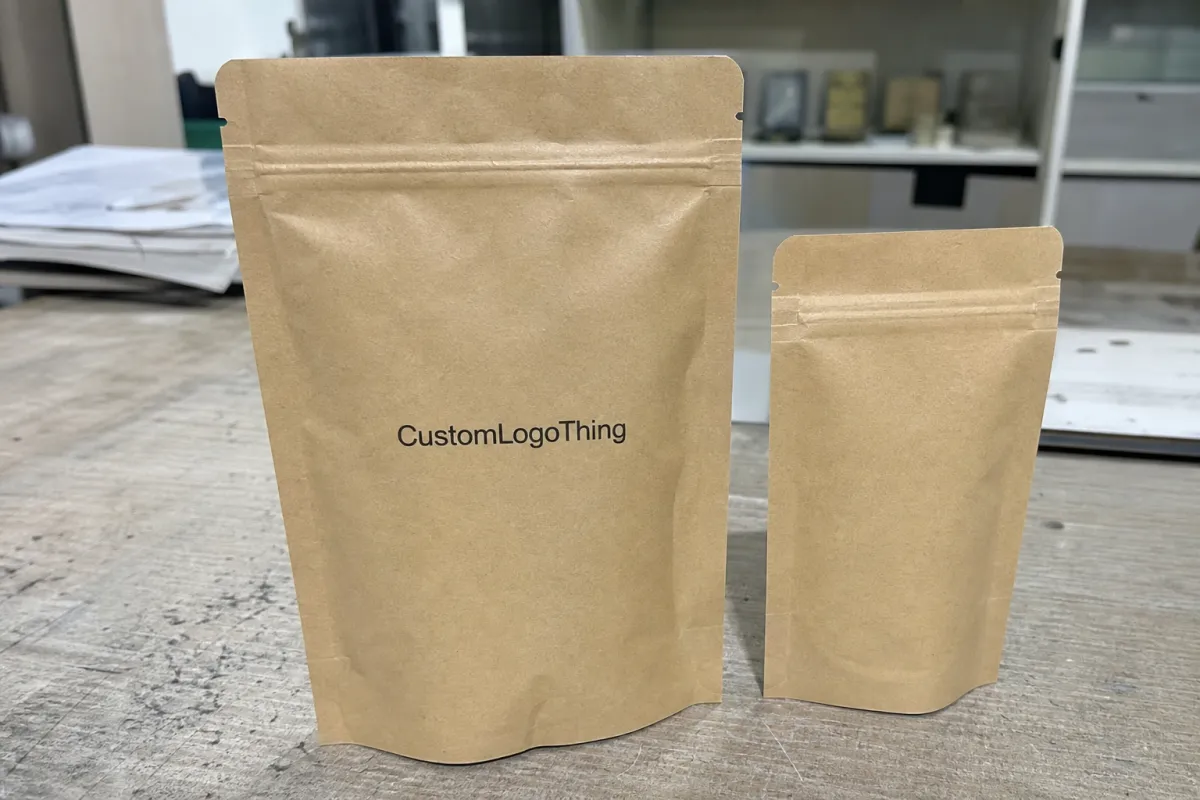
Most packaging decisions go wrong at the comparison stage. A buyer sees a lower factory price on one format and assumes the job is cheaper. Then filling slows down, labels get added, freight spikes, or the structure fails a shelf-life test. The package that looked expensive can end up producing the lower landed cost because it cuts out extra steps.
That is where Kraft Paper Bags often perform well. They can reduce secondary components, present better than a flat generic pouch, and carry enough design to support a launch without forcing the brand into carton economics. On a small run, the difference is not academic. A package that saves a minute in filling or avoids a second labeling pass can matter more than a 2 or 3 cent change in the print quote.
They make the most sense in a few practical situations:
- Trial runs: The brand wants 2,000 to 5,000 units without locking into heavier tooling.
- Refill packs: The product is already known, so the package must be practical and clean rather than ornate.
- Bundle kits: Multiple SKUs need one outer format that does not collapse on shelf.
- Retail gift sets: The goal is natural and premium, not shiny and overbuilt.
The tradeoff is protection. Kraft paper is not a barrier by itself. The inner structure matters more than the print finish, and that is where many first-time buyers under-specify the pack. Powdered supplements, moisture-sensitive blends, and aroma-rich ingredients usually need more than a decorative paper face. Seal quality, liner choice, and gusset geometry decide whether the bag protects the product or just frames it.
For teams that want a wider packaging reference point, industry resources such as packaging.org are useful for checking basic material logic before requesting quotes. The practical rule is simple: match the structure to the product, then decorate it. Reversing that order is how budgets get wasted.
“The cheapest quote was only cheap until the liner, freight, and repackaging showed up.”
Bag Construction and Print Specs That Actually Matter
The build determines performance. The logo does not rescue a weak structure.
Start with the outer paper weight. In supplement packaging, kraft faces commonly fall in the 80gsm to 120gsm range. Lighter paper keeps the bag flexible and cost-efficient; heavier paper improves stiffness and shelf stand. The right choice depends on size and handling. A small refill pack can get by with less structure. A larger format that needs to stand upright benefits from more body, or it will slump and wrinkle in the carton.
Then look inside the bag. A simple PE liner can work for dry, low-risk contents. Powders, gummy blends, and products exposed to humidity often need a stronger barrier, such as foil or an EVOH-based layer. That choice affects shelf life, odor retention, and the seal’s reliability. Under-specifying the liner saves a little now and creates an expensive problem later. A product that absorbs moisture or loses aroma is not a packaging success story.
Other construction choices change both the quote and the outcome:
- Gusset depth: A wider gusset improves standing ability but increases material use.
- Bottom style: Flat-bottom builds sit better than simple side-gusset bags.
- Closure: Heat seal, zipper, fold-over flap, and adhesive strip all affect labor and protection.
- Window cutout: Useful for visibility, but it adds tooling and weakens barrier performance if it is not planned carefully.
- Finish: Matte lamination reads premium; varnish is usually less costly and faster.
Print spec is not cosmetic trivia. One-color or two-color art on kraft usually costs less and produces a cleaner result than a full-coverage design that fights the paper texture. Foil can work, but only when the brand needs the contrast and the budget can carry it. The more important issue is layout. A supplement bag has to fit barcode space, ingredients, Supplement Facts, warnings, lot code, and expiry without turning the back panel into a crowded spreadsheet.
Claims deserve the same discipline. A kraft outer face does not make a package biodegradable if the liner is plastic or foil-based. Sustainability language should follow the actual structure, not the mood of the design. If recycled content or FSC certified paper is part of the story, ask for documentation and chain-of-custody proof rather than relying on a sales claim. The fastest way to lose trust is to exaggerate what the pack can actually be recycled into.
A complete spec sheet reduces friction. Dimensions, paper weight, liner type, finish, print count, and closure style should all be defined before pricing starts. Buyers who send “same as sample, maybe smaller” usually get a quote that cannot be compared with anything useful.
Supplement Brand Kraft Paper Bags Unit Cost: What Actually Moves the Number
The supplement brand Kraft Paper Bags Unit cost is driven first by size, structure, print complexity, and order quantity. Everything else comes after. Bigger bags consume more paper and liner. A thicker barrier costs more. More colors mean more setup. Smaller orders spread fixed charges across fewer units, which pushes the per-bag price up quickly. That part is not mysterious. It is basic manufacturing math.
In practice, a custom-printed kraft paper supplement bag often falls into broad buying bands like these, assuming standard shapes and normal print coverage. These are indicative ranges, not a final quote:
| Build | Typical MOQ | Indicative Unit Cost | Best For |
|---|---|---|---|
| Simple kraft outer, limited print, basic liner | 2,000-5,000 pcs | $0.20-$0.38 | Trial launches and refill packs |
| Mid-barrier build, multi-color print, matte finish | 5,000-10,000 pcs | $0.30-$0.55 | Retail-ready supplement lines |
| Premium structure, foil accents, window, stronger liner | 10,000+ pcs | $0.45-$0.85 | Brand-led launches with stronger shelf pressure |
Those numbers are useful only if the comparison is honest. A quote that looks lower on paper can be worse once tooling, freight, sample shipping, carton configuration, and duties are included. A factory price at $0.24 may lose to $0.29 if the first quote hides setup charges or ships inefficiently. The bag price is one piece. The landed total is the one that affects margin.
Quantity matters more than most buyers expect. Setup-heavy custom packaging punishes tiny runs. Once the tooling is approved and the print is running cleanly, repeat orders usually drop the unit cost. On many jobs, a jump from 2,000 to 5,000 pieces lowers the per-unit number more than a tiny adjustment in paper grade ever will. That is why tiered quotes at 2,000, 5,000, and 10,000 pieces are so useful. They show where the curve flattens.
Compare quotes only after aligning the variables: dimensions, liner, print colors, finish, quantity, and shipping term. Ex-factory versus delivered pricing is not a fair comparison unless both are identified clearly. The real supplement brand kraft Paper Bags Unit cost is the one that includes the path from production to your receiving dock.
Watch for hidden items. Plate or cylinder fees. Window tooling. Color matching. Sample courier charges. Special packing. Extra cartons because the finished bag is slightly larger than expected. None of those charges sounds dramatic by itself. Together, they can erase the advantage of a low quote.
A very low MOQ is not automatically a better deal. Often it means stock materials, limited print flexibility, or a higher per-unit price that only looks friendly because the setup details are tucked away. The quote should explain the tradeoff. If it does not, the price is incomplete.
Production Steps and Timeline From Proof to Delivery
Good packaging production is methodical. That is usually a sign of competence, not a lack of urgency.
The process starts with dimension and structure confirmation, then dieline review, then artwork placement, then proof signoff, then sample approval. Only after that should mass production begin. Skipping a step saves a few hours and risks a costly second run. Most packaging overruns begin with one of three things: late artwork changes, missing compliance text, or a buyer changing the fill plan after the proof has been approved.
The manufacturing sequence usually looks like this:
- Print the kraft face and any graphic layers.
- Apply lamination or coating if the build requires it.
- Convert the printed web into the final bag format.
- Add the seal, zipper, or other closure detail.
- Inspect print registration, seal integrity, and dimensional consistency.
- Pack the finished bags into shipper cartons for freight.
Timelines vary with structure and workload. A straightforward run can often move through production in about 12 to 18 business days after proof approval. Add windows, custom liners, complex print, or a crowded schedule, and the timeline stretches. Shipping adds its own clock. Air freight is faster and more expensive. Ocean freight protects margin but lengthens lead time. Domestic delivery depends on the receiving warehouse and whether the cartons are ready to be handled immediately.
QC matters at each stage. A 3% defect rate on a 10,000-piece order sounds small until it becomes 300 bags that need inspection, sorting, or repackaging. That is why buyers should ask how a supplier checks seal strength, print alignment, bag dimensions, and lot-code placement. A clean-looking sample means very little if the mass run starts drifting after the first few hundred units.
For transit risk, the bag should be considered alongside the outer corrugated cardboard shipper. They have to work as a system. Packaging that survives the plant but fails in transit is still a failed package. If shipping durability is central to the launch, standards such as ISTA provide a useful reference point for how packs should be tested before they are treated as finished.
How to Evaluate a Supplier Beyond the First Price
The first quote is rarely the best quote. It is just the first one.
A solid supplier should quote the same structure several ways, explain where the price moves, and answer questions without sliding into generalities. If they cannot separate paper weight, liner, finish, and freight, they are not helping you buy. They are helping themselves look inexpensive. That is not the same thing.
Ask for proof of process, not marketing language. Sample photos are useful, but so are material certificates, a clear QC checklist, and an explanation of how the supplier handles print alignment, sealing, and barrier consistency. A supplier that understands supplement packaging will ask about fill weight, shelf life, distribution channel, and whether the bag sits on a shelf alone or lives inside a display carton. Those questions reveal more than any sales pitch.
The best suppliers also understand the pressure points that matter in this category. Powdered products behave differently from gummy blends. Odor control is not the same as moisture control. A refill pack needs different protection than a premium herbal blend going direct to consumer. A packaging partner sees those distinctions early and builds the quote around them. A price-only vendor treats them as afterthoughts.
Buyer warning signs are usually plain. Vague answers. Missing liner details. Freight that appears only after approval. A sample that looks fine but is unsupported by a specification sheet. If the quote feels unusually clean, ask what has been left out. Sometimes the answer is nothing. More often, the missing piece is the one that changes the budget.
For sustainability claims, FSC is a useful reference if your team is building an FSC certified paper story. It will not determine the right bag structure, but it does help keep claims grounded in documentation rather than assumption.
What to Send for a Fast, Comparable Quote
If the brief is thin, the quote will be thin. That is usually where delays begin.
The most useful quote requests include the following:
- Dimensions: Width, height, and gusset depth.
- Fill type: Powder, capsule, gummy, herbal blend, or mixed format.
- Target quantity: The first run and, if possible, the likely reorder volume.
- Print colors: One-color, two-color, full color, and any special finish.
- Closure and liner: Heat seal, zipper, fold-over, adhesive strip, or another build.
- Destination: Port, warehouse, or receiving zip code.
Ask for both ex-factory and landed figures. If a supplier will only quote the bag and avoid freight, duties, or cartonization, you are not seeing the real supplement brand kraft paper bags unit cost. You are seeing the portion they want to sell first.
Sample the exact size and closure before committing, especially for powders or products with limited tolerance for moisture. Bags behave differently once they are filled. A format that looks balanced in a mockup can tip on the shelf, wrinkle under load, or close poorly after filling. A physical sample is worth more than a polished render because it shows how the package actually behaves.
One brief, complete submission usually outperforms a long back-and-forth thread. Send one spec sheet, one artwork file, and one target quantity. If two structures are still under consideration, ask for both. A competent supplier can price alternative builds without turning the process into a theater of revisions.
Ordering Mistakes That Inflate Unit Cost
Changing dimensions after proof approval is the classic expensive mistake. New tooling, new waste, new approval cycle, new delay. It sounds obvious because it is obvious, yet it happens constantly.
Overprinting causes a quieter kind of damage. Busy layouts, multiple color matches, and full-coverage art may look premium on a screen, then slow production and increase setup costs. For smaller supplement runs, a cleaner layout often performs better. Buyers sometimes confuse ornament with value. That is not always true. On kraft paper, restraint can read as more expensive than clutter.
Under-specifying the liner is worse. Saving a few cents on barrier performance can create odor loss, moisture intrusion, or shelf-life failure. Those losses usually do not appear on the original quote. They show up later as returns, damaged reputation, or product that has to be repacked before it reaches the shelf.
Another mistake is ignoring the filling method. Hand filling needs a bag that opens and closes cleanly. Semi-automatic lines care more about tolerances and seal consistency. If the bags go into corrugated cardboard shippers, carton efficiency and pack count begin to matter too. A package cannot be judged in isolation. It has to work in the system around it.
The most reliable rule is simple: lock the fill method, shelf-life target, and channel of distribution before asking for pricing. That one step removes a surprising amount of noise from the quote process and keeps the supplement brand kraft paper bags unit cost tied to the actual job instead of a hypothetical version of it.
Next Steps to Lock in a Better Quote
Compare at least two spec-matched quotes. Not two random prices that happen to share a shape. Spec-matched means the same dimensions, liner, print count, finish, quantity, and shipping term. Without that discipline, the comparison is decoration, not cost.
Then request a tiered quote ladder at the most common breakpoints: 2,000, 5,000, and 10,000 pieces. That reveals where the unit cost actually settles and whether the next quantity tier is worth the extra inventory. Sometimes a slightly larger run is the smarter move because the landed math supports it. Sometimes it is not. The numbers decide that, not the optimism.
Once the structure is confirmed, ask for a sample, approve the proof, and release the run only after the landed cost makes sense. That sequence is plain, but it prevents most of the avoidable overruns that turn a packaging project into a margin problem.
If the goal is to keep the supplement brand kraft paper bags unit cost under control, the best strategy is usually not a dramatic redesign. It is a cleaner brief, a simpler structure, and a quote comparison that respects the real production variables. Packaging costs stay manageable when the spec is specific and the assumptions are not doing the accounting.
What affects supplement brand kraft paper bags unit cost the most?
Size, liner type, print complexity, and order quantity usually move the number more than anything else. Freight, sample fees, and finishing can shift the landed cost enough to make the lowest factory price irrelevant.
Do supplement kraft paper bags need an inner liner?
For powders, gummies, herbs, and moisture-sensitive formulas, a liner is usually the safer choice. The liner should match shelf life and sealing method, because the outer kraft face alone does not provide the barrier most supplements need.
What MOQ should I expect for custom supplement kraft paper bags?
MOQ varies by build, but custom printed bags usually need enough quantity to spread setup costs across the run. If a supplier offers a very low MOQ, check whether the materials are stock, the print is limited, or the per-unit price is quietly higher.
How can I lower the unit cost without making the bag look cheap?
Keep the structure simple, limit color count, and avoid decorative finishes that do not support shelf impact or product protection. A clean layout often looks stronger than a crowded one, especially on kraft paper.
How do I compare quotes for kraft paper supplement bags fairly?
Match the same dimensions, liner, print count, finish, quantity, and shipping term before comparing numbers. Ask for both ex-factory and landed pricing so you can see the real supplement brand kraft paper bags unit cost.


