Reusable Grocery Bags Printed: Custom Order Guide for Buyers
A printed grocery bag is rarely a one-and-done item. It moves through parking lots, kitchens, trunk spaces, and checkout lanes long after the first handoff. That is why Reusable Grocery Bags printed can outperform a disposable promo piece for brand visibility, but only if the bag survives regular use.
The practical equation is simple: match the bag to the load, the print method to the artwork, and the finish to the customer’s actual behavior. If the handles feel flimsy, the stitching opens, or the logo scuffs after a few trips, the bag stops advertising and starts irritating the person carrying it.
A bag can look polished in a proof and still fail quickly on a store floor if the handle anchor, material weight, and print process do not fit how shoppers really carry groceries.
That is the real buying decision. Not just logo placement, but whether the finished item can carry milk, produce, and pantry goods without sagging, twisting, or losing legibility. For buyers ordering Reusable Grocery Bags printed, the difference between a decent tote and a genuinely useful bag usually lives in the details that do not show up in the first mockup.
What reusable grocery bags printed change at checkout
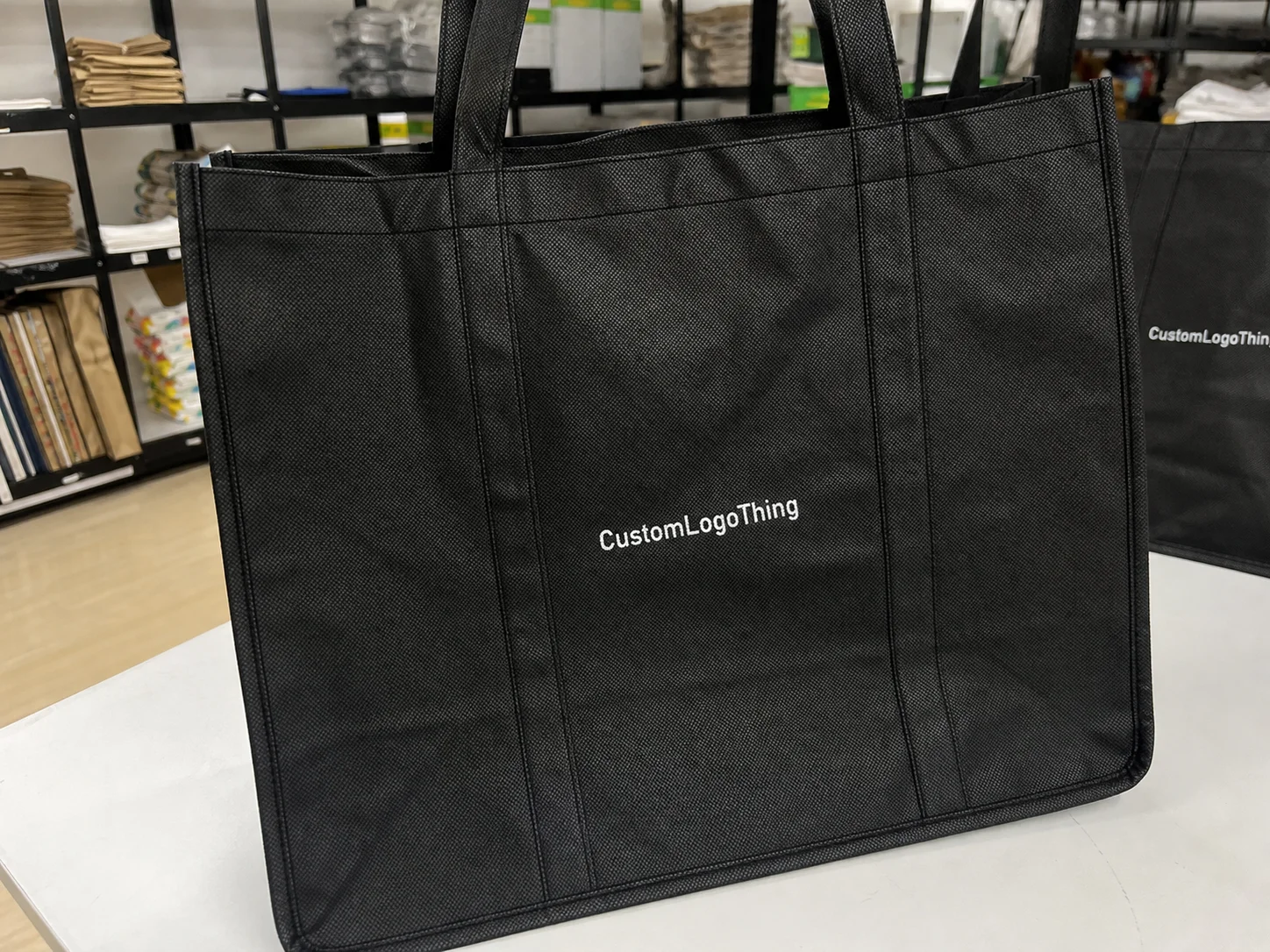
At checkout, the bag does two jobs. It carries product out of the store, and it carries the brand into public view. A shopper may only register the logo for a few seconds, but the same bag can be seen again at a second grocery run, during lunch pickup, or in the back seat of a car. That repeat exposure adds up without another media spend.
The value is in circulation. Reusable grocery bags printed are meant to stay in use, so the useful life of the bag matters as much as the artwork. Buyers who treat them like disposable handouts usually spend too much on decoration and too little on structure.
A packaging buyer should ask one question before approving a design: will this bag still look acceptable after ten or twenty trips? If the answer is no, the print never gets a fair chance to work. A strong grocery bag should feel balanced in the hand, stay open enough for easy packing, and keep the logo readable from a few feet away.
The spec sheet should reflect that reality. Size and logo file alone are not enough. The useful order details are:
- Working load for normal grocery use, not just a visual description.
- Handle comfort, especially if shoppers carry the bag by hand or over the forearm.
- Stitch quality at the handles and bottom seams, where failures usually start.
- Print durability under folding, abrasion, and repeated handling.
For simple retail programs, a 10- to 15-pound working load may be enough. For heavier grocery loads, a stronger build, wider handles, or a bottom insert usually makes more sense, especially if the bag must sit flat in a cart and hold shape under bottles and boxed goods. The goal is not to overspec every order. It is to Buy the Right bag for the actual use case.
Materials, construction, and print methods that hold up
Material choice usually decides whether the bag feels useful or promotional. For reusable grocery bags printed, the common substrates are non-woven polypropylene, woven polypropylene, recycled PET, and coated or laminated constructions. Each has a different balance of cost, stiffness, texture, and print behavior.
Non-woven polypropylene is the budget-friendly workhorse. It is light, easy to print, and often specified in the 80 to 120 gsm range for grocery bags. It folds easily and keeps the cost down. The tradeoff is a softer hand and less structure than woven materials, so it is not always the best option for heavier loads or a more premium retail presentation.
Woven polypropylene adds body and resists tear propagation better. It is a practical choice when the bag must carry repeated loads or keep its shape through a lot of handling. Recycled PET is often selected when the buyer wants a more fabric-like feel and a cleaner, retail-oriented finish.
Construction matters just as much as the base material. Before looking at artwork, a buyer should check for the following:
- Gussets that create depth for cartons and produce boxes.
- Reinforced handles with bar tacks or double stitching where stress concentrates.
- Hemmed edges that reduce fraying and improve the finished appearance.
- Bottom inserts when the bag needs a flatter base and more load stability.
- Clean seam lines, because crooked seams signal weak construction fast.
Print method affects both appearance and wear. Screen printing is the standard choice for bold logos and one to four spot colors. It lays down strong color, keeps cost manageable, and fits many retail runs. Flexographic printing can work well on large-volume jobs when the material and artwork suit that process. Heat transfer is useful for more detailed artwork, but the buyer still needs to confirm surface compatibility and how the finish holds up after repeated folding.
If the bag is expected to live a long time, the test should go beyond appearance. Ask for abrasion behavior, color consistency, and print performance at the stress points, usually near the fold and handle transition. For transit or carton testing, the ISTA framework is a sensible reference point if inner packs or shipping cartons need to survive distribution before the bags reach store shelves.
Artwork, branding, and layout decisions that affect results
Artwork is where many orders become more complicated than they need to be. A clean logo, a clear store name, and one or two brand colors usually print better than a crowded layout with small text and soft gradients. With reusable grocery bags printed, the bag already brings texture and movement, so the design has to read quickly even when the bag is folded or partly filled.
Imprint size is the first decision. A small logo can look tidy on a computer screen and disappear in a parking lot or under store lighting. Larger graphics are easier to read, but they need enough blank space around them so the design does not feel cramped. Keep important text several millimeters away from seams, fold lines, and handle anchors so it is not distorted or clipped.
Color count affects both price and production risk. One-color and two-color layouts are usually the safest starting point, especially for non-woven polypropylene or woven stock. If the artwork includes gradients, photographic treatment, or very fine type, the setup gets more complex and the final result depends heavily on the print process and the bag surface.
Contrast matters more than many buyers expect. Dark-on-dark combinations lose readability quickly. Pale print on a light surface can do the same. The strongest combinations are usually the ones that remain legible from a few feet away and still look clean when the bag sits on a kitchen counter, where the customer sees it outside the store environment.
When reviewing artwork, I usually work through this sequence:
- Does the audience need a practical grocery tote or a more premium retail carry bag?
- Will the design be seen mostly in-store, in transit, or at home?
- Can the material support the detail level without the artwork getting muddy?
- Does the color pairing keep the logo readable under ordinary store lighting?
If the answer to any of those questions is unclear, simplify the design before placing the order. A strong logo on a clean field usually beats a crowded layout that tries to say too much.
Production process and lead time for custom orders
The smoothest orders follow a predictable sequence. The buyer confirms size, material, handle style, quantity, and print method. The artwork is checked for resolution, line thickness, and placement. Then the supplier sends a digital proof for approval. Production should begin only after that approval comes back clean.
The proof stage is where many delays start. Last-minute copy changes, missing vector files, color matching questions, and slow approvals can push the schedule back several days. A good spec sheet reduces that risk because it gives everyone the same target before materials are cut or screens are made.
At a high level, the factory sequence usually looks like this:
- Material prep and inspection.
- Cutting or forming the bag components.
- Printing or transferring the artwork.
- Stitching, sealing, or assembling the bag.
- Inspection for print alignment, seam quality, and consistency.
- Carton packing and final shipment prep.
Lead time depends on whether the order is a repeat run or a new custom build. Straightforward repeat jobs can move in roughly 7 to 12 business days after proof approval if the material is in stock and the print is simple. New artwork, special finishes, or lower-availability materials often push that to 12 to 20 business days. Shipping sits on top of that, and freight by ocean or a destination that needs transloading will stretch the calendar further.
Quality control should be checked before the goods leave the line. Inspect print registration, handle anchors, seam consistency, and carton counts. If the bags will ship with inserts or go into a retail network, ask whether the cartons are suitable for transit testing. The FSC system is also useful if paper swing tags, care cards, or printed inserts need verified sourcing.
Pricing, MOQ, and unit cost drivers
Price is driven by more than the logo. Size, material weight, print coverage, handle style, reinforcement, and packaging all move the number. For reusable grocery bags printed, the biggest cost swing usually comes from the material and decoration method, followed by quantity and setup complexity.
MOQ, or minimum order quantity, matters because setup costs have to be spread across the run. If a job needs screen prep, color matching, and special stitching, a small quantity will carry a much higher unit cost than a larger run. Buyers sometimes focus only on the headline per-piece price, but a better comparison is the landed cost at the quantity they actually need.
| Bag option | Typical use | Relative feel | Typical unit price at 5,000 pieces | Notes |
|---|---|---|---|---|
| Non-woven polypropylene, 1-color print | Retail giveaway, everyday grocery use | Light, flexible | $0.22-$0.40 | Best when budget and repeat circulation matter most |
| Woven polypropylene, 1-2 color print | Heavier groceries, stronger carry demand | Structured, durable | $0.40-$0.75 | Handles stress better and usually looks more substantial |
| Recycled PET tote, detailed print | Premium retail program, upscale branding | Fabric-like, polished | $0.65-$1.10 | More premium presentation, often with higher setup attention |
Those ranges are directional, not a quote. Shipping, carton packing, artwork prep, and special finishes can shift the final number. A buyer comparing suppliers should ask what is included: screens or plates, proofing, freight, and carton pack specifications for warehouse or store receiving.
The cheapest bag is not automatically the cheapest program. If the bag tears early or the print wears off quickly, the buyer pays again in replacements or complaints. A slightly stronger bag with better handle stitching often wins on total value because it stays useful long enough to justify the print spend.
Common mistakes that weaken durability or raise spend
The most common mistake is under-specifying the bag. If the intended use includes gallons of milk, frozen items, or regular reuse in damp conditions, a lightweight build may be too fragile. The failure usually starts at the handle anchor or bottom seam, not in the middle of the panel where people are looking.
Another mistake is asking too much from the artwork. Tiny legal lines, fine gradients, and cramped type can look acceptable on a screen and then print poorly on textured material. Once the bag is folded, handled, and loaded, weak details become even harder to read. A cleaner layout usually prints better and ages better.
Budget creep can go the other direction too. Some buyers overbuild the bag with more structure, more finish, and more color than the use case requires. That can turn a practical grocery tote into a costlier item without improving the shopper experience. If the program is aimed at routine checkout use, spend first on handle comfort, seam strength, and a print that can survive contact.
A few avoidable missteps show up repeatedly:
- Placing text too close to seams or folds.
- Using low-resolution art and hoping the printer can fix it.
- Choosing a dark-on-dark color combination that kills readability.
- Comparing suppliers only on price, not on what the quote includes.
- Ordering a promotional handout and expecting it to perform like a retail grocery bag.
That last point matters. A handout bag and a grocery bag solve different problems. One is built to get attention for a day; the other is built to survive repeated trips and keep the brand visible in normal life. Reusable grocery bags printed work best when that distinction is respected from the start.
Expert buying tips and next steps before you quote
Before requesting pricing, gather the essentials: finished size, preferred material, target quantity, print colors, print method, handle style, and required delivery date. That one step saves a lot of back-and-forth and gives suppliers a real basis for comparison. If the bag will carry heavier loads, say so up front. If it needs to feel premium at retail, say that too.
Ask for a sample or a pre-production proof whenever color fidelity, handle strength, or retail presentation matters. A PDF tells you only so much. A physical sample shows texture, stiffness, and print behavior in a way a screen never can. If the supplier cannot produce a sample, insist on a detailed proof with dimensions, placement, and notes for any special finishing.
A simple comparison checklist makes quote review easier:
- Is the quoted material the same across suppliers?
- Are screens, plates, or art setup fees included?
- Does the price include freight, carton packing, and export-ready packing if needed?
- What is the real lead time after proof approval?
- What happens if the print color needs adjustment?
For buyers balancing retail display, repeat use, and budget control, the best orders usually keep the spec clean and the expectations plain. Lock the bag structure, confirm the artwork, check the proof, and schedule production with enough time for shipping and receiving. That is the path that keeps reusable grocery bags printed useful, consistent, and worth the spend.
What materials are best for reusable grocery bags printed?
Non-woven polypropylene is the common choice when price and broad retail use matter. Woven polypropylene and recycled PET work better when the bag needs more structure, a stronger carry feel, or a more premium presentation. The right material depends on load weight, how often the bag will be reused, and how polished the finished piece needs to look.
How much artwork can reusable grocery bags printed handle?
Simple logos and bold text usually reproduce the cleanest and keep setup costs in check. More colors, fine lines, and heavy coverage increase complexity, and the final result depends on both the print method and the bag surface. If the artwork is detailed, ask for a proof and confirm that the design still reads clearly at actual size.
What is a normal MOQ for reusable grocery bags printed?
MOQ varies by material, size, and decoration process, so there is no single standard number. Lower quantities usually cost more per piece because setup is spread across fewer units. It helps to ask for pricing at several quantities so you can see where the unit cost drops in a meaningful way.
How long do reusable grocery bags printed usually take?
Lead time depends on artwork approval, material availability, and the complexity of the build. Simple repeat orders can move quickly, while new artwork, special materials, or extra finishing add days. A firm proof approval date often makes the difference between an on-time shipment and a delay.
How do I keep reusable grocery bags printed from fading or cracking?
Choose a print method that matches the artwork and the bag material instead of forcing a design that is too detailed for the substrate. Use the bag within its intended load and storage conditions, because abrasion, folding, heat, and moisture all affect wear. If the bags will be handled daily, ask for guidance on print durability before you finalize the order.