Custom Dad Hats for Coffee Shops: Design, Price, Order
Custom Dad Hats for coffee shops work because they feel natural, not forced. A good cafe hat sits in the same visual lane as a cup sleeve, a sticker, or a kraft bag: useful, visible, and easy to wear after the first visit. That matters because the best merch does not need to shout to stay in circulation.
The format helps. A dad hat has an unstructured crown, curved brim, and low-profile shape that fits coffee culture better than a rigid cap. It can work as staff wear, retail merch, or a simple add-on for a launch or event without looking overbuilt.
Why Dad Hats Fit Coffee Shops
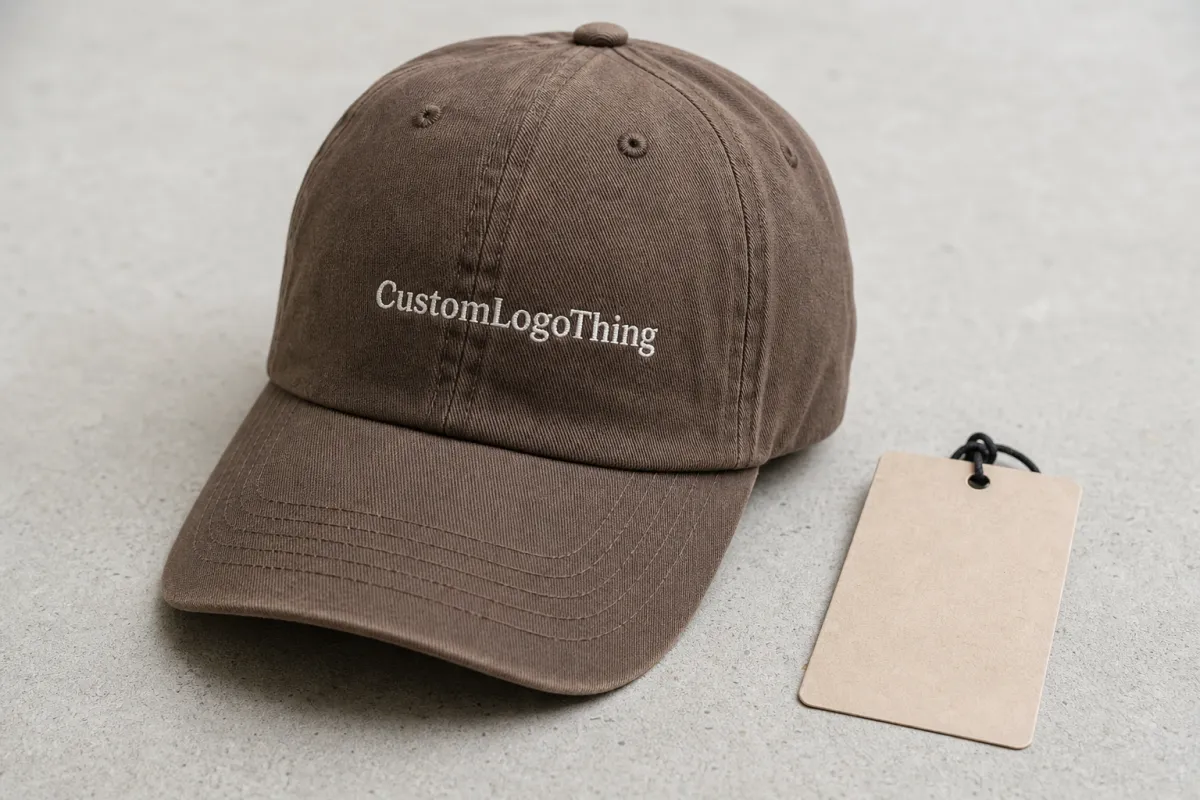
A cafe hat gets seen in more places than most branded items ever will. It shows up behind the bar, on the sidewalk, in customer photos, and on the person who buys a bag of beans and wears it home. That gives this product a practical advantage: it extends the brand into everyday life without feeling like an ad.
The relaxed shape reads approachable. The curved brim keeps it familiar. The soft front panel feels less corporate than a structured cap, which is useful for shops that want to look warm, local, and easy to walk into.
One hat can cover several jobs: staff uniform, retail merch, event giveaway, or seasonal drop. That reduces the number of branded items a cafe needs to manage and keeps the visual system tighter. If the cups, bags, and menu board already share a palette, the hat should sit in that same family instead of starting a new one.
A quick decision test helps: if it looks right on a barista during a slow Tuesday and still looks good on a customer leaving with a latte, it is probably doing its job. If it only works in the mockup, keep editing.
Decoration Choices: Embroidery, Patches, Print
Decoration changes the whole feel of the product. For most coffee shops, embroidery is the safest default. It adds texture, wears well, and makes a small logo look intentional instead of overdesigned. Clean wordmarks, monograms, and simple icons usually stitch best.
Embroidery is not ideal for everything. Fine lines, tiny text, and intricate crests can get muddy when they are shrunk to hat size. A logo that looks sharp on a screen may need simplification before it can live on a front panel. That is a production issue, not a design failure.
Woven patches are useful when the art has more detail or smaller type. They handle line work better than thread alone and can make a design feel more finished. Leather and faux-leather patches lean more premium and rustic, which works for roasters, bakery cafes, and shops with a tactile brand style. Printed decoration is the least textured option, but it can be the right call for bold graphics, event pieces, or short-run promos.
| Decoration method | Best use | Strengths | Tradeoff |
|---|---|---|---|
| Embroidery | Staff hats, simple wordmarks, everyday merch | Durable, classic, low maintenance | Small details may simplify |
| Woven patch | Detailed logos, retail drops | Better for fine type and line work | More built-up look than direct stitch |
| Leather patch | Premium or rustic cafe branding | Strong contrast, upscale feel | Not ideal for intricate art |
| Promo hats, simple graphic art | Good for flat-color designs | Less tactile, less traditional |
The smartest choice is the method that keeps the logo legible at hat size. Fancy is not the same thing as effective. A clean embroidered mark often outperforms a complicated patch because it stays readable from a few feet away.
If the hat is part of a larger merch wall, keep the decoration aligned with the rest of the brand system. A soft embroidered logo can pair nicely with custom packaging products such as cups, sleeves, labels, and mailers. A leather patch can support a more rustic retail presentation, especially if beans, tees, and mugs already share the same visual language.
Materials, Colors, and Fit
Material choice decides how the hat feels before anyone puts it on. Cotton twill is the dependable standard. It has enough body to hold shape without feeling cardboard stiff. Brushed cotton feels softer and a little more worn in, which suits neighborhood cafes and casual retail. Washed chino lands in a similar space, with a broken-in finish that fits the coffee shop aesthetic.
If the hat should look sharper, choose a firmer front panel so the logo sits flatter. If it should feel easygoing and wearable all day, an unstructured crown is usually better. Shops with a crisp visual identity often prefer a cleaner profile. Shops with a warmer, slower, more local feel usually lean toward softer fabrics and lower structure.
Color matters more than people expect. Espresso brown, charcoal, stone, natural cream, olive, and washed black are strong defaults because they fit the category without looking themed. Accent colors can work too, especially if they already appear in cup sleeves, wall art, or packaging. A hat does not need to match everything exactly; it only needs to feel like it belongs in the same room.
Fit comes down to closure and sizing. Fabric straps read more casual. Metal closures feel a bit more finished. Buckles and sliders sit somewhere in between. For staff, comfort matters because the hat may be worn for long shifts. For retail, a universal adjustment makes the product easier to sell across different heads and ages.
One more practical point: if the hat will travel with beans, cups, or gift sets, think about the full path from shelf to customer. FSC-certified paper is worth considering for tags or inserts, and the FSC site is a useful reference for paper sourcing standards. If the product is shipping in a larger mailer, carton testing guidance from ISTA can help prevent crushed brims and bent packaging in transit.
Process, Proofing, and Turnaround
The order flow is usually simple, but the weak points are predictable. Artwork comes in, a proof is created, revisions happen if needed, then production starts after approval. The actual sewing or stitching is often the fast part. Delays usually show up when the file needs cleanup, the logo needs resizing, or too many people are trying to approve the same hat.
A clean vector file saves time. AI, EPS, or PDF files are best because they scale cleanly and are easier to adapt for embroidery or patch production. JPGs and PNGs can work for reference, but they are not ideal as final production files. If the logo only exists as a low-resolution image, expect redraw work before the order can move forward cleanly.
For straightforward orders, turnaround often lands around 12 to 15 business days after proof approval. That is a practical range, not a promise. Add more time if the order includes custom labels, multiple colorways, extra decoration locations, or packaging inserts. Store openings and seasonal launches have a way of making every delay feel personal.
Pricing, MOQ, and Unit Cost
Price depends mostly on quantity and complexity. A simple embroidered dad hat at a modest quantity usually lands in the higher single digits to low teens per unit. Larger runs can bring that number down by several dollars, depending on the blank, stitch count, and finishing. Patch work, custom labeling, and extra packaging push the cost up.
MOQ, or minimum order quantity, exists because setup takes labor. The factory needs enough units to make the run efficient. That is true for blank sourcing, thread setup, embroidery hoops, and patch application. A larger order usually gives a better unit price. A smaller test run can still make sense if the shop is trying a new color, a new logo version, or a limited seasonal release.
A useful way to compare quotes is to look past the headline number and check the full landed cost.
| Order type | Best for | Cost impact | Notes |
|---|---|---|---|
| Single-location embroidery | Staff hats, simple merch | Lowest | Best value for compact vector art |
| Woven or leather patch | Retail hats, premium feel | Medium | More setup time, stronger texture |
| Multiple decoration locations | Fashion-forward merch | Higher | More labor, more proof checks |
| Custom labels or packaging | Gift sets, bundled retail | Higher | Branding improves, but compare the total |
Setup fees, sample costs, shipping, and revision policies can change the real price more than the per-hat number does. A quote that looks cheaper on paper may end up costing more once the proof changes start. That is not a trap if you know to look for it. It is just how custom production works.
Artwork Prep and Production Checks
Good artwork prep keeps the final hat from drifting away from the logo people approved. The easiest way to avoid problems is to work from a clean vector and simplify anything that depends on tiny detail. Hat front panels are small. Curved surfaces are unforgiving. A design that is too busy will not become clearer after stitching.
For embroidery, details below about 3 to 4 inches wide can become hard to read if the lines are too thin or the text is too small. That does not mean every logo needs to be stripped down to nothing. It means the design should respect the scale of the product. Strong shapes, clear spacing, and limited colors usually produce the best result.
Before production, the key checks are straightforward:
- Confirm the final logo version and placement.
- Verify thread colors or patch materials against the proof.
- Check spelling, punctuation, and spacing one more time.
- Keep one person responsible for final approval.
- Ask for a revised proof if the hat layout feels crowded.
The best hats are usually designed for the material, not copied directly from a poster or website header. Thread behaves differently from ink. A patch behaves differently from embroidery. The cap is its own medium, and it should be treated that way.
Common Mistakes That Cost Time
The most common mistake is trying to fit too much detail onto the front panel. A cafe logo can look elegant on a sign and still fail on a hat because there is not enough space for every line and curve. The smaller the surface, the more every design choice matters.
Another mistake is approving a mockup without thinking about wear. Screen art does not tell you how the hat sits, how the brim curves, or how the fabric feels after a few hours. If the team will actually wear the hats, they should see a sample or at least review a realistic proof before a larger run.
A few other errors come up again and again:
- Changing artwork after approval.
- Ordering too close to a store opening.
- Skipping a sample on a premium retail run.
- Choosing colors that clash with cups, boxes, or uniforms.
- Ignoring the rest of the merch system.
A hat is rarely a standalone product in a cafe. It sits next to packaging, signage, and other merch, so it should feel like part of the same story. If the hat looks disconnected from the rest of the brand, it weakens the shelf instead of strengthening it.
FAQ
How many Custom Dad Hats for coffee shops should I order first?
Start with the smallest quantity that still gives a reasonable unit price. For staff use, that keeps risk low. For retail, it is safer to test one or two colorways before committing to a larger line.
Are embroidery or patches better for cafe hats?
Embroidery is usually the better default for clean logos and everyday wear. Patches make more sense when the artwork has more detail or the brand wants a textured, retail-ready finish.
What file do I need for production?
A vector file such as AI, EPS, or PDF is the cleanest starting point. If the only file available is a JPG or PNG, a redraw is usually worth it before production begins.
How long do Custom Dad Hats for Coffee shops usually take?
A straightforward order often takes about 12 to 15 business days after proof approval. Extra decoration steps, sample requests, and packaging changes can extend that timeline.
What affects the final cost the most?
Quantity, decoration complexity, and the number of colors or locations usually have the biggest impact. Setup fees, shipping, and revision rounds also change the total, so compare complete quotes rather than the per-hat number alone.
A cafe hat works best when it feels useful first and branded second. Keep the logo readable, the materials honest, the fit comfortable, and the timeline realistic, and the result stops feeling like extra merch and starts doing real brand work.

