Buyer Fit Snapshot
| Best fit | Custom Reverse Tuck Cartons Bulk projects where brand print, material claims, artwork control, MOQ, and repeat-order consistency need to be specified before quoting. |
|---|---|
| Quote inputs | Share finished size, material target, print colors, finish, packing count, annual reorder estimate, ship-to region, and any compliance wording. |
| Proofing check | Approve dieline scale, logo placement, barcode or warning zones, color tolerance, closure strength, and carton packing before bulk production. |
| Main risk | Vague material claims, crowded artwork, missing packing details, or unclear freight terms can make a low unit price expensive after revisions. |
Fast answer: Custom Reverse Tuck Cartons Bulk: Pricing, Specs, Lead Time should be specified like a repeatable production item. The safest quote records material, print method, finish, artwork proof, packing count, and reorder notes in one written spec.
Production checks before approval
Compare the actual filled-product size with the drawing, then confirm tolerance on folds, seals, hang holes, label areas, and retail display edges. Reserve space for logos, QR codes, warning copy, and material claims before decorative graphics fill the panel.
Quote comparison points
Review material grade, print process, finish, sampling route, tooling charges, carton quantity, and freight assumptions side by side. A quote is only useful when the supplier can repeat the same color, closure quality, and packing count on the next order.
Custom Reverse Tuck Cartons Bulk: Pricing, Specs, Lead Time matters because packaging mistakes rarely arrive as one dramatic failure. They show up as extra seconds at the pack table, a few more inches of void fill, a pallet that carries fewer units than planned, or a reorder that lands after the product launch window has already slipped away. I have watched a small skincare brand lose a full week because the carton was just a hair too tight and the line kept snagging on the insert tab; nobody noticed it in the proof, but everybody noticed it at the table. A brand that shifts from mixed stock cartons to custom reverse tuck cartons bulk can trim pick errors, cut dunnage, and reduce shelf clutter without changing the product itself. Packaging, in other words, becomes operations with a printed face.
Custom Reverse Tuck Cartons Bulk: Why the Format Saves Space
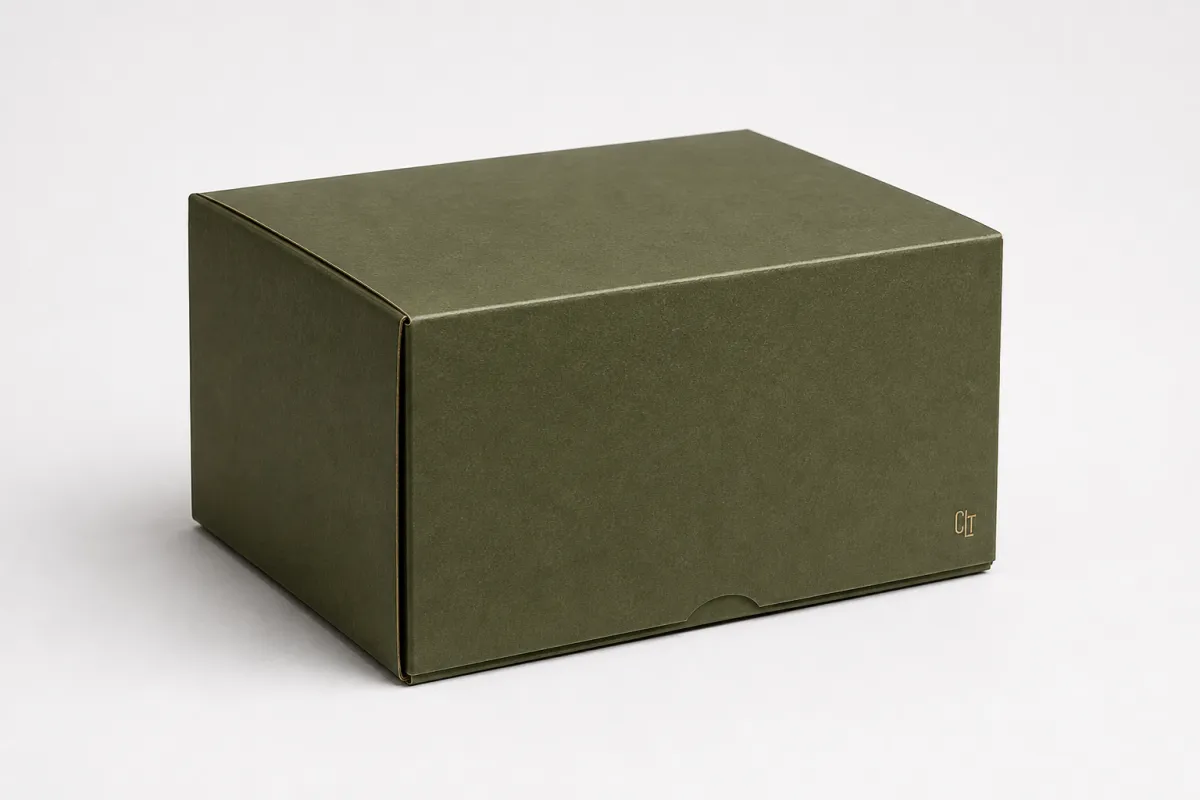
Buyers usually fixate on carton price first. That reaction makes sense. The invoice is immediate, visible, and easy to compare. The quieter savings tied to Custom Reverse Tuck cartons bulk usually come from geometry. Tighten the carton by even 1/8 inch on three sides and the effect can ripple through pallet layers, case counts, and freight density. A tiny change on paper can translate into more units per shipper, fewer dead-air voids in transit, and less room wasted in storage.
Reverse Tuck Cartons also behave well on a packing line. The top and bottom flaps fold in opposite directions, which gives the closure a predictable rhythm during assembly. That rhythm matters for repeated SKUs, seasonal replenishment, and multi-region operations that want one carton style to do ordinary work without constant retraining. Workers do not have to stop and think through a new closure pattern for every run. With Custom Reverse Tuck Cartons bulk, the format itself does part of the labor, which is kinda the whole point.
Retail brands like the structure for a different reason. It keeps the silhouette clean while still allowing enough panel space for copy, ingredients, warnings, and shelf-facing graphics. Supplements, cosmetics, accessories, small hardware, and light electronics all benefit from a carton that looks intentional without adding structural complexity. A carton can hold custom printed boxes style branding and still flatten for storage, stack neatly on a shelf, and fold fast on a line.
"If the carton forces the line to slow down, it is the wrong carton."
That line is not a slogan. It is the test. A good custom reverse tuck cartons bulk program only works when the carton spec, quantity, and lead time match the shipment profile. Oversize the box and the company pays for extra board and extra freight. Undersize it and insertion gets awkward, which is where scuffing, bent corners, and line frustration tend to appear. Miss the timing and the product waits on packaging instead of selling. Good packaging design reduces friction; it does not decorate a bottleneck.
There is a systems angle that gets overlooked far too often. One carton change can alter warehouse slotting, master case count, corrugate storage, and the cubic space a pallet occupies in transit. I have seen teams save pennies on the unit and then lose the margin back in freight because the revised size killed pallet efficiency. That is why custom reverse tuck cartons bulk is often chosen by teams that think beyond the box itself. They are buying a repeatable handling format, not just printed board.
- Less void fill: a tighter fit reduces filler and protects margin.
- Fewer pick errors: standardized dimensions help staff identify SKUs faster.
- Cleaner storage: flat-shipped cartons use less room than assembled inventory.
- Better presentation: consistent print and fit support package branding across each run.
Product Details: How Reverse Tuck Cartons Work in Shipping and Logistics
A reverse tuck carton sounds simple because it is simple. The top flap tucks one way, the bottom flap tucks the other, and the closure stays easy to understand during packing and handling. That predictable fold pattern is a big reason custom reverse tuck cartons bulk are common in fulfillment-friendly packaging programs. They are easy to open, easy to fill, and easy to reseat if a line worker has to inspect a unit before sealing the case.
The format suits lightweight to medium-weight products that need secondary packaging more than brute-force transit protection. Vitamins, skincare, candles, stationery, device accessories, and replacement parts all fit the profile. In those categories the carton has to do three jobs at once: protect the item, present the brand, and keep the SKU manageable on the floor. That is where custom reverse tuck cartons bulk beats random stock cartons. Consistency is not flashy, but it saves time in a way people only notice when it disappears.
Logistics teams appreciate the structure because it behaves predictably before and after packing. The carton ships flat, stores flat, and folds with a short, repeatable motion. In semi-automated operations, that predictability can matter as much as print quality. Once a team dials in the setup, custom reverse tuck cartons bulk can cut rework, quicken packing, and strengthen line confidence. Operators are not fighting the carton just to get it closed.
Appearance and performance do not have to pull in opposite directions. A carton can look polished enough for retail packaging and still be engineered for practical handling. That is the useful middle ground for custom reverse tuck cartons bulk. The face panels stay clean for branding, the side panels can carry instructions or ingredients, and the closure stays simple enough to support speed on the floor. For brands building a portfolio of branded packaging, that balance keeps the line from splintering into one-off exceptions.
Multi-channel brands get extra value from that same structure. A carton can sit on shelf in retail packaging, then move through replenishment, transfer, and receiving without requiring a different spec for every channel. Manufacturers often standardize custom reverse tuck cartons bulk across several SKUs for exactly that reason. Standardization lowers decision fatigue. It also lowers the chance that a packaging mismatch stalls a shipment at the worst possible hour.
For broader packaging programs, the carton is only one part of the equation. Many buyers pair this format with other Custom Packaging Products so artwork, board style, and size logic stay consistent across the line. That kind of packaging discipline pays off fast once the catalog grows and procurement wants fewer exceptions, not more.
Specifications That Matter: Board, Dimensions, Print, and Finish
A spec sheet is where carton programs win or drift. The buyer who knows the exact inside dimensions, board grade, caliper, print coverage, and finish usually gets a cleaner quote and a smoother launch. For custom reverse tuck cartons bulk, the details carry real weight because the carton has to fit the product, survive handling, and still look deliberate on shelf.
Board choice comes first. Common paperboard options include 14 pt, 18 pt, and 24 pt SBS or C1S/C2S grades, depending on how much rigidity the product needs. Thicker board improves crush resistance and stackability, but it can also raise cost and change how the carton folds. That tradeoff is not theoretical. A carton for cosmetics and a carton for parts may live in the same product family and still need different caliper. I have seen a 14 pt carton work beautifully for a lightweight serum bottle, then buckle the second it was asked to hold a denser glass jar. A buyer placing custom reverse tuck cartons bulk should compare sample board thicknesses before locking the order.
Dimensions deserve more precision than a rough estimate. Too much headspace lets the product shift. Too little creates drag during insertion and can push up damage rates on the line. An overly tight carton can also make the pack look stuffed, which is not a flattering signal for retail packaging. The strongest programs test inside dimensions against the actual packed item instead of trusting a drawing alone. That is where custom reverse tuck cartons bulk becomes a measured process rather than a guess.
Print and finish deserve equal scrutiny. Spot color matching helps keep branding consistent. Barcode placement affects warehouse scanning. Matte, gloss, and soft-touch coatings all change how the carton reads under store lighting and on camera. If the carton will live in a display tray or a crowded shelf, good packaging design needs more than a pretty logo. It needs readable type, a clear hierarchy, and enough contrast to survive real retail conditions.
For sustainability and transit validation, many buyers also track fiber sourcing and test standards. The ISTA framework helps anchor distribution testing, and the FSC system gives procurement a documented path for responsible fiber sourcing. Those references do not replace a spec review. They simply keep the conversation tied to standards instead of assumptions. If a supplier cannot tell you how the carton will be tested or what certification applies, that is a signal to slow down.
Palletization is another detail that changes the economics more than buyers expect. If cartons ship in master cases, the case count per pallet and the layer pattern affect freight planning, warehouse space, and receiving speed. A small shift in carton geometry can improve cube enough to change the landed cost of custom reverse tuck cartons bulk. Buyers who look at board, size, print, and pallet count together usually end up with the better order.
- Inside dimensions: match the actual packed product, not the sample shell only.
- Board grade: choose rigidity based on product weight and stack pressure.
- Print coverage: confirm front, back, side panels, and barcode placement.
- Finish: specify matte, gloss, soft-touch, or aqueous coating as needed.
- Packing format: define master case count and pallet configuration early.
Custom Reverse Tuck Cartons Bulk: Cost, Pricing, MOQ, and Quote Drivers
Price is the first number buyers ask for, but it should not be the only number they compare. The real cost of custom reverse tuck cartons bulk depends on quantity, board type, finished size, print complexity, coating, and any special features such as windows, embossing, foil, or unusual die cuts. A simple one-color carton and a four-color carton with full coverage are not the same job. Press time, setup time, and finishing time shift enough to move the price in a meaningful way.
Bulk pricing works because fixed setup costs get spread across more units. That is why a larger run often lowers unit cost even as gross spend rises. A buyer might see a bigger total invoice at 10,000 units than at 2,500 units, yet the per-carton cost falls and the freight math can improve because fewer reorders are needed. That is the logic behind custom reverse tuck cartons bulk. The right order size makes repetition cheaper, and the savings are not imaginary.
MOQ is not just a vendor preference. It reflects production reality. A basic blank carton may start around 1,000 pieces, while printed programs often sit closer to 2,500 or 5,000 pieces depending on the board and finishing steps. Specialty work can push the minimum higher. Buyers evaluating custom reverse tuck cartons bulk should ask for pricing at several quantity tiers so they can see the break points. A 5,000-piece tier may reveal a better cost curve than a 3,000-piece tier, even if the smaller number looks easier on paper.
The cleanest quote requests include finished dimensions, artwork files, target quantity, board preference, shipping destination, and whether the order is plain or printed. If a team sends only a rough size and a logo file, the quote will wander. If they send the real spec, pricing gets sharper. That is especially true for custom reverse tuck cartons bulk, where freight, pallet count, and case packing can shift landed cost almost as much as the carton itself.
Buyers should compare total landed cost, not unit price alone. Freight, storage, inspection time, and handling all affect the real economics of a bulk carton order. A carton that costs a few cents less per unit can still lose the comparison if it ships inefficiently or creates extra receiving labor. For custom reverse tuck cartons bulk, the best price is the one that fits the product, the warehouse, and the launch plan at the same time.
| Quantity Tier | Typical Unit Cost Range | Common Use Case | Buying Note |
|---|---|---|---|
| 1,000 to 2,499 | $0.38 to $0.78 | Prototype launch or small SKU run | Good for testing fit, but setup cost stays visible |
| 2,500 to 4,999 | $0.24 to $0.49 | Early production and repeat sales | Often the sweet spot for custom reverse tuck cartons bulk |
| 5,000 to 9,999 | $0.18 to $0.34 | Steady restock programs | Setup costs spread better across the run |
| 10,000+ | $0.12 to $0.28 | High-volume or multi-channel supply | Best when artwork and dimensions are locked |
Those ranges are illustrative, not fixed. Heavy ink coverage, specialty coating, tighter die tolerances, or an added window all push pricing upward. A simple one-color carton on standard board can come in lower. That is why custom reverse tuck cartons bulk quotes are most useful when the supplier has finished dimensions, artwork, and destination data in hand. The more complete the request, the fewer revisions later.
If the buyer is also comparing account structures or larger procurement paths, it can help to review Wholesale Programs alongside the carton quote. That comparison shows whether repeated replenishment, multiple SKUs, or branded packaging across product families changes the economics. Sometimes the answer is obvious; sometimes it is not, and that is fine.
Process, Timeline, and Lead Time for Bulk Production
A realistic schedule starts with intake, not with the press. The first step in custom reverse tuck cartons bulk production is a spec review: dimensions, material, print, finish, destination, and quantity. Prepress follows, where artwork and dielines are checked for bleed, fold lines, barcode placement, and copy accuracy. If either step is sloppy, the run slows down. Good suppliers do not rush past them.
Most delays happen for boring reasons. The dieline is incomplete. The artwork is still being revised. The buyer has not approved the proof. The ship-to address changed after freight was quoted. None of that sounds dramatic, yet each item can cost days. In a custom reverse tuck cartons bulk order, every extra revision can move the start date. The simplest way to protect the schedule is to lock the carton spec early and keep the approval chain short.
Lead time makes more sense if it is split into setup time and run time. Setup time covers prepress, proofing, material planning, and scheduling. Run time covers making, finishing, cutting, and packing the cartons. A straightforward printed order might move through production in roughly 12 to 15 business days after proof approval, while more customized jobs can need 15 to 25 business days or more depending on volume and finishing. That range is normal. It is one reason custom reverse tuck cartons bulk planning should start before inventory gets tight. If the carton is going to carry regulated text, extra proof time is wise; nobody wants a reprint because one line of copy was left hanging by a comma.
Sampling matters too. A digital proof confirms artwork layout, but a physical sample or preproduction approval shows whether the product actually fits, folds, and stacks the way the team expects. If the order supports retail packaging or fulfillment, that sample stage is cheap insurance. A buyer who skips it may save a few days and lose more later. For custom reverse tuck cartons bulk, the sample stage is where dimensions stop being theoretical.
Production planning should also connect to the rest of the supply chain. If the product launch is fixed, the carton schedule should be fixed first. Packaging arriving late can delay packing, which delays receiving, which delays sales. That cascade is easy to underestimate. With custom reverse tuck cartons bulk, the packaging schedule belongs upstream of the inventory date, not beside it as an afterthought.
Regulated copy needs special care. If the carton artwork contains legal language, that review should happen before proof approval, not after. Cosmetics, supplements, and technical parts are especially sensitive because a typo can trigger a reprint. A controlled proof cycle keeps lead time from stretching and gives the team more confidence when the bulk run begins.
- Step 1: send dimensions, quantity, board choice, and artwork.
- Step 2: review dieline and proof for copy, color, and fold points.
- Step 3: approve sample or preproduction check if needed.
- Step 4: move into scheduled manufacturing and finishing.
- Step 5: confirm packing, freight, and receiving details before ship date.
Why Choose Us for Bulk Reverse Tuck Carton Programs
A good carton supplier does more than print board. It understands the difference between attractive packaging and packaging that keeps a shipment moving. That distinction matters in custom reverse tuck cartons bulk programs, where the goal is not just a handsome sample but a carton that stays consistent from first run to reorder. Consistency is what procurement wants, operations needs, and marketing quietly depends on.
We focus on the details that keep a bulk order from turning noisy. That means checking size logic before quoting, reviewing artwork for print fit, and flagging places where a spec could create problems on the line. Buyers do not need guesswork. They need a clear path from inquiry to production. For custom reverse tuck cartons bulk, clarity is part of the product. A quote that explains board, finish, and turnaround is more useful than a low number padded with hidden assumptions.
Repeatability across reorders is another reason teams choose a specialized packaging partner. If a brand sells in waves, or if it ships into multiple regions, the carton has to be the same every time. That is where custom reverse tuck cartons bulk becomes a procurement advantage. The artwork stays stable, the fold stays familiar, and the line does not need to relearn the carton each time a new batch lands.
Packaging buyers also care about how a supplier handles branded packaging across formats. A carton project may sit beside inserts, labels, display packs, or other custom printed boxes. Good coordination keeps the look consistent and prevents mismatched colors or off-center spacing from creeping into the line. If the project has to support brand growth, not just one SKU, the supplier should think across the system rather than inside one carton.
If your team is comparing standardization paths, it can help to review the full line through Custom Packaging Products and then confirm the quantity structure through Wholesale Programs. That comparison makes it easier to see whether one carton format can support multiple product lines, which is often the smartest move for custom reverse tuck cartons bulk.
Our aim is practical: reduce the back-and-forth that slows purchasing. Buyers send the spec, we review the gaps, and the order moves forward with fewer surprises. That is not hype. It is a better way to buy custom reverse tuck cartons bulk when time, cost, and presentation all matter. No supplier can promise zero hiccups, but a careful one can make the first reorder feel less like a scramble.
"A good packaging program makes the next reorder easier than the first one."
Next Steps for Custom Reverse Tuck Cartons Bulk Orders
The fastest route to a clean order is straightforward: define the carton before the inventory gap turns into a crisis. Start with finished dimensions, product weight, board preference, print needs, target quantity, ship-to location, and deadline. That set of details gives the quote team enough to price custom reverse tuck cartons bulk accurately and keep revisions short.
- Confirm the product size and the internal fit tolerance.
- Choose board grade and finish based on handling and shelf goals.
- Request pricing at multiple quantity tiers so you can see break points.
- Review the proof with operations, procurement, and marketing together.
- Lock the production slot once the spec and timeline are approved.
That sequence saves more time than most buyers expect. It also gives each stakeholder a role without turning the carton into a committee project. Operations can check fit. Marketing can check branding. Procurement can compare landed cost. Then the team can move forward with custom reverse tuck cartons bulk in a way that feels controlled rather than rushed.
One final point deserves a place in the decision. A bulk carton order works best when the company thinks beyond the first shipment. If the item will be reordered, expanded into another size, or rolled into another channel, the spec should be built for that future now. The cheapest carton is not always the right carton. The right carton is the one that keeps the line moving, the brand consistent, and the next replenishment easier to place. That is why custom reverse tuck cartons bulk deserves a real spec review, not a quick guess.
What is the typical MOQ for custom reverse tuck cartons bulk orders?
MOQ depends on board choice, print complexity, and whether the cartons are plain or fully printed. Simple blank cartons may start around 1,000 pieces, while printed custom reverse tuck cartons bulk programs often sit closer to 2,500 or 5,000 pieces. Higher quantities usually improve unit pricing because setup costs are spread across more cartons, so it is smart to request pricing at several tiers before deciding. If a supplier gives only one number, ask for the next break point; that second number often tells the real story.
How long is the lead time for custom reverse tuck cartons bulk production?
Lead time usually includes proof approval, production scheduling, manufacturing, finishing, and shipping. A straightforward run may move in roughly 12 to 15 business days after proof approval, while more complex orders can need 15 to 25 business days or more. Artwork changes and missing spec details are the most common causes of delay, so a finalized dieline helps custom reverse tuck cartons bulk orders move faster. If the job includes legal copy, safety text, or multiple SKUs, build in a little extra breathing room.
What information do I need to get an accurate quote for custom reverse tuck cartons bulk?
Provide finished dimensions, quantity, board type, print coverage, and any coating or finishing requirements. Include the ship-to ZIP code or destination so freight can be estimated correctly. If possible, send dielines or sample photos to reduce revision cycles. The more complete the spec, the sharper the custom reverse tuck cartons bulk quote. A real sample is even better than a sketch, because it shows how the product sits in the carton instead of how it looks on paper.
Are custom reverse tuck cartons bulk orders better for shipping or retail display?
They are often used for both because the format is efficient for packing and clean enough for shelf presentation. The best choice depends on product weight, how the carton will be handled, and the brand's visual requirements. If the carton must do double duty, specify both logistics and display needs at the quoting stage so the custom reverse tuck cartons bulk design supports both jobs. That way you are not trying to fix a shelf problem with a shipping spec later on.
Can I order custom reverse tuck cartons bulk in multiple sizes for one product line?
Yes, but each size may require its own tooling, setup, and quantity planning. Multiple SKUs can work well when the product line shares artwork or structural standards. Ask for a pricing comparison across sizes to see whether standardizing dimensions will save money. In many cases, one well-planned custom reverse tuck cartons bulk spec is cheaper to manage than several near-identical carton sizes, especially once storage and reorder complexity enter the picture.
For buyers who want fewer surprises, the winning move is plain: lock the specs, compare quantity tiers, and keep the carton plan tied to the shipment plan. Start with a sample, confirm the inside dimensions, ask for pricing at 2,500, 5,000, and 10,000 units, and do not approve art until the barcode, copy, and fold lines have been checked against the real product. That small bit of discipline is what makes custom reverse tuck cartons bulk a packaging decision instead of a guessing game.

