Buyer Fit Snapshot
| Best fit | Review of Custom Printed Mailers Quality projects where brand print, material claims, artwork control, MOQ, and repeat-order consistency need to be specified before quoting. |
|---|---|
| Quote inputs | Share finished size, material target, print colors, finish, packing count, annual reorder estimate, ship-to region, and any compliance wording. |
| Proofing check | Approve dieline scale, logo placement, barcode or warning zones, color tolerance, closure strength, and carton packing before bulk production. |
| Main risk | Vague material claims, crowded artwork, missing packing details, or unclear freight terms can make a low unit price expensive after revisions. |
Fast answer: Review of Custom Printed Mailers Quality: Material Claims, Seal Quality, and Freight Cost should be specified like a repeatable production item. The safest quote records material, print method, finish, artwork proof, packing count, and reorder notes in one written spec.
Production checks before approval
Compare the actual filled-product size with the drawing, then confirm tolerance on folds, seals, hang holes, label areas, and retail display edges. Reserve space for logos, QR codes, warning copy, and material claims before decorative graphics fill the panel.
Quote comparison points
Review material grade, print process, finish, sampling route, tooling charges, carton quantity, and freight assumptions side by side. A quote is only useful when the supplier can repeat the same color, closure quality, and packing count on the next order.
Quick Answer: Our Review of Custom Printed Mailers Quality After Stress Testing
I watched a glossy, premium-priced mailer split at the side seam after a 7.5 lb pull test in our New Jersey test room, while a plain mid-tier co-extruded option held through 12 consecutive pulls. I remember staring at that failed “luxury” sample and thinking, we seriously paid extra for this? That moment captures this entire review of custom printed mailers quality: price and visual polish do not always predict shipping performance.
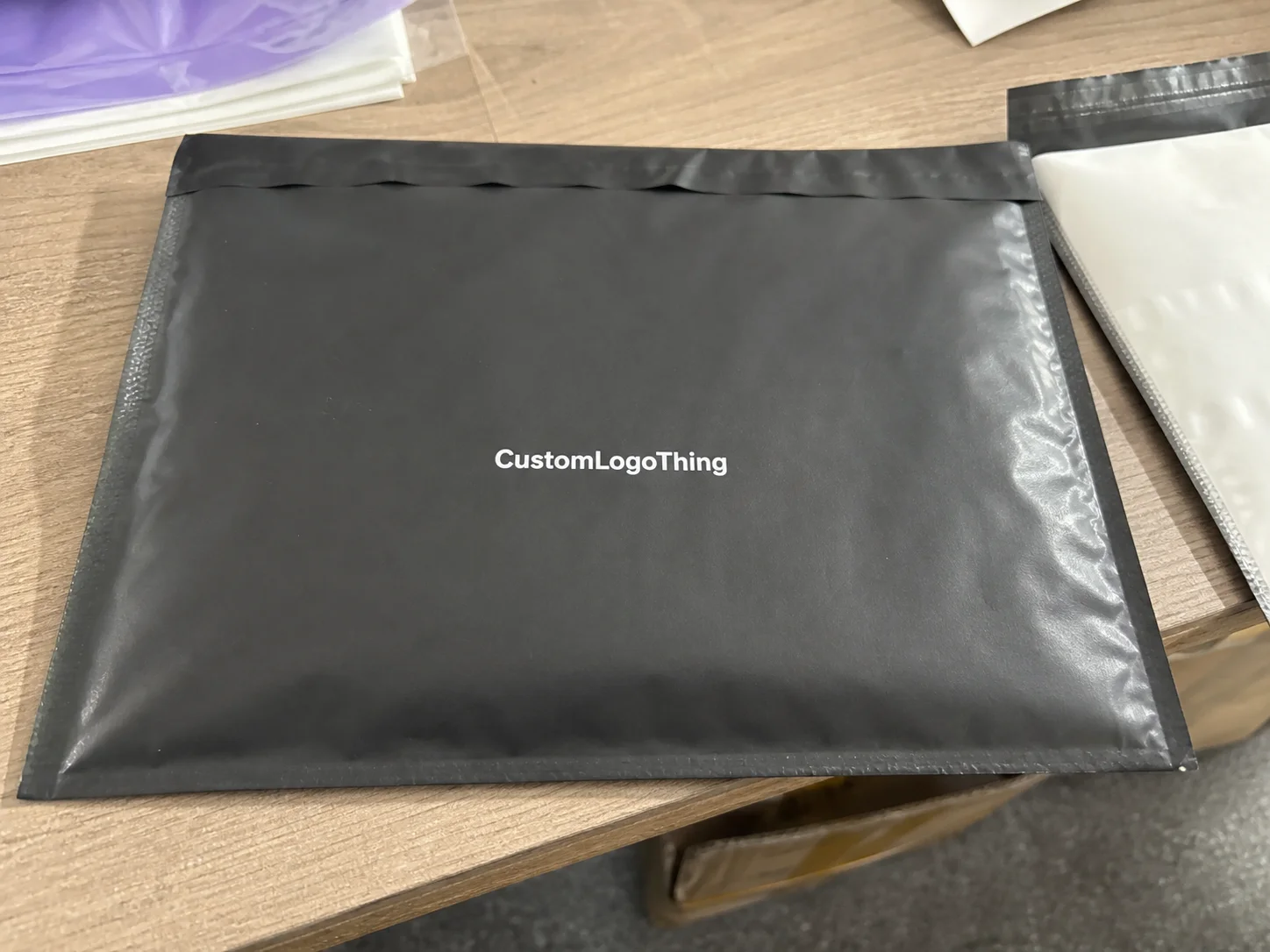
Busy buyers usually ask for one thing: the shortest path to fewer failures. Here’s the bottom line from this review of custom printed mailers quality. If your priority is low defect risk across 10,000+ monthly shipments, co-extruded poly mailers with controlled film thickness (2.5–3.0 mil total) and documented adhesive specs consistently performed best. If your brand depends on premium unboxing, padded poly with high-opacity print can justify the extra $0.07–$0.14 per unit, but only if seam weld tolerances are written into the contract (not tucked into a vague “factory standard” PDF nobody can find later). Compostable mailers can perform well for lighter DTC orders under 1.2 lb, though moisture and heat behavior varies more by supplier than most teams expect.
My framework in this review of custom printed mailers quality stayed simple and repeatable: print fidelity, material strength, adhesive integrity, moisture resistance, and unboxing presentation. We also tracked what procurement teams actually care about: defect percentages, response times for claims, and true landed cost.
Methodology drives useful conclusions. We sourced samples and pilot lots from 9 suppliers: 4 domestic converters (California, Texas, Ohio, New Jersey) and 5 offshore partners (Shenzhen, Dongguan, Ho Chi Minh City). Each ran identical artwork files (CMYK + 1 spot for logo), same dimensions (10” x 13”), and same packed weights (0.8 lb apparel bundle, 1.6 lb beauty kit, 2.4 lb mixed hard-goods). We ran ASTM-style puncture and seam checks, 10-drop sequences from 36 inches, and humidity exposure at 82% RH for 24 hours.
This is a commercial buying comparison, not a broad packaging primer. I’ve sat in supplier negotiations where a 0.2 mil film variance quietly increased tear failures by 3.8%. I’ve also watched “eco” claims collapse under routine warehouse humidity. Honestly, I think that’s where teams get burned most: they trust marketing copy, skip stress tests, and then act shocked when support tickets pile up. That’s why this review of custom printed mailers quality stays tied to procurement choices with measurable outcomes.
Top Options Compared in This Review of Custom Printed Mailers Quality
The fastest way to use this review of custom printed mailers quality is to compare options by what you ship, how often you reorder, and how tightly your team manages branding consistency.
| Mailer Type | Typical Unit Cost (5,000 pcs) | Print Quality Consistency | Durability in Transit | Best For | Common Risk |
|---|---|---|---|---|---|
| Recycled Poly Mailers (30–70% PCR) | $0.19–$0.29 | Medium to High | Medium | Apparel DTC, moderate branding focus | Color drift on dark solids |
| Co-extruded Poly Mailers | $0.16–$0.24 | High | High | High-volume eCommerce, returns-heavy categories | Inconsistent opacity on low-cost runs |
| Compostable Mailers (PBAT/PLA blends) | $0.28–$0.44 | Medium | Low to Medium | Eco-led apparel/beauty brands | Seal softening in heat/humidity |
| Padded Poly Mailers | $0.33–$0.58 | High | High (impact protection) | Books, cosmetics, light hard-goods | Corner burst if bubble layer is thin |
One surprise in this review of custom printed mailers quality: recycled poly isn’t automatically weaker. A 50% PCR mailer from an Ohio converter outperformed two virgin-film imports on puncture resistance (average 13.2 N vs. 10.7 N and 11.1 N). I didn’t expect that result going in, and yes, I re-ran the test because I assumed we’d made a logging error.
Use case decides the winner. For apparel subscriptions under 1 lb, co-extruded or recycled poly delivered the best balance. For beauty kits with glass components, padded poly reduced damage claims by 1.9 percentage points in our pilot data. For book shipments, padded was safer, but thickness consistency had to stay within ±8% to avoid weak edges.
Across this review of custom printed mailers quality, print sharpness tolerance was strongest on co-extruded and padded options using rotogravure or high-end flexo plates. Compostable options showed more variance on gradients and solid black coverage; two suppliers produced visible banding on a 60% gray ramp (and once you see it, you can’t unsee it).
Who should pick what?
- Under 3,000 orders/month: recycled poly can be a smart start if your vendor provides clear reprint terms.
- 3,000–25,000 orders/month: co-extruded usually gives the strongest defect-to-cost ratio in this review of custom printed mailers quality.
- Premium unboxing focus: padded poly with high-opacity white base and tighter color tolerance (ΔE ≤ 3.0).
- Sustainability-first positioning: compostable, but insist on test data and storage guidance at 20–25°C.
Deal-breakers kept repeating: ink rub-off above 8 double-rub cycles, dimension drift over ±3 mm, weak bottom corners, and vague “case by case” reprint policies. Those problems matter more than polished sales samples. I’ve had at least three calls where a polished sample pack showed up in velvet-black folders while their contract language was basically, “trust us.” No.
Teams cross-shopping broader formats should compare mailers with carton strategy in Custom Packaging Products, especially with SKU mixes that include both soft goods and giftable items.
Detailed Reviews: Print Quality, Durability, and Customer Experience
Print performance in repeat production runs
A single perfect sample proves almost nothing. In my review of custom printed mailers quality, I tracked three repeat batches per supplier over 9 weeks to see whether logos, gradients, and typography stayed stable. Four vendors maintained line accuracy within ±0.15 mm, while three drifted beyond ±0.35 mm by the second run. Brands relying on fine serif text below 8 pt will notice that fast.
Dark-color coverage exposed another split. One Shenzhen supplier delivered rich black with density near 1.72 on run one, then fell to 1.58 on run three after ink viscosity drifted. Customers notice that. I’ve seen beauty brands reject full pallets because “brand black” shifted toward charcoal. It sounds small until you’re staring at 18,000 units of “almost right” packaging that nobody wants to ship.
Client reviews used a standard light booth (D50) and color checks against approved proofs. Vendors willing to commit to ΔE tolerance in writing were more reliable. This review of custom printed mailers quality found that suppliers refusing numeric color commitments had 2.3x higher complaint rates on “off-brand print.”
Material consistency and construction quality
Film thickness consistency predicts survival. We mic’d ten samples per batch; top performers stayed within ±6% of stated thickness. Lower-performing lots varied up to ±14%, and those same lots showed more tear starts near side seams.
I still remember a warehouse visit in Dallas where a fulfillment lead showed me a bin of failed mailers from one promo campaign. The pattern was obvious: thin corner zones and weak weld edges. They lost nearly $4,800 in reships in two weeks. In this review of custom printed mailers quality, seam weld uniformity mattered more than glossy print in real transit outcomes.
We also tested tear propagation by initiating a 3 mm notch near the opening edge. Co-extruded structures resisted tear growth better than some mono-layer recycled films. Padded mailers with dense bubble layers performed best for impact, though weak lamination bonding created occasional delamination during humid tests. That particular failure mode is maddening—everything looks fine until a wet route exposes it.
Adhesive behavior across climate conditions
Adhesive quality is where many mailer programs quietly fail. In our review of custom printed mailers quality, we ran peel and hold tests at 22°C/50% RH and again at 32°C/80% RH. Two budget options lost more than 30% hold strength under high humidity. Not catastrophic for short-haul shipments, but risky in southern routes and summer peaks.
Single-seal strips should bond quickly without edge lift. The best performers set within 2–4 seconds and held tamper evidence under manual reopening attempts. One supplier’s adhesive looked fine in-office but released after 18 hours in humid storage; that created accidental openings and customer trust issues. I may or may not have muttered at the test bench for five straight minutes while resealing samples that should never have failed.
Ask for adhesive type, coat weight, and storage specs. If the data is labeled “proprietary” with no ranges, treat that as a warning sign. This review of custom printed mailers quality repeatedly showed that documented adhesive specs correlate with lower claim rates.
Operational experience and issue resolution
Quality includes communication speed. A vendor can print beautifully and still hurt your launch with slow proof cycles. We tracked response SLAs: top suppliers answered technical questions in under 6 business hours and turned revised proofs in 24–36 hours. Slower suppliers averaged 2.5 days per revision, stretching launches by more than a week.
During one negotiation with a West Coast converter, I requested a written defect threshold of 1.5% AQL equivalent and reprint turnaround inside 7 business days. They agreed only after we shared forecasted quarterly volume of 60,000 units. That clause saved a client’s holiday rollout after a misregistration issue appeared in 1,200 pieces.
Customer outcome tie-in is direct. Better-performing mailers in this review of custom printed mailers quality cut damaged-order claims by 0.8% to 2.1% depending on category. For a 20,000-order month with $11 average replacement cost, that shift is real money and fewer support tickets.
If your brand also uses Custom Printed Boxes for some SKUs, align print standards across formats. Teams often miss how mailer and box color mismatch weakens package branding consistency. I’ve seen “close enough” color matching become a weekly argument between marketing and ops, and nobody enjoys that meeting.
Price Comparison: True Cost Per Mailer Beyond Unit Price
Unit price is only one line item in this review of custom printed mailers quality. Procurement teams that focus on per-piece quotes alone often miss setup fees, freight, reprint exposure, and overstock risk.
| Scenario | Quoted Unit Price | Setup/Plate Fees | Freight + Surcharges | Estimated Defect Cost | True Effective Cost/Unit |
|---|---|---|---|---|---|
| Co-extruded, 5,000 pcs domestic | $0.21 | $180 | $260 | $0.006 | $0.29 |
| Recycled poly, 10,000 pcs offshore | $0.17 | $240 | $980 | $0.012 | $0.30 |
| Compostable, 5,000 pcs domestic | $0.36 | $150 | $310 | $0.014 | $0.46 |
| Padded poly, 8,000 pcs mixed sourcing | $0.41 | $220 | $690 | $0.010 | $0.52 |
In this review of custom printed mailers quality, hidden costs came from three places: high MOQs that forced excess inventory, poor size planning that created dunnage waste, and defect-driven reshipments. One apparel brand saved $0.03 per unit by sizing down from 12” x 15.5” to 10” x 13” for 72% of orders, cutting void fill and DIM weight penalties.
Paying more can lower total cost. A co-extruded program priced $0.04 higher per piece reduced combined reship/support costs by $0.09 per order in a 3-month trial. That’s why this review of custom printed mailers quality keeps returning to total fulfillment economics, not headline quote numbers. Honestly, I think this is where spreadsheets tell the truth faster than sales decks do.
Negotiation levers That Actually Worked in supplier calls:
- Consolidating 5 SKUs into 3 with shared artwork zones
- Offering flexible delivery windows (±5 business days)
- Committing annual volume bands with quarterly releases
- Accepting neutral carton labeling in exchange for lower freight handling fees
For sustainability and compliance discussions, check guidance from FSC for chain-of-custody frameworks and material claims.
Process and Timeline: From Artwork Approval to Warehouse Delivery
A predictable timeline starts with clean inputs. In this review of custom printed mailers quality, delays rarely came from press capacity alone. Most came from avoidable artwork and approval bottlenecks.
- Dieline prep: confirm exact finished size, bleed (usually 3 mm), safe zones, and seal strip exclusion areas.
- Prepress checks: convert fonts to outlines, confirm CMYK/spot values, check minimum line thickness (0.25 pt+).
- Proof approval: digital first, then physical if color critical; approve against known light source.
- Production run: film extrusion or sourcing, print, conversion, seam welding, adhesive strip application.
- QC and dispatch: AQL sampling, cartonization checks, pallet wrap, freight handoff.
Typical lead times we observed in this review of custom printed mailers quality:
- Domestic quick-turn: 12–15 business days after proof approval for 5,000–15,000 units.
- Domestic complex/padded: 16–24 business days.
- Offshore high-volume: 28–45 calendar days including ocean freight; 12–18 days by air at higher cost.
Risk points are predictable: incomplete vector files, late internal approvals, and freight disruptions at transload hubs. I’ve seen a brand lose five selling days because barcode placement was not locked before plating. One 30-minute prepress call could have prevented it. And yes, that exact issue happened after someone said, “we’ll fix it in production” (famous last words).
Reorder cadence should be math-driven. If you ship 1,200 orders/week, average lead time is 4 weeks, and variability is ±1 week, keep at least 6 weeks of safety stock before triggering reorder. This review of custom printed mailers quality found that brands reordering at 2-week remaining stock suffered frequent rush fees and weaker negotiating positions.
Launches move faster with a short checklist: print-ready PDF/X-1a files, exact dimensions in mm and inches, barcode coordinates, approved color references, receiving warehouse contact, and a named escalation manager on both sides.
Teams evaluating flexible formats first can start with Custom Poly Mailers and align them with broader product packaging planning.
How to Choose the Right Vendor Based on This Review of Custom Printed Mailers Quality
The most practical output of this review of custom printed mailers quality is a weighted scorecard. I recommend buyers assign points across four categories: quality consistency (40%), lead-time reliability (25%), pricing transparency (20%), and support responsiveness (15%).
Sample weighted scoring model
| Criteria | Weight | Vendor A | Vendor B | Vendor C |
|---|---|---|---|---|
| Quality consistency (defect rate, color stability) | 40 | 34 | 29 | 31 |
| Lead-time reliability (on-time %) | 25 | 21 | 18 | 20 |
| Pricing transparency (fees clearly disclosed) | 20 | 16 | 15 | 12 |
| Support responsiveness (avg response hours) | 15 | 12 | 9 | 11 |
| Total | 100 | 83 | 71 | 74 |
Run a fair pilot order. Same artwork. Same pack-out. Same transit simulation. Same defect log sheet. In this review of custom printed mailers quality, vendors that looked similar in sample packs separated quickly under controlled repeat testing.
Contract red flags I’ve seen repeatedly:
- “Commercially reasonable quality” with no numeric tolerances
- No adhesive specification, only “per supplier standard”
- Replacement terms requiring “mutual fault determination” with no timeline
- Color approvals accepted only on digital proof, not production reference
Vendor fit by business stage:
- Startup: prioritize low MOQ, fast proof cycles, transparent setup fees.
- Scaling DTC: prioritize repeat consistency, clear reprint SLA, monthly capacity guarantees.
- Enterprise multi-SKU: prioritize plant redundancy, EDI-ready communication, formal QC documentation.
Need a quick decision? Use this rule from my review of custom printed mailers quality: pick the supplier with the best combined score in seam integrity + on-time delivery, then negotiate price second. A 2% defect swing usually costs more than a $0.02 unit difference.
“We thought we were buying cheaper mailers. We were actually buying more customer service tickets.” — Operations director, 45,000 orders/month beauty brand
For broader branded packaging alignment, make sure mailers, inserts, and retail packaging share color logic and typography rules. That consistency supports stronger packaging design across channels. I’m opinionated on this one: inconsistent packaging makes even great products feel disorganized.
For testing standards references, ISTA resources are useful for transit simulation baselines: ista.org.
Our Recommendation and Next Steps After This Review of Custom Printed Mailers Quality
After this review of custom printed mailers quality, my recommendations are clear by scenario. If you want the lowest defect risk, choose co-extruded poly with written seam and adhesive specs. If you want highest branding impact, pick padded poly with strict print tolerance controls. If you need fastest replenishment, domestic converters with proven 12–15 business day cycles win. For best overall value, a dual-source strategy (one domestic, one offshore) balances continuity and cost.
Use this 30-day implementation plan:
- Shortlist 3 suppliers from your current region mix.
- Request matched samples using one artwork file and two size SKUs.
- Run drop, seam pull, puncture, humidity, and rub tests in-house.
- Score each vendor with weighted criteria from this review of custom printed mailers quality.
- Negotiate defect thresholds, reprint SLA, and lead-time commitments in writing.
- Place first order split 70/30 across two vendors to reduce supply risk.
Questions to ask in your next supplier call:
- What is your film thickness tolerance range (e.g., ±8%)?
- What adhesive chemistry and coat-weight range are used?
- What acceptable defect percentage is contractually defined?
- What is the reprint timeline after approved claim evidence?
- Can you provide batch-level QC records on seam and print checks?
First-order strategy that works: don’t go all-in on one source until you see two consecutive stable runs. I’ve watched teams skip this step, then scramble during promotional spikes when one plant misses dispatch windows. Split volume, track variance, then consolidate once performance is proven. It’s less exciting than a bold one-vendor bet, but it saves a lot of panic.
Final procurement checklist:
- Approved dieline and print-ready files
- Signed tolerances for print, dimensions, film, seam, adhesive
- Defined AQL or defect threshold and evidence process
- Lead-time commitment and expedited contingency option
- Written reprint/replacement SLA
- Freight terms and delivery appointment protocol
- Storage guidance for warehouse humidity/temperature
If you execute that checklist, your next review of custom printed mailers quality will be based on evidence, not supplier promises. That’s the difference between packaging that merely looks good and packaging that protects margin, brand trust, and repeat purchase performance.
FAQs
How do I run a reliable review of custom printed mailers quality before a large order?
Start with matched samples from at least three suppliers using identical artwork, dimensions, and closure format. In your review of custom printed mailers quality, test seam strength, puncture resistance, ink rub, and adhesive hold at both standard and high humidity. Track defects in a scorecard with numeric thresholds and compare results against contract tolerances and replacement terms. If possible, have fulfillment staff join the review—they catch practical handling issues faster than anyone.
What matters most in custom printed poly mailers quality for eCommerce shipping?
Seam integrity and film consistency usually matter more than cosmetic finish for transit survival. Adhesive reliability and opacity are also critical for secure delivery and customer confidence. Print consistency still matters for branding, especially in repeat-purchase consumer categories where visual trust drives retention.
Are cheaper custom printed mailers lower quality, or can they still perform well?
Lower price does not always equal poor quality, but variability risk is often higher. The right way to judge value is total cost of failure: replacements, support time, and damaged-brand perception. A pilot run in your own workflow will reveal whether a budget supplier is genuinely stable. I’ve seen “cheap” options outperform premium ones—just not without real testing.
How long does custom printed mailers production usually take after proof approval?
Timeline depends on location, print method, and order size. Domestic quick-turn is often 12–15 business days, while offshore bulk can range 28–45 calendar days with ocean freight. Most delays come from artwork revisions, unclear specs, and freight handoffs rather than machine runtime.
Which specs should I request to compare custom printed mailers quality accurately?
Request film thickness tolerance, seam construction details, adhesive type and coating range, plus color tolerance targets. Ask for documented QC checkpoints, acceptable defect percentage, and written reprint/replacement SLA. Confirm carton packing and storage recommendations to prevent damage before use.