Buyer Fit Snapshot
| Best fit | Review of Patterned Poly Mailers projects where brand print, material claims, artwork control, MOQ, and repeat-order consistency need to be specified before quoting. |
|---|---|
| Quote inputs | Share finished size, material target, print colors, finish, packing count, annual reorder estimate, ship-to region, and any compliance wording. |
| Proofing check | Approve dieline scale, logo placement, barcode or warning zones, color tolerance, closure strength, and carton packing before bulk production. |
| Main risk | Vague material claims, crowded artwork, missing packing details, or unclear freight terms can make a low unit price expensive after revisions. |
Fast answer: Review of Patterned Poly Mailers: Film, Print, MOQ, and Carton Packing should be specified like a repeatable production item. The safest quote records material, print method, finish, artwork proof, packing count, and reorder notes in one written spec.
Production checks before approval
Compare the actual filled-product size with the drawing, then confirm tolerance on folds, seals, hang holes, label areas, and retail display edges. Reserve space for logos, QR codes, warning copy, and material claims before decorative graphics fill the panel.
Quote comparison points
Review material grade, print process, finish, sampling route, tooling charges, carton quantity, and freight assumptions side by side. A quote is only useful when the supplier can repeat the same color, closure quality, and packing count on the next order.
Review of Patterned Poly Mailers: Honest Buyer's Take
At Custom Logo Things, I care less about the cute mockup and more about what survives the truck, the conveyor belt, and the customer opening the bag with one hand while holding coffee in the other. This review of patterned poly mailers is grounded in the plain things that decide whether a mailer earns its keep: seal strength, film quality, print clarity, opacity, and whether the bag still looks decent after rough handling.
The short version is simple. Patterned poly mailers can work very well for branded e-commerce shipping, especially when you want shelf appeal without the weight and cost of a rigid mailer system. They also hide scuffs better than plain bags in many cases. Weak adhesive, thin film, and sloppy print work show up fast, though. Pretty does not excuse bad construction.
Quick Answer: Review of Patterned Poly Mailers
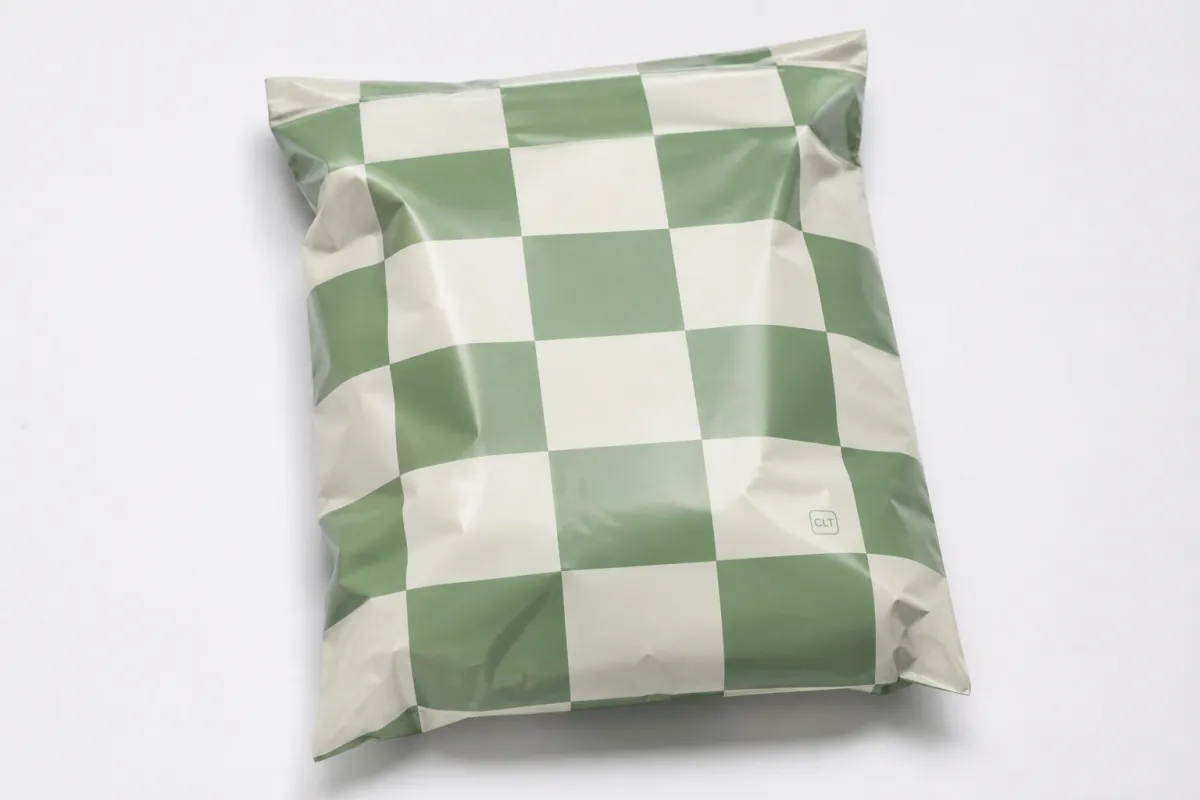
If you want the blunt version of this review of patterned poly mailers, here it is: the prettiest bag is useless if the seal fails or the print rubs off before it reaches the buyer. That sounds obvious, yet plenty of suppliers still sell bags that look great in a digital render and feel flimsy in hand. I would rather see a plain, well-made mailer than a patterned one that folds like cheap wrapping paper.
In practice, these mailers work Best for Brands that want light branding, lower packaging weight, and a cleaner presentation than a plain shipping sack. Apparel, accessories, subscription items, and giftable products all benefit from a mailer that becomes part of the brand experience instead of just a shipping shell. I've had samples on my desk that looked ordinary at first glance, then felt surprisingly solid once I pulled the seal tabs, packed them, and ran them through a few abuse tests. That's the kind of detail that usually separates a good purchase from a regret.
The tradeoff is easy to spot. Patterns can hide scuffs, wrinkles, and minor dirt very well, especially busier repeats and darker colorways. That helps. Bad print quality also stands out faster on a patterned surface than on a plain one. If the artwork is soft, the ink sits unevenly, or the repeat is off, the whole bag looks cheap. There is nowhere for those flaws to disappear.
Here is the review checklist I would use before ordering any patterned poly mailers:
- Durability: Film thickness, seam strength, and puncture resistance.
- Opacity: Whether the bag actually protects privacy and product visibility.
- Adhesive strength: How the seal behaves after packing and handling.
- Print clarity: Sharpness, color consistency, and repeat accuracy.
- Value: Whether the branding lift is worth the price jump.
“If the adhesive fails, nobody cares how pretty the daisies were.”
For a buyer, that is the whole point. The best review of patterned poly mailers is not about liking a design. It is about whether the design survives contact with reality. If you are building a shipping system, compare them with the options in our Custom Poly Mailers category and, if you need broader packaging support, browse the rest of our Custom Packaging Products.
Top Patterned Poly Mailers Compared
This part of the review of patterned poly mailers is where most people overthink the wrong thing. They get caught up in the print style and ignore the bag construction. Start with the use case first, then pick the pattern. A floral repeat on a 2.5 mil bag can be a smart retail-style shipper. The same floral repeat on a thin, weak mailer is just decorative disappointment.
From a packaging buyer's point of view, the main pattern styles break down like this: florals, bold graphics, subtle repeats, seasonal prints, and custom brand motifs. Each one has a different feel, and each one hides or highlights shipping wear in a different way. I do not think every brand needs a loud print. A quiet repeat often does more work because it feels more premium and less mass-market. Sometimes the cleaner option is the one that ends up looking more expensive, kinda the opposite of what people expect when they start comparing samples.
Use the table below as a practical shortcut in this review of patterned poly mailers. The cost ranges are rough wholesale ranges for common order sizes, not a promise from a supplier with a polished brochure and no stock in the warehouse.
| Pattern Style | Best Fit | Typical Unit Range | Main Strength | Main Weak Spot |
|---|---|---|---|---|
| Florals | Boutique apparel, gifts, lifestyle brands | $0.18-$0.35 | Soft, friendly, retail-like presentation | Can look busy if the repeat is too dense |
| Bold graphics | Streetwear, youth brands, high-contrast identity | $0.20-$0.40 | Strong shelf impact and fast brand recognition | Print flaws show quickly on large blocks of color |
| Subtle repeats | Premium basics, beauty, minimalist brands | $0.19-$0.38 | Feels polished without screaming for attention | Can disappear visually if the artwork is too light |
| Seasonal prints | Promotions, holiday drops, limited releases | $0.20-$0.42 | Good for short-term campaigns and giftable orders | Dead stock risk if the timing misses the season |
| Custom brand motifs | Established e-commerce brands and wholesale accounts | $0.22-$0.55 | Best brand control and cleaner long-term identity | Higher setup cost and usually a bigger MOQ |
Florals tend to work best when the brand wants warmth and charm without looking childish. The stronger the repeat structure, the more polished it feels. If the floral art is oversized and poorly spaced, the bag can drift into bargain-bin territory fast. That is not the mood most brands want.
Bold graphics are the easiest to notice, which is either a gift or a mistake depending on the artwork. They suit brands that already have a loud identity. They also punish bad registration. If a bold shape is shifted a few millimeters, you see it instantly. The same issue is less visible on subtle repeats, which is why those are often my favorite for premium basics.
Seasonal prints are useful if you treat them like inventory with an expiration date. They can make great holiday shipping bags or limited-release drops, especially when the package itself is part of the promotion. I would not overbuy them unless you have a clear sell-through plan. Nothing says bad margin like a warehouse full of last season's snowflakes.
Custom brand motifs usually deliver the best long-term value because they make the bag feel ownable instead of generic. That is the real advantage in this review of patterned poly mailers. A repeat made from your logo marks, signature shapes, or brand icons can create recognition at a low per-unit cost once the order size is high enough. If you are sending a high volume of parcels, that brand memory can matter more than one fancy insert card.
My buyer takeaway is simple. For boutique apparel and giftable products, florals and subtle repeats usually deliver the best balance. For energetic youth brands, bold graphics can work if the print is clean. For volume shipping, custom motifs usually beat stock novelty prints because they look less random and create a more stable brand system.
Detailed Reviews: What Holds Up in Real Shipping
This is the part of the review of patterned poly mailers where the marketing fog clears. A good bag should survive packing, taping, sorting, and the occasional rough toss without splitting open or looking miserable by the time it lands. I look at seam strength first because a pretty mailer with a weak seam is a waste of money. Then I check puncture resistance, moisture resistance, opacity, and how the finish looks once the bag gets folded and rubbed during handling.
For soft goods like T-shirts, scarves, and lightweight activewear, a 2.5 mil to 3 mil mailer usually performs well. It flexes enough to pack easily, and it holds its shape without feeling flimsy. If the film is thinner than that, you can still use it, but the bag becomes more sensitive to corner abrasion and rough conveyor handling. That matters more than people think, especially with printed surfaces that show scuffing faster than plain bags.
For boxed items, the review of patterned poly mailers changes a bit. A carton inside a mailer puts more pressure on the seams and corners, which means a weak adhesive strip or low-grade film will show its limits fast. I would not use a decorative mailer for a sharp-edged box unless the supplier can show decent testing, preferably tied to transit methods like ISTA transit testing standards. If a supplier cannot explain how the bag was tested, I assume they skipped the hard part.
For slightly sharp corners, the print finish matters more than many buyers expect. Glossy films can show scratches more easily, while matte films can hide some scuffing but may show dirt or hand marks in a different way. Soft-touch finishes look premium, but they are not magic. If the print layer is poor, the finish just makes the flaw feel more expensive. I've seen this with sample bags that looked gorgeous under office lighting and a little tired after ten minutes in a shipping bin.
Here is the honest performance breakdown I would give in a review of patterned poly mailers:
- Seam strength: Good on quality bags, bad on bargain bags that rely on a weak adhesive line.
- Puncture resistance: Fine for apparel, mixed for boxed or sharp products unless film thickness is solid.
- Moisture resistance: Strong enough for normal parcel handling, but not a substitute for product protection.
- Print clarity: Excellent on clean runs, disappointing when the repeat is misaligned or the ink is dull.
- Opacity: Often decent, but do not assume all patterned poly mailers are fully private.
Opacity deserves its own warning. Patterned bags are not always as concealing as they look in a photo. Lighter colors, oversized repeats, and thin film can still reveal the silhouette of the contents. If privacy matters, order samples and check them against a bright light. A pattern that looks busy on screen may not cover much once stretched around a product.
Print quality is where this review of patterned poly mailers becomes unforgiving. I look for banding, muddy edges, off-register repeats, and any spot where the artwork gets distorted near the fold or seal. Those flaws are not minor. They are the difference between a branded shipper and a cheap novelty bag. Customers may not describe the flaw in production terms, but they absolutely notice that something feels off.
There is also a practical difference between stock and custom construction. Stock patterned poly mailers can be fast and convenient, but you are stuck with the factory's design, thickness, and adhesive formula. Custom runs give you control over the repeat, the film weight, and the finish, but that control only helps if the supplier can actually hit the specs. If they cannot keep color consistent across the run, the whole custom angle falls apart pretty quickly.
For transit and material quality, I also like to see suppliers reference standards, not just adjectives. If the product data mentions film performance testing, seal checks, or material specs tied to industry methods, that is a sign they know what they are doing. For general packaging guidance and sustainability context, the resources at the packaging industry association site are a decent place to start. It is not glamorous, but then neither is a shipping claim that gets ignored by the carrier.
Bottom line: the best patterned poly mailers are the ones that still look intentional after packing and transit. The worst ones look like the brand spent money on decoration and forgot to buy a real shipping bag. I have seen that mistake too many times.
Cost and Pricing: What Patterned Poly Mailers Really Cost
Pricing is where this review of patterned poly mailers gets practical fast. The unit price is only part of the bill. You need to think about thickness, print coverage, order volume, setup charges, freight, and whether the bag replaces other packaging layers. A slightly higher unit cost can still be the smarter buy if it saves you from adding tissue, a box, or an outer poly bag later.
In rough wholesale terms, stock patterned poly mailers often land around $0.15-$0.28 per unit at moderate quantities. Semi-custom versions can move into the $0.20-$0.40 range, depending on how much of the surface is printed and whether the repeat needs special setup. Fully custom patterned poly mailers can land anywhere from about $0.22 to $0.55 per unit at common order sizes, with low-volume runs sitting higher because setup costs get spread over fewer bags.
There are hidden costs buyers miss all the time. Sample fees can be modest or annoying, depending on the supplier. Plate or setup charges may show up on custom print runs. Freight can swing the total landed cost more than the unit price if you are shipping a bulky carton count. Rush fees exist too, because somehow every order becomes urgent when someone forgets the launch date.
The savings side is real, though. Patterned poly mailers can reduce void fill, lower packaging weight, and cut down on secondary layers. That can shave enough from the packout to offset a better-looking bag. For apparel and similar light goods, you may also reduce carton use by switching to a well-sized mailer instead of a box. That is the kind of savings that does not sound exciting until you see the shipping invoice.
Here is a simple pricing framework for a review of patterned poly mailers:
- Budget buy: Stock pattern, standard film, low print complexity, smallest premium over plain bags.
- Mid-range buy: Semi-custom repeat, better ink coverage, stronger seal, cleaner presentation.
- Premium buy: Full custom artwork, thicker film, better finish, tighter brand control.
For smaller brands, the cheapest route is not always the smartest. If you are ordering 500 to 1,000 units, stock patterned poly mailers can be the least risky move because you avoid setup pain and get something usable quickly. Once you move into 5,000-unit territory, custom often becomes easier to justify because the per-unit cost drops enough to make the branding value more visible.
For volume buyers, it helps to request quotes at 500, 1,000, and 5,000 units so you can see the break point. That is where the honest math shows up. If the custom run only saves a few cents but adds three weeks of lead time, the decision is not automatically better. If the custom run creates a stronger brand presentation and lowers your need for extra packaging, then the higher sticker price may still be the better commercial choice.
One more thing: do not confuse a low quote with a good landed cost. Ask for the full picture, including freight, proof charges, and any repeat order conditions. This review of patterned poly mailers would be incomplete without that warning. A low number on a spreadsheet can turn into a frustrating invoice the moment the shipment leaves the factory.
Process and Timeline: From Artwork to Delivery
The production process matters because delays usually come from the parts people ignore. In a good review of patterned poly mailers, timeline is not a side note. It is part of the product. A supplier that can print a beautiful bag and miss the launch date is not helping you. A bag that arrives on time and is ready to pack is the real goal.
For stock patterned poly mailers, the process is simple. You pick the style, confirm quantity, and wait for warehouse shipment. That can be as fast as 2-5 business days if the stock is available. For custom patterned poly mailers, the process usually includes artwork handoff, proof review, color correction, print setup, production, curing or drying where relevant, packing, and freight. The more color coverage and finish complexity you add, the more room there is for schedule creep.
A normal custom timeline often lands around 12-15 business days from proof approval for straightforward runs, though larger or more complex orders can stretch to 18-25 business days. Add freight and you may be looking at 3-10 more days depending on route and carrier choice. Peak-season freight has a talent for turning simple plans into waiting games, and nobody is smiling when pallets sit in limbo.
Where do timelines slip? Usually in the same places every time:
- Late artwork: Files arrive incomplete, wrong size, or not print-ready.
- Color corrections: The first proof looks fine on a screen but not on film.
- Sampling revisions: The buyer wants changes after seeing a physical sample.
- Carrier delays: Freight gets pushed by weather, congestion, or peak demand.
- Peak season: Everyone suddenly wants packaging at the same time.
What should you ask for up front? Ask for a real lead time, not just a production estimate. Ask whether the timeline starts at proof approval, payment confirmation, or artwork submission. Ask what happens if the proof needs a second round. Ask whether stock is already in country or still on the water. Those details sound small until someone explains why “two weeks” somehow became six.
For buyers who are considering a broader packaging refresh, custom branded programs can be easier to manage when the supplier knows the whole stack, not just one bag. That is where a resource like our Custom Packaging Products catalog can help you compare options without making ten separate sourcing calls. The point is to keep the packaging system consistent, not to collect random parts from ten different vendors and hope they behave like a plan.
A practical order timeline might look like this:
- Small stock order: 2-5 business days to ship, plus transit.
- Small custom run: 12-18 business days after proof approval, plus transit.
- Larger wholesale run: 18-30 business days depending on print complexity and freight mode.
That is why I always tell buyers to work backward from the launch date, not forward from the quote. In the review of patterned poly mailers, timing is part of quality. A beautiful bag that misses the shipment window is just expensive inventory.
How to Choose Patterned Poly Mailers for Your Brand
If you are sorting through patterned poly mailers and feeling buried by choices, start with the product you actually ship. Apparel, beauty items, accessories, and lightweight hard goods do not all need the same thickness or seal behavior. A T-shirt can ride comfortably in a lighter mailer. A boxed serum or a product with corners needs more caution. The pattern is the last decision, not the first.
The next question is the job you want the bag to do. Loud patterns can grab attention, which helps if your brand identity leans playful, youthful, or streetwear-heavy. Subtle repeats feel more premium and are often better for beauty, boutique basics, and upscale gift packaging. Repeat print can also make the bag feel cleaner because it looks designed rather than decorated. That is a subtle difference, but it matters.
Here is the part of the review of patterned Poly Mailers That buyers often miss: the functional features matter more than the print itself. Adhesive quality, opacity, and tear resistance are the real drivers of whether the bag performs. A gorgeous pattern on a weak film is still a weak film. I would rather choose a slightly less exciting design on a bag that seals properly and resists puncture than gamble on aesthetics alone.
Then decide whether stock inventory or a custom run makes more sense. Stock patterned poly mailers are better if you need lower minimums, fast turnaround, and less decision friction. Custom runs make sense when your brand has enough volume to justify the setup and you want the design to be unmistakably yours. If you are shipping enough units for the packaging to become part of your identity, custom is usually worth a serious look.
A simple decision framework helps:
- Choose stock if you need speed, flexibility, and lower inventory risk.
- Choose semi-custom if you want some brand presence without a full print program.
- Choose full custom if the bag is part of the brand experience and volume supports it.
Think about customer expectations too. A handmade candle brand and a high-volume athletic apparel brand do not need the same visual tone. The first may benefit from softer colors and a gentler pattern. The second might need bolder graphics and a more energetic repeat. There is no universal winner, which is why any honest review of patterned poly mailers has to stay practical instead of acting like one print style fits every shop in the country.
Some buyers also forget how the mailer interacts with the rest of the packout. If the mailer is bright and patterned, you may not need a branded insert card as urgently. If the mailer is subtle, you might want more brand presence inside the package. That is a better use of budget than buying every packaging element at once because it sounds premium.
For sustainability-minded brands, you can also ask whether the film contains recycled content, whether the supplier offers a lighter gauge that still performs, and whether any paper components are FSC-certified. The answer is not always yes, and I would not pretend otherwise. But asking the question is part of a professional buying process, especially if the brand is already talking about waste reduction and material choice in its marketing.
My honest view? The best review of patterned poly mailers is the one that ends with a bag you do not need to apologize for. If the product is light, the volume is stable, and the branding matters, these mailers can be a smart, efficient upgrade. If the shipper is rough, the product is fragile, or the artwork is being used to cover a weak spec, skip the decoration and spend the money on the right construction first.
Our Recommendation and Next Steps
Here is the recommendation, plain and simple. For budget-focused brands, stock patterned poly mailers are usually the best starting point because they give you a branded look without a heavy commitment. For premium brands, custom patterned poly mailers are worth the extra effort if the print quality, film thickness, and seal strength are all in the right place. For high-volume shipping, the smartest choice is the one that lowers your total landed cost while protecting the package through transit and still making the customer feel like they received something deliberate.
I would not buy based on pictures alone. I would order samples, pack real products, and test them under actual handling conditions. Drop them. Rub them. Leave them in a hot car if that is realistic for your region. See how the print behaves when the film flexes. If the seal opens, if the ink dulls, or if the pattern looks muddy after one round of abuse, that tells you more than any mockup ever could.
Also compare total landed cost, not just the sticker price. That includes freight, sample fees, setup charges, and the cost of any secondary packaging you can remove. A cheaper bag that needs extra protection is not automatically the cheaper solution. Packaging math is plain once you stop pretending the quote is the whole story.
If you need a quick action plan, use this:
- Shortlist two or three patterned styles that fit your brand tone.
- Request samples and check opacity, adhesion, and print quality.
- Ask for quotes at 500, 1,000, and 5,000 units.
- Confirm lead time from proof approval to shipment.
- Choose the bag that works in real shipping conditions, not just on a screen.
My final take from this review of patterned poly mailers is straightforward. Buy them for brand presentation, but only after you confirm the basics: seal, thickness, print clarity, and transit performance. If those are solid, the pattern earns its place. If they are not, the pattern is just decoration pretending to be packaging. And nobody needs that kind of expensive mistake.
Frequently Asked Questions
Are patterned poly mailers worth the extra cost?
Yes, when branding and unboxing matter enough to justify a higher unit price. They can also reduce the need for outer packaging, which softens the cost gap. They are usually not worth it for ultra-low-margin shipments where appearance does not influence conversion. That is the honest answer in any review of patterned poly mailers. If the bag is doing both shipping and brand work, the extra spend can make sense; if it is only doing one of those jobs, the math gets a lot less friendly.
Do patterned poly mailers hide scuffs and dirt better than plain mailers?
Usually yes, especially darker repeats and busier prints. They still show tears, crease damage, and bad print quality very clearly, so do not mistake camouflage for durability. A pattern helps most when the mailers move through a lot of handling before delivery. This is one reason the review of patterned poly mailers tends to favor medium-to-dark repeats for retail shipping. I would still sample them under bright light, because a bag that hides one scuff can still telegraph every seam flaw.
What is the minimum order for patterned poly mailers?
Stock patterned mailers can often be bought in small cartons. Custom patterned poly mailers usually need a higher MOQ because of setup and print runs. Ask for pricing at 500, 1,000, and 5,000 units so you can see where the real break point is. That comparison matters more than the marketing line in any review of patterned poly mailers. Sometimes the first custom tier is the sweet spot; sometimes stock is still the cleaner move.
How long does the pattern printing process usually take?
Stock items can ship quickly if the design is already made. Custom runs take longer because of artwork approval, proofing, and production steps. Freight time can add several days or more, so always ask for a total lead time, not just print time. A supplier who gives only a production window is leaving out half the story in a review of patterned poly mailers. If you're gonna launch with these bags, build in a cushion for proof changes and shipping delays.
Can patterned poly mailers protect products as well as plain ones?
Yes, if the material thickness, seal, and tear resistance are the same. The pattern itself does not add protection; the film quality does. For fragile products, use the mailer as part of a packout plan, not as the only layer of protection. That is the practical takeaway from a real review of patterned poly mailers. The print can help with presentation, but the structure still has to do the heavy lifting.