Buyer Fit Snapshot
| Best fit | Branded Product Packaging Bags for Poly Mailers projects where brand print, material claims, artwork control, MOQ, and repeat-order consistency need to be specified before quoting. |
|---|---|
| Quote inputs | Share finished size, material target, print colors, finish, packing count, annual reorder estimate, ship-to region, and any compliance wording. |
| Proofing check | Approve dieline scale, logo placement, barcode or warning zones, color tolerance, closure strength, and carton packing before bulk production. |
| Main risk | Vague material claims, crowded artwork, missing packing details, or unclear freight terms can make a low unit price expensive after revisions. |
Fast answer: Branded Product Packaging Bags for Poly Mailers: Film, Print, MOQ, and Carton Packing should be specified like a repeatable production item. The safest quote records material, print method, finish, artwork proof, packing count, and reorder notes in one written spec.
Production checks before approval
Compare the actual filled-product size with the drawing, then confirm tolerance on folds, seals, hang holes, label areas, and retail display edges. Reserve space for logos, QR codes, warning copy, and material claims before decorative graphics fill the panel.
Quote comparison points
Review material grade, print process, finish, sampling route, tooling charges, carton quantity, and freight assumptions side by side. A quote is only useful when the supplier can repeat the same color, closure quality, and packing count on the next order.
Branded Product Packaging Bags for Poly Mailers That Sell
Branded product packaging bags can make a modest product feel considered, premium, and ready for sale, or they can make the same item look like it was packed in a hurry and sent out the back door. That difference is bigger than most teams expect. The outer bag is often the first physical touchpoint, so if the branded product packaging bags look flimsy, off-color, or inconsistent, the customer starts forming opinions before the product is even opened.
For apparel labels, beauty lines, supplement brands, accessory sellers, merch drops, and subscription orders, the bag has a job to do long before the item inside is unpacked. It has to protect the contents, carry the brand clearly, and keep packing moving at a sane pace without turning every shipment into a little art project. I have seen teams spend weeks debating artwork while barely checking film thickness or seal behavior, and that usually ends the same way: nice mockups, disappointing real-world performance.
The good news is that this format is practical. Branded product packaging bags can be light, quick to pack, and surprisingly effective as a brand signal if the spec is right. They are not magic, and they are not the answer for every product, but for a lot of ecommerce and retail shipments they are a smart middle ground between plain shipping mailers and heavier box programs.
What Are Branded Product Packaging Bags?
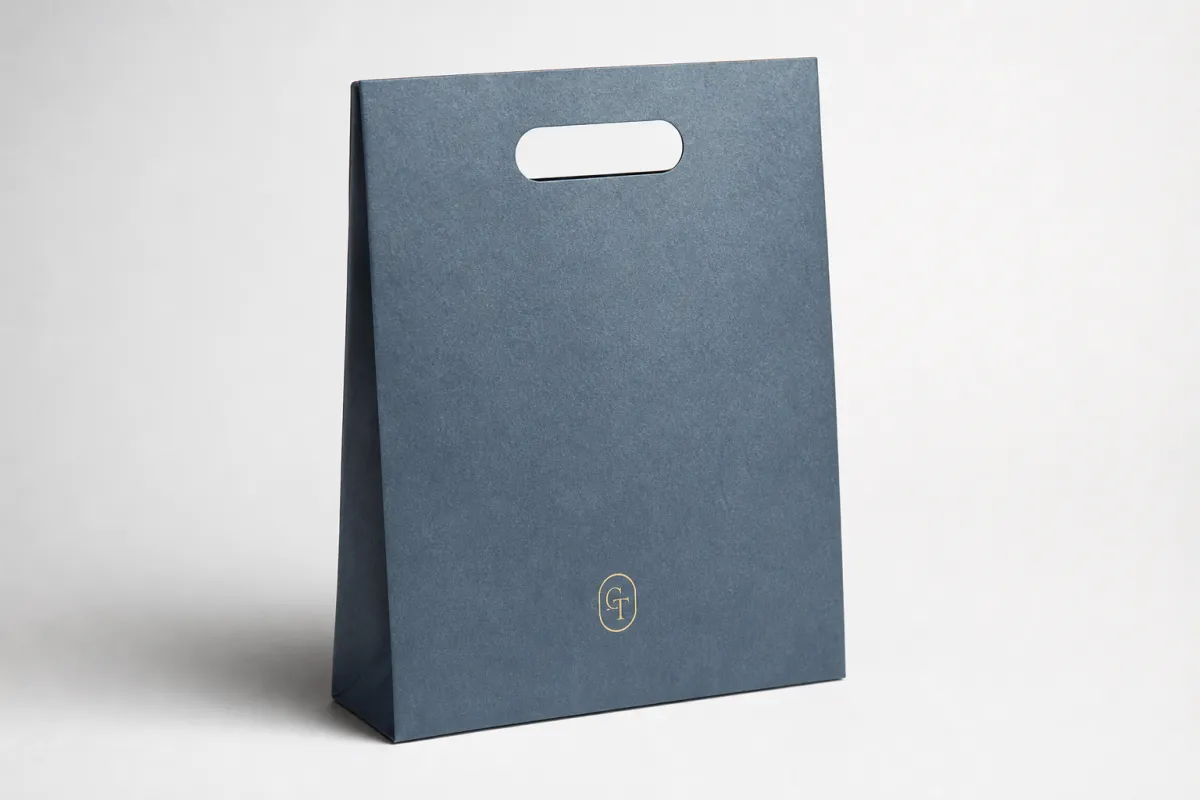
Branded product packaging bags are poly mailers or flexible packaging bags printed with a logo, pattern, message, or color system that makes the shipment recognizable right away. The structure stays simple: a flexible film bag holds the product, closes securely, and carries the Brand Identity on the outside. Think of it as a shipping container that also has to sell a bit of the experience.
These bags show up anywhere a brand wants to improve product packaging without moving into a full carton system. Apparel brands use them because they are light, easy to pack, and efficient at volume. Beauty companies use them for secondary orders, sample sets, and promotional kits. Merch sellers rely on them for drops that need strong package branding without adding unnecessary weight. Subscription businesses use them because the first impression starts at the doorstep, not after the tape is cut.
The value is not only visual. Branded product packaging bags can help reduce confusion in the warehouse, and that matters more than many marketing teams expect. A clear color system or a well-placed logo can help pickers separate SKUs, reduce packing mistakes, and make returns easier to trace. In a busy operation, small efficiencies like that save real time, even if nobody puts them on a mood board.
There is a memory effect too. People remember a shipment that feels consistent. They remember a bag that matched the website, lined up with the inserts, and arrived in good shape. That is the difference between generic retail packaging and packaging that actually supports the brand story. If the outer layer looks like a last-minute fix, the product becomes harder to position at a premium price.
From a packaging buyer's point of view, the real question is not whether branded product packaging bags look better. They do. The real question is how to balance presentation, protection, cost, and lead time without making the launch drag. That is where the tradeoffs show up, and where good packaging design earns its place.
How Branded Product Packaging Bags Work in Poly Mailers
At a basic level, branded product packaging bags are built from a film layer, a seal structure, a closure method, and a printed surface. Those four pieces decide whether the bag ships cleanly or turns into a wrinkled problem. The film carries the load. The seal keeps the contents in place. The closure keeps the bag shut. The print turns plain shipping plastic into branded packaging.
The difference between stock mailers with labels and fully printed custom bags is bigger than many first-time buyers expect. A stock mailer with a logo label is faster to source and easier to change if artwork shifts. It works well for small runs, testing, and brands that update graphics often. Fully printed branded product packaging bags cost more upfront, but they usually deliver better consistency, fewer label issues, and a cleaner presentation. For brands that depend on visual polish, labels can start to feel like a compromise pretty quickly.
Print method matters too. Flexographic printing is common for higher-volume orders and artwork that uses a few solid colors. Gravure can handle dense coverage and more consistent detail across large runs, though setup costs are usually higher. Digital printing makes sense for shorter runs, variable graphics, or faster artwork changes, even if the per-unit cost climbs. Label-based branding stays the most flexible, but it rarely looks as integrated as direct print on the bag itself.
Design affects performance as much as appearance. A bold logo means very little if the bag tears at the seam, scuffs in transit, or opens because the adhesive was weak. Good branded product packaging bags have to survive handling, stack cleanly, and keep the closure dependable through temperature swings and rough transport. That part is not glamorous. It is simply what the packaging has to do if it is going to earn its keep.
A strong mailer can also create instant recognition. When the same color block, logo placement, and type treatment show up month after month, the bag becomes part of the brand memory. That is why some companies pair branded product packaging bags with Custom Packaging Products such as inserts, tissue, or custom printed boxes for higher-tier orders. The goal is a consistent system, not a pile of packaging that fights with itself.
If the outer bag looks careless, the customer assumes the rest of the operation is careless too. Packaging gets judged in seconds. Fair? Not really. Real? Absolutely.
The unboxing effect is not magic. It comes from repetition, clear branding, and a bag that fits the product without fighting it. The bag should feel like it belongs with the item, not like it was borrowed from a random shelf in a warehouse. That is what separates plain shipping film from branded product packaging bags that actually help sales.
Key Factors That Affect Quality and Performance
Material thickness is usually the first spec worth checking. Thin film saves money, but it can crease badly, split under pressure, or telegraph a cheap feel the moment it enters a rough shipping lane. For many everyday orders, the useful range sits around 1.5 to 3 mil for lighter goods, with thicker builds used for heavier or sharper items. The right choice depends on what goes inside the bag, not what looks nice on a quote sheet.
Bag size matters just as much as the print. Oversized branded product packaging bags waste film, leave too much air inside, and can make the shipment look sloppy. Too tight, and the seams get stressed. That is how split corners happen, or how a bag refuses to lie flat on the packing table. A proper fit also keeps the branded surface where it should be, which sounds minor until a logo falls into a fold and disappears from view.
Print coverage and color count can shift both appearance and durability. A simple one- or two-color design is easier to control and usually less expensive to print. Full-coverage artwork, gradients, metallic effects, and tiny type can look sharp on screen and messy in production. That risk grows when the material has some stretch or the artwork crosses a seam. Clean branded product packaging bags usually keep the design bold enough to survive the real world.
Seal strength is not optional. In fulfillment centers, bags get grabbed, stacked, dropped, and sometimes crushed under heavier parcels. A weak seal turns into a customer complaint very quickly. Tamper resistance matters too, especially for beauty, supplements, and any product where contamination or product loss is a concern. If the adhesive is weak or the closure is inconsistent, the bag stops being packaging and starts becoming a liability.
Finish and surface texture affect how the bag ages. Gloss can be eye-catching, but it can show scuffs more easily. Matte can feel more premium and hide handling marks better, though some inks look flatter on it. Soft-touch finishes can fit luxury positioning, yet they add cost and may not make sense for a volume-driven program. The best branded product packaging bags match the finish to the brand tier instead of trying to imitate a luxury label on a thin margin.
Sustainability claims deserve careful reading. Recycled content, recyclability, and compostability are not the same thing, and they should not be treated as interchangeable. If a supplier says the bag is recycled, ask for the percentage and the resin type. If they say recyclable, ask where and under what local conditions. If the bag needs to align with formal sourcing goals, look for certifications such as FSC for paper components or documented supply chain claims from a credible source. For transit testing, ISTA testing standards are worth understanding because packages that fail in transit cost more than they save on paper.
A lot of packaging trouble comes from trying to make one bag do every job. The smarter move is to match the material and finish to the product, the shipping route, and the customer expectation. That is how branded product packaging bags stay useful instead of becoming expensive decoration.
Cost, Pricing, MOQ, and Quote Basics
Price is usually driven by five levers: size, thickness, print complexity, material type, and volume. Change any one of them and the quote moves. Change three and the revision cycle starts to spin. A fair vendor comparison depends on the same dimensions, the same film thickness, the same closure style, the same print colors, and the same shipping terms.
MOQ, or minimum order quantity, matters because setup costs do not disappear just because the buyer wants a small test run. Branded product packaging bags often get much cheaper per unit as volume rises, but the first hundred or first thousand pieces can look expensive because tooling, plates, and production setup get spread across fewer bags. That is normal. It is not a scam. It is math doing what math does.
For a practical buying range, a simple branded mailer at volume can land well below a multi-color, specialty-finish bag ordered in a small batch. As a rough guide, stock mailers with a branded label may sit in the lower-cost band, while directly printed custom bags usually cost more, especially below 5,000 units. At larger quantities, the gap shrinks. Freight can swing the landed cost by more than the printed unit price, so asking only for ex-factory pricing is one of the easiest ways to fool yourself.
Below is a useful comparison for buyers trying to decide whether to keep things simple or move into fully printed branded product packaging bags.
| Option | Best For | Typical MOQ | Typical Unit Cost | Tradeoffs |
|---|---|---|---|---|
| Stock mailer + branded label | Testing, small launches, fast changes | Low | $0.10-$0.30 | Fast and flexible, but less integrated and more manual at packing |
| One-color custom print | Core ecommerce orders, cleaner brand look | Moderate | $0.15-$0.40 | Better presentation, limited artwork complexity |
| Full-color custom print | Retail packaging, subscription brands, strong package branding | Moderate to high | $0.25-$0.65 | Higher setup and longer lead time, but stronger visual impact |
| Premium finish mailer | Luxury positioning, premium retail packaging | Higher | $0.40-$0.90+ | Best feel and appearance, but easy to overspend if the product margin is thin |
What belongs on every quote? Unit cost, setup or plate fees, sample cost, lead time, shipping terms, and the exact material spec. If the supplier cannot tell you the film thickness, print method, and closure type, you are not comparing quotes. You are collecting guesses. And guesses are how branded product packaging bags turn into a budget surprise.
The lowest quote is not a bargain if it brings weak print, poor color matching, or a schedule that misses launch. A bag that arrives late costs more than a bag that costs a few cents extra. That is especially true for seasonal drops, subscription starts, or any campaign built around a fixed ship date.
For buyers who want a broader view of packaging formats, Case Studies are useful because they show how brands balance cost, unboxing, and fulfillment speed in the real world, not just in a quote form.
Process, Timeline, and Lead Time for Production
The production process for branded product packaging bags usually follows a familiar path: brief, dimensions, artwork, proofing, sampling, approval, production, quality check, and shipment. The order only moves as fast as the slowest approval. That sounds obvious, but it is the part people ignore while asking for rush production on artwork that is still changing.
Time gets lost in revisions, not machines. A bag may be ready to run, but if the logo keeps moving, the color is not locked, or the buyer wants to see one more version, the schedule stretches. Color matching also takes time, especially if the brand has a particular blue, a soft black, or a background color that has to match website assets. On paper that sounds minor. In production, it often becomes the place where back-and-forth piles up.
For a usable expectation, stock-based branding usually moves faster than fully custom manufacturing. A label-based approach can often be turned around in a shorter window, while fully custom branded product packaging bags usually need more runway for proofing and setup. A realistic planning window is best measured in business days, not calendar optimism. If the launch date is fixed, work backward from that date and add time for sampling and freight. Hope is not a logistics plan.
Production time and transit time are different problems. A factory can finish on schedule and still deliver late if the freight leg is slow. Air freight can shorten the wait, but it raises cost fast. Ocean freight is cheaper at scale, but it needs more planning. Ground shipping can work for domestic orders, unless the warehouse sits on the wrong side of a holiday congestion pileup. None of that is glamorous, but all of it affects whether your branded product packaging bags arrive when they should.
Rush orders are often possible, but they narrow the menu. You may lose some finish options, need to accept stock material instead of a custom resin, or pay more for expedited production. That is not a reason to avoid rush orders. It is a reason to use them sparingly and only with clear tradeoffs. For brands that run calendar-driven campaigns, the smarter move is to schedule the packaging first and the hype second.
Step-by-Step Guide to Ordering the Right Bags
Start with the product, not the packaging. Measure the item as it will actually ship, including fold lines, inserts, protective tissue, or any sleeve that goes inside the bag. A hoodie is not the same as a flat tee. A serum bottle is not the same as a sachet. The more honest the product spec, the better the branded product packaging bags fit on the first try.
Next, choose the construction based on use case. Lightweight apparel can work well in a simpler mailer. Sharper products, heavier kits, or items with rigid corners need stronger film and better seal strength. If the order moves through a warehouse with rough handling, do not spec a thin bag and then act surprised when it fails. Packaging is not a magic trick, and the carton or mailer will tell on you pretty fast.
Artwork should be built for print reality. Tiny text, low-contrast color combinations, and cluttered layouts are all risky on flexible film. Strong logos, clear type, and a few well-placed brand cues usually perform better than an overdesigned mess. For branded product packaging bags, less can genuinely feel more premium because the surface area is limited. The goal is not to squeeze every line of marketing copy onto the bag.
Request quotes from multiple suppliers using the same spec. Same size. Same film thickness. Same print count. Same closure. Same destination. Otherwise the quote comparison falls apart, and one supplier will look cheaper only because they assumed a thinner material or a smaller run. That is how buyer teams end up explaining savings that disappear during production.
Always approve a sample or proof before full production. A digital proof can catch layout issues, spelling mistakes, and logo placement problems. A physical sample can catch the uglier issues: feel, opacity, stretch, seal behavior, and how the bag handles with a real product inside. If you are spending real money on branded product packaging bags, spend a little on proofing. It is much cheaper than reprinting a mistake.
Build a receiving checklist for the first shipment. Check dimensions, seal quality, count, color consistency, and print registration. If the bags arrive in cartons, confirm carton count and inspect random units from multiple boxes. The first batch sets the baseline for everything else, and catching a problem early means you can fix the source before the next order. That is basic operations discipline, not perfectionism.
For brands that also use custom printed boxes, align the visual system across formats. The bag should not look like it belongs to a different company than the box. That includes typography, color palette, and logo placement. Good package branding works because the customer sees one brand, not a collection of disconnected packaging decisions.
Common Mistakes, Expert Tips, and Next Steps
The first common mistake is buying a bag that looks great on screen but falls apart when packed, stacked, or tossed around in transit. Screen mockups leave out the awkward parts. They do not show scuffing, folding stress, or how a seal behaves after the bag is filled. A nice-looking mockup is not the same thing as durable branded product packaging bags.
The second mistake is ignoring total cost of ownership. A low unit price is not useful if the bag creates rework at packing, damage in transit, or customer complaints about presentation. Paying a little more per unit can save labor and cut returns. That is the part of packaging many finance teams only notice after the damage is already done.
The third mistake is treating the design as if the bag were a poster. It is not. It bends, folds, rubs, and gets squeezed. Large solid ink areas can scuff. Fine lines can disappear. Overcrowded artwork can look worse after shipping than a simpler graphic system. The best branded product packaging bags are readable, sturdy, and easy to pack. Fancy is fine. Fragile is expensive.
Here is a test worth using: order samples, pack real products inside, and handle them roughly. Drop them a few times. Stack them. Twist the corners. Close and reopen them if the closure allows it. If the bags survive some abuse in your own office, they are more likely to survive in the warehouse. For transit-sensitive programs, standards such as ISTA matter because shipping failures are never just packaging failures.
Another smart move is to lock color standards and dimensions early. Constant changes burn time, increase the chance of mistakes, and make everyone grumpy for no useful reason. If the brand will run the same SKU for months, treat the packaging spec as a production asset, not a creative draft. That is how branded product packaging bags stay consistent and how operations avoid pointless churn.
If sustainability is part of the brief, verify the claim before printing it on the bag. If the material is supposed to align with responsible sourcing, ask for documentation. If the outer structure includes paper components, FSC-certified fiber may matter. If you are making recyclability claims, make sure they match the actual local recovery stream. Packaging marketing is easy. Packaging proof is harder. That is why serious buyers check sources, including places like FSC and the EPA recycling guidance, before making claims they have to stand behind.
For a clean next move, use a short checklist: product dimensions, desired print style, target quantity, budget per unit, launch date, and whether the same design needs to work across bags, boxes, or inserts. That list will tell you whether to stay with simple branded packaging, move into fully printed mailers, or pair the program with a broader retail packaging system. It will also keep you from paying for features you do not actually need.
Done well, branded product packaging bags are not just a nice extra. They become part of the product experience, part of the operating system, and part of how the brand is remembered. Choose the right material, keep the artwork realistic, and respect the lead time. If you do that, the bag stops being a placeholder and starts doing useful work.
How do branded product packaging bags differ from plain poly mailers?
Branded bags add logo, color, and messaging instead of a plain exterior. They usually improve recognition and perceived value without changing the product itself, which is why so many brands use branded product packaging bags for shipments that need a stronger first impression. They also require more thought around print durability, sizing, and lead time.
What affects the cost of branded product packaging bags the most?
Order volume is the biggest lever because setup costs get spread over more units. Print complexity, bag size, and material thickness also move pricing quickly. Freight and sample costs matter too, so always ask for landed cost rather than only the unit price for branded product packaging bags.
What MOQ should I expect for custom poly mailer bags?
MOQ depends on the supplier and print method, but custom runs usually start where setup becomes economical. Smaller orders are possible, but unit cost is usually noticeably higher. If flexibility matters, ask about stock Mailers with Branded labels or limited-color branded product packaging bags instead of assuming full custom is the only route.
How long does production usually take for branded packaging bags?
Stock-based branding can move faster than fully custom manufacturing. Custom orders usually need time for proofing, sampling, production, and shipping. Build extra time for revisions, busy seasons, and freight delays if you want your branded product packaging bags to arrive before the launch date instead of after it.
What should I check before approving branded product packaging bags?
Check size fit with the actual product packed inside, not only the spec sheet. Confirm print quality, seal strength, and color consistency. Make sure the quote includes setup, samples, and shipping so there are no surprises later with branded product packaging bags.


