Ribbed Winter Beanies Material Guide for Bulk Orders Two ribbed beanies can look nearly identical on a spec sheet and still perform very differently once they are worn, washed, and packed for shipment. That is where buying mistakes usually start. Fiber matters, but rib depth, yarn weight, stitch density, and recovery after stretch matter just as much.
Bulk buyers often find that out after the sample stage. The hat feels soft, the logo prints or stitches cleanly, and the quote comes back in range. Then the production run lands and the cuff loosens, the knit warps around decoration, or the hat stops holding its shape. The color was not the issue. The build was.
This Ribbed Winter Beanies Material guide focuses on the details that affect performance and price in real production: material choice, gauge, recovery, pilling risk, decoration compatibility, and the construction choices that separate a reliable winter staple from a short-lived giveaway.
Ribbed Winter Beanies Material Guide: What Buyers Miss
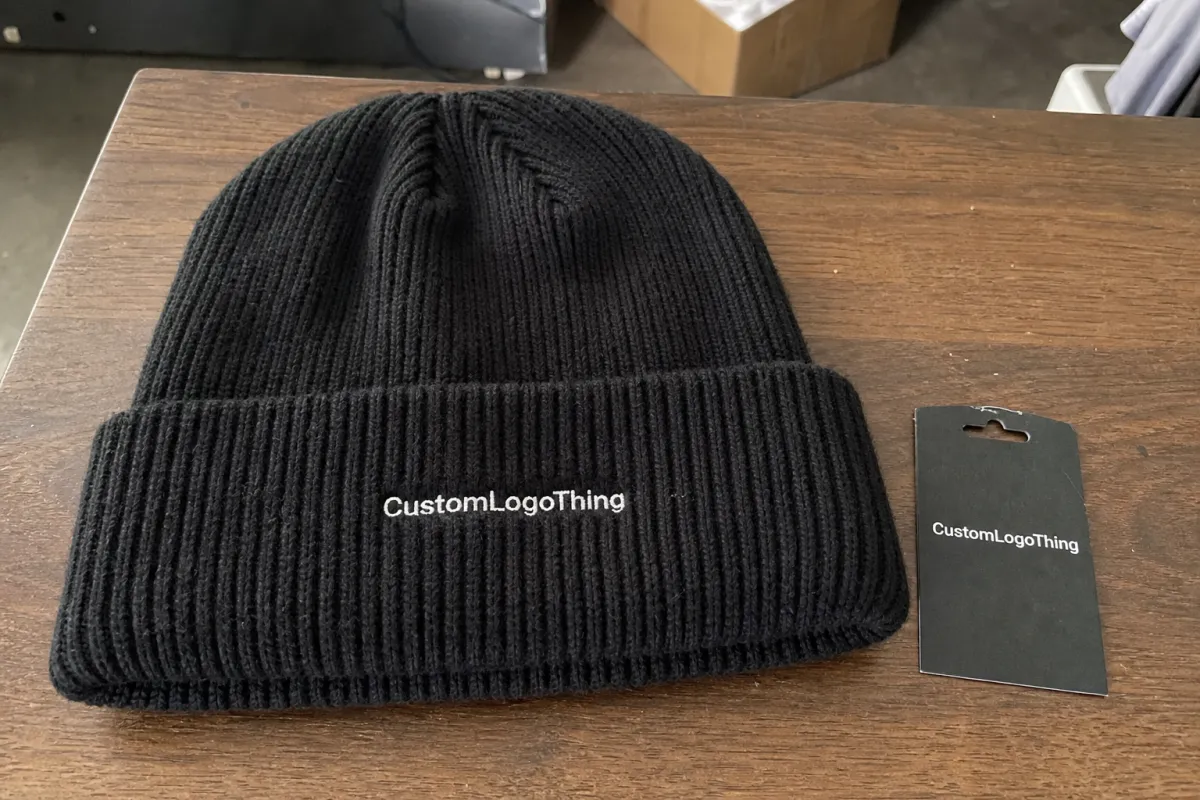
Ribbed construction changes the fabric in a mechanical way. Vertical channels trap air, which improves insulation, while the knit structure adds stretch without much elastane. That is why ribbed beanies fit a wide range of head sizes and usually feel more forgiving than flat-knit caps. The tradeoff is simple: if the yarn is too loose or weak, the knit can relax quickly and start to look tired around the forehead and crown.
Gauge has a bigger impact than many buyers expect. A 7-gauge rib usually feels heavier, softer, and more casual. A 10- or 12-gauge version looks cleaner, sits closer to the head, and often gives embroidery a steadier base. The same fiber can read premium in one gauge and low-end in another.
Fit is not only about circumference. Cuff depth, crown height, and how the knit rebounds after tension all shape the final wear. A wider cuff creates more room for decoration and usually helps the hat stay in place. A shallow cuff can feel lighter, but on a softer knit it may ride up or slump. A product can still look fine on a table and fail in wear.
For bulk buying, a vague label like “soft winter beanie” does not help much. A useful spec needs fiber content, yarn count, gauge, rib structure, target weight, decoration method, and basic performance expectations. Without those details, buyers end up comparing samples that were not built to the same standard.
“The beanie that looks best on a table is not always the one that wears best. Recovery, density, and yarn quality decide whether the hat still looks intentional after a week of use.”
Decoration needs the right base. Dense ribs take embroidery more cleanly than loose ones. On a stretchy crown, large stitched graphics can pull the knit out of shape. Smaller embroidery, a woven label, or a patch usually works better than forcing a heavy design onto an unstable fabric. The knit should support the artwork, not fight it.
How Ribbed Knits Change Warmth, Stretch, and Fit
Warmth in a ribbed beanie comes from trapped air as much as from fiber choice. Rib channels create small pockets that hold heat close to the head, which is why ribbed hats often feel warmer than buyers expect. Even so, density still matters. A loose rib in a thin yarn may feel airy rather than warm.
Recovery is the real test. Some yarns spring back after repeated stretch and keep the cuff crisp. Others relax after a few hours of wear and stay baggy. That shows up most at the forehead, where the hat gets pulled on and off. In practice, wool and wool blends usually recover better than budget acrylics, while cotton tends to be comfortable but less resilient under repeated stretching.
Fit also changes with construction details. A taller crown gives a more classic winter silhouette. A lower crown feels modern and often suits promotional use better. If the beanie is meant for active wear, tighter ribbing and a secure cuff matter more than a fashion-forward slouch. If the product is meant for retail, the silhouette has to look finished even when it is not styled.
- Commuter use: medium weight, low itch, dependable recovery, logo placement that stays flat.
- Outdoor work: warmer build, tighter rib, better abrasion resistance, minimal decoration.
- Retail merchandise: cleaner hand feel, stronger shape retention, controlled pilling, consistent color.
- Event giveaways: cost control first, but not so light that the hat loses shape after a few wears.
Small design choices can help or hurt comfort. A doubled cuff adds warmth and gives branding a stronger canvas. Too much bulk at the fold can make the beanie feel restrictive, especially if the yarn has little give. The most reliable products usually land in the middle: enough density to hold shape, enough flexibility to fit comfortably, and enough structure to survive normal winter wear.
Best Fiber Options: Acrylic, Wool, Cotton, and Blends
There is no single best fiber. The right choice depends on budget, climate, and the level of finish the buyer expects. Acrylic usually wins on cost and color consistency. Wool wins on warmth and perceived value. Cotton is comfortable, but by itself it is a weak winter material unless the use case is mild weather or transitional wear. Blends often end up as the practical middle ground.
| Material | Typical Feel | Warmth | Recovery | Indicative 500-Piece Unit Cost | Best Use |
|---|---|---|---|---|---|
| Acrylic | Soft, color-stable, easy to mass produce | Good | Fair to good, depending on yarn quality | $2.10-$3.40 | Promotions, volume orders, broad color runs |
| Wool | Natural, premium, warmer hand feel | Excellent | Very good | $4.50-$8.50 | Retail, winter merchandise, higher perceived value |
| Cotton | Soft, breathable, less itchy | Low to moderate | Fair | $2.60-$4.50 | Mild weather, fashion pieces, transitional wear |
| Blends | Balanced, adjustable, less extreme in any direction | Good to very good | Good | $3.20-$6.20 | Most bulk orders where value and wear both matter |
Acrylic is the easiest material to produce at scale. It dyes predictably, keeps pricing accessible, and works well for large color ranges. The tradeoff is that low-grade acrylic can pill and flatten faster than buyers expect. If the yarn feels overly slick or overly fluffy in hand, ask for a pilling check rather than assuming the sample will hold up.
Wool is the opposite: more expensive, more temperature-friendly, and usually better at holding shape. It also brings practical issues. Some wool yarns feel itchy to sensitive users. Others shrink if finishing and washing are not controlled carefully. Merino or wool blends can reduce that problem, but they cost more and usually need stricter handling.
Cotton sits in a difficult middle ground. It feels soft and familiar, but pure cotton ribbed beanies can lose structure in cold, wet conditions. That makes them better for fashion-led or transitional pieces than for hard winter use. A cotton blend can improve wearability, but buyers should not expect the same thermal performance as wool or dense acrylic.
Blends often work because they reduce the downside of a single fiber. Acrylic-wool blends can soften itch without giving up warmth. Adding a small share of nylon can improve abrasion resistance and pilling control. A modest amount of elastane can help recovery, although too much stretch content can make the fabric feel synthetic and less natural. The most useful blends are not dramatic; they are balanced.
Ask for the yarn construction and a pilling test result when possible. That is especially useful on lower-cost programs, where the fiber name alone does not tell you much about how the finished beanie will age in use.
Cost, Pricing, and MOQ: What Actually Moves Unit Price
Price in ribbed beanies is driven less by the headline fiber and more by the details around it. Yarn quality, gauge, weight, dyeing method, decoration, packing, and compliance requirements all add cost. Buyers often focus on the fiber line item and miss the real sources of variation.
MOQ matters because setup cost gets spread across the order. Once knitting, labeling, color matching, and finishing are locked in, a small order can look expensive even when the raw material is modest. Larger orders usually get better unit pricing, but only if the spec stays consistent. A quote that seems unusually cheap sometimes assumes looser tolerances, simpler finishing, or less inspection.
Decoration also changes the economics. Embroidery can be affordable on small logos, but once stitch count rises, the cost moves quickly. Woven labels and patches may be easier to control across multiple sizes or colorways. If the beanie needs special packaging, hang tags, or polybags with inserts, those costs should be included early rather than added after the sample stage.
Buyers should also watch for hidden production choices. Pre-washing, anti-pilling treatment, garment dyeing, and hand finishing all improve the final result, but they increase lead time and cost. On a tight budget, the better move is often to simplify the spec rather than trim quality in a few places and hope the product still holds together.
Process and Lead Time: From Yarn Spec to Finished Shipment
Lead time starts with the yarn decision, not with the final packaging step. Once the fiber is confirmed, the factory still has to source yarn, knit or link the body, complete finishing, add decoration, and run quality checks. Color approval can add more time if the program depends on custom shades or pantone matching.
Sampling is where most delays happen. A beanie sample may look close on first pass and still need adjustment in cuff depth, crown height, stitch density, or decoration placement. Buyers who move too quickly from sample approval to production sometimes find that a minor visual issue becomes a recurring production defect.
As a practical rule, simpler specs move faster. Standard acrylic in a familiar gauge will usually be easier to produce than a wool blend with custom trim and multiple decoration steps. That does not mean the simpler version is better. It just means buyers should factor timing into the sourcing decision rather than treating all beanie programs as interchangeable.
Shipping also affects the schedule. Bulk knitwear is sensitive to folding, compression, and moisture if it sits in transit too long. Clean packing matters, but so does carton sizing and the decision to use flat-packed or pre-shaped presentation. Small choices here can protect the product, or create avoidable creasing before it ever reaches the customer.
Common Mistakes That Make Ribbed Beanies Feel Cheap
The fastest way to make a ribbed beanie feel low value is to use a soft yarn without enough structure. A hat can feel pleasant in the hand and still look weak on the head. If the ribs collapse, the cuff rolls, or the crown stretches out unevenly, the product reads as disposable.
Another common issue is overspecifying decoration on an unstable knit. Large embroidery, dense patches, or heavy labels can distort a softer beanie. Buyers sometimes try to solve this by shrinking the artwork after the fact, but the better fix is to choose a decoration method that suits the fabric from the start.
Poor color control is another giveaway. Even when the shade is close, inconsistent dye lots make a program look less considered. That matters on retail orders and employee merch alike. A low-cost beanie can still look polished if the color is even, the ribs are consistent, and the finishing is clean.
Finally, some specs chase softness at the expense of recovery. That is a mistake on winter headwear. If the hat loses its shape after a few wears, the first impression does not last. Buyers usually get more value from a slightly firmer knit that keeps its form than from a very soft one that goes baggy too quickly.
Next Steps: Build a Better Spec Before You Request Quotes
The most useful sourcing work happens before the first quote request. A clear spec gives factories a better target and makes the numbers easier to compare. For ribbed winter beanies, the minimum useful brief should include fiber content, target gauge, approximate weight, cuff depth, crown profile, decoration method, color requirements, and packaging needs.
It also helps to define the priority. A retail program may need shape retention and color consistency first. A promotional run may prioritize cost and quick turnaround. A cold-weather work beanie may need warmth and recovery more than visual detail. Once the priority is clear, it becomes easier to accept the right tradeoff instead of trying to optimize every variable at once.
Buyers should also ask for material and construction samples when the order is large enough to justify it. A swatch or pre-production sample can reveal whether the knit is too loose, too dense, or too prone to distortion under decoration. That check is usually cheaper than discovering the problem after shipment.
In practice, the best ribbed beanies are not the most complicated ones. They are the ones where fiber, gauge, fit, and decoration all work together without fighting the product's use case.
FAQ
What fiber is best for ribbed winter beanies?
There is no single best option. Wool is strongest on warmth and perceived value, acrylic is strongest on price and consistency, cotton is best for mild-weather comfort, and blends often offer the most balanced result for bulk orders.
Why do some ribbed beanies lose shape so fast?
Usually because the yarn is too weak, the gauge is too loose, or the fiber has poor recovery. Softness alone does not guarantee durability.
Can ribbed beanies handle embroidery?
Yes, but the knit needs enough density to support the stitches. Loose or highly stretchy ribs can distort under heavier embroidery, so smaller logos or patches are often safer.
What should buyers ask before requesting quotes?
Fiber content, gauge, target weight, cuff depth, crown style, decoration method, and packaging details. Those basics make quotes comparable and reduce revision cycles.
Are wool blends worth the extra cost?
Often yes, if the order needs better warmth, recovery, and a more premium feel. The tradeoff is cost and, in some cases, stricter finishing requirements.


