Buyer Fit Snapshot
| Best fit | Rigid Box Factory Pricing projects where brand print, material claims, artwork control, MOQ, and repeat-order consistency need to be specified before quoting. |
|---|---|
| Quote inputs | Share finished size, material target, print colors, finish, packing count, annual reorder estimate, ship-to region, and any compliance wording. |
| Proofing check | Approve dieline scale, logo placement, barcode or warning zones, color tolerance, closure strength, and carton packing before bulk production. |
| Main risk | Vague material claims, crowded artwork, missing packing details, or unclear freight terms can make a low unit price expensive after revisions. |
Fast answer: Rigid Box Factory Pricing: What Actually Drives Cost should be specified like a repeatable production item. The safest quote records material, print method, finish, artwork proof, packing count, and reorder notes in one written spec.
Production checks before approval
Compare the actual filled-product size with the drawing, then confirm tolerance on folds, seals, hang holes, label areas, and retail display edges. Reserve space for logos, QR codes, warning copy, and material claims before decorative graphics fill the panel.
Quote comparison points
Review material grade, print process, finish, sampling route, tooling charges, carton quantity, and freight assumptions side by side. A quote is only useful when the supplier can repeat the same color, closure quality, and packing count on the next order.
Rigid box factory pricing looks tidy on paper right up until a factory adds insert labor, a specialty wrap paper, a magnet closure, or a tighter fit tolerance than the buyer expected. The first quote usually behaves more like an opening position than a complete commercial answer. A rigid box is built very differently from a folding carton: thick greyboard, wrap paper, hand assembly, corner turning, pressing, and a heavier quality check burden all sit inside the process. Those structural choices set the cost base before decoration even enters the picture, and that is where a lot of buyers misread the number.
For a packaging buyer, the confusion makes sense. One supplier may include assembly, foam inserts, and final packing, while another quotes only the shell and leaves freight, tooling, and samples outside the line item. The result is apples and oranges, even if both emails use the phrase rigid box factory pricing. A better reading method starts with structure, then decoration, then labor, logistics, and the little items that decide whether the order feels efficient or merely cheap. I have sat through enough RFQs to know that two quotes can look close and still be miles apart once the scope is unpacked.
A practical rule helps here: if a supplier cannot explain the scope in three sentences, the quote deserves a second pass. Rigid box factory pricing should spell out the board used, the wrap stock, whether inserts sit inside the number, and how much of the cost comes from handwork. Anything less is not really pricing; it is a partial estimate with a neat font.
"If the quote does not define the scope, it is not a price. It is a starting point."
Rigid Box Factory Pricing: Why the First Quote Rarely Tells the Story
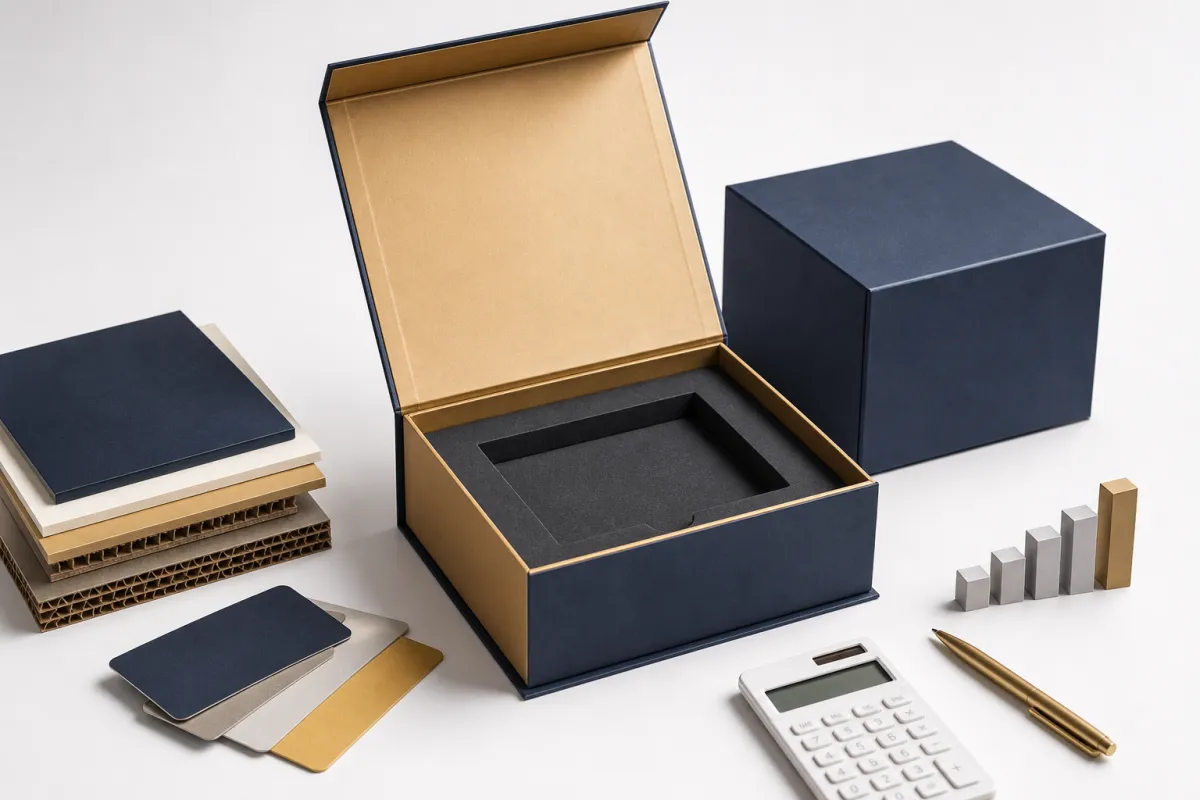
The first thing buyers notice is the spread. One rigid box factory pricing quote may land at $0.92 per unit, another comes back at $1.48, and a third sits somewhere between the two. The instinct is to label one supplier expensive. In practice, the difference usually comes from scope. Was the insert included? Was the wrap paper a standard coated sheet or a textured specialty stock? Did the factory include magnetic closure work, hand gluing, and final carton packing? Those details move the number far more than most people expect.
A rigid box is a semi-manual product, not a simple die-cut shell. The greyboard gets cut, wrapped, folded, pressed, and cleaned up by hand and machine together. The shell uses more material than a folding carton, and the labor burden is heavier because the fit has to stay exact. If a lid sits loose by even a little, the luxury feel slips. If a drawer box sticks, the whole unboxing moment turns plain. Rigid box factory pricing is not just about material cost. It also reflects how much time a factory needs to make each piece behave the same way.
The first quote also misses the story when factories price different stages of the job. Some use ex-works pricing, which stops at the factory gate. Others build in packaging, labeling, and inland delivery. A buyer who compares those numbers without checking the scope can mistake a narrow quote for a bargain. That mistake can get expensive once freight, customs handling, and a second round of samples enter the file.
There is also a psychology trap in the unit price. A box buyer sees one number and wants one answer. Factories do not work that way. They think in materials, setup, tooling, labor, waste, and capacity. The clearest way to read rigid box factory pricing is to ask what moved the number. Once that question is on the table, the quote stops feeling random and starts revealing the factory's actual production model.
How Rigid Box Factory Pricing Is Calculated
Most factories build rigid box factory pricing from the inside out. Greyboard comes first because board thickness sets the structure. Next comes the wrap material, which may be art paper, kraft stock, textured paper, or a coated printed sheet. Then the factory adds inserts, foam or paperboard compartments, ribbons, magnets, and finishing. Labor sits on top of all that: cutting, wrapping, pressing, inspection, and packing. Every step changes waste and time, so a small spec change can move the price faster than a buyer expects.
In a simple lift-off lid box, the structure may stay fairly direct. A greyboard shell around 1.5 mm to 2.0 mm thick wrapped in 157 gsm art paper is common for mid-range work, while premium builds may use thicker board and more elaborate wraps. The cost logic changes the moment a shoulder box, a book-style magnetic closure, or a drawer box with a ribbon pull enters the brief. Each style still counts as rigid packaging, yet each one adds handling touches that raise the factory's time on the line. That is why rigid box factory pricing often climbs faster than expected once the design gets more complex.
Factories also price according to how they prefer to manage production. Some quote by unit and then adjust through volume tiers. Some quote by sheet usage, which makes sense when print coverage and paper yield matter. Others combine material cost and labor cost into one formula tied to minimum order quantity. Two factories can look at the same drawing and still produce very different numbers because their internal assumptions are different. One may be tuned for speed, another for precision, and the shop floor changes the math.
Minimum order quantity matters because setup work lands early. A small run still needs die or plate preparation, proofing, machine calibration, and operator time. If the order is only 500 units, that setup cost lands on fewer boxes. If the order is 5,000 units, the same setup spreads much farther. That is why rigid box factory pricing can feel stubborn on low-volume orders and then soften sharply at higher quantities. A buyer who understands that curve can negotiate better and choose a run size that matches inventory, cash flow, and launch timing.
For buyers who like sourcing references, trade groups such as packaging.org and transit-testing bodies like ista.org are useful for checking the broader standards landscape. They will not price a box for you, but they help frame what a supplier should consider when the product must survive shipping, retail handling, or e-commerce distribution.
The Key Factors Behind Rigid Box Factory Pricing
The clearest driver in rigid box factory pricing is material choice. Greyboard thickness affects stiffness, shipping weight, and how the box feels in hand. Wrap paper matters just as much: a plain coated sheet usually costs less than linen-texture stock, soft-touch laminated paper, or a specialty metallic wrap. Magnetic closures, satin ribbons, foil stamping, and embossing also add cost, though not all in the same way. Some features mostly raise labor. Others raise material spend. A buyer needs to know which kind of pressure each feature creates before accepting the quote.
Size and geometry matter more than many people realize. A deeper box uses more board and more wrap. A nested lid with a shoulder needs a tighter build, which means more measurement control and a higher reject risk. Book-style rigid boxes, collapsible rigid boxes, and drawer boxes all demand different handling patterns on the assembly line. That means rigid box factory pricing depends not only on dimensions, but on how complicated the box is to finish without glue marks, warping, or corner damage.
Decoration can turn a decent price into a painful one. Foil stamping on a small logo is usually manageable. Full-wrap printing with multi-pass registration is not. Spot UV can look minor in the design file, yet it may need extra setup and quality checks. Debossing and embossing often sit in the premium lane because they need tooling and tighter alignment. A buyer who wants a luxury look should expect rigid box factory pricing to rise quickly as the finish stack gets longer.
Insert choices change more than the unit price
Insert material is one of the easiest places to underestimate cost. Paperboard inserts usually stay the most economical, although they have limits on protection and shape complexity. EVA foam offers more protection, but it can push cost up sharply and bring a different odor or surface feel. Molded pulp suits sustainability goals and can work well in transit, yet tooling and design development may take more time. Fabric linings and velvet trays can create a strong unboxing moment, but they also raise labor and often reduce yield. The insert is not a small accessory. It belongs in rigid box factory pricing in a very real way.
Here is a practical comparison that buyers often find useful:
| Rigid box style | Typical cost pressure | Common price effect | Notes for buyers |
|---|---|---|---|
| Standard lift-off lid | Low to moderate | Usually the most efficient build | Good for gift sets and retail kits with simple inserts |
| Drawer box | Moderate | Higher assembly and fit control | Ribbon pull and internal friction can add labor |
| Book-style magnetic box | Moderate to high | Magnets, wrap alignment, and hinge precision increase cost | Very common in premium cosmetics and tech accessories |
| Shoulder rigid box | High | More board, tighter build, more scrap risk | Elegant, but rarely the cheapest route |
| Collapsible rigid box | High, often front-loaded in setup | Tooling and folding features can raise initial expense | Useful when freight and storage savings matter |
Finishing standards should also sit in the conversation. FSC-certified paper may cost more, depending on region and supply chain, but it matters for brands making sustainability claims. A buyer should ask whether the paper mill or converter is certified and whether the chain of custody remains valid for the final product. That question is commercial as much as ethical. If a client or retailer expects certified materials, the wrong assumption can make a quote look attractive while hiding a compliance issue. The same logic applies to test standards like ASTM D4169 for distribution simulation or transit checks tied to ISTA methods.
In plain language, rigid box factory pricing rises when the box becomes harder to build, harder to align, harder to ship, or harder to verify. The cheapest design is not always the best design, and the most elaborate design is almost never the most efficient. The sweet spot matches product value, channel, and volume.
Rigid Box Factory Pricing: Cost Drivers That Change Fast
Some parts of rigid box factory pricing stay stable. Others move like a tide. Paper prices can swing with pulp availability, energy costs, and regional demand. Labor intensity changes when a factory is already loaded with seasonal orders. International freight can rise or fall faster than a buyer can adjust a spreadsheet. If the quote depends on imported board or specialty wrap stock, even a mild supply shock can shift landed cost enough to change the decision. The best buyers ask not only for the unit price, but for how long the supplier can hold it.
Proofing and sampling are common hidden costs. A quote may assume one round of mockups, yet the project may need two or three if the insert fit is tight or the artwork needs small corrections. Plate fees, die fees, and sample assembly charges may look minor on their own, but they add up. A buyer who revises logo placement after sampling can spend more on correction work than on the original sample itself. In rigid box factory pricing, late changes are expensive because the product rests on exact measurements. A five-millimeter shift can create new waste, new cutting, and new assembly checks.
Capacity pressure is another factor that catches buyers off guard. When a factory enters a busy stretch, labor allocation gets tighter and lead times stretch. The same box quoted at one rate during a quiet week may come back higher when the production calendar fills. That is not always opportunistic pricing; sometimes it reflects how many hands the factory can assign to hand-finishing without slowing other orders. Rigid box factory pricing is therefore partly about the market and partly about the calendar.
Order volume still matters, though not in a perfectly straight line. A larger run lowers unit cost because setup is spread across more pieces. A very large order can create warehouse pressure if the client does not need all units at once. Cash flow matters too. A brand may save a few cents per box at 20,000 units and still tie up money in inventory that sits too long. Lower unit cost is not always a better deal. The better answer keeps the project financially clean from production through sell-through.
One more factor can surprise buyers: packaging compliance and distribution testing. If the box is headed for e-commerce, a brand may want transit testing under an ISTA protocol or a similar internal method to reduce damage claims. Better packaging engineering can save money later, even if it adds spend now. That tradeoff is real. Rigid box factory pricing should reflect the actual channel risk, not only the look of the sample on the table.
In other words, rigid box factory pricing changes quickly when paper markets move, labor tightens, freight jumps, or the spec changes midstream. A quote that looks stable on Monday can be out of date by the time approval lands if the project drifts for weeks. That is why serious buyers ask for validity windows and material confirmations in writing. Otherwise, the nice number on the screen is gonna turn into a moving target.
From Brief to Freight: Rigid Box Factory Pricing Timeline
A clean project schedule helps control rigid box factory pricing. The process usually starts with an inquiry, then moves to spec review, quote, sample production, revision, approval, bulk production, quality check, packing, and shipment. It sounds simple, yet every step has its own friction point. The quote stage defines scope. The sample stage checks reality. The bulk stage is where tolerance errors get expensive. Freight is the last reminder that a beautiful box still has to move through the supply chain without damage.
Timing depends on complexity. A straightforward rigid box sample can sometimes be turned around in about 5 to 10 business days after all files are approved, although complex inserts or special finishes may need more time. Bulk production may run 12 to 20 business days for a moderate order, and longer if the line is packed or the project includes several finishing steps. Freight adds another layer of variability, especially on international moves. A buyer who assumes the sample timeline matches bulk production usually finds out otherwise.
Delays often start on the buyer side, not the factory side. Artwork files may be incomplete, die lines may not match final dimensions, or the insert sketch may miss the tolerance details that keep the product snug. Sometimes the sample is fine, but feedback arrives late, which pushes the production slot. Rigid box factory pricing is affected by these delays because factory time is a finite resource. Every extra round of proofing or correction consumes capacity that could have gone elsewhere.
A useful practice is to treat the quote and the timeline as one package. If the supplier says the price is valid for 14 days and the sample needs approval before bulk starts, the procurement plan should reflect that schedule. If the brand needs a launch date tied to a retailer window, the order should be built backward from that date. The low number does not help if the boxes arrive after the selling window closes.
To make the commercial picture clearer, buyers should think in stages:
- Brief the factory with exact dimensions, material targets, finish levels, and delivery terms.
- Request a written quote that spells out what rigid box factory pricing includes and excludes.
- Approve a sample only after checking fit, color, closing force, and insert behavior.
- Lock the artwork and dimensions before bulk production begins.
- Confirm freight terms, packaging method, and any import documentation early.
That sequence sounds basic, yet it prevents a long list of expensive surprises. In practice, the most reliable factories slow the buyer down at the right moments. They ask for missing files, flag a dimension mismatch, and push for sample approval before mass production starts. That discipline is not overhead. It helps keep rigid box factory pricing under control.
Common Mistakes When Comparing Factory Quotes
The first mistake is comparing unit prices without checking what those numbers include. A quote that covers board, wrap, assembly, inserts, and outer cartons is not the same as a quote that only covers the shell. Buyers do this often because the spreadsheet has one neat column. That is how rigid box factory pricing gets misread. The apparent savings can disappear once freight, packaging, and import costs are added back in.
The second mistake is giving the factory a vague spec sheet. If the board thickness is missing, the wrap finish is uncertain, or the insert material is not defined, the supplier has to guess. Those guesses appear in the price, and they often appear again as change orders. The more ambiguous the brief, the more unstable the quote. A clear specification does more than save time. It gives the number credibility.
The third mistake is skipping samples because the team wants to move fast. A sample often costs less than a corrected bulk run, and the risk reduction is large. A box that looks acceptable on screen can feel weak in hand, sit too high at the lid, or show glue at a corner seam. Catching that early protects both budget and brand perception. Rigid box factory pricing is only part of the total equation. The real cost also includes the cost of mistakes.
The fourth mistake is choosing the cheapest supplier without checking communication, QC standards, or production capacity. A low number from a slow responder can become expensive if the project needs repeated clarification or if the supplier cannot hold tolerance across the run. A lower quote is not automatically the lower-risk choice. Buyers need to weigh consistency, sample responsiveness, and the chance that the factory can actually ship on time.
Here is a practical comparison of quote styles that often arrive in inboxes:
| Quote style | What it usually means | Risk to buyer | Best use case |
|---|---|---|---|
| Unit price only | May exclude inserts, freight, and packaging | Easy to compare incorrectly | Early screening, not final selection |
| Material plus labor | More transparent, still may omit logistics | Good for internal budgeting | Projects with clear specs |
| Landed-cost quote | Includes freight and often more of the real spend | Best for final decision making | Orders with fixed launch dates |
| Incoterm-defined quote | Clarifies responsibility for shipping and risk transfer | Requires careful reading | International sourcing with customs exposure |
There is a direct line between quote quality and project quality. If the quote is vague, the project will probably be vague too. If the supplier can break down rigid box factory pricing into materials, labor, finishing, sampling, and freight, the buyer has a real basis for comparison. That kind of quote supports a decision instead of hiding one.
Expert Tips and Next Steps for Better Rigid Box Factory Pricing
The easiest way to improve rigid box factory pricing is to request apples-to-apples quotes. Give every supplier the same spec sheet, the same artwork package, the same target quantity, and the same delivery term. That sounds elementary, but it strips noise out of the comparison. If one supplier is pricing a 1.8 mm board with soft-touch lamination and another thinks the job is a standard art paper wrap, the numbers are not useful. Standardization creates comparability, and comparability leads to better sourcing decisions.
Ask for a breakdown. A serious factory should be able to split the quote into board, wrap paper, inserts, finishing, labor, sampling, and freight. That level of detail makes it easier to see where the cost lives. Sometimes the issue is not the box structure at all; it is the insert. Sometimes the price jump comes from a premium wrap paper that looks beautiful but adds little to the customer experience. Once the breakdown is visible, the buyer can decide what matters and what can be simplified.
Order samples before committing to the full run. A good sample check should cover fit, lid alignment, corner finish, color accuracy, surface feel, and insert function. If the box is meant for premium retail, the closure force matters too. A magnetic lid that snaps too hard or too weak can change the user experience in a second. For e-commerce, the buyer should also think about transit abuse and whether the package needs internal reinforcement. Standards from ASTM or ISTA can help guide that decision if the product travels a rough route.
Be willing to simplify the design if the margin math does not work. Dropping one specialty finish, changing the insert from EVA to paperboard, or reducing the number of print hits can lower rigid box factory pricing without turning the box into a commodity. In many cases, the smartest premium design is not the most ornate one. It is the one that spends money where the customer can actually feel it.
A few practical questions are worth asking every supplier:
- What is included in the unit price, and what is excluded?
- Which board thickness and wrap stock are being quoted?
- How many sample rounds are included before bulk production?
- Are the freight terms ex-works, FOB, or delivered?
- What is the validity window for the quote?
If a supplier answers those questions clearly, you are already ahead. If the answers stay fuzzy, the risk is not only price drift. It is production drift, timing drift, and quality drift. That is why better buyers read rigid box factory pricing as a full commercial story, not a number sitting in a column.
For brands managing sustainability claims, it also helps to ask about FSC paperwork, recycled content claims, and whether the printed components match the certification trail. The compliance side may feel secondary during negotiation, but it becomes central when a retailer audits the file or a marketing team wants to make a materials claim with confidence.
What is usually included in rigid box factory pricing?
Most quotes cover the greyboard structure, wrap material, and basic assembly, but the scope varies by supplier. Some factories also include simple inserts and outer carton packing. Always confirm whether sampling, tooling, freight, and any special finishing are included before you compare rigid box factory pricing across vendors.
Why can rigid box factory pricing vary so much between suppliers?
Because factories do not build the quote the same way. One may use thicker board, more hand assembly, or a different finishing workflow. Another may quote a narrower scope or assume a higher minimum order quantity. Two numbers can look close until you line up the exact materials, tolerances, and shipping terms.
How can I lower rigid box factory pricing without hurting quality?
Simplify the structure, reduce specialty finishes, and standardize the insert. Clean artwork files also help because they cut back on proofing time and correction work. In many projects, a larger order quantity lowers rigid box factory pricing more effectively than chasing a cheaper supplier who cannot hold the same quality level.
How long does rigid box factory pricing stay valid?
That depends on paper costs, labor capacity, and freight conditions. Some quotes stay valid for 7 to 15 days, while others are shorter or longer depending on the market and the supplier's inventory position. If your project is delayed, ask the factory to confirm whether the original assumptions still hold.
Does rigid box factory pricing include shipping and customs fees?
Not always. Many factories quote factory-gate or ex-works pricing first, then add freight separately. If you need a usable comparison, ask for a landed-cost estimate so you can see the actual total spend instead of only the box price.
The practical takeaway is simple: build every comparison around the same scope, the same materials, the same quantity, and the same delivery term, then judge the quote by what it really includes rather than by the lowest number on the page. That is the cleanest way to turn rigid box factory pricing into a sourcing tool instead of a source of surprises.
Related packaging resources
Use these related guides to compare specs, costs, quality checks, and buyer decisions before making the final call.

