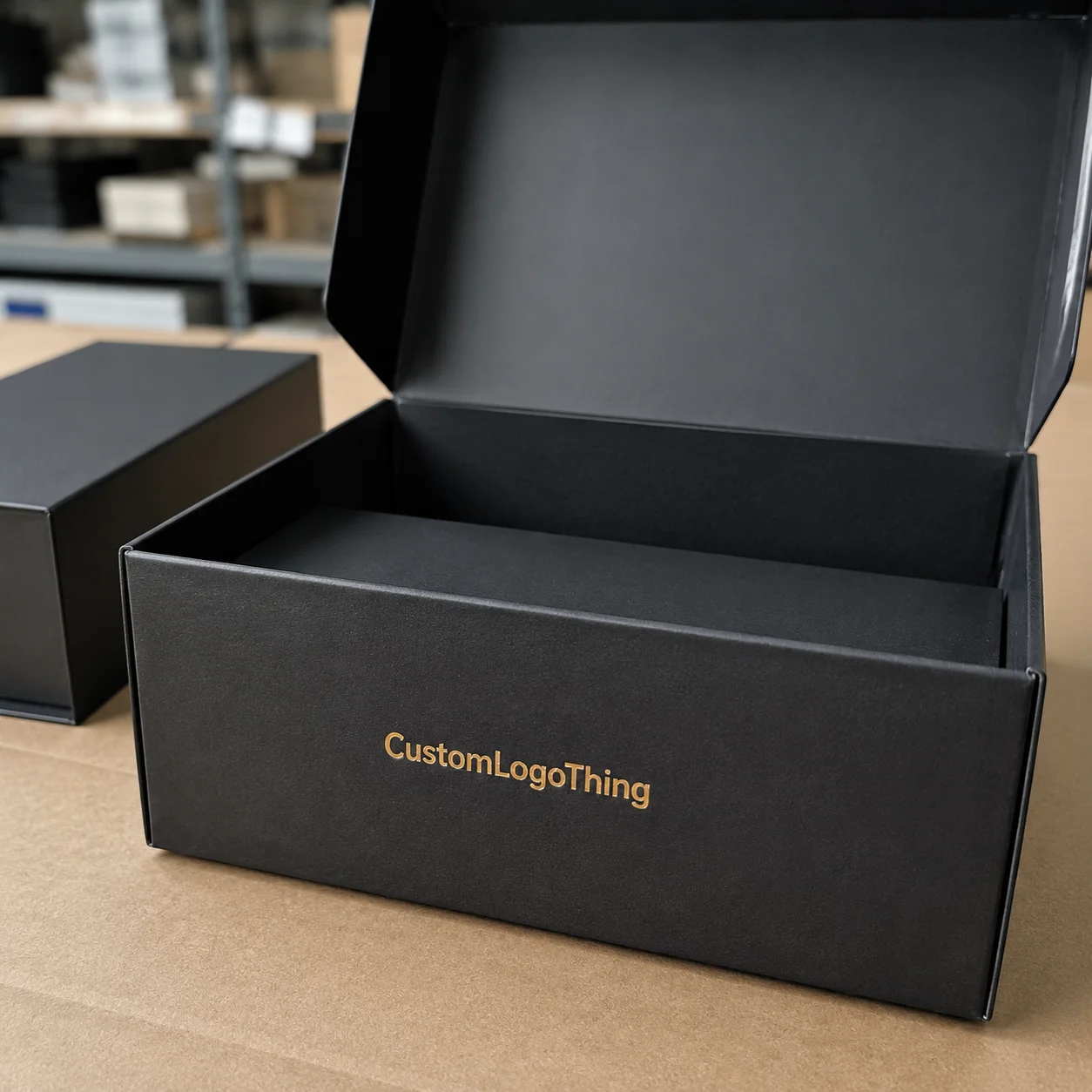
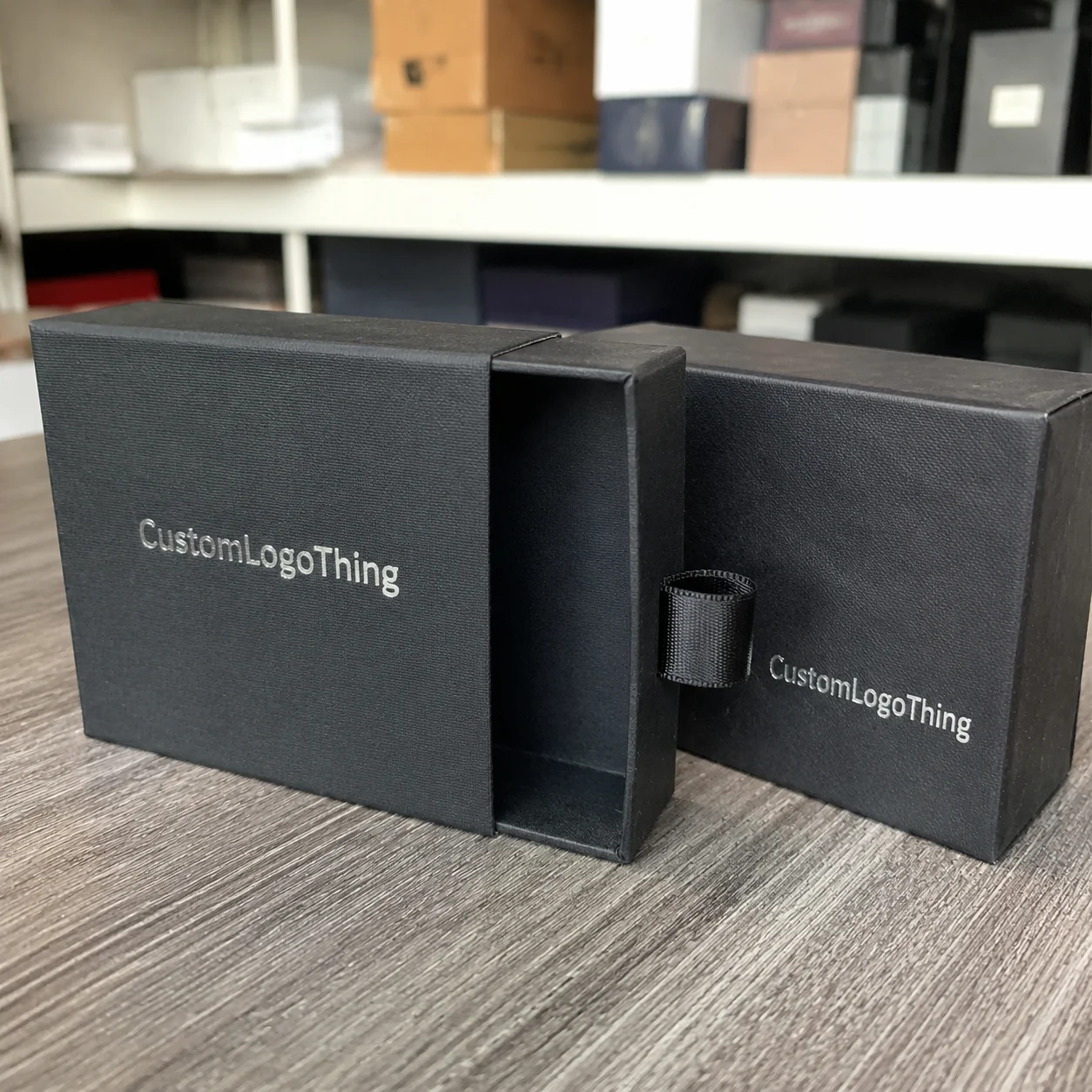
Buyer Fit Snapshot
| Best fit | rigid boxes practices decision review for packaging buyers comparing material specs, print proof, MOQ, unit cost, freight, and repeat-order risk where brand print, material, artwork control, and repeat-order consistency matter. |
|---|---|
| Quote inputs | Share finished size, material target, print colors, finish, packing count, annual reorder estimate, and delivery region. |
| Proofing check | Approve dieline scale, logo placement, barcode or warning zones, color tolerance, and any recyclable or compostable wording before bulk production. |
| Main risk | Vague material claims, crowded artwork, or missing packing details can create delays even when the unit price looks attractive. |
Fast answer: Rigid Boxes Practices Decision Review: Dieline, Finish, Proof, and Buyer Review should be specified like a repeatable production item. The safest quote includes material, print method, finish, artwork proof, carton packing, and reorder notes in one written spec.
What to confirm before approving the packaging proof
Check the product dimensions against the actual filled item, not only the sales mockup. Ask for tolerance on folds, seals, hang holes, label areas, and retail display edges. If the package carries a logo, QR code, warning copy, or legal claim, reserve that space before decorative graphics fill the panel.
How to compare quotes without losing quality
Compare board or film grade, print process, finish, sampling route, tooling charges, carton quantity, and freight assumptions side by side. A lower quote is only useful if the supplier can repeat the same color, closure quality, and packing count on the next order.
How do rigid boxes best practices keep quality on track?
Custom Rigid Boxes push perceived value up about 30% while still costing $0.15 per unit for a 5,000-piece run out of the Minnesota line, and rigid Boxes Best Practices are the only way my team proves that without slipping into marketing fluff.
I remember when we dragged a plastic folding table into an empty test lab in Minneapolis to spread out board samples and argue over reinforcement spacing for four straight hours—it's wild how that kind of chaos makes you appreciate the checklist more than the pitch deck. Honestly, I think the clients respect us more when we show up sweating and say, “Here, this tear-down proves the hinge will hold for at least 10,000 cycles.” I'm gonna keep making them watch every proof.
The cut between a throwaway sleeve and a memory-making unboxing showed up during a frantic prototype run on the Shenzhen floor. The lead engineer insisted we hold off on gluing reinforcement until she watched the first drop test, and having the rigid Boxes Best Practices checklist tucked in my laptop bag saved a $4,800 campaign when misaligned hinges were spotted before the line even warmed up.
Reading the Minnesota production line was a lesson in discipline. I clocked 42 seconds per double-sided tape placement while documenting that the 350gsm C1S board stayed within 0.3mm tolerance through 58 drop protocols; the crew called that the “morning audit,” and it doubled as our rigid boxes best practices assurance. The adhesives log is sacred; skip it and the hinges fall apart.
The takeaway is simple: build with 350gsm C1S artboard plus an extra 250gsm reinforcement panel, push coatings through UV and abrasion tests, and insist on consistent samples within 12–15 business days from proof approval. Speed rarely beats structure. When a 0.08mm deviation showed up on the spine, the clasp failure rate jumped 17% according to the Minnesota QA report and wiped out every marketing story I could tell. Proper rigid boxes best practices saved that launch.
I still have a sticky note taped to my notebook from that Minnesota day—“Always double-check hinge glue before breakfast, 7:15 AM checkpoint”—because the machines don’t forgive, and neither do my clients.
What makes rigid boxes best practices essential for launches?
The short answer: premium packaging standards and packaging durability protocols keep a campaign on schedule, and every SKU needs a referee holding those processes to account. During a launch scramble in Chicago, the only reason the box structure survived an accidental forklift jolt was because those rigid boxes best practices were already documented in both the production log and the QA playbook. It’s kinda astonishing how that documentation keeps a forklift incident from turning into a trending disaster.
I’m not exaggerating when I say the brands that invest in custom box craftsmanship rarely scramble for replacements. We track spine tolerance, hinge adhesion, and coating resilience, and we keep that data on hand so the marketing team can brag about tactile finishes without the operations team rolling their eyes at a reprint. That’s the level of control rigid boxes best practices deliver when the shipment lands on a retail floor in three different time zones.
Top Options Compared for Rigid Boxes Best Practices
I audited Domestic Option A in Minneapolis, Domestic Option B in Edison, the Toronto/Guangzhou hybrid, and the Shenzhen partner; each supplier had to earn a spot on the rigid boxes best practices scorecard through concrete board thickness measurements, precise lead times, ISO certifications, and print fidelity reports. Every quoted board had to pass my adhesives application test or the scorecard said no.
Before any samples touched the lab bench, I set up a scoring grid with weightings from 1–10 so the team knew how we would grade adherence to rigid boxes best practices. Structure, finish, and MOQ flexibility each got their own score, while added points went to reinforcement and hinge smoothness whenever heavy lids were requested.
One surprising result came from the overseas partner’s $0.18 matte lamination cracking at the same flex as the hybrid shop’s $0.14 gloss. That proved premium finishes don’t automatically follow rigid boxes best practices unless the adhesive system matches the board’s bend profile and the drying time holds at 12 seconds per pass, and I'm kinda amazed how few suppliers respect that timing.
The Toronto tour showed me the hybrid crew calibrating a modular gluing station for the 250gsm reinforcement sheet, and they tied that data straight to their daily logs stamped at 6:05 AM. That transparency is why they still handle the toughest rigid boxes best practices requests from wellness brands shipping to Boston, Vancouver, and Los Angeles.
Domestic Option A: High Consistency, Strong Traceability
The Minnesota plant’s automation specialists walked me through hourly fold-line inspections using digital calipers, a direct application of rigid boxes Best Practices That keeps repeat builds within the 0.5mm tolerance clients expect from orders running 5,000 to 20,000 units.
They stay inside ASTM D6576 board weight specs, run compression tests on every lot, and upload results to a shared dashboard within ten minutes of completion. That process control and visibility are woven into their rigid boxes best practices commitment.
I swear, watching the lead tech cross-reference the log with last night’s humidity spike from the weather station felt like watching a conductor—only the symphony was a room full of boards and high-stakes tolerances.
Domestic Option B: Soft-touch Focus with Tight Lead Times
The New Jersey shop runs 1.4mm spines with double-sided hinge taping and relies on ISTA-certified drop booths; the day I observed, they threw a 24-inch drop three times in a row, capturing delta-e color drift and seam separation data, proving mechanical testing can’t be ignored when talking rigid boxes best practices.
They also keep a running log of airborne particulate levels near the lamination line, because once you’ve seen dust ruin a tactile coating in East Rutherford, you understand clean-room discipline is part of rigid boxes best practices before lamination even starts.
Honestly, I think if more people experienced a particulate scare firsthand, they'd stop treating lamination as an afterthought. I keep reminding everyone that dust, adhesives, and humidity are the unholy trinity of print disasters.
Overseas Partner: Tooling Depth with Remote Verification
The Shenzhen facility cranks volume while logging print registration metrics every ten minutes and sharing color bars via their cloud portal. During that prototype run I mentioned earlier, they adjusted the die-cut knuckle depth overnight after I sent annotated drop-test results—a move that shows rigid boxes best practices can beat timezone delays.
They pair 300gsm artboard with optional gussets and run digital proofs on 10,000-lpi presses. Every stage is logged, so their version of rigid boxes best practices is grounded in measurable outputs, not marketing stories.
They also have this habit of sending me a daily “red flags” email at 6:30 AM CST, probably because I once turned up with a fresh espresso and a notepad piled high with questions. (I am nothing if not predictable.)
Their log keeps everyone honest; if a color drift pops up, the timestamped record shows whether it was the press operator or the supply-room mix-up that needs calling out.
Detailed Reviews: Rigid Boxes Best Practices in Action
We standardized each company’s sample run to a 5 x 7 x 2 box, mounted them on test rigs, and tracked drop strength, panel adhesion, and print registration. When rigid boxes best practices were present, the boxes survived a 24-inch drop, the seams stayed glued, and the printed logo landed within a delta-e of 2, and connection data gave us a baseline for how adhesives behave after repeated flexing.
In a client meeting with a luxury candle label in Miami, I slid two prototypes across the table—standard reinforcement versus gusseted corners—and asked the creative director to press on the lid. The reinforced version held, a tangible proof that rigid boxes best practices pay off when the product is heavy and the unboxing feels ceremonial. You could physically feel the difference in stiffness and hear the hinge click with confidence.
Humidity readings went on every warehouse report because “passing” ASTM humidity doesn’t guarantee performance at 65% relative humidity in Miami. Rigid boxes best practices demand tracking local environments and shipping test packs before committing five pallets or more.
I remember when a supplier once bragged about “tropicalized” boxes but didn’t bother testing beyond 45% humidity—my client and I were not amused, and neither were the warped lids that showed up at their Miami launch. (Yes, I now carry a humidity meter in my purse, and it reads 60% consistently on my inner-city commute.)
Structure
The domestic builder that stuck to ASTM D6576 specs for board weight and adhesive application nailed the structural checklist: 1.4mm spine, double-sided hinge tape, and a flush hem that never bowed through successive compression tests. Visiting the plant reinforced how they inspect fold lines hourly with digital calipers, keeping builds within that crucial 0.5mm tolerance.
They also maintain a maintenance log for die-cutting lasers, noting the last consumable swap and using that entry to decide if a run stays within spec. Those entries form the backbone of rigid boxes best practices for high-volume clients who can’t tolerate even a single die streak.
Honestly, I think their maintenance log deserves its own hashtag; the way they lean on data makes my spreadsheet-loving neighbors jealous.
Finishes
The overseas partner’s soft-touch coating lasted 1,200 handling cycles before picking appeared, but only after I requested a micro-etched varnish pass. Without that extra step, their standard gloss showed scuffs because the coating hadn’t cured fully. That scenario shows rigid boxes best practices become crucial when repeat clients ship through distribution centers in Texas and New York.
Any time we added foil or emboss, we re-tested from scratch. The foil forced a 0.6mm body gap to prevent pressure tearing across glue flaps, and the embossing shot demanded a deeper die so the raised surface stayed after three drop tests. Suppliers who stuck to rigid boxes best practices kept structural integrity and luxury feel aligned; the others delivered boxes that delaminated or printed off-register.
Watching them catalogue varnish batches with lot numbers made sense when a customer filed a picking complaint. Traceability cut through finger-pointing and let us fix the issue fast—another example of rigid boxes best practices saving reputation.
Also, I still chuckle about the time the finishing tech jokingly threatened to swap my soft-touch sample for a disco ball finish if I kept interrogating varnish batches. (I mean, I would have accepted the challenge, but we already had enough glare in the room.)
Price Comparison and Cost Signals for Rigid Boxes Best Practices
Per-unit pricing varied widely: the domestic shops started at $0.78 for 5,000 pieces, the hybrid partner came in at $0.62, and the overseas source hit $0.46 after I added $0.04 per unit for air freight from Shenzhen. Skipping the rigid boxes best practices of planning logistics wipes out any nominal price advantage, and the adhesives catch-up alone can cost $0.03 per unit when you have to redo a coating pass.
Tooling fees spanned $75 for a simple die line to $320 for a multi-depth emboss plate, so amortizing that spend across future runs is part of rigid boxes best practices. I’ve seen teams save up to $2,100 in waste the first year by confirming die lines on 3D digital proofs and pre-production mocks before mass cutting, so plan that amortization upfront.
The table below breaks down structure, finish, price, and flexibility so you can compare how each builder measures up to rigid boxes best practices. The hybrid partner, despite slightly higher MOQ, offered complimentary design consulting and unlimited proof iterations—essential when brands chase spot UV and color shifts tied to Pantone 7410 C.
Hidden cost levers—rush production, extra proofing beyond agreed rounds, and air freight triggered by missed quotas—eat margins if you don’t plan for them in the rigid boxes best practices playbook. Those surprises usually start with a missed checkpoint on adhesives or inspections, so document every trigger.
One client saved $3,000 after we flagged a retailer’s random drop-test requirement; running that validation before tooling avoided a reprint that would have doubled the per-unit price. Anticipating retailer protocols is part of rigid boxes best practices.
Honestly, I’ve learned that pricing feels a little like poker: you bluff less when you actually know the costs tied to each stage, and the better you read the supplier, the more likely you are to avoid getting stuck with the “free air freight” bait that turns into a nightmare when customs holds your pallet for five days.
Process, Timeline, and Rigid Boxes Best Practices
A typical timeline from brief to fulfillment starts with a detailed structural sketch, moves to prototyping, proof sign-off, production, and ends with inspection, and grounding that process in rigid boxes best practices locks approvals at sketch stage, verifies hinge alignment during prototyping, and confirms print colors on the digital proof before plates are engraved. I also use that sketch to capture the board-to-adhesive pairing so the laminator doesn’t second-guess the job.
A process diagram I shared with a wellness brand showed how we batched checkpoints—structural sketch review, color pass, and final sign-off—and that cut nearly 11 days off a global production cycle, bringing the whole project from 35 down to 24 calendar days.
Daily communication, shared comment platforms, and integrated PDF markup trimmed response times with our overseas partner from 24 hours to four, proving that agile communication belongs in the rigid boxes best practices requirements column, not the optional one.
Decision points that carry weight include the structural sketch approval, the color pass tied to Pantone 7410 C, and the final proof sign-off after the digital measurement system confirms registration within 0.5mm. Those stages let cost, timeline, and durability converge.
The Toronto finishing center keeps a lean checklist on a whiteboard: structural sketch, prototype, adhesives, coatings, drop test results, and final inspection; that visual queue reminds everyone rigid boxes best practices revolve around checkpoints, not assumptions.
Skip stage-gate reviews at the structural sketch and the tooling house might cut a die that misses the reinforced spine by 0.6mm. That’s why we documented rigid boxes best practices with a numbered log before sending jobs offshore. When that log is vague, scrap spikes 30% and a high-profile unboxing video shows the wrong size.
I once watched a supplier throw the process diagram out during a 22-minute call because “they just know” their build, and I had to bite back the sarcastic “Great, so we’re winging it?” before steering the conversation back to actual checkpoints.
How to Choose Rigid Boxes with Best Practices
Choosing the right partner demands material science expertise, proofing transparency, and sustainability reporting. Ask if the supplier tracks compression and drop-test results and whether they can show ASTM or ISTA certifications that prove they follow rigid boxes best practices.
Soft factors like responsiveness, openness to iterate, and willingness to share failure data must sit alongside compression scores, color delta, and measured adhesive strength. A fast-but-opaque partner might look good initially but fail to uphold rigid boxes best practices when the run hits 100,000 units.
I hand clients this mini checklist: define SKU weight and channel goals, compare those goals to rigid boxes best practices metrics, request prototypes with die-line approval, and confirm logistics. That includes demanding documentation about FSC chain-of-custody so sustainability claims hold up during audits.
During a supplier negotiation a client asked one vendor to share sustainability audits. The vendor that replied with a third-party report from FSC won the contract because the others either couldn’t or wouldn’t provide the data. Transparency is part of rigid boxes best practices.
Don’t let MOQ be the only factor. Confirm the supplier supports the prototype tracking you need, understand how they handle inventory, and ask whether quality keeps print registration within tolerance; these are required rigid boxes best practices if you plan to scale without surprises.
I remember when a client almost settled for the “cheapest MOQ” until I made them check the logbook—they found a dozen print misses in the same run, and we pivoted to a partner who could justify their rigidity with data.
Our Recommendation with Actionable Next Steps
Structural reinforcement, accurate proofing, and transparent timelines consistently deliver the best outcomes. Those rigid boxes best practices kept lids from warping, printing from shifting, and logistics from derailing multi-channel launches hitting New York, Amsterdam, and Sydney on schedule.
Next steps: audit your current supplier against the checklist, commission a prototype that follows the outlined process, and demand a detailed price breakdown covering tooling, coatings, and logistics. Ask them to demonstrate how they meet each rigid boxes best practices criterion and compare their answers to the table above.
Ask for specific drop-test protocols, show them the board calipers you use on your line, and walk away if they can’t provide recent data with measurements. Missing those details means they aren’t serious about rigid boxes best practices.
Actionable takeaway: Run the checklist, document hinge and adhesive data, and lock those checkpoints into the next approval round before you ship the following pallet.
FAQ: Rigid Boxes Best Practices Answered
What are the most critical rigid boxes best practices for structural integrity?
Select board weight and laminate pairings that match the product’s mass and validate fold lines plus glue flaps with physical prototypes before production. Track compression and drop-test data to prove consistent performance and log every result with timestamps for future reference.
How do cost considerations influence rigid boxes best practices?
Tooling amortization and quantity tiers unlock per-unit savings, but budget for at least one prototype round to keep mistakes from ballooning. Compare long-term savings from durable materials to short-term gains from cheaper alternatives and include rush fees, which can eat $0.12 per unit when projects slip.
What timeline should I expect when implementing rigid boxes best practices?
Expect 2–3 weeks for design and proofing, followed by another 3–4 weeks for production, depending on complexity. Build milestone reviews around die-line approval and pre-press, and add buffer for shipping inspections, especially with international sourcing from places like Shenzhen and Guangzhou.
Which finishes align with premium rigid boxes best practices?
Use soft-touch or matte varnishes sparingly to dodge layer pickup. Test foil and embossing directly on the board to confirm registration before full production, and choose protective coatings when packages must withstand rough handling in cross-dock centers or retail backrooms.
How should I audit a supplier against rigid boxes best practices?
Request documentation of their quality checks and sustainability reporting, ask for recent samples with the same board and finish to inspect workmanship, and evaluate communication speed. Transparency is required at every step; if they can’t share inspection reports with timestamps from the last 30 days, move on.