Screen Printed Neck Labels: Order the Right Fit Fast
Screen printed neck labels fix a very ordinary problem: sewn tags get cut out. Customers do it all the time. If the inside neck area feels scratchy, bulky, or crowded with stitching, the first thing to go is the branding. A clean print inside the garment keeps the label in place without adding thickness, which is why this method shows up so often on tees, fleece, and lightweight apparel.
They sit in the middle of the branding options. Woven labels feel premium, but they add structure. Heat transfers can be crisp and flexible, but they are usually better for smaller runs or variable data. Tear-away tags improve comfort, but they do not replace the branded finish you get from a printed neck mark. For buyers, the value is simple: less irritation, a smoother inside finish, and a more polished retail presentation without stuffing more material into the seam.
“If the label annoys the wearer, it has already failed. The best branding is the stuff people stop noticing after they put the garment on.”
That does not mean this method works for every product. It performs best on stable fabrics with enough surface area for the print to sit cleanly. On a basic cotton tee, the job is straightforward. On a very stretchy performance knit, the job gets technical fast. That is the tradeoff: screen printed neck labels are low-bulk and efficient, but only if the fabric, ink, and artwork are matched properly.
If you are comparing inside branding options, it helps to look at the garment as a system instead of a single label. Many brands use screen printed neck labels for comfort and pair them with Custom Labels & Tags for care content, hangtags, or outside branding. That split is common because it keeps the inside clean while preserving the retail details shoppers still need.
Screen Printed Neck Labels: Why brands switch
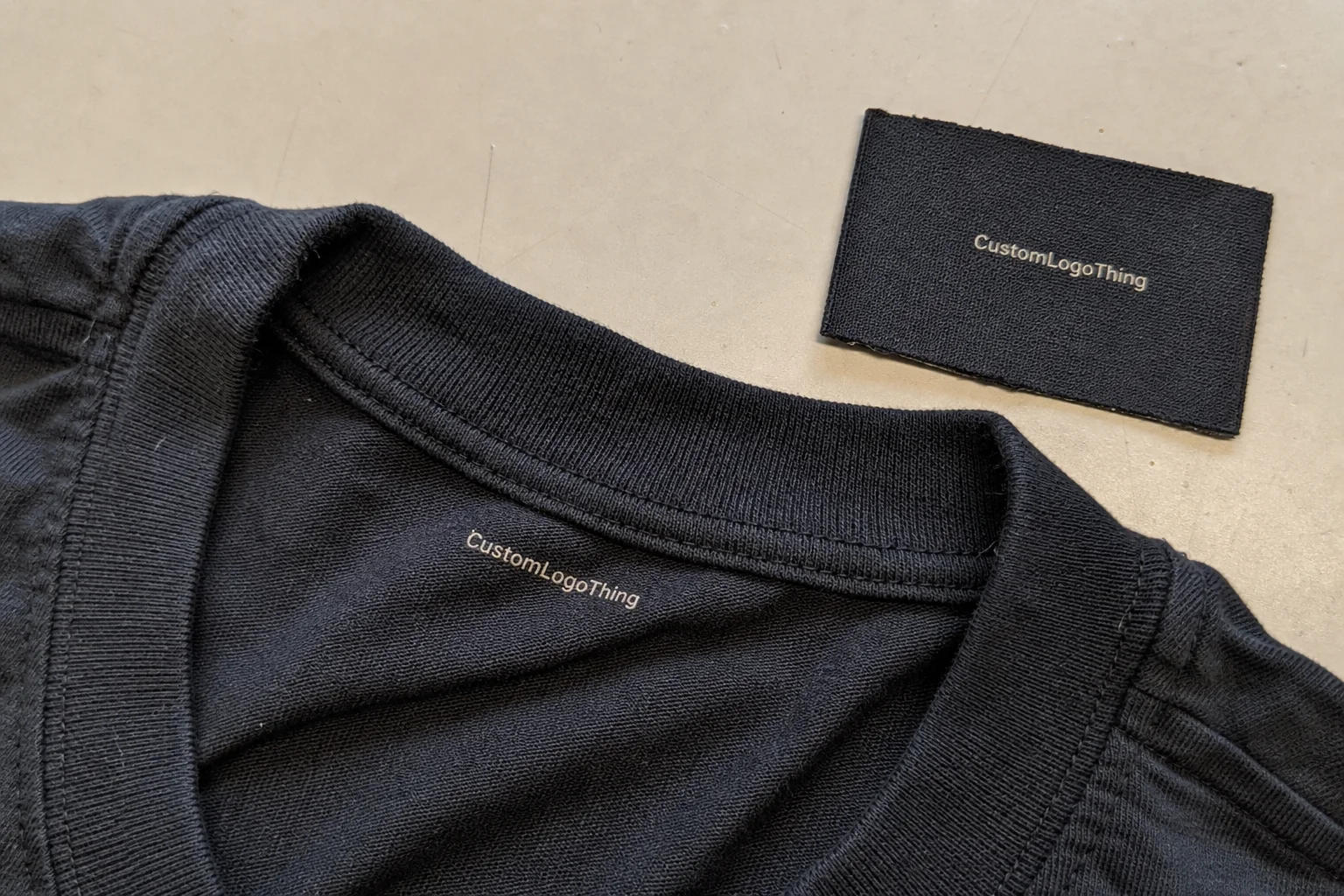
Most buyers do not switch because they love printing for its own sake. They switch because sewn-in labels create friction, literally and commercially. A tag that scratches the neck gets trimmed or cut out, and once that happens the garment loses a piece of its brand presence. Screen printed neck labels keep the identity inside the collar without creating a hard edge or extra stitch line.
There is also a presentation benefit that is hard to ignore. Inside printing looks deliberate. It feels more considered than a raw tear-away tag, especially on apparel sold through boutiques or direct-to-consumer channels where first impressions matter. The benefit is not just comfort. It is consistency. A printed neck mark sits flat, looks integrated, and avoids the little fold-and-pucker effect that cheap tags can create.
From a product mix point of view, this format works best on:
- Tees and tanks where the neck area is slim and the wearer is sensitive to bulk.
- Fleece and hoodies where a tag stack can feel thick and annoying.
- Lightweight blends where a sewn label can distort the drape of the garment.
It is not magic. Screen printed neck labels still need good artwork, a stable blank, and a sensible placement spec. If any of those are off, the result looks cheap fast. That is why the best orders start with a clear understanding of the garment and the end user, not just the logo file.
| Option | Best use | Feel inside garment | Typical setup | Ballpark unit cost |
|---|---|---|---|---|
| Screen printed neck labels | Tees, fleece, simple brand marks | Flat, low bulk | Moderate screen setup | $0.18-$0.45 at mid-to-higher quantities |
| Transfer-based neck branding | Stretch fabrics, small runs, variable data | Smooth, slightly film-like | Lower plate cost, more handling | $0.25-$0.60 depending on quantity |
| Woven labels | Premium branding, outside branding, sewn applications | Textured, noticeable | Higher label setup, cut-and-fold options | $0.12-$0.40 depending on size and finish |
| Tear-away tags | Comfort-focused basics, promo apparel | Temporary, removable | Simple attachment | Usually lowest, but not a branding replacement |
If you need outside branding to match the inside finish, pairing the print with a separate label system can make sense. A lot of brands use screen printed neck labels inside and add a sewn exterior label or hangtag outside. The result feels more complete without overloading the neck area.
How the printing process works
The process starts with artwork prep. A good file does not just look sharp on a screen; it has to survive on fabric. Clean vector art is usually best. Tiny text, thin strokes, and stacked copy often need simplification before production. Buyers should expect a proof stage where the printer checks line weight, spacing, and placement against the garment’s actual neck area.
After artwork approval, the printer sets up screens or prepares the transfer format, depending on the method. For direct screen print, ink choice matters a lot. The press has to sit the print in the right spot, deposit the right amount of ink, and cure it properly so it bonds without cracking or smearing. For transfer-based versions, the print is made separately and then applied under heat and pressure, which can help on fabrics that do not like a direct print pass.
Fabric type changes the entire job. A dense cotton jersey behaves differently from brushed fleece or a polyester blend. Knit density affects edge sharpness. Stretch affects registration. Texture affects opacity. A smooth, stable surface is easier to print on, and that is why some neck prints look crisp on one style and slightly fuzzy on another even when the artwork is identical.
Buyers usually need to provide:
- Logo file in vector format if possible.
- Size range so the print can stay centered across variants.
- Color count for the logo and any required copy.
- Placement spec such as center back neck, left inside seam, or under-collar position.
- Label content like care instructions, fiber content, or country of origin.
There is one more practical point. If the garment ships retail-ready, ask for transit and pack-out checks aligned with ISTA principles. Ink that survives printing but rubs off during packing is still a failure. Packaging teams learn that lesson the expensive way, usually after someone opens a box and finds half the stack marked up.
Key factors that change quality and wear
The quality of screen printed neck labels comes down to a few controllable variables: fabric, ink, artwork, and cure. Get those right and the label stays readable, feels acceptable, and holds up through normal wash cycles. Miss one of them and the whole thing looks off.
Fabric composition is the first variable. Cotton is forgiving. Poly can be trickier because some inks need better adhesion or a different cure profile. Blends sit in the middle, but stretch can still distort the print over time. If the garment is highly elastic, a direct print may need a softer ink system or a transfer-based approach so the print can move with the fabric instead of fighting it.
Ink choice is the second variable. Softer inks usually feel better against the skin, but very soft does not always mean very durable. Heavier inks can look stronger on dark fabrics, but they can also add hand feel. Buyers often want both softness and durability, which is fine as a goal, but those two things do trade off. There is no free lunch here.
Artwork complexity is the third. Fine lines, reversed text, and small symbols can disappear or fill in after printing. If the smallest text is too tiny, it may look good in the proof and underwhelm on the shirt. A simple logo and clear compliance copy usually print better than a crowded label design with three font sizes and a tiny website URL nobody will read anyway.
Placement consistency matters more than most people expect. On a tee, a shift of even a few millimeters can look sloppy because the eye sees the collar as a centerline reference. Buyers should ask for a placement tolerance before approving the job, especially if the order spans multiple sizes or multiple garment bodies.
For brands that need a cleaner compliance story, it is worth asking how the print will hold up to wash testing and repeated handling. If you are working with care content or fiber claims, the label needs to remain legible. For paper inserts or related packaging components, using FSC-certified stocks from FSC sources can help support a broader sustainability claim, but only if the documentation actually matches the claim. That part matters more than the marketing copy.
One practical benchmark: if a supplier cannot explain how they handle dark garment opacity, stretch recovery, and cure verification, the quote is probably too optimistic. Cheap screen printed neck labels often become expensive after the rework.
Process and timeline: from quote to delivery
A decent order follows a predictable path. First comes spec review. Then quote. Then proof or strike-off. Then approval. Then production. Then finishing and shipment. The exact timing depends on the artwork and the garment, but the order of operations should not be mysterious. If it is, that is a red flag.
Typical timing looks something like this:
- Quote review: 1-2 business days if the request is complete.
- Artwork proofing: 1-3 business days, longer if the logo needs cleanup.
- Sample or strike-off: 3-7 business days, depending on the method.
- Production: often 7-12 business days after approval for standard runs.
- Shipping: varies by destination and freight method.
Delays usually come from three places. The first is incomplete art. The second is approval lag. The third is scope creep, which is the polite way of saying the buyer changed the spec after the quote. If the label needs multiple placements, multiple colors, or revised content, the schedule shifts. That is normal. What is not normal is pretending it will not.
Rush production is possible sometimes, but it has limits. Screen setup and curing cannot always be compressed safely without sacrificing adhesion or registration. If the order has a hard launch date, send the deadline early and ask what part of the timeline is actually at risk. A supplier who gives you a blunt answer is more useful than one who promises everything and then quietly misses the ship date.
Before requesting a quote, have these items ready:
- Garment type and fabric content.
- Quantity by style and size range.
- Artwork in the cleanest format you have.
- Placement preference and any compliance copy.
- Target deadline with room for proofing.
That information cuts down the back-and-forth and helps prevent a weak sample from becoming a production headache. Screen printed neck labels are not complicated once the buyer gives the shop a complete brief. The complications start when everyone assumes someone else already answered the obvious questions.
Cost, pricing, and MOQ drivers
Pricing is driven by the same few variables across most apparel decoration jobs: quantity, color count, artwork complexity, garment type, and setup burden. With screen printed neck labels, quantity matters more than people expect because setup gets spread across the run. A 200-piece order can look expensive on paper. A 5,000-piece order usually looks much better on a per-unit basis.
Here is the basic logic. The printer has to prep art, set screens or transfer equipment, run tests, check placement, and cure the job. Those costs happen whether you order 100 units or 10,000. That is why very small runs carry a higher unit price. It is not greed. It is math, which is rarely fashionable but usually correct.
Typical cost drivers include:
- Quantity: the biggest factor by far.
- Number of colors: each extra color adds setup and risk.
- Fabric type: difficult materials need more attention.
- Special inks: soft-hand, high-opacity, or specialty systems can cost more.
- Sampling: strike-offs and revisions may add fees.
For rough budgeting, some buyers see screen printed neck labels land around $0.18-$0.28 per unit at higher quantities with simple artwork, while smaller runs or more complex specs can push the price into the $0.35-$0.60 range or higher. That is a range, not a promise. The actual number depends on garment type, color count, and how much labor the setup needs.
| Quote item | What it should include | Why it matters |
|---|---|---|
| Artwork support | Cleanup, layout, and proof preparation | Prevents surprise design charges later |
| Sampling | Strike-off or production sample details | Shows whether the print actually fits the garment |
| Freight | Shipping method and destination | Can change the landed cost more than buyers expect |
| Rework policy | What happens if registration or cure fails | Protects you when the run misses spec |
If you are comparing suppliers, ask for the same assumptions on every quote. Same quantity. Same artwork. Same fabric. Same placement. Otherwise the quotes are not comparable, they are just numbers on different planets. Also ask whether there is a minimum order quantity and whether the MOQ changes with one-color versus multi-color art. That alone can move the unit cost a lot.
Common mistakes that create ugly labels
The ugliest neck prints usually fail for boring reasons. Not because the supplier used some mysterious bad technique. Because someone approved a design that could never print cleanly in the first place.
Low-resolution art is the classic mistake. Tiny text, hairline rules, and compressed logos can look acceptable on a monitor and terrible on fabric. Fabric is not paper. Ink spreads differently, and knit movement exaggerates weak art. If the smallest element in the label matters, it needs to be sized for production, not for the mood board.
Ignoring garment color is another common miss. Dark fabrics need enough opacity. Light fabrics need enough contrast. If the logo color is too close to the base color, the label disappears. If it is too heavy, it feels plasticky. The right answer depends on the shade, the weave, and the print system, not on what looked nice in the logo file.
Placement errors can make a decent print look cheap. A print that sits too high on one size and too low on another is instantly noticeable. A label that drifts under the collar seam can rub awkwardly. On multi-size apparel, this matters even more because the visual balance changes across the range. Buyers should ask for a placement guide before production starts, not after they see the first carton.
Approval mistakes are probably the most expensive. Skipping a proof review, assuming the sample represents bulk without checking details, and approving without a wash test are all ways to create a reprint order. If the job is important, test it. Wash it. Stretch it. Look at it under real use, not just under a fluorescent desk lamp.
One more issue: people sometimes try to cram too much information into the neck area. The logo, the size, the care instructions, the fiber content, the origin, and a small marketing slogan all in one tiny block. That kind of label almost always looks cluttered. If the garment needs legal content, keep it readable and separate the branding logic from the compliance logic. You can still make it neat. It just needs restraint.
For buyers who need a better outside package, pairing the neck print with a cleaner label set can solve a lot of presentation problems. If you are also ordering hangtags or sewn branding, keep the inside and outside systems consistent so the product does not look stitched together by committee.
Next steps for a clean order
The fastest way to get a good result is to decide what the label is supposed to do. Comfort? Brand presence? Compliance? Usually it is some mix of all three. Once that is clear, the rest gets easier. Screen printed neck labels are not hard to buy, but they do reward buyers who show up with a complete brief.
Before requesting samples or quotes, send this minimum set of information:
- Garment type and fabric content.
- Quantity by style, color, and size range.
- Artwork file and any text that must appear.
- Placement preference with a rough location reference.
- Deadline and whether the date is flexible.
Then ask for three things before you approve anything: a production proof, a placement spec, and a sample photo or strike-off. If the supplier can show how the print will sit on the garment, you are already ahead of most buyers. If they cannot, slow down. A cheap quote that produces bad screen printed neck labels is not cheap. It is delayed waste.
My practical recommendation is to compare one direct-print option against one transfer option on the same garment. That gives you a real read on feel, registration, and durability. For many brands, the best choice is the version that prints cleanly, wears comfortably, and survives the wash test without drama. Fancy is optional. Legible is not.
If you are specing your next run, start with the garment details, then build the inside branding around them. That is how you get screen printed neck labels that look intentional instead of improvised.
What are screen printed neck labels used for on apparel?
They replace sewn-in tags with printed branding inside the neck area. The main goal is to improve comfort, reduce bulk, and give the garment a cleaner retail finish.
Are screen printed neck labels durable after washing?
Yes, when the ink system, fabric, and curing method are matched correctly. Durability drops when the artwork is too detailed, the fabric is highly stretchy, or the cure is inconsistent.
What affects the cost of screen printed neck labels most?
Quantity is the biggest driver because setup cost gets spread over more units. Color count, artwork complexity, fabric type, and special handling can also raise unit price quickly.
How long does the process usually take for screen printed neck labels?
Typical timing includes artwork approval, sampling, production, and shipping, so lead time depends on each step. The slowest part is usually approval, not printing, unless the order needs revisions or rush handling.
What should I send when requesting a quote for screen printed neck labels?
Send garment type, fabric content, quantity, size range, artwork, and placement preference. If you have a deadline or sample reference, include that too so Pricing and Timeline are realistic.