Buyer Fit Snapshot
| Best fit | Shipping Bags Manufacturer Direct projects where brand print, material claims, artwork control, MOQ, and repeat-order consistency need to be specified before quoting. |
|---|---|
| Quote inputs | Share finished size, material target, print colors, finish, packing count, annual reorder estimate, ship-to region, and any compliance wording. |
| Proofing check | Approve dieline scale, logo placement, barcode or warning zones, color tolerance, closure strength, and carton packing before bulk production. |
| Main risk | Vague material claims, crowded artwork, missing packing details, or unclear freight terms can make a low unit price expensive after revisions. |
Fast answer: Shipping Bags Manufacturer Direct: Pricing, Process, and Fit should be specified like a repeatable production item. The safest quote records material, print method, finish, artwork proof, packing count, and reorder notes in one written spec.
Production checks before approval
Compare the actual filled-product size with the drawing, then confirm tolerance on folds, seals, hang holes, label areas, and retail display edges. Reserve space for logos, QR codes, warning copy, and material claims before decorative graphics fill the panel.
Quote comparison points
Review material grade, print process, finish, sampling route, tooling charges, carton quantity, and freight assumptions side by side. A quote is only useful when the supplier can repeat the same color, closure quality, and packing count on the next order.
A shipping bags manufacturer direct order can look like the easy answer on paper, yet the cheapest line item rarely tells the whole story once you factor in dimensional weight, packaging strength, print quality, and the cost of fixing damaged shipments after the fact. A mailer that is too large, too thin, or slightly off in spec can quietly create waste that never shows up in the first quote, and that can sting a little when the boxes start arriving back at your dock.
I like to keep this subject grounded in the real packaging work that happens behind the scenes. Working with a shipping bags manufacturer direct source gives you more control over size, gauge, closure style, and print placement, which matters whether you are shipping apparel, subscription products, ecommerce orders, or goods that need repeatable transit packaging. If you already use Custom Poly Mailers, going straight to the source can help you refine the spec instead of living with whatever stock size happened to be available that week.
The useful question is not just, "What does each bag cost?" It is, "What will the parcel cost once freight is added, how often will the order arrive in good shape, and how much time will the team spend correcting problems later?" That is the lens that makes a shipping bags manufacturer direct quote worth a careful look.
Shipping Bags Manufacturer Direct: What It Really Means
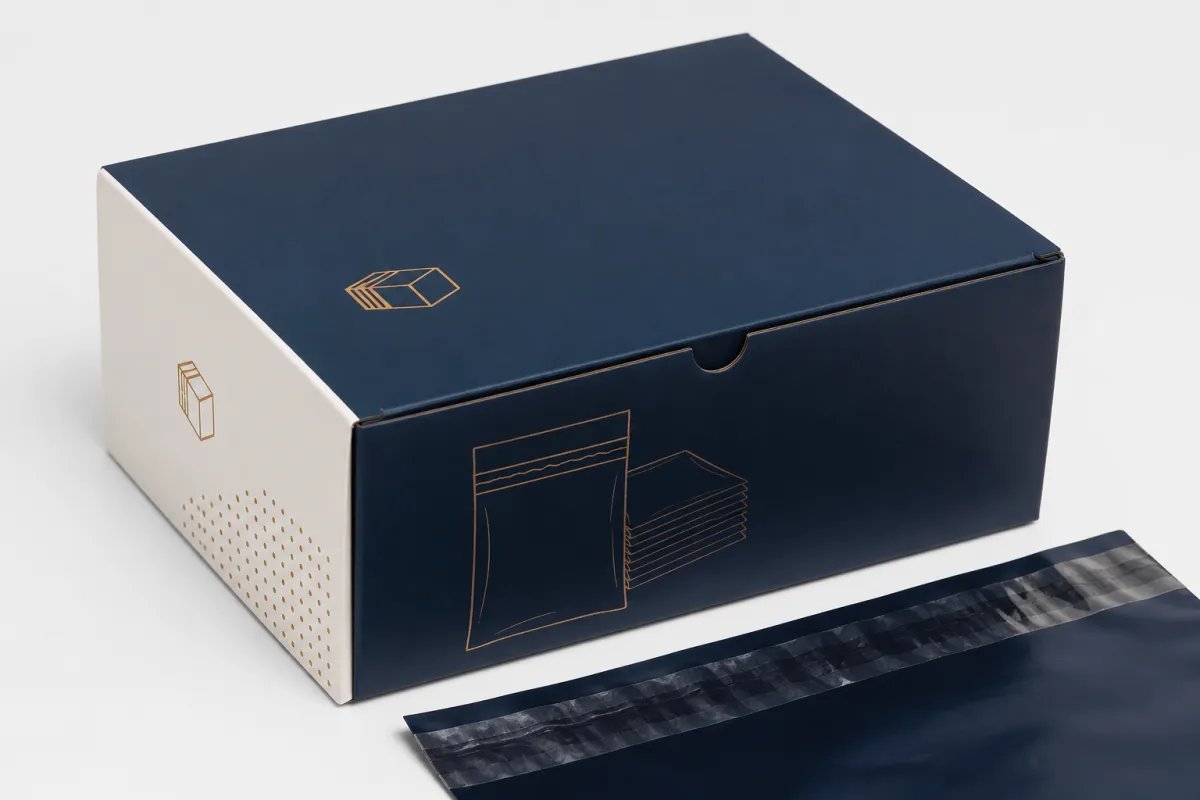
In plain language, shipping bags manufacturer direct means you are buying from the factory source, or from a partner very close to production, instead of moving through several middle layers before the order reaches you. That usually means more control over the details that matter in production, including dimensions, seam construction, film structure, print registration, closure type, and the way the bags are packed for shipment.
People often assume direct sourcing only affects price. That view misses a lot. A good shipping bags manufacturer direct arrangement gives you a clearer line from quote to production because the people answering your questions are tied to the same process that turns specs into film, ink, and seals. The result is fewer misunderstandings and far less of the telephone-game effect that can happen with reseller quotes.
The difference shows up in a few practical ways:
- Reseller model: You usually choose from a limited range of stock sizes, fixed gauges, and preset print options.
- Manufacturer direct model: You can shape the spec around the product, which helps when you need a custom width, a stronger seal, or a specific printed finish.
- Direct quote flow: Your dimensions, material target, and artwork go to the source with fewer handoffs in between.
That matters most for buyers working under real packaging constraints. Apparel brands do not need the same bag spec as a fulfillment center shipping heavier accessories. Subscription packaging may care about presentation and a crisp printed message, while another operation may care more about packing speed and a reliable peel-and-seal strip. In each case, shipping bags manufacturer direct sourcing can bring the package closer to the actual job instead of settling for a generic average.
From the buyer side, consistency is the biggest win. A direct factory relationship can keep repeat orders closer to the approved sample, which matters once your packing process is built around a certain width, opacity level, or seal feel. If the bag feeds well at the packing table and protects the product through transit, the entire operation runs with less friction.
Practical rule: the best mailer is not the one with the lowest price on the sheet; it is the one that fits the item, protects it in transit, and avoids extra labor at the packing station.
If your team is still weighing paper mailers, poly mailers, or other shipping materials, a direct supplier can help compare the tradeoffs without forcing every order into one format. That is where Custom Packaging Products becomes useful, because the right solution may include mailers, cartons, labels, and void fill instead of a single bag type for everything.
How a Shipping Bags Manufacturer Direct Order Works
A clean shipping bags manufacturer direct order usually follows a simple path, though each step carries more weight than many buyers expect. The factory cannot make a useful recommendation until it knows the packed dimensions, quantity, branding needs, and shipping destination. Once those pieces are in place, the quote becomes much more meaningful.
- Initial inquiry: You share the approximate bag size, thickness, printed or unprinted status, and your target quantity.
- Spec review: The supplier checks whether the dimensions fit the product, whether the seal style works with your fulfillment process, and whether the film thickness suits the item weight.
- Quote: Pricing reflects quantity, print coverage, color count, material structure, and shipping terms.
- Artwork review: The factory checks logo files, bleed, font size, and color separation.
- Proof approval: You approve a digital proof or sample and confirm layout, copy, and placement.
- Production: The bags are printed, converted, sealed, counted, and packed.
- Quality checks: The run is checked for size, print alignment, seal strength, and visual defects.
- Shipment: The finished order is carton-packed or palletized and sent to your warehouse or fulfillment center.
The buyer still carries a few responsibilities that can shape the outcome. A shipping bags manufacturer direct supplier can guide you on technical points, but you still need to provide the correct artwork files, confirm the intended packed dimensions, choose a quantity that matches your usage rate, and respond quickly when proofs come back with questions.
That last part matters more than people think. A project with two print colors and a clean layout may move quickly, while a bag that needs custom sizing, exact color matching, and a special zipper or tamper-evident seal usually needs more back-and-forth. The fastest direct orders tend to come from buyers who already know what they want before they request a quote.
It helps to think of the manufacturer as a production partner rather than a price list. Ask about tolerances, print expectations, and how the bags are packed for shipment. A supplier that can explain those details clearly is usually easier to work with over time.
One more point is worth keeping in mind. If you compare a factory quote against a reseller quote, both sides need to be quoting the same thing. A 2.5 mil bag with no print does not compare cleanly to a 3 mil bag with full coverage artwork and reinforced seals. A fair shipping bags manufacturer direct comparison starts with the same spec sheet.
Shipping Bags Manufacturer Direct Pricing: What Affects Cost
The price of a shipping bags manufacturer direct order is driven by more than the bag count. Size, film thickness, print coverage, color count, and packaging format all influence the final number, and the quote can change a lot depending on those variables. A small shift in spec may not feel dramatic, but across several thousand units it can move the landed cost in a meaningful way.
Bag size is usually the first cost driver. Larger bags use more film, which means more material cost, more weight, and often more freight expense. A bag that is only slightly larger than needed can also affect dimensional weight on the outbound parcel, which is why the right fit matters so much in ecommerce shipping.
Film thickness is the next major variable. A standard lightweight mailer might sit in the 2.5 mil range, while heavier products or bags that need more puncture resistance may move toward 3 mil or 4 mil. If the contents have corners, hardware, zippers, or anything sharp, a stronger film structure can reduce package protection issues and cut down on return headaches later.
Print coverage matters too. A simple one-color logo on a white bag costs less than a full-coverage print with multiple colors, tighter registration, and a larger decorated area. More colors can mean more setup, more proofing, and more risk of a small visual mismatch. That is normal. It is also why a good shipping bags manufacturer direct quote should spell out print assumptions clearly.
Order quantity changes the economics in a major way. Once setup is covered and the run is dialed in, the unit cost usually drops as quantity rises. A 5,000-piece order may price much higher per bag than a 20,000-piece order because the fixed costs are spread across fewer units. That is not a trick; it is simply how production math works.
There are also costs buyers should ask about early so they do not show up later as surprises:
- Freight: pallet shipping, residential delivery fees, fuel surcharges, or cross-border transport.
- Setup or plate charges: often tied to print preparation or conversion setup.
- Sample production: useful and often worth it, but still part of the project budget.
- Rush fees: possible if you need a supplier to interrupt a normal run queue.
- Palletization: better protection in transit, but sometimes more handling cost.
A useful way to judge value is to think in total landed cost. A bag that costs two or three cents more may still save money if it reduces damage, speeds packing, lowers return rates, or cuts labor. A shipping bags manufacturer direct purchase should be measured against the full shipment process, not just the price printed on the quote. That matters even more when the product is fragile, premium, or costly to replace.
| Option | Typical Use | Indicative Unit Price | Common Setup Needs | Typical Lead Time |
|---|---|---|---|---|
| Stock mailer | Plain ecommerce shipping, fast restock | $0.06-$0.18 | Usually none | 2-7 business days |
| Semi-custom mailer | One-color logo, standard sizes | $0.12-$0.28 | Basic print setup or plate charge | 10-15 business days |
| Fully custom mailer | Unique size, multi-color branding, special film | $0.18-$0.45 | Artwork proofing, print setup, possible tooling | 12-20 business days |
The table above works as a planning guide, not a promise, because the final quote depends on the exact spec, shipping method, and whether the bags are stock, printed, or custom converted. Even so, it gives buyers a useful frame for comparing a shipping bags manufacturer direct quote against reseller pricing. If one supplier looks far cheaper, check the spec line by line before assuming it is the better deal.
For direct sourcing, I like to request an apples-to-apples sheet that shows size, film gauge, print count, closure type, quantity, freight assumption, and delivery location. That keeps the conversation honest and helps prevent false savings. It also makes it easier to spot the little things that tend to get buried in a quick email thread.
Process and Timeline: From Artwork to Delivery
A shipping bags manufacturer direct project usually follows a predictable timeline, though the clock starts earlier than many buyers expect. The first delay is often incomplete information rather than production. If the factory is still waiting on dimensions, artwork, or a final quantity, the order does not really move yet.
For a typical project, the schedule often looks like this:
- Inquiry and quote review: 1-3 business days if the spec is clear.
- Artwork and proof stage: 1-5 business days depending on file readiness and revision count.
- Production: often 10-18 business days for standard custom runs, though the range can be shorter or longer depending on volume.
- Freight or final transit: a few days for nearby domestic delivery, longer for cross-country or international movement.
That split between production time and shipping time matters a lot. I have seen buyers hear "two-week lead time" and assume the bags will be sitting at the warehouse in fourteen days. In reality, the factory may finish in fourteen days, and then freight still has to do its job. A careful shipping bags manufacturer direct buyer plans both clocks at once.
Artwork approval is one of the most important steps because it catches mistakes before the run begins. If your logo needs a specific Pantone match, if the bleed is tight, or if your copy sits close to the edge, the proof stage is the place to slow down and inspect every line. A small typo on 10,000 mailers becomes an expensive typo, and nobody wants to explain that one later.
The sample stage deserves the same attention. A printed sample, press proof, or even a plain physical prototype can reveal issues that a screen will not show. The bag may be too roomy, the film may feel thinner than expected, or the print may sit too close to the seal. That is the time to revise, not after production begins.
Seasonal demand changes the calendar. Holiday promotions, subscription launches, product drops, and Q4 fulfillment peaks all eat lead time. A shipping bags manufacturer direct order that looks simple in spring can become tight in the fall if you wait until the last minute. A better move is to build a reorder plan before inventory gets close to zero.
If your operation works with order fulfillment centers, tell the supplier how the bags will be packed and used. A mailer that runs well on a small in-house packing table may need different dimensions or a different closure style once it is moving through a faster fulfillment line.
Step-by-Step Guide to Choosing the Right Poly Mailer
Choosing the Right mailer starts with the product, not the packaging catalog. A strong shipping bags manufacturer direct partner will ask for packed dimensions, product weight, and a quick description of the item before recommending a size or film gauge. That is the right approach, since the bag needs to suit the goods inside it.
Measure the packed item, not just the product itself
Start by measuring the product as it will ship, including inserts, tissue, poly wrap, retail boxes, or protective sleeves. A folded garment is very different from a boxed accessory, and a soft item that compresses easily needs a different allowance than a hard item with corners. If the bag is too tight, sealing becomes awkward; if it is too loose, the shipment can look sloppy and may cost more under dimensional weight pricing.
Choose film thickness with handling in mind
For light apparel, a 2.5 mil or similar structure may be enough. For heavier textiles, small boxes, or products moving through rougher parcel networks, 3 mil or 4 mil can be a better fit. The goal is not to buy the thickest film available. The goal is to match the structure to the real handling conditions. A well-sized 3 mil mailer often performs better than an oversized 4 mil bag that creates unnecessary air space.
This is where shipping bags manufacturer direct sourcing helps. The supplier can explain what the film is doing, not just what it costs. Co-extruded LDPE films, for example, can be designed with a printable outer layer and a darker inner layer for opacity. That can matter if the contents need privacy or if the brand wants a clean white exterior with a strong printed face.
Decide whether plain, printed, or fully branded is the right move
Plain mailers are easy and inexpensive, which makes them a good fit for early-stage testing or internal operations. Printed bags make the parcel look more deliberate and can support brand recognition during ecommerce shipping. Fully branded mailers, with custom graphics and messaging, cost more but can strengthen the unboxing experience and help the parcel feel like part of the product instead of a generic shell.
The question is not which option sounds best in theory. It is which option supports margin, fulfillment speed, and customer expectations. A growing brand may start with plain or lightly printed bags and move into more detailed branding once order volume justifies the added setup. A smart shipping bags manufacturer direct partner can guide that progression without pushing the most decorated version of the bag.
Match the closure to the workflow
Peel-and-seal closures are popular because they are fast and familiar on packing lines. Tamper-evident strips add an extra layer of security, which can matter for certain product categories or return-sensitive programs. Some operations prefer a simple flap because they already add their own labels or tape in a second step. The closure should fit the process, not fight it.
I always ask buyers to check how the closure behaves in the real world. Does it grab cleanly on the first press? Does it stay closed in transit? Is the release liner easy for packers to remove without slowing the line? Those details seem small until they show up at scale, especially in order fulfillment environments where seconds matter.
Use samples to verify fit and appearance
Samples are where the truth shows up. A sample lets you check opacity, print clarity, seal performance, and how the bag feels in hand. You can also see whether the mailer flops too much, wrinkles awkwardly, or makes the product look cramped. With shipping bags manufacturer direct orders, sample approval is one of the best ways to protect the final result.
If possible, compare the sample against the real packed product instead of an empty estimate. That quick check often catches the one thing the spec sheet cannot show, such as a zipper pull that punctures the film, a box corner that needs more room, or a printed logo that should sit a little higher on the face of the bag.
For brands that also use cartons for some items, it often makes sense to compare the bag with Custom Shipping Boxes. Some products ship better in a box with void fill, while others are ideal candidates for a mailer. The right mix can reduce dimensional weight and keep package protection where it belongs.
For standards and testing, I like to keep two references in mind: ISTA shipping test guidance for transit performance and FSC certification information if any part of the package uses paper-based materials. Those are helpful anchors when packaging decisions need more structure than guesswork.
Common Mistakes When Buying Shipping Bags Direct
The biggest mistake I see is buying by unit price alone. A shipping bags manufacturer direct quote that looks cheaper can still turn out to be the more expensive option if the bag is too large, too weak, or too generic for the product. Once freight, samples, and reorders enter the picture, the math often changes.
Vague specifications cause trouble too. If you ask three suppliers for "a Custom Poly Mailer" without giving the exact size, thickness, print coverage, and quantity, you will get three quotes that are difficult to compare. That is not the suppliers being difficult. That is the buyer comparing different products under the same name.
Skipping samples is another easy way to create problems. A printed bag that looks fine on screen may have a color shift, weak opacity, or a logo that sits too close to the edge. A sample gives you one chance to catch those issues before the entire run is made. For branded ecommerce shipping, that step is worth the time.
Underestimating lead time is risky as well. Many launches are tied to fixed promo dates, so the real cost of a late bag is not just a rush fee. It is missed sales, stressed staff, and last-minute substitutions that often look cheap but feel expensive later. A serious shipping bags manufacturer direct plan should treat proofing, production, and transit as separate blocks.
Minimum order quantity and packaging format are easy to overlook. Some suppliers quote by case, some by pallet, and some by count with a specific pack size. If those details are not confirmed before the purchase order is issued, you can end up with a palletized delivery that does not fit your receiving process or storage space.
Before approving an order, I recommend checking a few basics:
- Confirm the exact outside dimensions and usable interior space.
- Verify thickness in mils or microns, not just "light" or "heavy."
- Ask whether freight is included or billed separately.
- Review print placement, color count, and bleed.
- Check the closure type and seal position on the proof.
When those five items are clear, the odds of a clean run go up a lot. That is the real value of a shipping bags manufacturer direct relationship: fewer surprises, fewer hidden assumptions, and less time spent fixing avoidable issues after the bags arrive.
Expert Tips and Next Steps for a Direct Order
If you want a smoother shipping bags manufacturer direct project, build a one-page spec sheet before you request quotes. Include the packed product dimensions, approximate weight, target quantity, preferred bag style, print requirements, closure type, and delivery location. That one page saves time on both sides and usually leads to a cleaner quote.
Ask for a physical sample whenever possible. There are details you can judge only by touch: film stiffness, seal feel, opacity, and the way the bag lies flat on the table. Screen images cannot tell you whether a mailer will feel flimsy in a packer's hand or whether the print will stay crisp after handling.
Compare landed cost, not only factory price. A quote that looks a little higher may still be the better choice if it includes freight, cleaner packaging, fewer defects, or a more reliable lead time. On the other side of that, a low quote that hides shipping or setup charges is not much help once the PO is issued.
Setting a reorder threshold early also helps. If you know a run takes two to three weeks from proof approval to warehouse arrival, do not wait until inventory is almost gone. A small buffer protects your order fulfillment schedule and keeps you from paying for panic later.
For buyers still deciding how the package should look, it can help to compare the bag concept with the rest of the packaging line. A direct bag may be the best answer for one product, while a boxed format or a mixed packaging program may suit another. If you want to review the broader assortment, About Custom Logo Things gives some context on the brand, and Custom Packaging Products can help you see where poly mailers fit alongside other transit packaging choices.
My practical advice stays simple: gather specs, request matched quotes, approve a real sample, and choose the partner that gives you the best balance of fit, price, and timing. A shipping bags manufacturer direct order works best when the bag is treated as part of the shipping system, not just a sleeve around the product. Handled well, it protects margin, keeps packing smooth, and supports the brand every time the parcel leaves the building. If you want to keep the next order clean, start with the spec sheet and the sample first, then let the quote follow the product instead of guessing your way backward.
Frequently Asked Questions
What does shipping bags manufacturer direct mean for poly mailers?
It means you are buying from the factory source, or a source very close to production, instead of from a reseller that is relisting stock. That usually gives you more control over size, thickness, print layout, and lead time, and it makes it easier to see the real production details before you place the order.
Is shipping bags manufacturer direct actually cheaper?
Often it is cheaper on comparable specs because there are fewer middle layers in the pricing chain. Still, the lowest quote is not always the lowest total cost once freight, samples, setup, and damage risk are included. A slightly better bag can save money in practice if it reduces returns or packing issues.
How long does a direct poly mailer order usually take?
Timing depends on artwork readiness, quantity, and whether the bag is stock or custom printed. Proofing can move quickly, but production and transit should be planned as separate steps. If you are launching a promotion or holiday program, book earlier than you think you need to.
What should I have ready before requesting a quote from a manufacturer direct?
Have the packed product dimensions, expected quantity, preferred bag style, print details, and delivery location ready. If you can, include a launch date and any packaging requirements that affect fit or protection. A clear spec sheet helps the supplier quote the same item every time.
How do I compare shipping bags manufacturer direct quotes fairly?
Compare the same bag size, thickness, material structure, print setup, and quantity across every quote. Ask whether freight, samples, and setup charges are included or billed separately. Written specs make it much easier to see where one offer differs from another.

