Buyer Fit Snapshot
| Best fit | Shipping Box Inserts Manufacturer projects where brand print, material claims, artwork control, MOQ, and repeat-order consistency need to be specified before quoting. |
|---|---|
| Quote inputs | Share finished size, material target, print colors, finish, packing count, annual reorder estimate, ship-to region, and any compliance wording. |
| Proofing check | Approve dieline scale, logo placement, barcode or warning zones, color tolerance, closure strength, and carton packing before bulk production. |
| Main risk | Vague material claims, crowded artwork, missing packing details, or unclear freight terms can make a low unit price expensive after revisions. |
Fast answer: Shipping Box Inserts Manufacturer: Board, Finish, Dieline, and Unit Cost should be specified like a repeatable production item. The safest quote records material, print method, finish, artwork proof, packing count, and reorder notes in one written spec.
Production checks before approval
Compare the actual filled-product size with the drawing, then confirm tolerance on folds, seals, hang holes, label areas, and retail display edges. Reserve space for logos, QR codes, warning copy, and material claims before decorative graphics fill the panel.
Quote comparison points
Review material grade, print process, finish, sampling route, tooling charges, carton quantity, and freight assumptions side by side. A quote is only useful when the supplier can repeat the same color, closure quality, and packing count on the next order.
Shipping Box Inserts manufacturer relationships usually decide whether an order survives the trip or arrives rattling around in a carton. The outer box gets blamed because it is visible, which is convenient, but the damage usually starts inside the box. Movement bends corners. It scuffs finishes. It turns a clean ecommerce shipment into a refund headache. A good partner balances package protection with material cost, pack-out speed, and dimensional weight, because all four hit the margin.
That is why buyers should think beyond the insert itself. The right program touches custom shipping boxes, labels, void fill, and the pace of order fulfillment. If your assortment includes light accessories, subscription kits, or fragile retail goods, the right insert often saves more money than shaving a little off the carton. For a broader look at branded mailers, cartons, and accessories, the custom packaging products catalog gives a useful comparison point.
From a packaging buyer's point of view, strong results usually come from a supplier that asks annoying questions early. What is the product finish? How many drops does it need to survive? Does it ship alone, or inside a kit? Those answers shape the real packaging materials, not just the quote. A capable shipping Box Inserts Manufacturer acts like a designer, tester, and cost analyst in one seat. That mix matters because a tray that protects beautifully but slows packing by eight seconds per unit can cost more than it saves. I have seen that exact problem more than once.
There is also a straightforward truth that gets missed in procurement meetings: packaging is not a decorative layer. It is part of the product experience, and it is part of the operating model. A cheap insert that creates labor drag or a higher return rate is not cheap. It is just delayed pain with a tidy invoice.
What a Shipping Box Inserts Manufacturer Actually Does
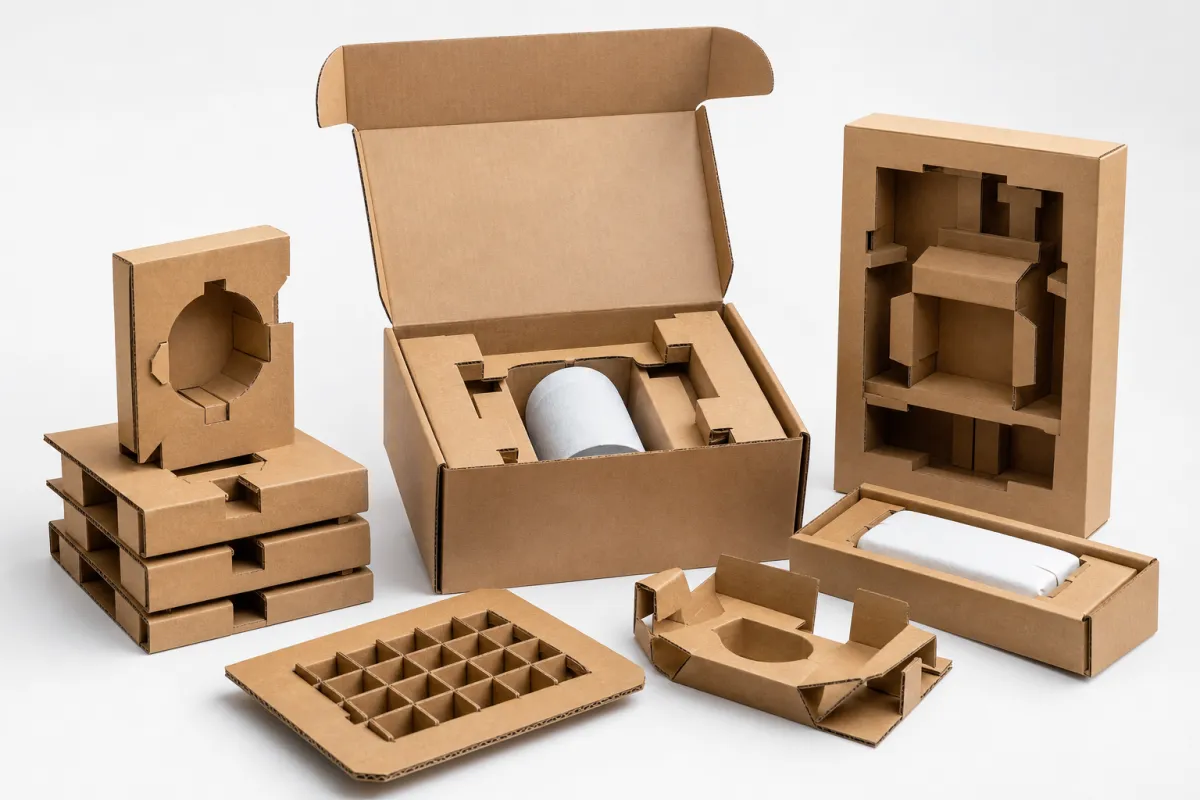
A shipping box inserts manufacturer does a lot more than cut board or foam to a finished size. The work starts with protection logic. Movement inside a carton creates the problem, so the insert has to stop shifting, absorb impact, and keep sensitive surfaces from touching each other or the outer wall. In practice, the manufacturer is designing a small transit packaging system, not just a shape.
The distinction matters because buyers often use several words as if they mean the same thing. They do not.
- Inserts are the custom internal parts that hold a product in place.
- Dunnage is the broader protective material used to stabilize cargo during transport.
- Void fill cushions empty space, but it usually does not lock a product in position.
- Separators divide multiple items so they do not knock against one another.
- Molded protection uses formed cavities or trays to cradle the product more precisely.
That is why a shipping box inserts manufacturer should not be judged only on whether the sample fits on the first try. Fit matters. Fit is not the whole story. The better question is whether the insert cuts breakage, lowers return rates, and keeps the unboxing experience controlled. A premium product that arrives loose in the carton feels cheap. A modest product that lands cleanly and centered often feels more expensive than it is.
There is also a margin story hiding in plain sight. Product damage is not the only cost. Repacking, customer service tickets, replacement freight, and write-offs all pile up. A shipment that costs $0.20 more in packaging can still be the better choice if it prevents a return that costs $12 to $25 in labor and freight. Anyone in package protection knows that math. Teams still miss it when they focus on the insert line alone.
The best shipping box inserts manufacturer partners think like operators. They care about carton count, nesting efficiency, and whether the insert adds useless weight to ecommerce shipping. If the product is light, every extra ounce can change dimensional weight economics. If the product is heavy, the insert must resist compression without turning into a brick. The right answer is rarely the material-hungry answer.
One useful test is to ask how the insert protects the product during a rough sequence of handling: pack-out, palletizing, line-haul vibration, courier drop, and final delivery. A good shipping box inserts manufacturer maps the insert to that path instead of describing it only in factory terms. That kind of thinking separates commodity cushioning from actual transit packaging design.
And yes, I know that sounds obvious. It still gets ignored. Plenty of teams approve a fit drawing, then act surprised when the product ships through a parcel network with more vibration than anyone budgeted for. Packaging does not care about optimism.
How a Shipping Box Inserts Manufacturer Turns Specs Into Protection
A good shipping box inserts manufacturer turns a basic product brief into a physical system by moving through a sequence of decisions. The first step is usually not the material. It is the product data. Dimensions, weight, fragility, finish sensitivity, stacking limits, and shipping environment all shape the insert concept. A glass bottle, a machined part with sharp corners, and a soft-touch cosmetic kit need very different answers even if their carton size looks similar on paper.
Design teams usually start with the part itself, then look at the distribution environment. Will the product move through parcel networks, regional carriers, or B2B freight? Will it see hot warehouses, damp conditions, or long dwell times? Are there multiple SKUs inside one pack? Those details matter because a shipping box inserts manufacturer is not protecting in a vacuum. The insert has to perform in the real shipment environment, where vibration and compression are often more damaging than the single dramatic drop everyone imagines.
From there, the manufacturer translates the data into a structure. Corrugated die-cuts are common when the product needs crisp edges, light protection, and good recyclability. Molded pulp works well when the shape can be formed into a nest and the buyer wants a fiber-based solution. Foam still has a place for surface-sensitive items, especially when scratches, coating damage, or tight dimensional control are concerns. Paper-based hybrids show up more often now, especially in ecommerce shipping programs that are trying to reduce plastic while keeping pack-out simple.
Testing is where the concept stops being theoretical. A capable shipping box inserts manufacturer may run drop testing, compression checks, vibration exposure, and fit validation in a real carton. The exact method depends on the product and shipping profile, but the logic stays the same: the insert should protect under abuse, not just in a tidy prototype photo. Industry references such as ISTA help frame those tests, and many teams also compare designs against ASTM D4169-style distribution thinking.
The most useful test results are not always dramatic failures. Sometimes the failure is subtle. A tray may pass a drop test but let a closure rub against a printed surface. Another insert may pass compression, yet slow down pack-out because the worker has to rotate the product twice to seat it. That is why a serious shipping box inserts manufacturer keeps judging the design from three angles at once: protection, labor, and shipping efficiency.
Good development work also accounts for nesting and assembly. If the insert ships flat and folds quickly, it can lower freight, improve storage density, and cut the time spent in order fulfillment. If the insert nests well in production but is annoying at the packing bench, the cost shows up later as labor drag. The strongest programs usually find the middle path: enough structure to protect, enough simplicity to keep the line moving, and enough material discipline to avoid waste.
In my experience, the best projects always ask the boring questions before anyone gets attached to a pretty sample. Can the operator grab it one-handed? Does the product seat the same way every time? Can the insert survive a slightly rough warehouse without tearing up the edges? That is the stuff that separates a decent concept from a program that actually holds up.
Key Factors That Shape Performance, Material Choice, and Price
Several variables push both performance and price, and a strong shipping box inserts manufacturer will talk through them without hiding behind generic language. The first is product fragility. A heavier object is not always harder to protect. A lightweight item with sharp corners, a glossy finish, or loose internal components can be trickier than a denser product with a simple shape. Cosmetic tolerances matter too. If a scratch is visible at arm's length, the insert spec changes fast.
The second variable is geometry. A cube is easier. A long, thin item with offset features, ports, caps, or protrusions is harder because the cavity has to stabilize multiple points at once. That is where insert thickness and cavity depth start shaping the quote. More structure usually means more board, more tool complexity, or more foam density. A skilled shipping box inserts manufacturer will ask whether the product can tolerate pressure on any edge, corner, or surface before they choose the material.
Material density matters as well. Heavier board grades, higher-density foam, and thicker molded fiber all add protection, but they also add cost and sometimes freight weight. Nesting efficiency is another hidden driver. If a design nests tightly, a run of 10,000 parts may ship on fewer pallets, which cuts logistics cost. If it nests poorly, the packaging line may save pennies on unit cost while spending dollars on storage and freight.
Sustainability has become part of the conversation too, but it should stay grounded. A buyer may want recycled content, curbside recyclability, or FSC-certified board, yet those goals still have to fit the product and budget. The EPA's resource pages on recycling and material recovery are useful for teams trying to separate aspiration from actual end-of-life behavior: EPA recycling guidance. A reputable shipping box inserts manufacturer should be able to discuss whether the proposed structure is fiber-based, recyclable in common residential streams, or better suited to a mixed-material program. Some materials that look green on a spec sheet are not actually easy for customers to recycle. That part should be said plainly.
Volume changes the economics quickly. Prototype runs usually carry the heaviest setup burden because drawing time, sample cutting, and revision cycles are not spread across many units. Short runs can look expensive per unit but still make sense for launches, seasonal kits, or limited editions. High-volume production lowers the average cost, yet only if the design is stable enough to avoid repeated changes. A seasoned shipping box inserts manufacturer will often compare not just unit price, but damaged-unit rate, pack-out labor, and freight impact.
There is a practical comparison buyers can use before choosing a material. Ask each supplier how many grams, inches, or density points they are adding to solve a problem. If the answer sounds vague, the quote may be more guesswork than engineering. If the answer ties protection to a test method, a carton dimension, and a labor assumption, the supplier is probably thinking the right way.
The smartest teams also compare material choices against the product lifecycle. A subscription brand may care deeply about curbside recycling because the box is opened every month and the insert becomes part of brand perception. A B2B parts seller may care more about stacking strength and damage reduction. Both are valid. The right shipping box inserts manufacturer should match the material to the use case, not force the use case to match the material.
A quick reality check helps here: if everyone in the room agrees on the material too fast, somebody probably skipped a detail. That is when the expensive surprises show up later. A little friction early usually saves a lot of grief later.
Shipping Box Inserts Manufacturer Pricing: What Buyers Actually Pay For
Pricing becomes clearer once buyers break it into components. A shipping box inserts manufacturer is usually charging for design time, sampling, tooling or setup, material, conversion labor, and freight. On a simple corrugated die-cut, design and setup may be modest. On molded pulp or a complex foam program, tooling can become a real line item. That is normal. The mistake is treating every quote as if it were only a material quote.
To make the economics concrete, a buyer might see sample-development fees from roughly $150 to $750 for straightforward corrugated concepts, while more complex formed or molded programs can move into the low thousands depending on tooling. Unit pricing then depends on volume and geometry. A small insert with minimal print coverage might land in the low cents at scale, while a multi-cavity protective set can easily move into the higher range. A reliable shipping box inserts manufacturer should explain those steps before the quote arrives, not after.
The cheapest insert is often the most expensive program once returns are counted. That is not a slogan. It is arithmetic. If a $0.11 insert allows a 1% damage rate on a high-value shipment, while a $0.23 insert cuts that rate in half, the higher-priced option can save money almost immediately. The same logic applies to rework and customer service. Replacement shipping, reshipment labor, and repeat handling often outweigh the packaging delta.
The cheapest insert is rarely the cheapest program once damage, labor, and return freight are counted.
Customization affects price in very specific ways. Print adds cost, though not always a large one. Tight die-cut tolerances add cost. Multiple cavities add cost. Special coatings, anti-abrasion liners, or bonded assemblies add cost. A shipping box inserts manufacturer may also charge more if the structure requires extra handling steps on the line or if the parts have to be pre-assembled before shipment. Buyers should ask how many seconds each pack-out adds, because faster handling can lower total fulfillment cost even if the insert itself is a little pricier.
Shipping costs matter too. A structure that saves a cent on the insert but increases carton size can erase the savings fast. Parcel networks are not sentimental about this. If the box crosses a dimensional weight threshold, the rate jump can dwarf the packaging savings. That is why carton design and insert design should be reviewed together. Split those decisions, and you end up paying twice for one mistake.
| Material / Format | Typical Use | Setup or Tooling | Approx. Unit Cost at 5,000 | Approx. Unit Cost at 25,000 | Best Fit Notes |
|---|---|---|---|---|---|
| Corrugated die-cut | Light to midweight products, retail kits, simple cavities | $250-$900 | $0.18-$0.55 | $0.10-$0.30 | Good recyclability, fast assembly, strong value for repeat runs |
| Molded fiber | Trays, nests, multi-point product support | $1,500-$5,000 | $0.28-$0.85 | $0.16-$0.45 | Better for higher volumes and fiber-based sustainability goals |
| Foam insert | Surface-sensitive products, fragile finishes, electronics | $300-$1,200 | $0.35-$1.10 | $0.22-$0.70 | Useful when scratch prevention and tight fit matter most |
| Paper-based hybrid | Mixed SKU kits, lighter protection, reduced plastic use | $200-$800 | $0.24-$0.70 | $0.14-$0.40 | Often balances cost, branding, and curbside-friendly positioning |
These numbers are directional, not quotes. A shipping box inserts manufacturer will still adjust for product size, board grade, print coverage, scrap rate, and freight. Still, a table like this helps buyers compare apples to apples before procurement gets trapped in unit-price tunnel vision.
One more factor sits quietly in the background: dimensional weight. If a bulky insert forces the carton to grow even slightly, parcel charges can rise faster than the packaging savings disappear. A carton that increases by just a couple of inches can cross a rate threshold in ecommerce shipping. That is why insert design and outer-carton design should be reviewed together, not separately. A thoughtful shipping box inserts manufacturer understands that a lower carton profile can be as valuable as a lower insert price.
For brands that care about sourcing standards, FSC-certified paperboard can support procurement goals and customer-facing claims when used correctly. More on forest stewardship standards is available through FSC. A credible shipping box inserts manufacturer will tell you which components are certified, which are simply recyclable, and which are neither. That honesty matters, especially when a sales deck is trying a little too hard to sound green.
Process and Timeline: From Brief to First Production Run
A typical shipping box inserts manufacturer process starts with discovery. That stage is short on glamour and high on consequence. The supplier needs a product sample or CAD file, exact dimensions, weight, photos from multiple angles, and a description of the shipping route. A brief that says only "protect this product" is not enough. A better brief says how it will ship, how often it will be packed, and what kind of damage matters most.
From there, the timeline usually moves through a sequence like this:
- Intake and review - 1 to 2 business days for a clean brief, longer if product data is incomplete.
- Concept development - 2 to 5 business days for a first structural idea and material direction.
- Prototype or sample - 5 to 10 business days for many corrugated programs, longer for formed parts.
- Testing and revision - 3 to 7 business days if the first sample needs fit changes or transit adjustments.
- Approval and production - often 10 to 20 business days for corrugated runs after approval, and sometimes longer for molded or more complex systems.
That schedule can compress or stretch based on project clarity. Missing samples slow everything down. So do late artwork changes, last-minute product revisions, and a supplier who is still waiting for final dimensions. A good shipping box inserts manufacturer will tell you where the bottleneck is before the project starts slipping.
There is also a real difference between a stock-style solution and a fully custom program. A stock or near-stock insert can move fast because the shape already exists and only minor adjustments are needed. A fully custom design takes longer because the team is solving protection, fit, and operational flow from scratch. For seasonal launches or promotional kits, the best answer may be a hybrid approach: use a practical interim solution now, then switch to custom once the product line stabilizes. A flexible shipping box inserts manufacturer can support both paths.
That flexibility becomes useful during peak periods. If a holiday launch is tied to a date, the project should include time for sample review, one revision cycle, and a small pilot run before the full release. Teams that skip those steps often discover problems only after orders are live. In ecommerce shipping, that can mean a wave of returns before the first production pallet is even unloaded. A good shipping box inserts manufacturer helps prevent that by planning around the calendar, not just the drawing.
If your line also ships apparel, accessories, or lightweight add-ons, custom poly mailers can play a role alongside inserts. The point is not to force one format everywhere. It is to build the right mix of shipping materials so the pack-out stays efficient and the outer pack matches the product class.
Ask for a milestone schedule in writing. Procurement needs dates. Operations needs pack-out assumptions. Customer service needs visibility on likely failure points. A disciplined shipping box inserts manufacturer should be able to name the sample date, the testing window, the approval checkpoint, and the production start. That is not bureaucracy. It is how you keep launch risk under control.
One more thing: if a supplier says they can "figure it out later," they are asking you to pay for uncertainty. Maybe that works on tiny runs. It does not work well when inventory, launch calendars, and customer expectations are already locked in.
Common Mistakes When Sourcing Shipping Box Inserts
Many programs go sideways for reasons that are easy to spot after the fact and surprisingly hard to correct midstream. The first mistake is sizing the insert to the carton instead of the product. When that happens, the product shifts, the voids grow, and the carton ends up carrying the protection burden by itself. A careful shipping box inserts manufacturer should start with the object, not the box.
The second mistake is overengineering. Buyers sometimes ask for more protection than the product needs because they are trying to eliminate every possible risk. That can backfire. Extra board thickness, excess foam density, and oversized cavities all increase cost and can make fulfillment slower. If a product survives a modest drop profile with a smaller insert, there is no prize for using more material than necessary. A practical shipping box inserts manufacturer will challenge over-specs if they do not match the actual shipping environment.
Another common miss is skipping prototype testing. Fragile, irregular, or premium products need real-world validation. A CAD file can look perfect and still fail because a lid lip catches, a corner rubs, or a cavity compresses too much under stack load. The most reliable suppliers treat testing as a requirement, not a nice extra. A qualified shipping box inserts manufacturer should be able to explain what kind of drop, compression, or vibration check was used and what changed after the first sample.
Choosing a supplier only on unit price is another expensive habit. A low quote can hide slow revisions, poor fit consistency, or weak communication. If the supplier cannot turn changes quickly, the project loses weeks. If the tolerances drift, the damage claims show up after launch. The quote may still look good on paper, but the program cost rises elsewhere. Buyers should ask the shipping box inserts manufacturer how they measure success: by unit price alone, or by damage reduction, line speed, and customer experience.
The last mistake is leaving operations and customer service out of the conversation. Those teams see the real failure patterns. They know which SKUs are awkward to pack, which cartons collapse at the corners, and which complaints repeat every month. Their feedback is often the fastest route to a better insert. A practical shipping box inserts manufacturer will want their input because the pack-out bench is where theory meets labor reality.
- Do not approve a design before a real carton test.
- Do not assume the outer box will make up for poor internal fit.
- Do not ignore carton size changes that affect dimensional weight.
- Do not treat customer complaints as random if one SKU keeps generating them.
Those are simple rules, but they save real money. A careful shipping box inserts manufacturer should welcome them because they make the final program easier to defend inside the business.
Expert Tips and Next Steps for Choosing the Right Partner
If you are evaluating a shipping box inserts manufacturer, ask for more than a price sheet. Request sample kits, material comparisons, and test notes. If a supplier can show how one concept compares with another on protection, cost, and labor, the conversation gets more useful fast. The same is true for revisions. Seeing what changed from sample one to sample two tells you a lot about the engineering process.
A simple scorecard helps. Weight protection, cost, sustainability, lead time, and pack-out efficiency on the same page. Do not make the scorecard complicated. Five criteria are enough for most programs. A design that wins on sustainability but hurts line speed may still be the wrong answer. A design that is fast but damages product is obviously wrong. A good shipping box inserts manufacturer should make those tradeoffs visible instead of hiding them in the quote.
Compare at least two concepts before approving a run. The most obvious option is not always the best one. I have seen projects where a folded corrugated solution beat a foam concept on price and labor, and others where a molded tray reduced returns enough to justify a higher upfront cost. The only way to know is to compare. That matters even more in order fulfillment environments where one minute of labor across thousands of units becomes a real expense. A thoughtful shipping box inserts manufacturer knows that a better design may be the one that is less flashy and far easier to pack.
Pilot the insert with real shipments before scaling. A small batch of 50 to 200 units can expose issues that no bench test catches. Watch how operators handle the parts. Watch whether the product seats cleanly. Watch whether the carton closes without strain. Watch customer feedback if the product reaches actual buyers. A disciplined shipping box inserts manufacturer should be comfortable with that pilot phase because it protects both sides from larger mistakes later.
One more practical move: involve finance early. The financial team may not care which cavity geometry is prettier, but they care a great deal about replacement rate, freight impact, and inventory carrying cost. If the insert lowers damage but increases carton dimensions, finance will spot the trade immediately. If the insert costs a bit more yet reduces reshipments, finance will usually appreciate the logic. That is how a packaging program shifts from a cost center into a controlled system.
For brands building out a broader kit strategy, the team behind Custom Logo Things can help connect insert design with branded cartons, presentation packaging, and the rest of the shipping structure. The right partner should not just cut parts. The right partner should understand how the parts fit into the rest of the supply chain. That is the difference between packaging that looks fine in a sample room and packaging that performs in real transit.
If you are choosing a partner tomorrow, keep the checklist simple: ask for the product sample, a second material option, a real test plan, and a pilot run. If the supplier cannot explain those pieces clearly, keep moving. If they can, you are probably talking to a shipping box inserts manufacturer that understands the difference between a drawing and a shipment.
In the end, choosing a shipping box inserts manufacturer is a decision about risk, labor, and repeatability. Gather product data, request samples, compare quotes at more than one volume, and launch a pilot run before you commit to scale. The best shipping box inserts manufacturer will help you protect the product, reduce returns, and keep packaging cost inside the target without sacrificing the customer experience. That is the real goal. Not pretty specs. Not inflated claims. A package that shows up intact and a line that keeps moving.
Frequently Asked Questions
How do I choose the right shipping box inserts manufacturer for my product?
Start with the questions the supplier asks. A strong shipping box inserts manufacturer will want measurements, weight, fragility details, shipping conditions, and a sample if possible. Compare sample quality, testing capability, revision speed, and how clearly the team explains tradeoffs. The best partner is usually the one that can show how the insert reduces damage and improves pack-out speed, not just the one with the lowest quote.
What materials do shipping box insert manufacturers usually recommend?
Common options include corrugated board, molded fiber, foam, and paper-based cushioning systems. The right choice depends on product weight, fragility, moisture exposure, sustainability goals, and budget. A good shipping box inserts manufacturer should give you two or three material paths so you can compare protection, cost, and recyclability side by side instead of guessing. If one option is clearly better on damage control but worse on recovery or labor, that tradeoff should be out in the open.
How much do custom shipping box inserts cost?
Cost depends on material choice, insert complexity, order volume, and whether tooling or sampling is required. A simple design at scale may cost far less per unit than a highly customized insert with multiple cavities or tight tolerances. A careful shipping box inserts manufacturer should also help you compare damage reduction against unit cost, because the cheapest insert can create the highest total expense. I would rather see a buyer spend ten minutes on lifecycle cost than three months fixing a cheap mistake.
How long does it take a shipping box inserts manufacturer to deliver samples and production?
Simple projects may move quickly, while custom designs usually need time for design, sampling, testing, and revisions. Delays often come from unclear specs, late approvals, or product changes after samples are made. Ask the shipping box inserts manufacturer for a milestone schedule before the project begins so inventory, launches, and fulfillment plans can stay aligned. If the project has a hard date, bake in one revision cycle early. That extra cushion is boring. It also saves launches.
Can a shipping box inserts manufacturer help with testing and damage reduction?
Yes, many suppliers can test fit, simulate transit stress, and adjust the design based on results. They can also help identify weak points in the pack-out process, such as movement, pressure points, or poor nesting. Use those tests before scaling, especially for fragile or premium products. A capable shipping box inserts manufacturer should treat testing as part of the design, not an afterthought. If they cannot explain the test conditions in plain language, keep asking.

