Buyer Fit Snapshot
| Best fit | Shipping Boxes Design That Cut Costs and Damage projects where brand print, material claims, artwork control, MOQ, and repeat-order consistency need to be specified before quoting. |
|---|---|
| Quote inputs | Share finished size, material target, print colors, finish, packing count, annual reorder estimate, ship-to region, and any compliance wording. |
| Proofing check | Approve dieline scale, logo placement, barcode or warning zones, color tolerance, closure strength, and carton packing before bulk production. |
| Main risk | Vague material claims, crowded artwork, missing packing details, or unclear freight terms can make a low unit price expensive after revisions. |
Fast answer: Shipping Boxes Design That Cut Costs and Damage: Board, Finish, Dieline, and Unit Cost should be specified like a repeatable production item. The safest quote records material, print method, finish, artwork proof, packing count, and reorder notes in one written spec.
Production checks before approval
Compare the actual filled-product size with the drawing, then confirm tolerance on folds, seals, hang holes, label areas, and retail display edges. Reserve space for logos, QR codes, warning copy, and material claims before decorative graphics fill the panel.
Quote comparison points
Review material grade, print process, finish, sampling route, tooling charges, carton quantity, and freight assumptions side by side. A quote is only useful when the supplier can repeat the same color, closure quality, and packing count on the next order.
Shipping Boxes Design Tips matter more than most people think. I’ve watched a gorgeous printed carton fail a basic drop test in Ningbo because the insert was off by 3 mm and the corrugated spec was too soft for a 7.8 lb product. Pretty box. Bad outcome. That’s the part people skip when they assume packaging is just “the box around the thing.”
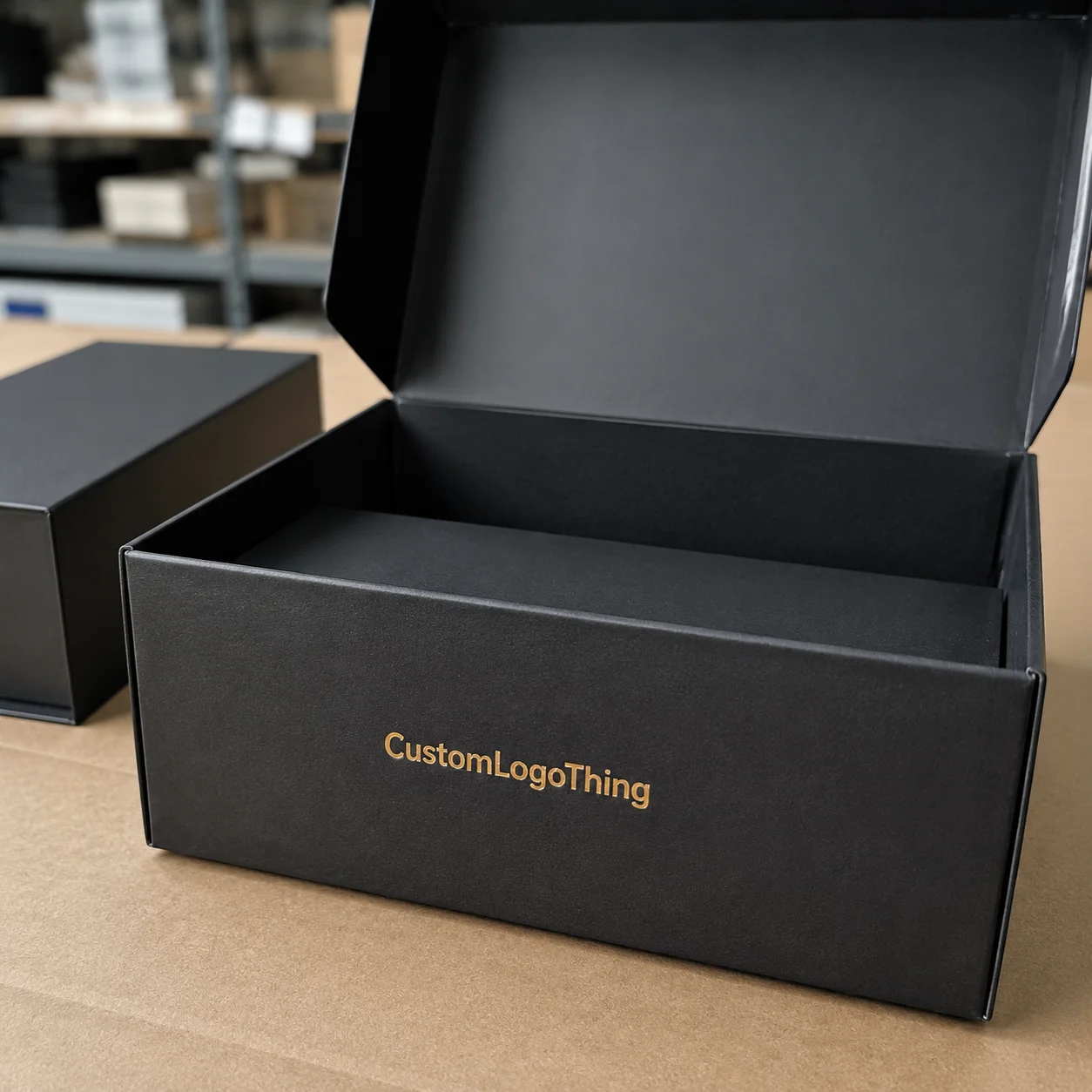
At Custom Logo Things, I’ve seen brands spend $1.80 per unit on print upgrades and then lose $12 per order in damage, returns, and repacking labor. That math is rude, but it’s real. In one Shenzhen program, switching from a flimsy single-wall box to a 350gsm C1S artboard sleeve over a 32 ECT corrugated shipper cut breakage by 4.6% and saved roughly $0.41 per shipment after labor. The right shipping boxes design tips can cut freight costs, reduce breakage, and make order fulfillment faster without turning your package into cardboard overkill.
Shipping Boxes Design Tips: What Actually Matters
Shipping boxes design tips start with one blunt truth: a shipping box is not decoration. It’s a working part of your transit packaging system. It affects package protection, dimensional weight, pallet fit, packing speed, and how your customer feels when they open the carton. If the box fails, the brand story inside it does not matter much. Brutal, but fair. I’ve seen a carton with a $2.10 per unit premium finish fail in the first 18-inch corner drop. Fancy doesn’t beat physics.
I like to define box design as six connected decisions: structure, corrugated grade, dimensions, print, inserts, and closure. Miss one of those, and the whole carton can wobble. That’s why shipping boxes design tips are never just about making something look clean. They are about creating a box that survives carriers, stacks neatly, and still looks like a brand spent more than eleven minutes on it. In practice, that usually means a custom size within 2 to 4 mm of the packed product, a board spec that matches the lane, and a closure method that does not annoy the packing crew in Guangzhou at 4:30 p.m.
Here’s where people get confused. A shipping box is built primarily for protection and transport. A mailer box usually has a more consumer-facing opening style and can handle lighter ecommerce shipping. A retail carton is often designed for shelf presentation first, not for being tossed onto a truck by someone who thinks “fragile” is a personal challenge. Different jobs. Different specs. Different prices too: a plain stock mailer might run $0.38 to $0.72 per unit at 5,000 pieces, while a custom RSC shipping box with a 2-color logo can land around $0.62 to $1.45 depending on board and size.
One afternoon at a Shenzhen converting plant, I saw a customer insist on a 4-color outside print with soft-touch lamination, then choose a carton that was too thin for a 9 lb product. The box looked expensive. The product still cracked when the stack test started. I told the buyer, “Congratulations, you bought an expensive failure.” He was not amused. The factory manager was. He had seen this movie before, usually with buyers who skipped the sample test and tried to fix the problem after a pallet failure in Rotterdam.
Good shipping boxes design tips balance three things: protection, cost, and production practicality. Not “make it pretty and hope.” Not “make it thicker because thicker feels safer.” The real answer sits in the middle, where the product survives, the freight bill stays sane, and the packing line does not slow down to a crawl. I’ve found that a 32 ECT single-wall box is often enough for lighter items under 5 lb, but once you start shipping glass, ceramics, or stacked units, 44 ECT or double-wall BC flute starts making a lot more sense.
For brands building a packaging system, I usually suggest looking at Custom Packaging Products alongside your box specs. Sometimes the right answer is a custom box. Sometimes it’s a custom insert, a label, or a hybrid structure that protects the product without adding $0.42 in dead weight to every shipment. I’ve also seen a $0.15 per unit stock label solve a launch problem that would have cost $0.90 per unit in custom printing and a 3-week wait in Dongguan.
How Shipping Boxes Design Tips Work in Real Production
Shipping boxes design tips only matter if they hold up in production. The lifecycle starts with a dieline, which is basically the box blueprint. From there, the spec moves into corrugate selection, print planning, cutting, gluing, folding, and final pack-out. If the dieline is wrong by even 1/8 inch, the whole thing can become a tolerances problem. And yes, tolerance problems are where factories quietly start drinking more tea. I’ve watched a 0.125-inch error turn into a 2,000-piece rework at a plant in Dongguan. Nobody was cheerful.
The board style and flute choice change everything. A single-wall B flute might work beautifully for a 1.2 lb candle set, but a double-wall BC flute may be smarter for heavier ecommerce shipping with a longer carrier route and more stacking pressure. Print quality also shifts with the board. A rougher liner can make fine typography look fuzzy, while a smoother liner gives you cleaner branding but may cost more. For example, 350gsm C1S artboard on an outer sleeve can give you crisp color, while a 32 ECT kraft liner underneath handles the abuse. Shipping boxes design tips always have a material side and a visual side.
Dimensional weight is the sneaky cost nobody respects until the invoice arrives. A box that is half an inch larger in each direction can push you into a higher billable weight tier, especially for parcel shipping. I once renegotiated a box spec with a client and shaved the outer length from 12.5 inches to 11.9 inches. That tiny change cut the dimensional weight enough to save roughly $0.68 per shipment on average with UPS Zone 5 pricing. Multiply that across 20,000 orders and suddenly the “tiny change” looks like a budget line item worth caring about.
The process usually runs like this: sample prototype, internal review, revisions, approval, production, then transit time. If you are adding custom inserts, specialty coatings, or a complicated crash-lock bottom, the timeline gets longer. In a normal run, I’ve seen simple Custom Shipping Boxes move from approved spec to finished cartons in 12 to 15 business days from proof approval in Xiamen, while more complex packaging can take 18 to 25 business days depending on tooling and factory queue. Shipping boxes design tips should always include a timeline reality check, especially if you’re launching before Singles’ Day or Q4.
Factory constraints matter too. Minimum order quantities can start around 1,000 pieces for some custom work, but the real sweet spot is often 3,000 to 5,000 pieces for better unit pricing. Tooling setup, print plates, and custom die costs can add $150 to $800 upfront depending on complexity. A simple two-color die-cut box made in Foshan might cost about $0.15 per unit at 5,000 pieces, while the same structure at 1,000 pieces can jump to $0.39 per unit. That’s not scary if the box runs all year. It is annoying if you only needed a one-off test and nobody asked the factory the right questions. I’ve been in those meetings. They are a special kind of painful.
If you want a baseline for standards, I always point people to industry references instead of vibes. The ISTA testing protocols are useful for drop and transit simulation, and the Packaging School and Packaging Professionals Network resources are solid for material fundamentals. For sustainability questions, the EPA’s guidance on packaging waste is worth reading too: EPA sustainable materials management. Fancy branding is nice. Standards keep you from paying for avoidable mistakes, especially when a carrier in Louisville or Chicago decides your carton is a stress test.
Key Factors in Shipping Boxes Design Tips: Size, Strength, and Cost
Size first. Always. Shipping boxes design tips begin with a box that fits the product and leaves just enough room for protection materials. Too much extra space means more void fill, more movement, and more dimensional weight. Too little space means crushed corners, abraded surfaces, and packing staff fighting the box like it owes them money. And trust me, packaging people remember those boxes forever. I still remember a 14-inch carton spec from a client in Dallas that needed 48 grams of paper fill just to stop the product from rattling like a toy in a coffee can.
For fragile products, I usually want internal clearance measured in millimeters, not guesswork. If a ceramic item needs 10 mm of foam or molded pulp on each side, build that into the dieline from the start. If the product is oddly shaped, use inserts or dividers so the load is supported at the right points. A molded pulp tray might run $0.17 to $0.29 per set in 5,000-piece orders from Huizhou, while EPE foam can be cheaper at first glance but add more bulk and more freight. Good shipping boxes design tips are really package protection decisions wearing a cardboard costume.
Strength is not a guess. It’s a spec. Single-wall corrugated with an ECT rating of 32 might be fine for lighter items, but heavier cartons or stacked pallets may need 44 ECT or double-wall construction. Here’s the part people hate hearing: paying more for stronger board can be cheaper than replacing damaged product. A carton that costs $0.21 more but reduces breakage by 3% can absolutely save money. I’ve seen that happen in skincare, glassware, and small electronics. On one Shenzhen skincare project, moving from 32 ECT to 44 ECT added $0.18 per unit and cut return claims by 2.9% in the first month.
Internal packaging matters more than the outside print. Inserts, dividers, and void fill keep the product from bouncing around during transit. In one factory in Dongguan, I watched an operator pack 500 units with kraft paper crinkle and no insert. Half of them arrived with corner wear because the product had just enough room to move. We switched to a molded pulp tray at $0.17 per set, and damage claims fell hard. That is the kind of boring fix that makes shipping boxes design tips pay off. Not glamorous. Just profitable.
| Option | Typical Unit Cost | Best For | Watch Out For |
|---|---|---|---|
| Stock box + label | $0.38 to $0.72 | Fast launches, lower volumes | Loose fit, weaker branding control |
| Custom shipping box | $0.62 to $1.45 | Branding, fit, higher protection | Tooling costs, longer lead time |
| Custom box + insert | $0.95 to $2.10 | Fragile or premium products | More setup time, more parts to source |
| Mailer box + void fill | $0.44 to $1.05 | Light ecommerce shipping | Limited compression strength |
Pricing depends on board grade, print coverage, size, and quantity. A 2-color logo on a standard kraft shipper might be $0.58/unit at 5,000 pieces from a factory in Guangzhou. The same structure with full outside print, inside print, and a special aqueous coating can jump to $1.30 or more. Shipping boxes design tips should help you decide where branding adds value and where it just adds cost. Sometimes a cleaner structure beats a louder print. Honestly, the box does not need to scream if the product already looks good.
Sustainability is not just a talking point. Right-sizing a carton reduces shipping materials, lowers waste, and usually improves pallet utilization. FSC-certified board is a smart option if your buyers care about sourcing, and it helps when retailers ask for documentation. But don’t overengineer a box to prove you care. I’ve seen brands add extra board layers “for sustainability,” which is hilarious in the worst way because overbuilt packaging usually means more material, more freight, and more carbon burden. Efficiency is cleaner than theater, especially if your cartons move through a warehouse in Newark or Atlanta where every extra cubic inch matters.
For teams building broader packaging systems, pairing box work with Custom Shipping Boxes and, where suitable, Custom Poly Mailers can simplify order fulfillment. Different products need different transit packaging. A shirt does not need the same protection as a glass jar. Shocking, I know. A 6 oz apparel parcel from Los Angeles can ship fine in a poly mailer, while a 16 oz jar set from Nashville probably deserves a corrugated shipper with a molded insert and 2-inch tape seal.
Shipping Boxes Design Tips Step by Step
Step one in shipping boxes design tips is a product audit. I want the real weight, the surface finish, the fragility level, and the shipping method. Is this going by parcel, pallet, or mixed freight? Does it ship once or twice? Is the product coated, polished, or easily scratched? These details change the carton spec more than most people realize. A 2.6 lb matte-finish candle in a parcel shipment needs a different solution than a 14 lb metal accessory going across a distribution center stack in Memphis.
For example, a 2.6 lb matte-finish candle in a parcel shipment needs a different solution than a 14 lb metal accessory going across a distribution center stack. The first may fit in a lighter single-wall mailer-style box with paper cushioning. The second may need a stronger RSC carton with a tighter insert and stronger closure tape. A sample run in Yiwu might show the candle carton working at $0.49 per unit, while the metal accessory may need a $1.08 double-wall build to avoid corner crush. Shipping boxes design tips work best when the product reality comes first.
Step two is measurement. Measure the product plus the protection allowance, then build the dieline around the finished packed size. I’ve had clients insist their item was “10 inches long,” only to discover that after sleeves, labels, and a protective wrap, it was actually 11.2 inches. That extra inch changes the whole structure. It changes pallet pattern. It changes freight pricing. It changes your life in irritating little ways. I still remember one supplier in Suzhou calling it “just a little buffer.” Sure. A little buffer that costs money, adds 0.3 cubic feet, and pushes you into a more expensive UPS zone.
Step three is selecting corrugate grade, flute type, and closure method. A B flute can give nice print quality and decent compression. E flute is thinner and often cleaner for retail presentation, but it may not be strong enough for heavier transit packaging. Double-wall gives you more crush resistance and better stack performance. Closure method matters too. Standard tape is cheap. Self-locking features can save labor but may cost more in tooling. Hot-melt or reinforced tape can be worth it if the box is opened and closed multiple times before shipment. A crash-lock bottom made in Foshan can shave 5 to 7 seconds off pack time if the line is set up for it.
Step four is print planning. Exterior print is the obvious branding choice, but inside print can Create a Memorable reveal if the package is opened by a consumer. It costs more, though, and inside print is not always practical for high-volume order fulfillment. A 1-color inside message can be enough. You do not need a full mural unless the budget is already ridiculous. I’ve seen people ask for a six-color interior and then act shocked when the quote arrives. The quote was not rude. The request was. A single-color inside note on a 350gsm C1S liner can give you the nice moment without the $0.27 extra print hit.
Here’s the test I use on print decisions: if the print adds $0.14 per unit, will it improve perceived value, reduce confusion in packing, or help the box sell the product? If not, I usually say no. Beautiful is good. Useful is better. I’d rather have a plain kraft box that survives a 600-mile truck route from Dallas to Denver than a glossy carton that looks smart and arrives looking like it fought a raccoon.
Step five is sampling and testing. Request prototypes. Test fit. Test drop performance. Test stacking. Test with the actual packing staff, not just the person who knows how to make the CAD file look elegant. I once saw a sample pass design review and then fail in the warehouse because the top flap required too much force to close. The packers hated it immediately. They also made that very clear in Spanish, which the brand manager did not understand until I translated the mood, not the words. In practical terms, a box that adds 14 seconds per pack can burn through labor budgets fast at 1,500 units a week.
“The first prototype looked perfect on the screen. On the line, it took 14 extra seconds to pack each unit. We rejected it the same afternoon.” — an operations manager I worked with on a beverage launch in Monterrey
That one sentence sums up shipping boxes design tips better than a hundred mood boards. If the box slows packing by 10 to 15 seconds, the labor cost can snowball quickly. At 2,000 units a week, even 12 extra seconds per pack can create real payroll waste. This is why box design is never just art. It is operations math. If your line labor runs $19 per hour, those seconds add up in a hurry.
Common Mistakes in Shipping Boxes Design Tips
The first mistake is using a box that is too large. Bigger sounds safer, until the item starts moving, void fill increases, and dimensional weight goes up. Then you are paying to ship air. Very expensive air. Shipping boxes design tips should never create more empty space just because the original product spec was inconvenient. A carton that is 1 inch too long can also waste pallet space and make stack patterns messier in a warehouse like Rancho Dominguez or Dallas-Fort Worth.
The second mistake is choosing the cheapest board without checking compression strength. I’ve seen brands save two cents a unit and then lose $8,000 in replacement shipments after stack collapse in a regional warehouse. A weak carton can look fine on a desk and fail badly under pallet pressure. That is why ECT and BCT numbers matter. They are not decorative. A 32 ECT box at $0.42 may look fine on paper, but a 44 ECT build at $0.60 can be the cheaper choice if your product ships through a busy Midwest distribution center and stacks four high.
Third mistake: ignoring carrier rules. Parcel carriers care about dimensional weight. LTL and pallet shipping care about stackability and carton integrity. If your box pattern creates unstable pallets, your freight costs can climb and your claims can too. Shipping boxes design tips must match the shipping lane, not your favorite CAD dimension. FedEx Ground does not care that your render looked elegant.
Fourth mistake: approving a pretty mockup without testing. A render is not a package. A CAD file is not a shipping test. I sound sarcastic because I’ve had to explain this too many times, usually after someone falls in love with a blue box that cannot survive a 24-inch drop. I get it. The mockup looks lovely. The truck does not care. In one case in Los Angeles, the brand approved a lamination sample at 8:00 a.m. and rejected 300 units by 3:00 p.m. after the edge scuffing showed up in the first carton.
Fifth mistake: forgetting assembly speed. A gorgeous carton that takes 25 seconds to fold and tape can create a labor bottleneck that destroys your savings. In order fulfillment, time is money. If you can cut packing time from 40 seconds to 28 seconds with a simpler structure, that can matter more than shaving $0.03 off the board spec. Use the simpler box when it protects the product well enough. If a crash-lock bottom costs $0.06 more but cuts 6 seconds from every pack, that’s usually money well spent in a Houston warehouse.
Expert Shipping Boxes Design Tips From Factory Experience
Ask for ECT and BCT specs. Not just “thick board.” Not just “good cardboard.” I know that sounds obvious, but half the buying requests I see are still written like someone is ordering pizza. If a supplier cannot tell you the edge crush test rating, the board composition, or the flute profile, keep asking until they do. Good shipping boxes design tips rely on measurable specs, not sales language. I want to see the board callout in writing: 32 ECT kraft, 44 ECT white liner, or double-wall BC flute, not “premium material.”
Test the real shipping lane. Parcel handling beats up cartons differently from air freight, and both are different from palletized shipping. I’ve had clients run a box through gentle internal handling and declare victory, only to have it fail once a carrier sorted it through a longer route. Shipping boxes design tips should reflect the roughest route your product will face, not the friendliest one. If the box is headed from Shenzhen to Chicago, test for that route, not for the polite little warehouse transfer in between.
Negotiate setup costs. This is where brands leave money on the table. Print plates, die charges, and insert tooling are often negotiable, especially if you can commit to repeat volume. I’ve pushed a die charge from $680 down to $420 just by consolidating adjacent SKUs into one outer size and adding an insert variation instead of a whole new carton. In one case, a supplier in Xiamen quoted $260 for sampling and then absorbed it into the first 5,000-piece PO after we agreed to a quarterly reorder. Suppliers expect some back-and-forth. If they do not, they are probably not pricing aggressively enough.
Sometimes a stock box plus a custom label wins. I know, not as glamorous. Also not as expensive. If your product is stable, light, and doesn’t need a custom insert, a stock carton with branded labeling can be the smarter move. It is faster too. For some ecommerce shipping programs, I’ve seen brands launch in 5 business days with stock packaging instead of waiting 3 weeks for a custom run. That speed can matter more than perfect graphics, especially if the first 2,000 orders are going out of a warehouse in Phoenix before a retail pitch in two weeks.
Design around labor. I can’t say this enough. A box that saves 10 seconds per unit can save real money at scale. If your team packs 4,000 units per month, that is roughly 11 hours of labor saved. If packing labor averages $18 to $24 per hour, you do the math. I’ve sat in more than one supplier meeting where the packaging spec looked “slightly” more expensive but actually lowered total landed cost because the packing process got simpler. A cleaner dieline from Dongguan can beat a prettier print from Guangzhou if it trims even 8 seconds per pack.
One more thing: ask your supplier where they are making the tradeoff. Better board? Higher freight? Lower print quality? More labor? They all show up somewhere. A good vendor will be honest about that. A bad one will hand you a glossy sample and hope nobody opens the box hard enough to find the truth. I’ve had that exact moment happen, and yes, it was as annoying as it sounds. The sample looked expensive. The carton wall was 0.8 mm thinner than promised. That sort of trick is how quote sheets turn into headaches.
Next Steps for Better Shipping Boxes Design Tips
If you want better shipping boxes design tips, start with a practical checklist. Gather product weight, dimensions, fragility level, and shipping method. Define what damage rate you can tolerate. Compare at least 2 or 3 structures, not just one “favorite” option. That gives you room to measure cost and performance instead of guessing. If the product ships from California to New Jersey, test one box for West Coast routes and another for cross-country pressure. Different lanes, different abuse.
Then request samples. Run a small pilot shipment with the actual packing team and the actual shipping lane. Log fit, pack time, damage, and customer feedback. If the carton looks fine but adds 9 seconds to pack and 2 ounces of void fill, those details matter. Small numbers compound fast in order fulfillment. A pilot of 200 units can tell you more than a pretty PDF ever will.
Build a simple cost sheet. Include unit price, tooling, freight, inserts, labor, and expected breakage reduction. Don’t just stare at the box price and declare victory because it is 6 cents cheaper. I’ve seen “cheap” packaging become the most expensive choice on the spreadsheet after returns and repacks were counted. That spreadsheet has ruined more good moods than I care to admit. A box that costs $0.08 more but saves $0.32 in breakage and $0.11 in labor is not expensive. It is cheaper. Yes, math can be annoying like that.
Document the final approved spec. Keep the dieline, board grade, print setup, closure method, and insert dimensions in one place so repeat orders stay consistent across vendors and production runs. Packaging drifts. Suppliers change. People forget. A written spec prevents a lot of “wait, why does this box feel different?” conversations later. I like to keep one PDF, one CAD file, and one signed sample from the last approved run in the same folder. Boring? Absolutely. Useful? Also yes.
Last practical note: choose the box that protects the product, fits the freight model, and keeps packing moving. That is the actual job. Not making the carton dramatic. Not overbuilding it to impress somebody in procurement. Shipping boxes design tips are about making a box that does its job quietly and consistently, which is usually the sign that the design was good. If the box survives a 24-inch drop, stacks cleanly in a 40-inch-high pallet, and packs in under 30 seconds, I’m happy. That’s a win.
At Custom Logo Things, I’ve learned that the best shipping boxes design tips are the boring ones That Save Money. Right-size the carton. Specify the board. Test the lane. Keep the labor sane. Do those things well, and your Custom Shipping Boxes stop being a cost center with a logo and start acting like a real part of the product experience. I’ve seen that happen on runs from Foshan to Los Angeles, and the brands that get it right usually stop arguing about the box color and start asking for lower damage rates. Much more productive.
The takeaway is simple: start with the product, then design the box around the real shipping lane, not the render. Measure carefully, spec the board in writing, test prototypes with the actual packing team, and only pay for print upgrades if they pull their weight. That’s the cleanest path to better shipping Boxes Design Tips That Actually hold up in the warehouse.
What are the best shipping boxes design tips for fragile products?
Use a snug internal fit with inserts or dividers so the product cannot shift inside the carton. Choose stronger corrugated board, such as 44 ECT or double-wall BC flute, and test with real drops from 18 to 24 inches, not just visual inspection. Add just enough void fill to prevent movement, but not so much that the item bounces around. A molded pulp tray at about $0.17 to $0.29 per set can outperform loose kraft fill in many glass and ceramic shipments.
How do shipping boxes design tips help reduce shipping costs?
Right-sizing the box reduces dimensional weight charges and wasted void fill. Choosing the correct board strength avoids paying for overbuilt packaging you do not need. A more efficient layout can also lower packing labor and pallet space usage. I’ve seen a 0.6-inch size reduction save $0.68 per shipment on UPS Ground in Zone 5, which adds up quickly over 10,000 orders.
How long does the shipping box design process usually take?
Simple custom boxes can move from dieline approval to finished production in about 12 to 15 business days from proof approval if the factory queue is light. Sampling, revisions, and approval usually take the longest because people change things after seeing the first prototype. Production and transit time depend on quantity, printing complexity, and supplier capacity. In Dongguan or Xiamen, a more complex job with inserts or special coatings can take 18 to 25 business days.
Should I use custom shipping boxes or stock boxes?
Use custom boxes when product protection, branding, or cube efficiency matters enough to justify the setup. Use stock boxes when speed and lower upfront cost matter more than perfect fit. A stock box with a custom label or insert can be a smart middle-ground solution. For example, a stock carton plus a $0.15 printed label may be enough for a 6 oz apparel item, while a fragile glass set may need a $0.95 custom box and insert.
What should I test before approving a shipping box design?
Test product fit, pack-out speed, drop performance, and stacking strength. Check how the box performs after tape application, during palletizing, and under real carrier handling. If possible, test the same carton with multiple packing staff to see where problems show up. I like to run at least 200 pilot units and measure seconds per pack, corner scuffing, and compression failures before approving a full 5,000-piece order.