Buyer Fit Snapshot
| Best fit | Shipping Labels for Branded Boxes projects where brand print, material claims, artwork control, MOQ, and repeat-order consistency need to be specified before quoting. |
|---|---|
| Quote inputs | Share finished size, material target, print colors, finish, packing count, annual reorder estimate, ship-to region, and any compliance wording. |
| Proofing check | Approve dieline scale, logo placement, barcode or warning zones, color tolerance, closure strength, and carton packing before bulk production. |
| Main risk | Vague material claims, crowded artwork, missing packing details, or unclear freight terms can make a low unit price expensive after revisions. |
Fast answer: Shipping Labels for Branded Boxes: Design, Cost, and Timing should be specified like a repeatable production item. The safest quote records material, print method, finish, artwork proof, packing count, and reorder notes in one written spec.
Production checks before approval
Compare the actual filled-product size with the drawing, then confirm tolerance on folds, seals, hang holes, label areas, and retail display edges. Reserve space for logos, QR codes, warning copy, and material claims before decorative graphics fill the panel.
Quote comparison points
Review material grade, print process, finish, sampling route, tooling charges, carton quantity, and freight assumptions side by side. A quote is only useful when the supplier can repeat the same color, closure quality, and packing count on the next order.
Shipping Labels for Branded boxes live in a weird little corner of packaging. They have to do the boring logistics job and still not ruin the box. That sounds simple until you have a beautiful carton, a strict carrier spec, and a label that was slapped on five degrees crooked. I have seen that exact thing turn a premium shipper into something that looks rushed. Not catastrophic. Just sloppy. And sloppy gets expensive fast.
These labels do three jobs at once. They carry carrier data, help warehouse teams move quickly, and keep the outside of the package from turning into chaos. That matters the second a sorter touches the box, a driver scans it, or customer service needs to trace a shipment that went sideways. If the label fails any one of those jobs, the whole package starts acting up.
For teams building custom packaging, shipping labels for branded boxes are not just a barcode on cardboard. They are a decision about surface, adhesive, print method, and how much of the carton gets sacrificed to logistics. That decision matters on plain kraft cartons, coated white boxes, and full-color printed packaging alike. Get it wrong and the box starts fighting the label. The label usually loses.
What Shipping Labels for Branded Boxes Do
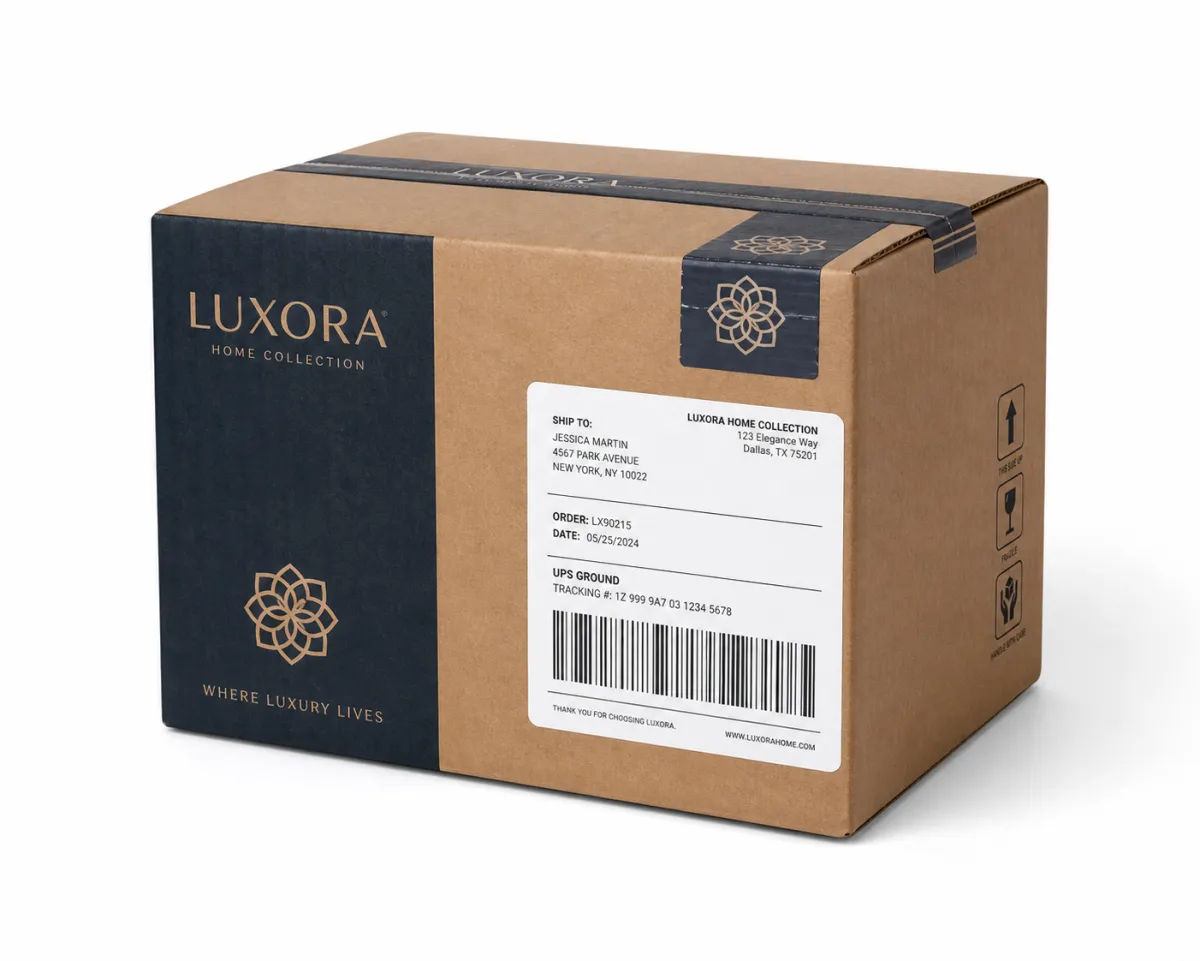
Shipping labels for branded boxes sit at the point where operational data meets visual branding. The label has to scan cleanly, survive handling, and carry the right routing information. The box has to still look like the brand. Put them together and the label becomes part of the package experience, whether anyone planned for that or not.
That detail carries more weight than a lot of teams admit. A carton might have custom printing, a better structure, and a higher shipping cost. One crooked or oversized label can still make the whole thing feel careless. Customers may not say, "the label ruined it." They will just feel that something is off. I have watched buyers do exactly that in reviews: the product was fine, the box was fine, but the presentation felt off because the shipping label fought the design.
There is a practical side too. Carriers depend on barcodes and routing data to keep parcels moving. Warehouses depend on standard placement to avoid bottlenecks. Returns teams depend on readable order IDs to match shipments back to accounts. Shipping labels for branded boxes affect scan speed, exception rates, and reverse logistics as much as they affect presentation.
The best label system treats those needs as part of the same job. A good setup reserves a blank label zone, keeps artwork visible, and uses a face stock that works with the carton finish. That could mean matte paper on kraft, a synthetic film for wet or rough transit, or removable adhesive for premium boxes that might be reused. There is no magic stock that fits every carton. If someone tells you there is, they are guessing or selling something.
From a packaging buyer's point of view, shipping labels for branded boxes are not decoration. They are a control point. Get Them Right and the shipper looks organized, the scan rate stays high, and the brand still looks like itself. Get them wrong and the box becomes a correction problem. Corrections burn time fast.
"The label is small, but it is never neutral. It either protects the package story or interrupts it."
That is why many teams plan their carton and label systems together instead of bolting labels on at the end. If you are also sorting out box styles, a broader packaging system like Custom Packaging Products gives you a cleaner starting point because the box size, print area, and label zone can be aligned from the start.
How Shipping Labels for Branded Boxes Work: Process and Timeline
Shipping labels for branded boxes follow a predictable chain, even if the details shift between preprinted labels, in-house printing, and work done by a packaging partner. The flow is simple enough: data gets generated, artwork gets checked, labels get printed, the labels get applied, and the package gets scanned into the carrier network. The real difference shows up in speed, control, and consistency.
Preprinted labels make sense when shipments repeat and the data fields stay stable. In-house printing gives operations more flexibility, especially when SKU counts are high or the shipping mix changes daily. A packaging partner sits in the middle and helps when the label needs to match a custom box program or a specific finish across multiple carton styles.
Timeline matters because shipping labels for branded boxes are more than a print job. They are a proofing job, a barcode job, and often a warehouse workflow job too. A clean setup can move from file to launch in a few business days if the artwork is tight and the data fields are already defined. More often, teams should plan on 1 to 2 weeks for proofs, sample checks, and a pilot run. Multiple SKUs, multiple box sizes, or special carrier routing push that longer.
Where do delays usually show up? Three places. First, artwork approvals slow down when the brand team wants the label to look polished and the operations team wants maximum scan area. Second, barcode testing drags when the box surface is reflective, textured, or curved. Third, the box size and label size do not match, which creates placement debates at the packing station. Nobody enjoys that meeting. Nobody.
Carrier validation deserves attention too. A label may look fine to the eye and still fail at a sorter because the barcode contrast is too weak or the quiet zone is too tight. Teams that want a solid reference point for testing often look at the methods used by organizations such as ISTA, especially when the carton is part of a larger transit packaging program.
One thing gets missed a lot: different channels usually need different templates. Retail replenishment, direct-to-consumer ecommerce shipping, wholesale pallets, and subscription shipments may all use different data fields or placement rules. Shipping labels for branded boxes only stay simple when the shipment model stays simple too, and that is rarely the case for long. If your team ships across three channels, expect three different label conversations, even if the boxes look similar on paper.
Key Factors That Affect Shipping Labels for Branded Boxes
Several variables decide whether shipping labels for branded boxes work well or become a recurring headache. Material choice comes first. Paper labels are common and affordable, especially for standard cartons. Thermal stock fits high-volume order fulfillment where speed matters more than decoration. Synthetic films handle moisture and abrasion better, which matters if boxes travel through humid warehouses, refrigerated zones, or rough hands. Removable adhesives help when the box is meant to be reused or when the brand wants a cleaner unboxing moment.
The carton surface matters just as much as the label stock. A smooth coated box holds a label differently than a rough kraft surface. Dark box colors can weaken contrast, so barcode readability may need a white label face or stronger print density. Glossy finishes can throw glare under warehouse lights, which is bad for scanners and annoying for people. Shipping labels for branded boxes work best when the print method and surface finish are matched on purpose, not guessed at in a hurry.
Size is another filter. A label that is too small squeezes the barcode, routing number, and return information into a cramped layout. A label that is too large can cover the brand artwork and make the box look over-managed. The goal is not maximum coverage. It is balance, with enough quiet zone for the barcode and enough room left for the box to still look like a brand asset.
Compliance adds another layer. Carrier rules are the obvious piece, but destination data, hazard markings, recycling symbols, and return instructions can all affect the final design. Some operations also need labels that survive humidity, abrasion, or temperature swings during package protection and transport packaging. If a box moves through multiple hands, the label has to survive multiple touches. That is the job, plain and simple.
For teams that care about fiber sourcing, paper choice can tie into certification and sustainability goals too. The FSC system often comes up in those discussions because buyers want to know whether the paper in the label or carton is tied to responsible forest management. It does not answer every materials question, but it gives the sourcing conversation a spine.
Operating conditions finish the picture. Warehouse lighting, application speed, operator training, and resistance to moisture or abrasion all affect performance. A label that tests well on a bench can fail if the packing line moves fast and the label gets applied at a slight angle every single time. Shipping labels for branded boxes get judged by design teams first, then the warehouse delivers the verdict. Usually bluntly. Usually by 2 p.m. on a Friday, which is rude but common.
Shipping Labels for Branded Boxes: Cost and Pricing Drivers
Cost is where shipping labels for branded boxes stop being abstract. Buyers want a number. Fair enough. The number depends on substrate, adhesive, print coverage, quantity, and whether the labels are standard or custom-sized. The gap between a basic thermal label and a premium synthetic label can be real, and the true cost also includes setup, spoilage, and labor.
Here is a practical comparison for common label paths in branded packaging programs:
| Label option | Typical unit cost at 5,000 pieces | Best for | Watchouts |
|---|---|---|---|
| Paper pressure-sensitive label | $0.08-$0.14 | Standard cartons, moderate volumes | Less resistant to moisture and rubbing |
| Thermal direct label | $0.05-$0.10 | High-volume ecommerce shipping | Print can fade in heat or sunlight |
| Synthetic film label | $0.14-$0.28 | Premium boxes, humid or rough transit | Higher material cost and setup discipline |
| Removable adhesive label | $0.12-$0.22 | Reusable cartons, retail-ready packaging | Adhesion must still hold through the trip |
That table is the starting point, not the whole story. Shipping labels for branded boxes often come with hidden costs that never show up in a clean unit quote. If the label design creates misprints, scrap rises. If placement is inconsistent, labor slows down. If the barcode fails, the shipment may need relabeling or manual correction. Those costs look tiny once. Repeated every shift, they are not tiny anymore.
Volume changes the math in a predictable way. Small runs usually cost more per unit because setup work gets spread across fewer pieces. Bigger runs lower the unit cost, but they raise inventory risk if the artwork changes or a carrier rule shifts. That is why on-demand printing appeals to some teams. It cuts storage risk and makes SKU changes easier to manage. The tradeoff is more labor and, in some setups, more printer maintenance.
Shipping labels for branded boxes also affect cost indirectly through the carton itself. A well-planned label zone can keep the brand from paying extra for oversized print areas or special finishes just to make room for logistics data. A better box choice can also prevent relabeling when packages get packed into the wrong size and corrected at the dock. Dimensional weight enters the chat here too, not because the label changes the weight class, but because bad box selection tends to create the label mess in the first place.
Pricing labels by themselves is too narrow. The smarter question is what the total packaging system costs per shipment, including box, label, labor, damage rate, and return handling. A cheap label can still be expensive if it causes rework. A more expensive label can be the better buy if it speeds scanning, cuts mistakes, and keeps the carton looking like it should.
For reference material and pricing discussions, teams often use Custom Labels & Tags alongside the carton spec so the visual and operational pieces are costed together rather than in separate silos.
Step-by-Step: Applying Shipping Labels to Branded Boxes
The fastest way to improve shipping labels for branded boxes is to standardize how they get applied. The label matters. The placement method matters just as much. A clear process cuts scan issues, protects the artwork, and keeps the warehouse moving without constant interruptions.
- Audit the box first. Measure the flat label area, check whether the surface is matte or glossy, and identify seams, folds, and texture changes. The point is to reserve a stable label zone before the first carton gets packed.
- Build the template with real data fields. Include the barcode format, carrier text, return information, and any brand-safe elements that should stay visible. If the box already has a strong visual layout, do not bury it under a giant white block unless you enjoy making designers grumble.
- Test on the actual carton material. Sample labels should be applied to the production box, not just a mockup. A label that looks perfect on a flat proof may curl, lift, or blur on the real surface.
- Set a placement standard. Give warehouse teams a clear rule for where the label sits, how far it stays from edges, and which direction the barcode faces. Consistency is the difference between a controlled workflow and a daily guessing game.
- Run a pilot shipment. Send a small batch through the full chain, then review scan rates, damage rates, and customer feedback before rolling out the final version.
A simple label map can make the whole thing easier. Some teams mark the upper right panel as the primary label zone, leave 0.25 inch to 0.5 inch away from seams, and keep brand graphics out of that area entirely. Others split box styles by channel so retail shipments, wholesale cartons, and direct-to-consumer orders each use a separate template. That sounds fussy until the packing station hits peak volume and nobody has time for improvisation. Then it starts looking pretty smart.
One more step helps more than people expect: compare the carton and the label as one system, not two separate products. If you are building the outer packaging at the same time, it is worth reviewing Custom Shipping Boxes so the board, print, and label locations all line up from the start. That coordination keeps last-minute compromises from showing up in the final customer experience, which is where the damage usually becomes obvious.
Teams sometimes ask whether the label is a branding asset or a logistics asset. The honest answer is both. Shipping labels for branded boxes work best when the warehouse can apply them quickly and the customer still sees a clean, well-composed package. That is not a contradiction. It is the standard.
Common Mistakes With Shipping Labels on Branded Boxes
Most problems with shipping labels for branded boxes are preventable. The annoying part is that they repeat because each one feels minor in isolation. A label slightly off-center here, a barcode too close to a seam there, and the fulfillment team ends up fixing the same issue day after day. That is how small mistakes become policy.
One common mistake is placing the label across an edge or fold. That looks harmless until the adhesive fails or the barcode becomes hard to scan. Another is putting the label on a textured or glossy area that looks fine in daylight but turns into a scanning headache under warehouse lights. A third is covering a major brand graphic with an oversized transit label. The box still ships, but the unboxing story takes a hit.
"Most label failures are not dramatic. They are tiny layout mistakes repeated at scale."
Low-contrast printing causes trouble too. Black on white still works best for many carrier labels because scan reliability matters more than decoration. If a brand chooses toned materials or tinted label stock, the barcode still has to print dark enough to separate cleanly from the background. If it does not, carrier exceptions follow. Then comes extra handling. Then comes delay. Same old story, just with more paperwork.
Another trap is assuming every box size can use the same label setup. Small cartons, medium cartons, and oversized shippers often need different templates or at least different placement rules. A label that fits neatly on a mailer-style carton may look clumsy on a larger shipping box. That gets worse when the carton has print on several panels and the label needs a reserved blank zone.
Return-label confusion shows up a lot too. If the forward label and return information are not clearly separated, warehouse and customer service teams waste time sorting out the shipment later. Shipping labels for branded boxes should be readable from more than one operational angle because the package is handled by more than one department over its life cycle. Packaging does not live in one department, no matter how much people wish it did.
Adhesive failures usually come down to the wrong stock or the wrong application conditions. Dust, cold, humidity, and carton coatings all affect performance. A label that sticks in a test room can peel in a cold dock or on a long route. A short sample run beats a long assumption every time. For teams that want to see how disciplined packaging programs handle that kind of iteration, the examples in Case Studies are a useful way to compare process choices across shipment types.
The rule is simple: if shipping labels for branded boxes are treated like an afterthought, they will act like one. If they are treated as part of the package spec, the result is cleaner, faster, and much easier to scale.
Expert Tips and Next Steps for Better Branded Box Labels
The best shipping labels for branded boxes programs usually share a few habits. None of them are flashy. They are just consistent, and consistency pays off in order fulfillment. The first habit is a placement map for each box size. A packing team should not have to decide where the label goes while a line is moving. That belongs in the spec, not in the moment.
The second habit is channel-specific variation. A subscription box, a wholesale carton, and a direct-to-consumer shipper do not need identical label logic. Color-coding templates or using different placement rules by channel can reduce confusion without making the system harder to manage. It also makes training faster because each shipment type looks familiar at a glance.
The third habit is testing more than one stock. A side-by-side trial of paper and synthetic stock, or standard adhesive and removable adhesive, can show how the label behaves under real handling. One sample may look prettier. Another may survive three conveyor transfers and a long truck ride without drama. Shipping labels for branded boxes should survive the trip, not just the proof.
Track a few metrics after launch. Scan success rate is the obvious one. Label waste is another. Customer unboxing feedback is the third, and it matters more than many operations teams want to admit. If the package arrives clean and the label does not fight the box, the program is probably doing its job. If people keep sending photos of crooked labels, the data is telling you something even before the complaints show up.
- Scan success: Watch for missed scans, reprints, and carrier exceptions.
- Label waste: Track spoilage, misprints, and damaged rolls or sheets.
- Customer feedback: Note comments about appearance, returns, and box condition.
The next move should be small and measurable. Audit current boxes, choose one high-volume SKU, test one label set on the actual carton, and compare it against the current method. That gives you a clean baseline without turning the project into a full packaging overhaul. If the carton surface is the problem, fix that first. If the label size is the problem, change that first. Do not try to solve three things at once unless you enjoy messy test results and meetings that go nowhere.
For teams that want a stronger starting point on the outer pack itself, Custom Poly Mailers can also be used as a useful benchmark for how label placement and print surfaces behave across different transit packaging formats.
Shipping labels for branded boxes are one of those packaging details that looks simple from a distance and annoying up close. That is exactly why they deserve a pilot, a placement standard, and a real cost review. Start with the actual carton, reserve a clean label zone, test the barcode on the real surface, and lock the process before volume ramps up. Do that, and the label stops acting like a compromise. It becomes part of the packaging system, which is where it should have been all along.
Are shipping labels for branded boxes different from standard shipping labels?
The shipping data is the same, but shipping labels for branded boxes usually need better visual balance, stronger adhesion, and cleaner placement. They are built to protect the brand look while still meeting carrier scan requirements. Many brands use the same label logic across packaging, then adjust size, stock, or finish to fit the box surface.
What is the best placement for shipping labels on branded boxes?
Place the label on a flat, visible area that does not cross a seam, fold, or edge. Keep it away from logos and illustrations unless the box design intentionally reserves a label zone. Barcodes should face the same direction across the warehouse so scanning stays fast and consistent.
Do shipping labels for branded boxes cost more to produce?
They can cost more if you use specialty stock, color printing, custom sizes, or extra finishing. Unit cost usually drops as volume rises, but setup, artwork, and waste can still affect the final price. The real comparison should include labor savings, fewer relabels, and better brand presentation, not just label price alone.
How long does it take to set up shipping labels for branded boxes?
A simple setup can move quickly if you already have box dimensions, label data, and approved artwork. Custom programs take longer because samples, barcode testing, and warehouse workflow checks usually happen before launch. Multi-SKU systems take the most time because each box size may need its own template or placement rule, which is why shipping labels for branded boxes should be planned early rather than patched together late.
Can shipping labels for branded boxes help with returns?
Yes. A label system that includes return codes, order IDs, or other useful fields can make reverse logistics easier. A consistent layout helps customer service and warehouse teams identify the shipment faster, and clear return labeling can reduce mistakes while improving the post-sale experience.