Buyer Fit Snapshot
| Best fit | Shipping Labels for Branded Cartons projects where brand print, material claims, artwork control, MOQ, and repeat-order consistency need to be specified before quoting. |
|---|---|
| Quote inputs | Share finished size, material target, print colors, finish, packing count, annual reorder estimate, ship-to region, and any compliance wording. |
| Proofing check | Approve dieline scale, logo placement, barcode or warning zones, color tolerance, closure strength, and carton packing before bulk production. |
| Main risk | Vague material claims, crowded artwork, missing packing details, or unclear freight terms can make a low unit price expensive after revisions. |
Fast answer: Shipping Labels for Branded Cartons: Material, Adhesive, Artwork, and MOQ should be specified like a repeatable production item. The safest quote records material, print method, finish, artwork proof, packing count, and reorder notes in one written spec.
Production checks before approval
Compare the actual filled-product size with the drawing, then confirm tolerance on folds, seals, hang holes, label areas, and retail display edges. Reserve space for logos, QR codes, warning copy, and material claims before decorative graphics fill the panel.
Quote comparison points
Review material grade, print process, finish, sampling route, tooling charges, carton quantity, and freight assumptions side by side. A quote is only useful when the supplier can repeat the same color, closure quality, and packing count on the next order.
Shipping Labels for Branded Cartons: A Practical Guide
Shipping labels for branded cartons look small, but they carry more weight than most packaging teams give them credit for. They have to scan cleanly, survive conveyor belts and truck vibration, keep fulfillment moving, and still look like they belong on a carton with a real brand identity rather than a rushed warehouse fix. That is a pretty tall order for one label, which is exactly why shipping labels for branded cartons deserve a real spec, not a shrug and a best guess.
Branded cartons sit between two worlds. They are not plain brown shippers, but they are not display boxes meant to live on a shelf forever either. The label lands right in that middle zone where logistics and brand presentation meet. Get shipping labels for branded cartons wrong and even a beautifully printed carton can feel careless. Get Them Right and the parcel feels controlled, intentional, and easy for carriers to process.
The practical goal is simple: keep the parcel moving, keep the barcode readable, keep the carton looking deliberate, and avoid creating extra work for the team applying labels at scale. That sounds basic because it is basic. The trouble is that basic systems are often where packaging projects start to wobble, especially once ecommerce volume climbs and the small details start showing their teeth.
What Shipping Labels for Branded Cartons Actually Do
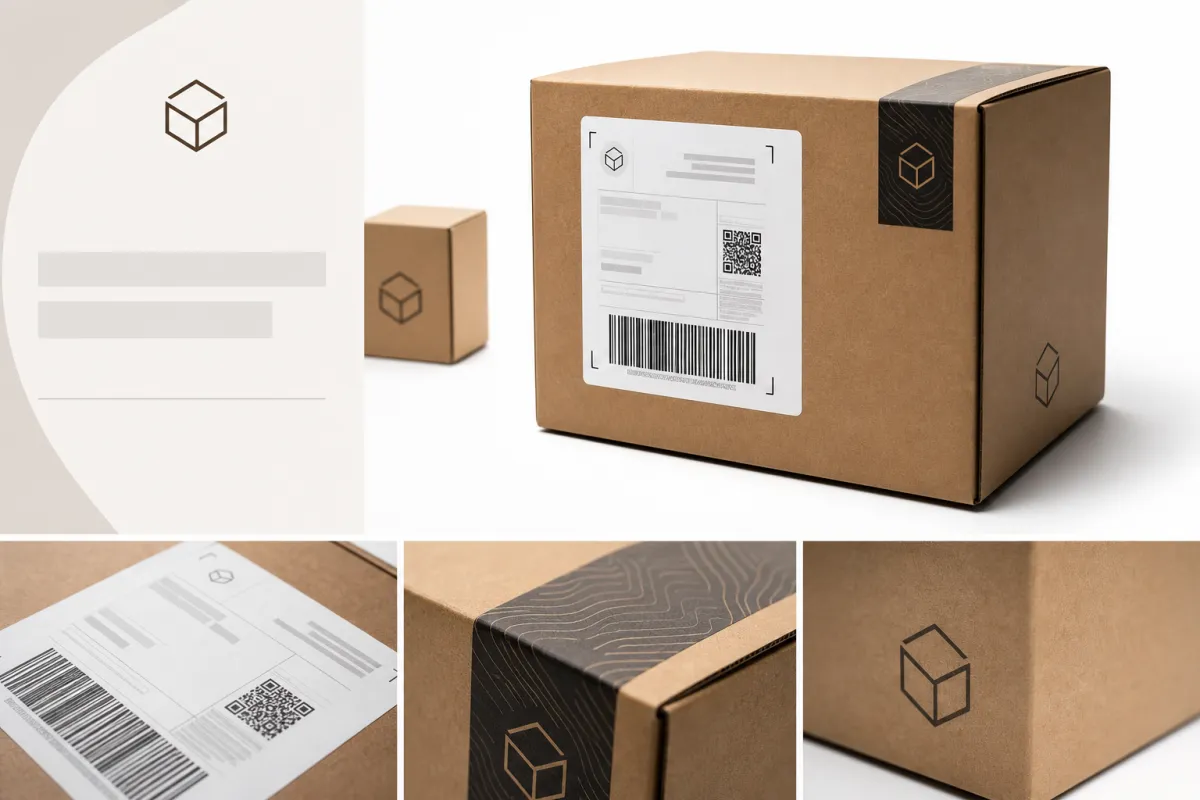
The plain truth is that shipping labels for branded cartons are usually the least glamorous part of the package and, at the same time, the most critical. They have to hold up through sortation belts, pallet stacking, temperature swings, dust, moisture, and the customer who may turn the carton over before recycling it. A label that lifts at the corner or smears in transit is not just a visual issue. It creates delays, reroutes, returns, and manual work for the fulfillment team.
Branded cartons include Printed Shipping Boxes, specialty mailers, or corrugated cartons with logos, messaging, or color printing already on the board. Plain shippers are usually unprinted kraft or white cartons with no visual identity to protect. Shipping labels for branded cartons have to respect both sides of the job at once. A carton can look premium, yet if the label clashes badly or peels in transit, the whole package feels unfinished.
People sometimes talk about shipping labels as if they are only barcode stickers. That misses a lot. Shipping labels for branded cartons also affect carrier handling, customer confidence, and return workflows. A clear label placement helps warehouse staff find the scan zone quickly. A poor one can hide a logo, cross a seam, or make the carton look cobbled together from spare parts. I have seen perfectly good cartons lose their polish because somebody placed the label one inch too low and nobody caught it until the first shipment wave went out.
From a packaging buyer’s perspective, the label belongs to the transit packaging system, not the office supply cabinet. It interacts with shipping materials, carton coating, adhesive chemistry, and the conditions the parcel meets between dock and doorstep. Treating shipping labels for branded cartons like a packaging component with a real spec sheet usually produces better results than treating them like a last-minute accessory. Honestly, that’s where most of the headaches start and end.
A clean label does not rescue a bad box. It only makes the failure easier to scan.
For teams comparing packaging formats, the label decision sits beside broader carton choices. A different board grade, a better coating, or a smarter carton size can matter more than a decorative label treatment. If you are reviewing the whole system, it helps to look at the carton itself through Custom Shipping Boxes, then connect it back to Custom Labels & Tags and the rest of your Custom Packaging Products.
Used properly, shipping labels for branded cartons do three jobs at once: they carry shipment data, reduce logistics errors, and preserve the brand impression the carton is meant to create. That is a small square of paper or film doing serious work.
How Shipping Labels for Branded Cartons Work in Production
Shipping labels for branded cartons move through a production chain that is more technical than it first appears. The process usually starts with carton approval. Carton size, board grade, coating, and print layout are confirmed early because those choices decide where the label can sit and how well the adhesive will hold. The label artwork then gets built around carrier data fields, barcode placement, and brand rules.
Three application methods show up most often. Direct-to-carton printing puts the shipping information onto the box as part of the carton workflow. Pre-applied labels are printed and applied before the carton leaves the warehouse or co-packer. Label-on-demand happens at packing time, using live order data right before handoff. Each method works, and each one changes cost, speed, and error risk in a different way.
Direct-to-carton printing can work well for fixed-SKU carton programs, though it is less forgiving when order mix changes often. Pre-applied labels are common when carton production and fulfillment happen in separate steps. Label-on-demand gives fulfillment teams the most flexibility because the label is generated from current order data, but it also raises the bar for printer calibration, operator training, and scan testing. In other words, it gives you control, but you do have to earn it.
The handoff points matter more than most teams expect. Shipping labels for branded cartons pass between packaging suppliers, warehouse staff, software systems, and carriers. Problems usually show up at those boundaries. A carton proof may look correct while the fulfillment software outputs a label size that does not match the panel. A warehouse team may apply the label too close to a seam because they are trying to keep pace. Speed helps until it starts creating rework.
A realistic timeline depends on how custom the setup is. For a straightforward carton and label change, artwork approval and proofing may take 2-4 business days. Material sampling, adhesive testing, and a small pilot run can add another 5-10 business days. If the project includes a new carton finish, carrier compliance checks, and warehouse training, it is safer to build in 2-3 weeks before full launch. For high-volume ecommerce shipping, that buffer is cheap insurance.
Testing should stay practical rather than theatrical. You do not need a lab coat or a dramatic reveal. You need the exact carton stock, a dry test, a light condensation test, a short cold exposure test if refrigerated handling is part of the route, and a basic rub test. If the label is going to fail, it is better to find out on a bench than on a dock.
For teams that want a framework for package performance, standards help keep everyone honest. ISTA testing protocols are useful when package protection matters and transit abuse is a real concern; see the current testing framework at ISTA standards. FSC certification also matters when cartons use certified fiber and the brand wants verified sourcing; details are available through FSC certification.
The best shipping labels for branded cartons tend to disappear into the process. The customer gets a clean parcel, the carrier gets a readable label, and the warehouse does not have to babysit every shipment. That is the aim: not drama, just a box that moves.
Key Factors That Shape Shipping Labels for Branded Cartons
Carton surface is the first variable worth checking. Glossy varnish, soft-touch lamination, recycled kraft, uncoated board, and textured finishes all change how shipping labels for branded cartons stick and scan. A smooth coated surface can look elegant, but some adhesives struggle if the coating is too slick. A rough recycled surface may grip well and still create barcode issues if the label wrinkles at the edges.
Label size matters more than many teams expect. Too small and the barcode or address block becomes hard to read. Too large and the label starts competing with brand graphics or wrapping too far around a panel. Most carton shipping labels land in a practical 4 x 6 inch range for standard ecommerce parcels, though larger cartons may need wider formats if they carry multiple service codes, return information, or international customs fields. The real goal is enough white space around the critical data.
Contrast is non-negotiable. Shipping labels for branded cartons need crisp print quality, especially for barcodes, tracking numbers, and human-readable text. A dark background behind the barcode, decorative typography, or low-contrast ink can create scan failures that slow order fulfillment. If the parcel is moving through automated sortation, weak print contrast invites trouble, and carriers are not gonna wait around for a second try.
Adhesive choice is the quiet workhorse in the spec. A standard permanent adhesive may be fine for dry ambient storage and short transit. A stronger adhesive may be needed for cold rooms, humidity, or cartons that wait in staging before pickup. Repositionable labels can help in some packing workflows, but they usually are not the right choice for shipping labels for branded cartons unless the application step is tightly controlled.
Branding decisions change more than appearance. Some teams want the label to blend into the carton design with a reserved neutral panel so the package keeps a premium look. Others want the label to stand out clearly as an operational layer. Both approaches can work. Consistency matters most. If one SKU leaves space for the label and the next one does not, the warehouse starts improvising, and improvisation costs money.
Carrier requirements are not optional. Most carriers want clear address information, scannable barcodes, and placement away from seams or folds. International shipping adds customs data, country of origin details, and sometimes extra paperwork. The label format has to support those needs without turning the carton into a wall of text.
Warehouse conditions belong in the spec as well. Moisture, dust, cold storage, and conveyor abrasion all affect shipping labels for branded cartons. A label that behaves perfectly in a dry studio can start peeling when cartons sit on a humid dock in summer. In a cold environment, adhesive tack can change enough to matter. That is not theory. That is warehouse reality.
Dimensional weight does not change because of the label itself, but it absolutely shapes the carton choice around it. A label cannot rescue an oversized carton that drives up shipping cost. If the box is too large, the parcel may cost more to move no matter how polished the label looks. That is why shipping labels for branded cartons should be planned alongside carton dimensions, not after the fact.
One more detail tends to get missed: sustainability claims need to match the materials. If a carton uses FSC-certified board or recycled content, the label adhesive and face stock should not create a recycling problem unless there is a specific reason for a heavy-duty synthetic label. For packaging teams trying to keep claims accurate, the label material is part of the story. Not the whole story, but enough of it to matter.
Shipping Labels for Branded Cartons: Cost, Pricing, and Tradeoffs
Cost is where the conversation gets concrete. Shipping labels for branded cartons can look inexpensive on paper and become expensive in practice if they fail. The main cost drivers are label material, adhesive strength, print method, quantity, and whether the project needs special testing or compliance support. A basic label spec in volume may cost very little per unit, while a high-adhesion synthetic label with moisture resistance can cost noticeably more.
For a rough buying range, simple high-volume printed labels might land around $0.03-$0.06 per piece at 5,000 units if the artwork is straightforward and the material is standard. A more durable synthetic label with stronger adhesive may run about $0.07-$0.14 per piece. Custom shapes, variable data, or cold-chain performance can push pricing higher. Setup fees, proof revisions, and small-batch runs also add cost when the project is not standardized.
Cheap labels are not automatically smart labels. If a low-cost label causes reprints, manual relabeling, delayed dispatch, or damaged presentation, the real cost climbs quickly. A warehouse operator spending 20 extra seconds per carton does not sound dramatic until that number is multiplied by 8,000 shipments a month. Then the issue is labor, not sticker price.
| Option | Typical Cost at 5,000 Units | Best Fit | Main Tradeoff |
|---|---|---|---|
| Paper label + standard adhesive | $0.03-$0.06 | Dry storage, short transit, stable carton surfaces | Less forgiving with moisture and abrasion |
| Synthetic label + permanent adhesive | $0.07-$0.14 | Higher-scuff parcels, longer transit, humid docks | Higher unit cost, but fewer failures |
| Thermal label on demand | $0.02-$0.08 depending on stock | Variable order fulfillment, frequent SKU changes | Requires printer maintenance and good calibration |
| Specialty label with custom finish | $0.12-$0.25+ | Premium presentation, niche performance requirements | Higher cost and longer validation time |
The least expensive route is not always the right route, and the most expensive route is not always justified. A simple decision framework helps with shipping labels for branded cartons. If parcels ship in normal dry conditions, move quickly, and land on a compatible carton surface, a standard spec is usually enough. If parcels sit in staging, face humidity, or need a label that survives rough handling, move up in adhesive and face stock. If brand presentation is part of the sale, the label should support that rather than fight it.
Overspending usually shows up in two places. One is choosing a label spec that is more durable than the parcel really needs. The other is buying premium-looking labels for cartons that already carry strong branding, then discovering the label is barely visible from a normal viewing distance. That is money spent on a detail nobody notices.
The smarter comparison is total cost per shipped order. That includes materials, labor, reprints, returns, and damage complaints. It also includes the cost of customer support when a parcel arrives with a half-lifted label or a smeared tracking number. Shipping labels for branded cartons should be judged on operational cost, not just invoice cost.
If you want to evaluate the label as part of the broader packaging stack, compare it with the carton and outer mailer choices side by side. Some brands find that upgrading carton print or switching to a better box construction reduces damage more than any label upgrade would. Others discover that a slightly better label spec fixes most of the problem for a fraction of the cost. Packaging decisions work better as a system than as isolated purchases.
Step-by-Step Workflow for Shipping Labels for Branded Cartons
The cleanest workflow starts with a short audit. Look at your current carton SKUs and ask three questions: what surface are we labeling, what shipping environment do these boxes face, and where are the failures happening now? Shipping labels for branded cartons are easier to spec once the team stops guessing and starts documenting what is actually happening on the dock.
Carton review comes first. Record board type, coating, print finish, box size, seam locations, and any brand elements that should stay visible. Shipping-condition review follows right behind. Note whether the parcels move through standard ambient ecommerce shipping, cold storage, humid staging, long-haul transit, or rough distribution. Label format selection comes next: size, material, adhesive type, print method, and barcode placement.
Proofing is where many teams save themselves from embarrassment. A proof should check label dimensions, barcode quiet zones, human-readable text, carrier service code location, and how the label sits on the carton panel. If the barcode touches a fold or the address block crowds the edge, fix it before production. Shipping labels for branded cartons are far cheaper to correct on screen than in a live warehouse run.
A small batch test should come after the proof. The mockup can look perfect and still fail in the real world. Apply labels to the actual carton stock, then run a controlled test through handling, stacking, and short transit exposure. If possible, test 20-50 cartons before rolling out broadly. That is enough to expose a weak adhesive choice or a placement problem without wasting a full production run.
Warehouse training matters just as much as material selection. A label can be ideal and still fail if operators place it inconsistently. Train the team on exact placement rules: distance from edges, panel orientation, seam avoidance, and scan zone visibility. In a high-volume fulfillment environment, a 1-inch shift repeated 10,000 times becomes a real issue.
Launch and monitor close the loop. Track the first 2-4 weeks closely. Watch reprint rates, scan failures, label lifts, and customer complaints. If the numbers stay flat, the rollout is working. If not, fix the root cause rather than telling people to be more careful. That advice has never saved a production line.
A practical rollout timeline for shipping labels for branded cartons often looks like this: 2-4 days for artwork and spec alignment, 5-10 business days for sampling and test runs, 1-3 days for warehouse training, then a monitored launch window. If the carton finish, label material, or carrier setup changes at the same time, add more margin. Too many packaging projects fail because everyone assumes the handoff will sort itself out. It will not.
If the goal is long-term consistency, write the label spec down. A one-page sheet with approved size, face stock, adhesive, barcode placement, carton zones, and approved print method will save more time than another round of emails ever will. That spec becomes the reference when someone in operations asks why a different label showed up on the next purchase order.
Common Mistakes With Shipping Labels for Branded Cartons
The most common mistake is choosing shipping labels for branded cartons based on appearance instead of performance. A label that matches the carton color perfectly may look elegant in a photo and still fail on a humid dock. The warehouse does not care whether the label is pretty if it will not stay down long enough to be scanned.
Bad placement comes next. Labels placed over seams, score lines, folds, or heavily inked areas invite trouble. If the label crosses a structural break, it can wrinkle or tear. If it covers a key design element, the branded carton starts looking like an accident. A clean panel usually exists somewhere. Use it.
Another mistake is mismatching adhesive to surface. Recycled kraft, coated white board, matte laminate, and gloss varnish all behave differently. A label spec that works on one carton can fail on another even if both boxes look similar at a glance. That is why shipping labels for branded cartons should be tested on the exact stock, not a close-enough substitute from the sample shelf.
Skipping real-world tests hurts the most. A label can look great on a table and then fail after an hour in a hot van, a cold staging area, or a damp receiving dock. Most failures are boring and expensive. The barcode stops reading. The corner lifts. The operator reprints. The parcel ships late. Five minutes vanish from everyone’s day, and the problem multiplies across the workflow.
Some teams overload the carton with information. They try to fit branding, care instructions, recycling notes, service codes, and legal copy all onto the shipping label. That is too much. Keep the shipping label focused on shipment data and let the carton handle brand storytelling. Shipping labels for branded cartons work best when each layer has one job and stays in its lane.
Fulfillment software settings also get ignored more often than they should. If the label template in the system does not match the carton size or the printer settings, the output can drift by a quarter inch or more. That small shift can push text into the edge margin or make the barcode less reliable. Software, printer, and carton need to agree. Otherwise the warehouse turns into a troubleshooting lab nobody planned for.
Customer perception starts before the box is opened. A label with curling edges, fingerprints, or crooked placement tells the customer something about the operation. Maybe that judgment is unfair, but customers judge what they see. Shipping labels for branded cartons have to protect the shipment and support the brand image at the same time. That is the job.
Expert Tips and Next Steps for Shipping Labels for Branded Cartons
Build a label spec sheet for every carton line. Keep it simple and strict. Include label dimensions, approved stock, adhesive type, barcode placement, margin rules, and where the label should sit on the carton panel. If your warehouse handles multiple SKUs, standardization cuts mistakes quickly. Shipping labels for branded cartons become easier to buy, easier to apply, and easier to troubleshoot.
Test on the exact carton stock and in the exact shipping environment. If parcels ship warm and dry, test that. If they sit in a humid dock, test that. If they move through long-distance ecommerce shipping with automated sortation, test that too. Guessing is not a strategy. It is just a more polite way to pay for reprints.
Track the numbers that matter. Reprint rate. Scan failure rate. Mislabeling incidents. Edge lift complaints. Damage claims. Once those pieces are measured, you can tell whether a label change actually helped. Without those numbers, every opinion in the room sounds equally confident and equally useless.
Compare the label against the rest of the packaging stack as well. Maybe the carton print zone needs to be adjusted. Maybe the shipping box size can be trimmed to lower dimensional weight. Maybe the label should move closer to the top panel for faster scan access. Packaging systems work better when the whole thing gets tuned, not just the sticker.
If your brand is scaling, review one current carton SKU and ask whether the label spec still matches the shipment reality. A carton that worked for 300 orders a month may behave differently at 30,000. Adhesive dwell time, warehouse handling, and carrier volume all change the math. Shipping labels for branded cartons need to keep pace with the operation, not freeze in the first version that happened to work.
For teams that want a cleaner broader system, it helps to compare the label spec against other transit packaging choices such as Custom Poly Mailers for lighter parcels or a refreshed carton lineup. If the label is only fixing a symptom, the cartoning strategy may need a second look.
My practical advice stays straightforward: review one live carton SKU, test one improved label spec, and compare the results against your current baseline for scan speed, label adhesion, and customer appearance. That gives you a real answer instead of a theory. For shipping labels for branded cartons, real answers are what pay the freight.
Shipping labels for branded cartons do not have to be complicated. They do have to be deliberate. Choose the Right material, match the adhesive to the surface, keep the barcode readable, and test on the carton that will actually ship. That is how shipping labels for branded cartons support brand presentation, package protection, and order fulfillment without turning into a daily problem.
FAQ
What are the best shipping labels for branded cartons?
The best option depends on carton coating, shipment temperature, and how long the parcel spends in transit. For most shipping labels for branded cartons, strong adhesion, crisp barcode print quality, and resistance to scuffing or moisture matter most. If the carton has a premium finish, test the label on the actual board before committing to volume.
Can shipping labels for branded cartons go directly on printed boxes?
Yes, as long as the adhesive matches the carton surface and finish. Glossy coatings, varnishes, and recycled textures can all change how well the label sticks. A quick real-world test is better than guessing and hoping the label survives the trip.
How much do shipping labels for branded cartons cost?
Cost depends on label size, material, adhesive, print volume, and any custom finishing requirements. Simple high-volume labels are usually cheaper per piece, while specialty labels cost more but may reduce failures and reprints. The real comparison is total cost per shipped order, not just sticker price.
How long does the shipping label setup process take?
Basic setups can move quickly if carton artwork and label specs are already defined. Custom or premium branded carton workflows usually need time for proofs, testing, revisions, and warehouse rollout. Build in extra time if you are changing carton finishes, carriers, or fulfillment software.
What is the biggest mistake with shipping labels for branded cartons?
The biggest mistake is treating the label like an afterthought instead of part of the packaging system. Bad placement, weak adhesive, or unreadable barcodes can trigger delays, damage claims, and poor customer experiences. Test before scaling. It saves money and avoids the usual warehouse chaos.


