Frosted zipper Bags for Subscription brands solve a practical problem: they make recurring kits look deliberate without adding much weight, cube, or packing complexity. The frosted finish softens what is inside, reduces glare in warehouse light and on camera, and helps a mixed assortment read like one planned set instead of loose items dropped into a pouch.
That matters because subscription packaging is judged twice. Operations teams care about packing speed, damage rates, and unit cost. Customers care about whether the box or pouch feels considered when it arrives. A well-specified frosted bag protects against dust, minor scuffing, and movement in transit while staying simple enough to use every month.
The real value is consistency. Subscription programs need packaging that behaves the same way on every run: same dimensions, same zipper feel, same visual result after filling. When the build is stable, a flexible pouch often does the job of a more expensive structure without the extra freight and storage burden.
A bag that looks premium but slows the line is expensive. A bag that packs quickly, protects the contents, and still looks composed earns its place.
Rigid boxes still make sense for fragile or highly giftable sets, but many kits do not need that level of structure. For accessories, beauty refills, snacks, apparel, and sample-driven subscriptions, a frosted zipper bag can deliver most of the presentation at lower material weight and simpler fulfillment.
Why frosted zipper bags for subscription brands stand out on the shelf
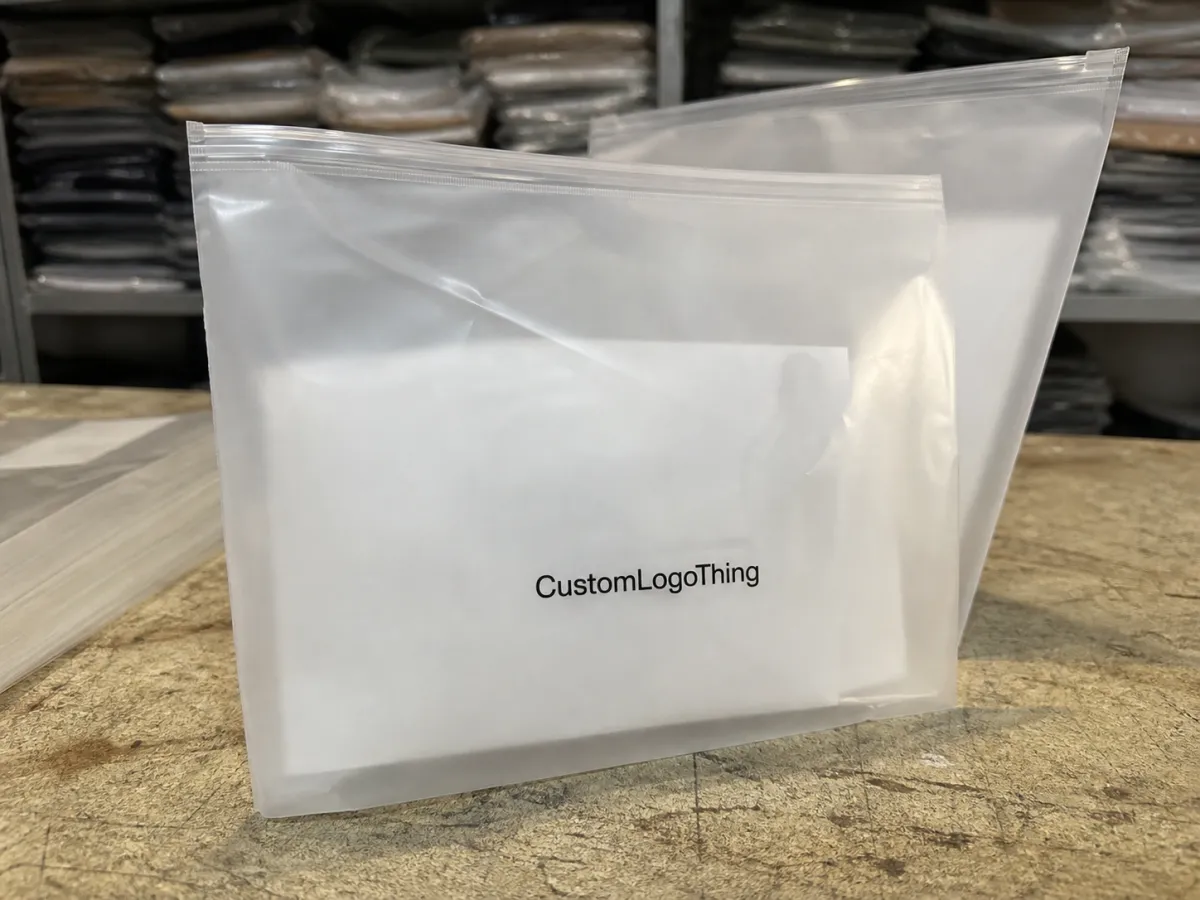
Clear packaging shows every item and every label, which can work until the contents start working against the design. Uneven shapes, barcode clutter, and product variation become obvious. Frosted film blurs those edges and creates a calmer, more premium read even when the contents are simple.
It also behaves better in real light. Clear bags can catch overhead glare, flash in photos, and make branding harder to read. A frosted surface cuts that distraction, which matters for brands that depend on customer photos, unboxing clips, or retail shelf visibility.
For subscription programs, repeatability matters more than novelty. If the same assortment ships every month, the packaging should stay visually consistent even when small product differences appear. Frosted bags help standardize the look batch after batch.
The finish itself signals restraint. It does not fight for attention the way a full-coverage carton sometimes does. For many subscription brands, that controlled look is the point: clean, organized, and deliberate.
How the zipper closure and frosted film work
The usual build is straightforward: frosted polyethylene film, side seals, a reclosable zipper track, and optional features such as a tear notch, hang hole, or hang tab. Flat pouches work for slimmer products. A bottom gusset adds depth when the contents need more volume or better shelf stance.
The zipper matters because it changes use after the first shipment. Customers may reopen the bag for storage, returns, or reuse, so the track should be tested with the actual product load. A sample that feels fine empty can behave very differently once filled.
Film thickness is usually discussed in mils. For soft goods or light accessories, 2.0 to 3.0 mil is often enough. For contents with corners, weight, or more movement in transit, 4.0 mil can be the safer choice. Thicker film adds stiffness and may improve handling, but it also raises cost and can slow packing if the bag becomes awkward to open and close.
The frosted finish is not only aesthetic. It hides fingerprints better than glossy film and keeps branding readable without heavy coverage. That can make one bag work across multiple product variants without looking like a different package every month.
One caveat is worth flagging early: Frosted Zipper Bags are usually not a high-barrier solution by default. Standard PE structures handle dust, handling, and light moisture exposure, but they are not ideal for oxygen-sensitive, fragrance-sensitive, or long-hold products unless the construction is upgraded. If barrier performance matters, ask for the material structure, not just the finish.
Cost, pricing, and MOQ tradeoffs to model before you quote
Pricing moves with size, film thickness, zipper style, print coverage, and order volume. A 6 x 9 inch frosted bag with a one-color logo is a different job from a larger pouch with full-bleed printing, a gusset, and a custom hang hole. At 5,000 pieces, even small spec changes can move unit cost by several cents.
MOQ deserves a sober look. Lower minimums help when you are testing a new kit or a seasonal offer, but the unit price is usually higher because setup is spread over fewer bags. Higher MOQs lower the per-piece cost, but they also tie up cash in inventory and reduce flexibility if the assortment changes.
| Option | Typical MOQ | Typical unit price at 5,000 pcs | Best fit | Main tradeoff |
|---|---|---|---|---|
| Stock-style frosted zipper bag | 1,000-3,000 | $0.10-$0.20 | Fast tests, inserts, and low-complexity kits | Limited size and branding options |
| Custom printed frosted bag | 3,000-5,000 | $0.16-$0.32 | Recurring kits, refills, and branded unboxing | Artwork approval and proof timing matter |
| Heavier-gauge custom bag with add-ons | 5,000+ | $0.22-$0.42 | Bulkier items, higher reuse value, sharper contents | Higher freight, material, and handling cost |
Those figures are directional. Factory price is only one piece of the picture. Freight, carton count, inner packing, duties, and warehouse receiving can move the real cost noticeably. Compare landed cost, not just the line item on the quote.
Hidden cost drivers show up in predictable places. A custom die-cut can increase tooling time. A heavier zipper can slow filling. Extra ink coverage can raise scrap if registration drifts. Even a width change can alter how many units fit in a master carton, which affects shipping cube and labor.
Production steps and lead time from sample to shipment
The sequence is usually simple: confirm dimensions, artwork, quantity, and delivery target; generate a proof; approve a sample or pre-production unit; run production; inspect; pack; ship. If the structure is locked early, the job is much easier to manage.
Delays usually come from a short list of issues. Artwork revisions are the most common. Color matching can also take time, especially when a brand wants a particular white, silver, or muted green on frosted film. Zipper sourcing can slow the job too, because not every closure style is available in every gauge or construction.
For a first custom order, a realistic lead time is often 10-18 business days from final proof approval to production completion, before transit. Complex printing, larger quantities, or special features can push that longer. Repeat orders can move faster if the spec does not change.
To keep timing clean, send the supplier as much of the packout context as possible before quoting. That includes carton count targets, packing configuration, shipping marks, and storage requirements. If transit testing matters, align the outer packaging with a recognized test framework such as ISTA so the bag is evaluated in a shipping context instead of as a tabletop sample.
Choosing dimensions, barrier levels, and print finishes
Size the bag from the product outward, not from the catalog inward. A flat sample can look perfect and still fail once inserts, cords, cards, or cushioning are added. Leave room for filling and zipper closure, but do not leave so much slack that the contents slide around inside the bag.
Thickness should match the contents. Lightweight apparel, paper goods, and soft accessories usually work in a lighter gauge. Items with corners, edges, or more friction in transit deserve a stronger film and a wider seal. If the bag will be reopened often, check zipper force carefully.
Print finish choices affect both appearance and operations. A one-color logo is the easiest to approve and often the easiest to keep consistent across runs. Full-bleed artwork can produce a stronger shelf signal, but it complicates proofing and can change how the frosted film reads under light. For smaller runs, a label-ready surface may be more sensible than a fully printed structure.
Barrier level needs a blunt conversation. A frosted zipper bag can help with dust, handling, and light moisture, but it is not a substitute for a true barrier pouch when the product needs protection from oxygen, odor transfer, or prolonged storage conditions. Ask for the film structure, seal width, and any coextruded layers if protection matters.
If sustainability claims are part of the packaging story, keep the whole system consistent. Paperboard inserts, outer cartons, and labels may be FSC-certified or recycled-content friendly, but the bag itself still needs to be assessed separately.
- Gusset depth: add it only when the product stack genuinely needs room.
- Zipper type: match the closure to how often the customer will reopen the bag.
- Seal strength: request filled samples, not just empty material swatches.
- Warehouse footprint: verify carton counts and shelf fit before final approval.
- Brand surface: check that the logo stays readable after the product is inserted.
How subscription brands should plan packout and fulfillment
Packout speed is where packaging decisions become operational. A good bag stages easily, opens cleanly, fills without fighting the operator, and closes without extra pressure. If the team is packing by hand, even a few seconds of friction per unit becomes real labor cost.
A workable flow is usually simple: stage the contents, load the bag, close the zipper, apply the label or insert, verify weight, then move the unit into the mailer or master carton. That order makes errors easier to catch before the unit disappears into secondary packaging.
Manual kitting and semi-automated lines need different tolerances. A bag that behaves acceptably in a slow pilot can start to snag, scuff, or pick up static when the line speeds up. That is why the pilot should use the same pack station, operator flow, and product set that will be used at scale.
Check three things before scaling: appearance after filling, closure behavior after repeated handling, and product movement during transit. If the contents shift enough to create corner wear or visual distortion, the bag may still be functional, but it may not be right for a premium subscription program.
For subscription brands, Frosted Zipper Bags work best when they are treated as part of the fulfillment system, not as an isolated decorative item. The bag, the mailer, the insert, the label, and the kitting process all interact. Once that is clear, the question becomes whether the full package holds margin, schedule, and presentation standard at the same time.
Common mistakes that raise damage rates and cost
The most common mistake is choosing a bag that is too tight. Tight bags slow filling, stress the seams, and make zipper closure less forgiving. They also tend to make the kit look overstuffed, which undercuts the polished look you were trying to create.
Over-specifying is the next trap. It is easy to add thickness, more ink, extra features, and a more complex zipper because each change sounds modest on its own. The problem is cumulative. A bag that is technically better in three ways can still be wrong if it raises cost, freight, or labor beyond the margin plan.
Skipping real testing is where brands usually get burned. A flat sample does not show how the zipper behaves with a full load. It does not reveal scuffing from corners, how the film looks after a carton ride, or how much force an operator needs to close the bag hundreds of times.
- Too-small dimensions: increase seal stress and slow packout.
- Heavy print coverage: raises cost without always improving presentation.
- No pilot test: hides zipper and scuffing issues until launch.
- Late artwork approval: creates rush fees and freight pressure.
- Unclear carton counts: complicate receiving and trigger rework.
The best subscription programs treat packaging as a system. The bag choice, the fulfillment line, the carton count, and the outer shipper all influence the customer experience. When those pieces are aligned, the packaging stops being a recurring headache and starts functioning like infrastructure.
Next steps for ordering a pilot run and scaling
Start with a short brief: product dimensions, target quantity, branding requirements, shipment destination, and the date the first kits must be ready. That lets a supplier quote the real program instead of a rough estimate. If the assortment changes often, say so early because it affects sizing, MOQ, and whether a stock-style bag or a custom run makes more sense.
Then request samples or a pilot run. Use the same products, the same team, and the same sealing rhythm you expect at scale. Measure fill speed, closure feel, appearance, and packout durability. If the first run shows scuffing or a zipper that is too stiff, there is still time to adjust before the monthly cycle locks in.
Compare quotes on more than price. Unit cost matters, but so do lead time, minimum order size, carton configuration, and whether the supplier can keep the spec stable on repeat orders. A lower quote that misses the launch window is not a better quote.
For brands moving from testing to repeat production, frosted zipper Bags for Subscription Brands work best when the dimensions are stable, the artwork is final, and the pilot has already proven the packout flow. Get those pieces right once, and the bag becomes a dependable part of the subscription experience instead of another variable to manage.
What size frosted zipper bags work best for subscription boxes?
Start with the actual product dimensions, then add room for the zipper area, easy filling, and any insert or cushioning you plan to use. A flat sample helps, but a filled pilot kit gives a better read on true depth and closure behavior. If your assortment stays stable, one main size is often enough.
Are frosted zipper bags good for premium subscription brands?
Yes. The frosted finish usually looks softer and more controlled than a standard clear bag, especially under retail lighting and in unboxing photos. It helps the kit feel organized without forcing you into a rigid box.
How much do frosted zipper bags cost in bulk?
Bulk pricing depends on size, thickness, zipper style, print coverage, and order volume. Smaller runs cost more per unit because setup costs are spread across fewer bags. Ask for landed cost, not just factory price, so freight, carton count, and packaging configuration are included.
What lead time should subscription brands expect?
First orders usually take longer because proofing and sampling add review steps. A standard custom run often lands in the 10-18 business day range from final approval to production completion, before transit. Repeat orders can move faster if the spec stays unchanged.
How do I test frosted zipper bags before a full order?
Run a pilot with the real product, not just an empty bag, and use the same packout process you plan to use at scale. Check fit, closure feel, scuffing, and how the bag behaves after shipping. That is the clearest way to avoid a bad launch surprise.

