For jewelry brands, the Size Labels MOQ guide for jewelry brands is not about chasing the lowest quote. It is about choosing a label format, a production quantity, and a reorder path that fit how the collection actually sells. A small label can still trigger sorting mistakes, launch delays, or a second print run if the first order is built on guesswork.
Size labels are easy to dismiss because they look minor beside boxes, pouches, and inserts. Yet they influence how cleanly a product line is organized, how quickly fulfillment moves, and how polished the final presentation feels. A brand that underestimates them usually finds out on the first reorder, when the fast-moving size runs out and the slow mover fills a storage shelf.
That mismatch is expensive for a simple reason: labels are rarely purchased as one flat SKU. Rings may need several numeric sizes. Bracelets can require length-based labeling. Gift sets and bundled accessories often need size information on an insert, a sticker, or a tag. Once the order is split across multiple variants, MOQ stops being a small-number problem and becomes a planning problem.
Why jewelry brands underestimate size labels until the first reorder
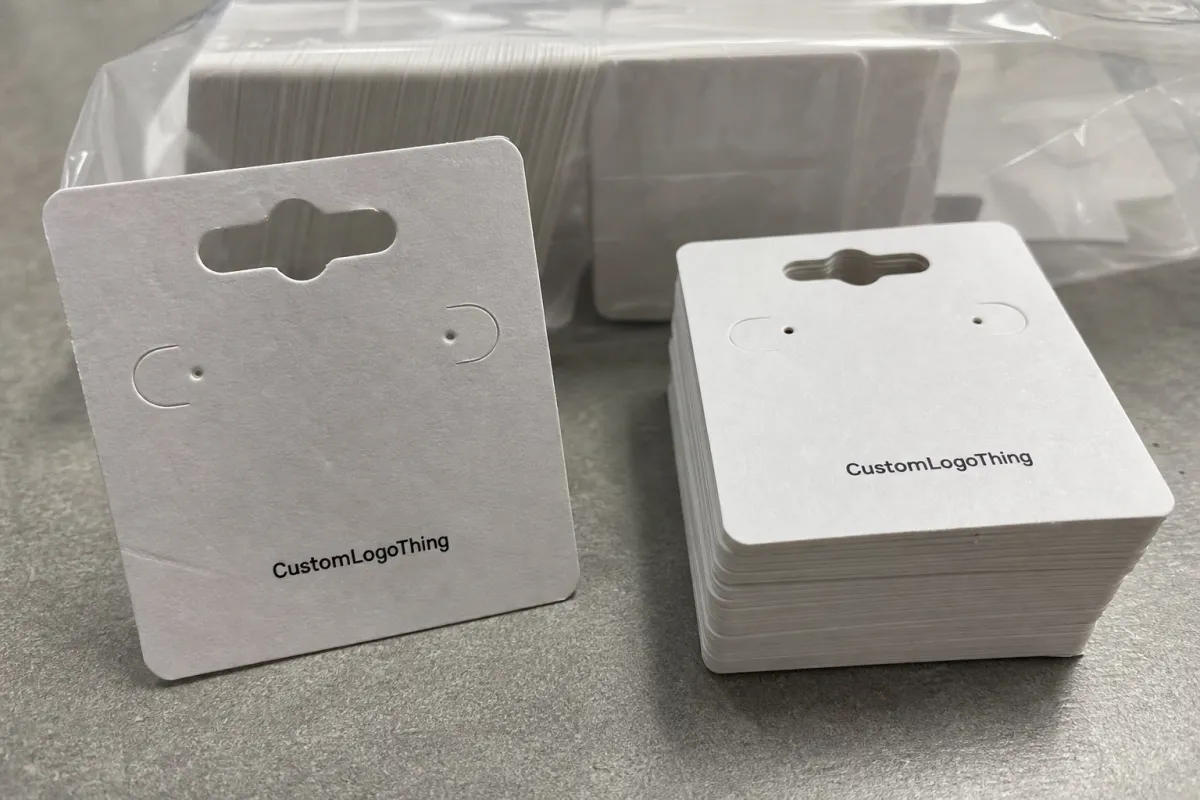
Most teams focus on the outer packaging first. Boxes, tissue, pouches, inserts, and hang tags get the attention because they are visible in photos and easy to compare across suppliers. Size labels usually sit lower on the list until the first reorder exposes the weak points. That is when the brand learns that one size sold through faster than expected, that the label layout does not hold up under handling, or that the original run was priced around a quantity that no longer matches demand.
The Size Labels MOQ guide for jewelry brands matters because jewelry rarely behaves like a single-size, single-pack product line. Even a modest launch can involve three or four size variants, and some collections need more. A 1,000-piece run divided across six sizes is not the same as 1,000 identical labels. Production efficiency changes, sorting changes, and the cost per piece usually changes too.
From a buyer’s point of view, the value of a good label system is practical. It reduces picking errors during kitting, keeps receiving and storage cleaner, and helps the package look deliberate instead of improvised. Even a tiny size sticker can make a pouch or card-backed product feel organized. That matters more in jewelry than brands sometimes admit, because the customer sees every detail before they ever see the piece itself.
“The cheapest label is rarely the cheapest order if it causes a reprint or slows fulfillment. Vague specs cost more than a slightly higher unit price.”
MOQ is best treated as a planning tool. It tells you how the supplier wants to run the job efficiently, but it also tells you how to structure the order so inventory tracks real sell-through. Teams that think about reorder behavior early tend to waste less material and get fewer surprises once sales begin to move.
Size label formats, materials, and construction options
There are several workable ways to produce size labels, and the right choice depends on where the label sits, how it is handled, and how much wear it needs to survive. For jewelry brands, the most common formats include woven labels, printed satin labels, heat-transfer labels, adhesive labels, hang-tag size stickers, and folded size tabs.
Woven labels are a strong fit when the brand wants a premium textile feel and a longer service life. They are often used for sewn-in or stitched applications where the label must stay legible after repeated handling. Printed satin labels are softer against the skin and usually more economical, especially when the design is narrow and needs to stay readable. Heat-transfer labels remove the physical tag from delicate pieces while keeping the size information permanent.
Adhesive labels and size stickers are the simplest route for inner packaging, inventory sorting, or retail prep. They can be printed on coated paper, polypropylene, or polyester stock depending on whether the label needs only basic shelf life or better resistance to scuffing and moisture. Folded size tabs help when the label must show at the edge of a pouch, bag, or insert without taking up much space.
Material choice affects more than appearance. Polyester is more durable, satin feels softer, cotton fits natural or artisanal branding, and coated paper is usually the most cost-conscious option for short-term or non-textile uses. Print method matters too. Screen print, thermal transfer, digital print, and woven construction each handle edge detail, color consistency, and wear differently.
Buyers should also consider fold style, cut type, adhesive strength, ink or thread color, and whether the label will face shipping abrasion or just light retail handling. A proof can look fine on screen and still fail in use if the adhesive is too weak, the stitch area is too narrow, or the edge cut frays.
Here is a practical comparison buyers can use before requesting a quote:
| Format | Best Use | Typical Strength | Cost Level |
|---|---|---|---|
| Woven label | Permanent sewn-in size identification | High durability, clean premium feel | Higher setup and MOQ |
| Printed satin label | Soft apparel-style labeling | Good legibility, softer finish | Moderate |
| Heat-transfer label | Tag-free applications | Excellent for smooth interiors | Moderate to higher |
| Adhesive size sticker | Boxes, pouches, inventory, inserts | Fast application, flexible format | Lower to moderate |
| Folded size tab | Edge-visible pouch or bag labeling | Easy organization, compact | Moderate |
For jewelry packaging specifically, the most common mistake is choosing a format that looks premium but is awkward for the actual packing flow. A label that takes extra handling on the floor can wipe out the savings from a lower unit price. On the other hand, a simple sticker may be the best choice if the label is only being used for box identification, internal sorting, or SKU control.
Technical specifications buyers should confirm before ordering
Before a supplier can price a label accurately, the artwork and specification details need to be clear. The most common fields are exact dimensions, fold direction, artwork format, color references, size count, and placement requirements. If those details are vague, the quote can shift several times, and production may slow once files are reviewed.
For the size labels moq guide for jewelry brands, this is where small details create outsized effects. A narrow label with two lines of type needs a different layout than a wider label that holds a size, SKU, and care symbol. Fine text can disappear if the design is not adapted to the material. That risk is especially high on woven labels, where very small lettering can fill in, and on small adhesive labels, where margins eat into the printable area quickly.
Key fields to lock before quote approval
- Artwork format: AI, PDF, EPS, or other vector files are best for clean production.
- Exact dimensions: width, height, and any folded size if applicable.
- Fold direction: center fold, end fold, Manhattan fold, or another specified finish.
- Color matching method: Pantone references, CMYK build, or thread color equivalents.
- Quantity per size: for example, 300 each in sizes 6, 7, and 8.
- Placement requirement: sewn, stuck, inserted, or heat-applied.
Compliance and usability matter as well. If the label is used on packaging inserts or apparel-adjacent items, there may need to be space for fiber content, care symbols, barcode data, or a SKU. If it is retail-facing, the print must stay legible after folding, cutting, or stacking. For paper-based labels and inserts, certification such as FSC can matter. For shipping durability expectations, testing references from ISTA provide a useful frame, especially when labels are packed with heavier packaging components.
A practical rule: if the label needs to be read from more than arm’s length, it probably needs a more open layout or a larger face area than the first sketch suggests. That single adjustment often saves a round of proof corrections later.
size labels MOQ, cost, and unit pricing explained
MOQ usually reflects the material, the print method, and the amount of setup required before production can run. A simple adhesive label often has a lower entry point than a woven or heat-transfer label because the tooling, inspection, and finishing steps are different. In plain terms, a lower MOQ usually means a higher unit cost, while larger runs tend to improve cost per piece.
The key point in the size labels moq guide for jewelry brands is that the quoted MOQ is not arbitrary. It usually reflects setup charges, tool preparation, waste allowance, and the packaging format requested. A two-color woven label with custom cutting and folded finishing takes more handling than a one-color printed sticker sheet. If you compare only the headline number, you can miss the real cost structure.
These are the main price drivers buyers should expect:
- Number of colors: more colors usually add production complexity.
- Number of size variants: multiple SKUs can raise sorting and pack-out costs.
- Custom cutting or folding: special finishing adds labor.
- Proofing and sampling: may be included or may appear as a separate line.
- Packaging format: rolls, sheets, loose stacks, or individual packs all affect labor.
For buyers comparing bulk pricing, the clearest way to review a quote is to look at three numbers together: total project cost, cost per size variant, and the reorder price. A run that looks a little higher at 5,000 pieces can be cheaper over the season if it reduces rush charges, limits rework, and gives a better inventory cushion. That is especially true in jewelry, where a few sizes may outsell the rest by a wide margin.
Typical pricing ranges vary a lot, but for a simple printed adhesive size label, brands may see pricing around $0.03-$0.12 per piece at moderate quantities. Woven or specialty labels can move higher depending on construction and detail. Once custom finishing is added, the cost profile changes fast. A useful buying habit is to ask for two figures every time: the first-run quote and the reorder quote. A supplier should be able to show where the savings appear on the second order.
Here is a simple buying framework that works for smaller launches:
- Use the lowest practical MOQ for a new collection when size demand is uncertain.
- Combine compatible sizes into one artwork system if the layout allows it.
- Compare the quoted reorder price before choosing the initial quantity.
- Avoid extra finishing unless the product handling truly needs it.
That approach keeps risk under control without locking the brand into a pricing structure that only looks good on the first purchase order.
Production steps and timeline from file approval to delivery
The production path is usually predictable if the artwork is clean and the specifications are complete. Most jobs move through six stages: quote request, artwork review, digital proof, sample or preproduction approval, production and finishing, and final shipment. When approvals move quickly, the schedule stays tight. When a file waits on review, everything behind it slips.
For many label orders, lead time can land around 10-15 business days after proof approval for straightforward printed work. More complex woven or specialty finishes may need longer depending on the queue, material availability, and finishing requirements. Custom color matching, special packaging, and detailed inspection instructions all add time. That is normal, and it is safer to plan for it than to base a launch on a best-case assumption.
What slows timelines down most often? In practice, it is incomplete artwork, unclear size mapping, approval delays from multiple stakeholders, and last-minute changes after the proof has already been prepared. A buyer may think a one-line text change is minor, but if that change affects print width, fold position, or code placement, the proof may need to be rebuilt.
Brands that keep production moving usually do three things well:
- Send vector artwork with outlined fonts or finalized text.
- Confirm exact size quantities before quoting.
- Assign one decision-maker to approve the proof.
For brands that want packaging alignment across multiple components, it helps to coordinate labels with boxes, bags, inserts, and tags at the same time. That keeps the visual system consistent and avoids the common problem of a label style that clashes with the rest of the line. If that is a priority, the broader Custom Labels & Tags category is usually the right place to compare construction options.
Buyers who track shipping integrity may also refer to general testing guidance from EPA when considering material and waste implications, especially if the order shifts between paper-based and synthetic stocks. The exact test standard depends on the application, but asking for proof before bulk production saves rework more often than not.
How custom packaging suppliers reduce waste and avoid sizing errors
A good supplier workflow reduces waste in two places: production and inventory. On the floor, art verification and dimensional checks catch errors before a full run begins. In inventory, accurate size mapping keeps a brand from ordering 2,000 labels for a size that only moves 400 units a season. That second problem is more common than many teams admit.
For the size labels moq guide for jewelry brands, the best suppliers ask the questions that prevent mistakes early. They want to know whether several collections share a size system, whether the label must sit inside a box or on the product itself, and whether the same art needs to repeat across multiple reorder cycles. That kind of workflow matters because it reduces miscommunication and keeps the spec sheet stable.
One point of contact helps too. If the project moves through separate people for quoting, proofing, and reorders, details can get lost. A supplier that keeps the original spec sheet, artwork version, and finish notes on file gives the buyer a cleaner path for repeat orders. That consistency often makes the difference between a smooth reorder and a round of avoidable emails.
In packaging terms, the goal is repeatability. The size label should fit the same way on the same pouch or card, hold the same text hierarchy, and match the same finish every time. That is the kind of consistency that makes a small accessory line feel managed rather than pieced together.
Waste also shows up in less obvious places. A label that is oversized for the package may force extra trimming or create a bad fold. A label that is too small may require reprinting because the information is unreadable. A clean specification avoids both problems. The difference between a workable label and a wasteful one is often just a few millimeters.
Next steps to place the right size label order
If you are ready to quote a label run, gather the basics first: label dimensions, size list, preferred material, quantity by size, artwork file, and target delivery date. If those details are ready, the quote will be more accurate and the production timeline will be easier to plan. If they are not ready, the supplier can still help, but the quote may need revisions.
Ask for two pricing scenarios whenever possible: the initial order and a reorder scenario. That gives you a clearer view of MOQ, bulk pricing, and whether the first run is truly the smartest choice or simply the easiest one to approve. It also helps you compare unit cost against future savings, which is where many packaging decisions either pay off or become expensive later.
The practical sequence is straightforward. Confirm the format first. Approve the proof second. Build a reorder calendar before stock gets thin. That keeps label supply aligned with sales instead of reacting after inventory runs low. For brands that need a single decision point, the size labels moq guide for jewelry brands boils down to this: Order the Right spec once, save the production record, and make the next reorder easier than the first.
What is the typical size labels MOQ for jewelry brands?
MOQ usually depends on material and print method. Woven and specialty finishes often require more units than simple printed labels. Brands can reduce risk by ordering one core size run first, then expanding to additional sizes after sell-through is confirmed.
Can size labels be customized for different jewelry product lines?
Yes. Size labels can be adapted for rings, bracelets, necklaces, or apparel-adjacent packaging inserts as long as the dimensions and information hierarchy are planned correctly. The key is to match the label format to the packaging surface and handling conditions.
How do I lower unit cost without increasing ordering mistakes?
Combine compatible size variants into one production run when the artwork system allows it, and simplify colors or finishing where possible. Always confirm proof accuracy before production so low unit cost does not turn into costly reprints.
What affects turnaround time on custom size labels?
Turnaround time is driven by artwork readiness, approval speed, material availability, finishing complexity, and whether the order needs sampling. Clean files and fast proof approval usually shorten the overall schedule more than any other factor.
Can I reorder the same size labels later at the same spec?
In most cases, yes, if the original artwork and production details are retained and the brand keeps the same material, size, and finish. It is smart to save the exact spec sheet so reorders stay consistent and do not require a new setup decision.


