Skincare Brands Zipper Pouches Unit Cost: Request a Quote
skincare brands Zipper Pouches Unit Cost is rarely a throwaway packaging number. In a lot of launches, the pouch does more visible brand work than the jar or bottle inside it. It sits on shelf, carries the color story, protects the formula, and signals whether the product feels clinical, premium, or bargain-level before a customer ever opens the seal. I have watched teams spend weeks perfecting a hero serum label, then discover the pouch is the piece that quietly decides the margin. That is why the real question is not just price. It is how skincare brands zipper pouches unit cost affects freight, conversion, shelf presence, and the cost of the next reorder.
A five-cent swing sounds tiny until the purchase order lands. On 25,000 units, that adds up to $1,250. If the quote also includes tooling, setup, or a heavier laminate that changes shipping weight, the difference is no longer small. Compare the pouch against a carton or a bottle and it may look inexpensive. Compare it against the full launch budget and the same pouch can swallow savings that looked safe on paper. That is why skincare brands zipper pouches unit cost needs a real cost model instead of a quick glance at a quote sheet.
The useful questions are practical ones: what is the pouch built from, which details push the price up, what MOQ applies, how long does production take, and how do you keep skincare brands zipper pouches unit cost in check without making the pack look thin or generic? Those are the threads worth pulling.
Why skincare brands zipper pouches unit cost changes fast
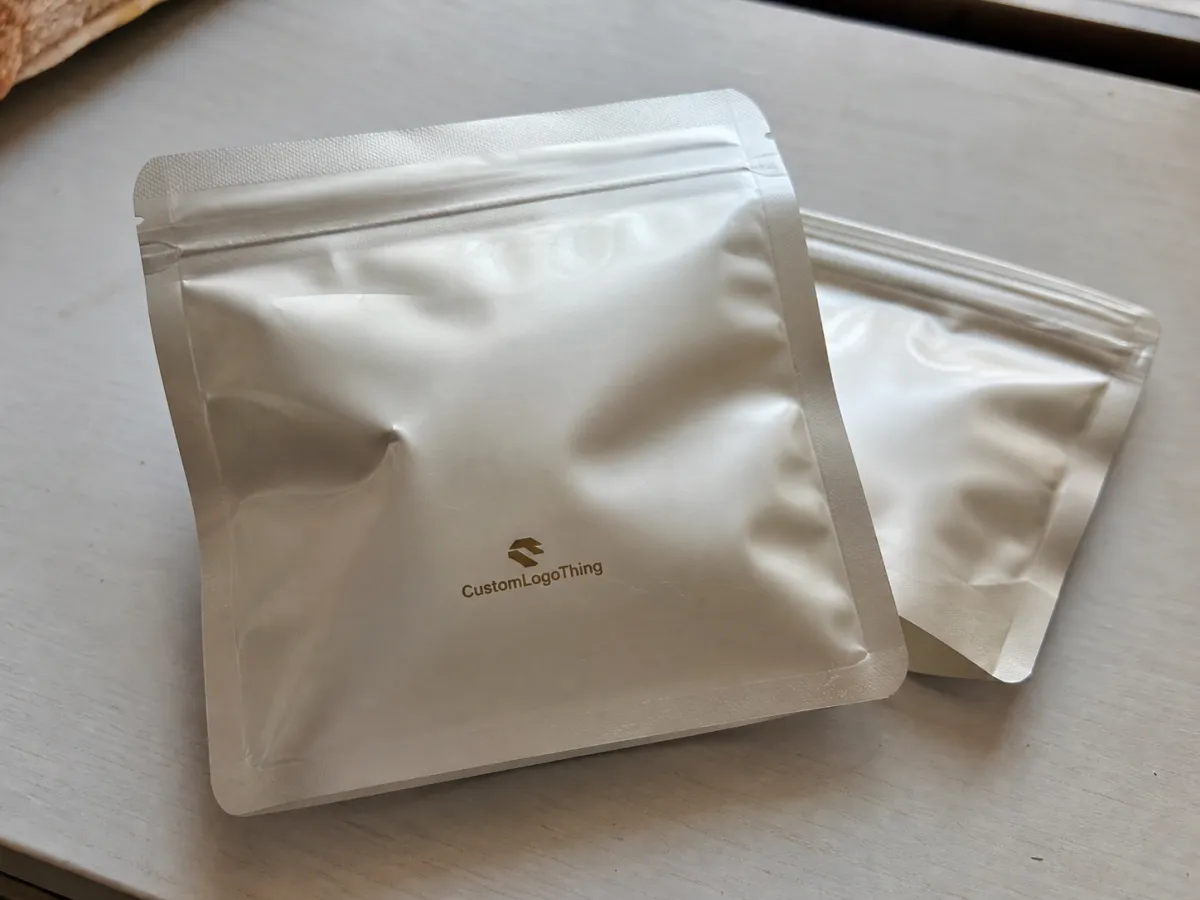
skincare brands zipper pouches unit cost moves quickly because a pouch is a stack of decisions, not a single material choice. Size matters, but it is often not the biggest driver. Print coverage, zipper type, barrier level, finish, and structure tend to move the number more than a few millimeters of extra height. A smaller-looking pouch can cost more than a larger one if the build is doing more work under the surface.
That catches buyers off guard during the first round of quotes. A matte stand-up zipper pouch with full-bleed artwork, a high-barrier laminate, and a tear notch can cost more per unit than a glossy flat pouch with lighter print coverage and a standard zipper. The quote reflects more than film usage. It also reflects press time, registration control, and the setup needed to keep the run stable. That is where skincare brands zipper pouches unit cost starts to show its real shape.
Margin is the scoreboard that matters. A brand may shave $0.03 off a pouch by choosing a cheaper structure, then lose that saving through leakage, damage, or weak shelf appeal that drags conversion down. Packaging buyers see this pattern often. A pouch that protects the formula better, opens cleanly, and ships with fewer complaints can be the lower-risk choice even when the initial skincare brands zipper pouches unit cost looks higher.
Piece price is only part of the story. Freight, tooling, setup charges, and repeat-order consistency belong in the same calculation. A quote that looks expensive on paper may still be the better buy if it cuts rework or holds color from batch to batch. That matters most on small and mid-size launches, where fixed costs are spread across fewer units and skincare brands zipper pouches unit cost gets distorted quickly.
Another common mistake is assuming every supplier is pricing the same thing. They are not. One quote may include a custom zipper pull, a wider seal area, and color matching against brand standards; another may price a simpler build with less attention to barrier performance. Compare those side by side without unpacking the spec and skincare brands zipper pouches unit cost becomes a misleading number instead of a decision tool.
The buyer's job is to separate the variables. Once the build is clear, the pricing story gets less mysterious. The pouch is not expensive because it is a pouch. It is expensive because of what it must do, how it must print, and how reliably it must run on the line. That is the practical foundation of skincare brands zipper pouches unit cost.
Product Details: what skincare zipper pouches are buying
Skincare brands Buy Zipper Pouches for different jobs, and each job changes skincare brands zipper pouches unit cost in a different way. A sample sachet, a refill pouch, a travel kit, and a retail-ready stand-up pouch all live in different parts of the customer journey. They are not interchangeable. The format decides how the product fills, how it sits on shelf, and how much punishment it takes in transit.
Flat pouches are usually the simplest route. They fit masks, wipes, single-use samples, and travel-size products where low material usage matters more than shelf theater. Stand-up pouches carry more visual weight and are often the better fit for refills, powders, and premium sets because they present well in retail displays. Window pouches let the product speak visually, though the extra clear layer or die-cut panel can push skincare brands zipper pouches unit cost upward. Reclosable zipper pouches add convenience for formulas that get opened and closed repeatedly.
Skincare formulas do not behave the same way inside a pouch. Creams demand stronger seals and puncture resistance. Powders need a structure that resists migration and clumping. Wipes add bulk and stress the gusset. Cleansing refills may need a stronger oxygen and moisture barrier. Each of those choices changes skincare brands zipper pouches unit cost because the structure has to support the formula, not just the graphics.
Visual merchandising matters just as much. Matte and gloss send different signals in seconds. Clear windows can reduce print coverage, but they also alter the construction. Metallic layers create a premium cue and usually improve barrier, yet they tend to cost more than a standard mono-layer appearance. Soft-touch coatings, tactile finishes, and spot accents can lift a pouch from functional to polished. They also move skincare brands zipper pouches unit cost, sometimes by more than buyers expect.
The cheapest pouch is not always the lowest-risk pouch. A low-cost build that dents in transit, sits flat on shelf, or leaks at the zipper can cost more than a better-specified pouch with a slightly higher quote. For skincare brands, the pouch has to support both the brand story and the reality of wet, oily, or sensitive formulas. That tension sits at the center of skincare brands zipper pouches unit cost.
The blunt version is simple: the pouch has to earn its place. A refill-friendly format can strengthen repeat purchase behavior. A premium-looking pack can support a higher retail price. A travel-friendly pouch can widen the audience. The format decides how much value the pouch can carry, and those decisions shape skincare brands zipper pouches unit cost.
| Option | Typical Build | Typical MOQ | Estimated Unit Cost | Best Use |
|---|---|---|---|---|
| Flat zipper pouch | Lightweight laminate, simple print, standard zipper | 3,000-5,000 pieces | $0.18-$0.32 | Samples, masks, travel kits |
| Stand-up zipper pouch | Gusseted structure, stronger seal area, retail-friendly shape | 5,000-10,000 pieces | $0.24-$0.48 | Refills, powders, premium SKUs |
| Window pouch | Clear panel or cutout with printed body | 5,000-10,000 pieces | $0.28-$0.55 | Product visibility and shelf appeal |
| Premium high-barrier pouch | Multi-layer laminate, specialty finish, stronger barrier | 10,000+ pieces | $0.35-$0.75 | Sensitive formulas, luxury lines |
These ranges are directional, not universal. Artwork coverage, zipper type, fill weight, freight lane, and finish selection all move the final skincare brands zipper pouches unit cost up or down. Even so, the table gives buyers a more honest starting point than a vague "contact us for pricing" response ever will.
Specifications that affect performance and shelf life
A proper spec sheet does more than describe a pouch. It explains the tradeoffs that shape skincare brands zipper pouches unit cost. Dimensions come first. Structure comes next. After that, closure type, seal width, fill volume, and the small details that influence how cleanly the pouch runs on the line all need to be on paper. Miss one, and the quote may look right while still being commercially useless.
Barrier is the next major variable. Some formulas only need moisture resistance. Others need oxygen control because active ingredients oxidize. Light protection can matter for serums, powders, or botanical blends that degrade under exposure. A pouch with a metallized layer or a stronger barrier film can extend shelf life, but it also changes skincare brands zipper pouches unit cost. Buyers who know their shelf-life target can avoid paying for protection they do not need, or underbuying barrier and paying for failure later.
Film thickness is another lever. Thicker film usually improves feel, puncture resistance, and sealing tolerance. It can also make the pack feel more substantial in hand. That said, thicker film adds weight, and weight changes freight. It also affects material usage, which feeds directly into skincare brands zipper pouches unit cost. A small change in micron count can look minor on a drawing and turn meaningful at scale.
Usability details deserve equal attention. Tear notches help consumers open the pouch cleanly. Hang holes matter for retail display systems. Child-resistant features may be required for certain formulations or channels. Reclose performance matters when the pack is meant for repeated use. None of these are decorative. Each one can change the structure, tooling, or print setup, and each one can shift skincare brands zipper pouches unit cost.
Technical buyers usually get better results when transit testing enters the conversation early. That matters especially if the pouch will ship with bottles, jars, or fragile components inside secondary packaging. Many teams reference ISTA test protocols for transport performance and use ASTM methods when they want a formal benchmark for package behavior. The goal is not to overbuild the pouch. The goal is to match the spec to the real risk so skincare brands zipper pouches unit cost reflects what the pack actually needs to do.
Compliance and finish belong in the same conversation. A luxury soft-touch coating can make sense on a hero SKU, but if the pack lives in a humid environment or gets handled often, the brand should ask how that finish behaves over time. A pouch that looks excellent on approval sheets but scuffs easily can damage perceived quality. That is why skincare brands zipper pouches unit cost should be read with durability, not apart from it.
If the product sits inside a sustainability story, the material claims need to be checked carefully. The Forest Stewardship Council matters when paper components are part of the packaging system, and buyers should ask how those claims are documented. Recycled content, paper sourcing, and recyclability all depend on the full pack structure, not just one layer or one label. A pouch that looks green on the quote but does not hold up to local recycling guidance is a bad story to tell. That context influences how the pouch is positioned and how much premium the market will accept, which circles back to skincare brands zipper pouches unit cost.
The cleanest way to think about specs is plain enough: every line item should protect the formula, improve the shelf message, or reduce risk. Anything else is cost without return. That filter keeps skincare brands zipper pouches unit cost disciplined and helps the brand avoid paying for features that do not move sales or performance.
Skincare Brands Zipper Pouches Unit Cost: Pricing, MOQ, and Quote Inputs
skincare brands zipper pouches unit cost is driven by five core variables: material structure, print method, order quantity, zipper style, and whether the pouch needs special tooling. If a supplier asks only for size, the quote will be thin. If they ask for artwork coverage, finish, closure type, barrier level, and target quantity, they are asking the right questions. That is the difference between a placeholder estimate and a quote you can actually buy against.
MOQ matters because fixed costs have to land somewhere. A fully custom pouch often brings setup charges, tooling fees for custom features, and prepress work for the artwork. Those costs are easier to absorb at higher volumes. At lower volumes, they weigh more heavily on skincare brands zipper pouches unit cost. A 3,000-piece run can look surprisingly expensive while a 15,000-piece run may drop sharply on a per-unit basis.
Bulk pricing usually moves in tiers rather than in a smooth line. A quote might shift from $0.41 at 5,000 pieces to $0.33 at 10,000 pieces and $0.29 at 25,000 pieces. Those numbers are illustrative, not a live market promise, but the pattern is familiar. The more units that absorb fixed costs, the lower the per-piece price. Freight and minimum run constraints can flatten that curve, though. Sometimes the cheapest piece price is not the best total spend. That is a classic skincare brands zipper pouches unit cost trap.
The right brief gets better pricing. Start with dimensions, pouch style, artwork files, closure preference, target finish, barrier needs, and quantity by tier. If the pouch is for a refill, say so. If the formula is oily, fragile, or moisture-sensitive, say that too. If shelf life is a hard requirement, include it. The more context you provide, the less guesswork sits inside skincare brands zipper pouches unit cost.
It also helps to state the priority plainly. If the goal is the lowest possible landed cost, say that. If the goal is a premium shelf appearance with tight cost control, say that. Suppliers can often move the quote in different directions by simplifying the structure, changing print coverage, or switching to a more standard zipper. The problem is rarely lack of options. The problem is that many teams ask for "best price" without defining best for skincare brands zipper pouches unit cost.
"A good pouch quote is not the one with the lowest headline number. It is the one that survives sampling, production, freight, and reorder without surprises."
There are a few practical ways to improve skincare brands zipper pouches unit cost without making the pack feel cheap. Standardize pouch size across related SKUs. Reduce the number of print colors if the artwork allows it. Ask whether a full-window design is necessary or whether a smaller transparent panel would do the same job. Keep the zipper style consistent across launches. Complexity is what tends to inflate setup charges, and these moves cut complexity where it matters.
The buying reality is simple: a quote should help you compare options, not just approve a single number. Ask for at least two tiers if budget allows it. Compare a standard build against a premium build. Compare different quantities. Compare the effect of reducing print coverage. That is how skincare brands zipper pouches unit cost starts working for the brand instead of against it.
Process and Timeline: from brief to delivery
The process is straightforward once the assumptions stay put. It begins with a brief, moves into quoting, then sampling, then revision, then production, then shipment. On paper, that looks tidy. In the real world, skincare brands zipper pouches unit cost often shifts during the sequence because the first brief left out one critical detail. A missing seal width, a late artwork change, or a barrier update can turn a clean estimate into a new pricing round.
For a new design, the quote stage is usually the fastest part if the spec is complete. A competent supplier can often return an initial range quickly, then refine it after artwork and structure review. Sampling takes longer because the brand may want to check color, zipper feel, fit, and overall presentation before approving production. That delay is normal. It should be planned for, not treated as noise. The more custom the build, the more skincare brands zipper pouches unit cost depends on how early the design gets locked.
Lead times vary by structure and order size, but a practical planning window for many custom pouches often lands around 12 to 18 business days from final approval to production completion, with shipping added after that. Some projects move faster. Some move slower. Artwork readiness, material availability, and extra quality checks all influence the timeline. If a brand is working to a hard launch date, the safest move is to build buffer into the schedule instead of hoping the quote and sample cycle compresses itself. That affects skincare brands zipper pouches unit cost too, because rush changes and accelerated freight can raise the final landed figure.
Delays usually come from the same handful of issues. Artwork arrives without bleed or proper dielines. The brand changes print coverage after seeing the first proof. The zipper style gets swapped late. A barrier upgrade gets requested after the pouch has already been priced. Each of those changes can shift skincare brands zipper pouches unit cost because the supplier has to rework material assumptions or restart approval steps.
Sample approval is where many brands save themselves from expensive mistakes. Check seal integrity. Check zipper function. Check how the pouch sits on shelf and how it behaves in transit. If the pack will be tested, reference the methods early instead of after the fact. Some teams use transit testing logic from ISTA or package performance methods from ASTM to validate the build before volume starts. That discipline keeps skincare brands zipper pouches unit cost from being undermined by later failures.
Working backward from launch helps more than most buyers admit. If the retailer needs finished goods on a specific date, build in time for quote review, sample review, color corrections, production, freight, and contingency. That sounds obvious. It is also where many packaging budgets are won or lost. A rushed launch can make skincare brands zipper pouches unit cost look lower on the quote and higher on the invoice.
The timeline is not just a scheduling issue. It is a pricing issue. The faster the brief changes, the more likely the price changes with it. Stable specs create stable costs. That is one of the least glamorous truths in packaging, and one of the most useful for controlling skincare brands zipper pouches unit cost.
Why choose us for custom skincare zipper pouches
For Custom Logo Things, the useful promise is plain: clear specs, dependable quoting, and production that matches what was approved. Buyers do not need slogans. They need a supplier who can turn a brand idea into a manufacturable pouch and keep skincare brands zipper pouches unit cost visible from the first conversation onward.
The strongest packaging partners tend to be the ones that tell you what is easy, what is expensive, and what will likely cause trouble later. That matters more than a polished sales pitch. If a finish adds cost without adding value, say so. If a structure can be simplified without hurting shelf appeal, say so. If the MOQ changes because the build is fully custom, say so. Candor makes skincare brands zipper pouches unit cost easier to control and easier to defend internally.
Quality control is not abstract here. Skincare brands care about seal integrity, zipper function, print registration, and repeat-order consistency. A pouch that looks fine in a photo but fails at the seal line is not an asset. It is an operational risk. A supplier that checks these points early can reduce rework and returns, which directly influences skincare brands zipper pouches unit cost over the life of the program.
Scale-up support matters too. Many skincare brands do not start at huge volume. They launch small, then grow if the line performs. The right supplier can support a smaller MOQ first and then move into stronger bulk pricing later without changing the visual language of the pack. That continuity matters because every redesign has a cost. Keeping the same pouch family across growth stages protects both brand equity and skincare brands zipper pouches unit cost.
Communication is the final test. Fast responses help, but clarity helps more. A quote should show what is included, what is not, and which assumptions could change the number. That reduces back-and-forth and helps the brand make decisions quickly. If the supplier handles that well, skincare brands zipper pouches unit cost becomes a planning tool instead of a guessing game.
For teams that want a packaging partner rather than a price-only vendor, that distinction matters. Price matters. Consistency matters more. Over a product cycle, the cost of uncertainty often exceeds the cost of a slightly better pouch. That is why a disciplined approach to skincare brands zipper pouches unit cost usually pays off.
You can also review our Case Studies to see how packaging choices influence execution, consistency, and brand presentation across different product types. Good case work does not prove every project will be identical. It does show how a supplier thinks when specifications, lead times, and budget all need to hold together.
Next steps: request a sharper quote in one pass
If you want a cleaner estimate, send a complete brief the first time. Include pouch dimensions, product type, artwork files, finish preference, quantity tiers, zipper style, and target timeline. That is the fastest route to a usable skincare brands zipper pouches unit cost. A partial brief usually produces a partial quote, and partial quotes are where misunderstandings grow.
Photos help. A reference pouch helps even more. If you have a competitor sample, a retail example, or even a rough mockup, include it. Visual reference gives the quote team clues about finish, structure, and shelf position that a spec list alone may miss. That often shortens the loop and improves the accuracy of skincare brands zipper pouches unit cost.
Ask for multiple tiers at once. It is much easier to compare 5,000, 10,000, and 25,000 pieces in one pricing pass than to restart the process three times. That comparison shows how MOQ affects unit cost, where freight starts to matter, and whether a slightly larger order actually improves total economics. Many buyers discover that the better choice is not the lowest unit price, but the most efficient landing point for skincare brands zipper pouches unit cost.
Before you send the request, confirm the details that usually create friction: closure type, seal style, color count, special finishes, and whether samples are required before production. Those items change setup work and can shift setup charges. They also affect repeatability. If the formula is moisture-sensitive or the shelf position is premium, say that directly. The more specific the brief, the less likely the quote will drift later. That is how you protect skincare brands zipper pouches unit cost from avoidable surprises.
The takeaway is simple. Lock the spec before you chase the lowest number. A pouch quote only stays useful if it still makes sense after sampling, freight, and reorder, so make the first brief complete, compare three quantity tiers, and choose the build that protects both the formula and the margin. That is the shortest path to a skincare brands zipper pouches unit cost you can actually trust.
What affects skincare brands zipper pouches unit cost the most?
Material structure, print coverage, zipper style, and order quantity usually have the biggest impact on skincare brands zipper pouches unit cost. Custom finishes, barrier layers, and special features like windows or tear notches can raise the price quickly. Freight and setup charges matter more on small runs, so the same pouch can price very differently at different volumes.
What MOQ should a brand expect for skincare zipper pouches?
MOQ depends on whether the pouch is stock-based or fully custom. For custom runs, many programs begin around 3,000 to 10,000 pieces depending on structure, print method, and feature set. If launch volume is low, ask for tiered pricing so you can compare the unit cost at several quantities instead of guessing where skincare brands zipper pouches unit cost becomes efficient.
How can I lower unit cost without making the pouch look cheap?
Simplify print coverage, reduce special finishes, or use a more standard pouch structure. Keep the same size and closure across SKUs when possible to avoid extra setup complexity. Ask for alternative material options so you can compare appearance, protection, and skincare brands zipper pouches unit cost side by side before you commit.
How long does the process take from quote to production?
The quote stage is usually fastest when all specs are complete and artwork is ready. Sampling and approval add time, especially if color matching or structural changes are needed. Production and shipping lead time depends on order size, material availability, and destination, so skincare brands zipper pouches unit cost should always be evaluated alongside the schedule.
What should I send to get an accurate quote for skincare zipper pouches?
Send dimensions, pouch style, product type, artwork files, and quantity by tier. Include zipper preference, finish preference, and any barrier or shelf-life requirements. If possible, share a reference pouch or competitive sample so the supplier can price against a real target and give you a more accurate skincare brands zipper pouches unit cost.


