Pet treat Die Cut Stickers cost is rarely the biggest line in a launch budget, but it can quietly decide whether a pouch, jar, or shipping insert looks intentional or thrown together. Brands often spend weeks perfecting formulation, sourcing, and shelf packaging, then tack on a sticker at the end as if it were a footnote. That is usually where the trouble starts. Pet treat die cut stickers cost should be treated as a packaging decision with measurable brand value, not as a stray print expense.
Buyers usually want one thing from a sticker: proof that it earns its space fast. A contour cut around a logo, a paw, or a treat silhouette can help a chicken treat pouch stand out in a crowded aisle. A bone-shaped label can give a subscription box more personality without changing the structure of the pack. Once a sticker does that job, the price starts to make sense. The real question is not whether pet treat Die Cut Stickers cost money. It is whether that cost returns visible value per piece, per order, and per reorder.
Why Pet Treat Die Cut Stickers Cost Less Than Missed Sales
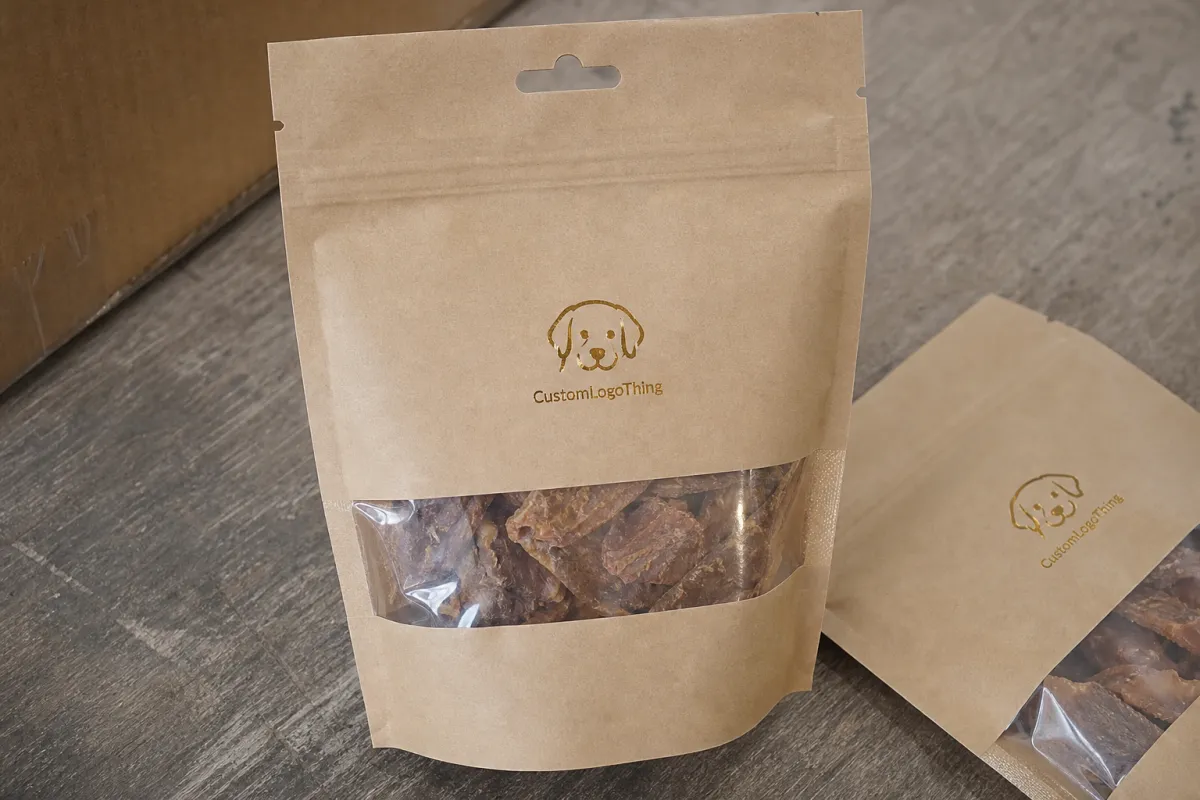
The cheapest sticker is not always the smartest branding move. A plain rectangle can do the job, but it often disappears on a busy pouch, a kraft carton, or a sample pack already crowded with claims. A shaped sticker, cut to follow a logo or mascot, gives the eye a cleaner place to land. In plain terms, pet treat Die Cut Stickers cost far less than a packaging redesign, but they can create a stronger shelf signal than a generic label sitting dead center on a panel.
That matters because pet food and treat buyers rarely read every line on the pack. They scan for trust cues: flavor, ingredient claims, size, sourcing, and whether the package looks polished enough to match the promise. A die cut outline makes the brand feel deliberate. It also matters in e-commerce, where the sticker may be the only visible brand marker before the box is opened. Pet treat Die Cut Stickers cost a fraction of a full carton refresh, yet they still shape first impressions, and first impressions affect repeat behavior more than many brands want to admit.
I have seen this in production audits more than once: a small visual upgrade can change how a team talks about the entire product. Not because the sticker is magical, but because it signals care. If the package looks considered, the rest of the brand suddenly gets a little more credibility. That is a weirdly human reaction, and it shows up fast.
One comparison makes the math easier to picture. If a sticker run costs $180 for 1,000 pieces, the unit cost is $0.18. If that same design helps one buyer remember the brand at reorder time, the cost per piece starts looking tiny. Not every launch will show an immediate lift, and pretending otherwise helps nobody. Still, packaging teams see this pattern often: small, visible upgrades tend to outperform larger spend that stays hidden from the customer. That is why pet treat die cut stickers cost should be measured alongside packaging conversion, not only against the invoice.
Industry groups such as packaging.org keep circling back to the same practical point: packaging is communication. If the sticker communicates flavor, craft, and consistency in one glance, it earns a place in the budget. If it fades into the background, it becomes decoration. The difference shows up in the package stack, in the unboxing moment, and in how easily the brand is recalled after the first purchase.
Practical rule: a sticker that improves recognition, supports a clean fulfillment flow, and stays within target unit cost usually beats a cheaper option that looks generic or peels early.
There is another angle here too. Better graphics and a cleaner contour can reduce the chance that a promotional insert feels disposable. In a market where pet treat brands compete on trust, tiny visual details carry real weight. Pet treat die cut stickers cost should be weighed against the value of fewer weak touchpoints, not just the raw print price.
What You Get With Custom Die Cut Stickers for Pet Treats
Custom Die Cut stickers follow a specific shape rather than a standard rectangle or circle. That shape can trace a logo, a paw print, a bone, a treat silhouette, or a mascot outline. Two common formats come up again and again. A kiss-cut sticker is cut through the face stock but stays on a backing liner. A full die cut sticker is cut all the way through the material so the finished piece comes off as its own shape. Both can work for pet treats, but the better choice depends on how the sticker will be used and how much handling it must survive.
Common applications are broader than many buyers expect. Pet treat die cut stickers cost can be justified on:
- Stand-up treat pouches for retail shelves
- Glass or plastic jars that need a branded accent
- Shipping cartons and mailers for direct-to-consumer orders
- Thank-you cards and insert cards in subscription boxes
- Sample packs, launch kits, and event giveaways
- Bundles that need quick brand recognition without reprinting packaging
Material choice changes both the look and the durability. Paper stocks are often used for short-term or indoor applications where cost per piece matters most and moisture exposure is low. Film stocks such as polypropylene or BOPP are stronger choices for pouches that may be handled often, refrigerated, or exposed to oils from the product area. If the sticker will touch a smooth pouch, film usually holds up better. If it will sit on a carton insert or a short-run promo pack, paper may be enough. Pet treat die cut stickers cost more when the material has to perform longer, and that is usually money well spent.
Finish matters too. Matte finishes feel quieter and more premium in the hand. Gloss finishes make colors pop and can be easier to wipe clean. Soft-touch options add a velvety feel, but they usually raise pet treat die cut stickers cost because they add another layer to the build. The right finish is the one that fits the brand promise. A rustic, farm-style treat line may look better in matte. A bright training treat line may benefit from gloss. A premium, human-grade message might justify soft-touch if the budget allows.
If your program needs matching pieces across several package types, it can help to coordinate with our Custom Labels & Tags range so the art style stays consistent across pouches, cartons, and inserts. That kind of consistency reduces design drift. It also makes the package family feel like one system instead of a stack of unrelated print pieces.
Pet Treat Die Cut Stickers Cost: Pricing, MOQ, and Unit Cost
Pet treat die cut stickers cost depends on more than the shape. Finished size, quantity, substrate, finish, print coverage, and turnaround speed all feed into the quote. Buyers often ask for the lowest sticker price first. That instinct makes sense, but it can hide the real story. A quote with a low base price and heavy setup charges may not beat a slightly higher quote with better bulk pricing and lower total landed cost. The useful number is cost per piece, not just the headline total.
For planning purposes, a small Custom Die Cut sticker run might look like this:
| Order Size | Typical Unit Cost | Best Fit | What Usually Affects the Price |
|---|---|---|---|
| 250 to 500 pieces | $0.45 to $0.90 | Pilot launches, seasonal tests, event packs | Higher setup charges, lower spread of fixed costs |
| 1,000 pieces | $0.18 to $0.38 | Small brand runs, reorder testing, subscription inserts | Balanced MOQ and unit cost |
| 5,000 pieces | $0.07 to $0.16 | Steady sellers and repeat packaging use | Stronger bulk pricing, better material efficiency |
| 10,000 pieces and up | $0.05 to $0.11 | High-volume distribution or national retail support | Lower cost per piece, storage and inventory planning become more important |
Those ranges are planning numbers, not promises. A 1.5-inch logo sticker on white BOPP will not price the same as a complex full-color shape with heavy coverage, white ink, and a soft-touch finish. Still, the table shows the main trend: as quantity rises, pet treat die cut stickers cost drops sharply on a per-unit basis. That is the logic behind MOQ. Higher minimums are not always about pushing volume. They are often about spreading fixed production work across enough pieces to make the run efficient.
Some buyers see tooling fees and assume they are being padded. Sometimes that happens, but not always. In digital contour-cut work, there may be no traditional tooling fee at all, only setup charges for file prep, proofing, and production calibration. In more specialized analog workflows, a custom physical die can add a tooling fee that might land anywhere from modest to material, depending on shape complexity. Either way, pet treat die cut stickers cost should be quoted with the setup structure clearly stated so there are no surprises after approval.
A good quote should list the following items in plain language:
- Exact finished size and shape complexity
- Material type and finish
- Quantity breakpoints and bulk pricing tiers
- Proofing method and number of revisions included
- Any setup charges, tooling fees, or special finishing costs
- Packing method, roll or sheet format, and shipping expectations
That kind of clarity matters because pet treat die cut stickers cost can vary sharply based on one hidden detail. A bright white film with full coverage is not the same as a simple two-color mark. A tiny paw print with clean lines is not the same as a multi-lobed mascot silhouette with tight corners. If you compare quotes without a common spec sheet, the lowest number can be misleading. I have seen buyers compare apples to oranges, then realize later that the cheaper option excluded proofing or used a material that did not fit the pouch surface.
One more comparison helps. A custom sticker is often the fastest way to improve package presence without paying for a full structural change. New cartons, printed sleeves, and converted pouches can involve longer lead times and larger order commitments. A well-specced sticker run gives a brand room to test, learn, and reorder. That is why pet treat die cut stickers cost belongs in the same conversation as packaging flexibility and launch risk.
Specifications That Move the Quote
Specifications drive price more than many first-time buyers expect. The same design can quote differently depending on size, contour detail, color count, and the surface it must stick to. Pet treat die cut stickers cost rises when the shape has tight corners, thin bridges, or unusually large overall coverage. A simple round treat badge is easier to produce than a cut line that wraps around whiskers, paws, and tag shapes. Every added curve creates more attention in prepress and more care during cutting.
Artwork format matters too. Vector files are the cleanest starting point because they scale without loss and support precise cut lines. Fonts should be outlined. Bleed should be built into the file so the edge does not expose a white line after trimming. If the design uses multiple colors, small reverse text, or white ink, the proofing step becomes more important. Those details do not just affect appearance. They can influence the final pet treat die cut stickers cost because they affect press time and file preparation.
Surface choice is another practical variable. Smooth polyethylene pouches, glossy cartons, textured kraft boxes, and curved jars do not behave the same way. Adhesion strength can change with the surface energy of the material, the amount of handling, and whether the pack sees moisture or oil. A pouch stored in a dry warehouse is a different job from a jar that gets handled in a humid kitchen or a freezer case. For buyers comparing materials, the right question is simple: what surface will the sticker touch, and how long does it need to stay put?
There is also a sourcing side to the spec conversation. If a brand wants a paper-based option with documented fiber sourcing, FSC-certified stock may be part of the brief. The FSC system gives packaging teams a recognized way to track responsible forest sourcing. That does not make a sticker automatically better, but it can matter for brands with retail or procurement requirements. In the same way, shipping-heavy programs may think about handling and parcel stress in light of ISTA-style transit expectations. The spec sheet should reflect the actual use case, not a generic paper choice.
Here is a quick checklist that usually speeds approval:
- Final width and height in inches or millimeters
- Confirmed quantity and any backup quantity tier
- Gloss, matte, or soft-touch finish preference
- Material preference based on pouch, carton, or jar use
- Print-ready art with outlined fonts and defined cut lines
- Target ship date and any retail or launch deadline
When these details are missing, pet treat die cut stickers cost becomes a moving target. When they are clear, the quote becomes far more reliable. That reliability is valuable on its own. Buyers do not just want a low number. They want a number they can plan around.
Process, Turnaround, and Production Steps
A clean production process keeps pet treat die cut stickers cost under control. The usual sequence is straightforward: submit specs, receive a quote, review the proof, approve the layout, print, cut, inspect, pack, and ship. The difference between a smooth order and a stressful one is usually not the printing itself. It is the quality of the input and the speed of approval. If the artwork is complete and the quantity is confirmed, the job can move quickly. If the file needs major cleanup, the timeline stretches.
Simple repeat orders often move faster than first-time custom shapes. That is because the die line, print method, and finish are already set. A repeat run may ship in 7 to 10 business days after proof approval, depending on the schedule and quantity. A new custom contour, specialty film, or complex finish may need 10 to 15 business days, sometimes more if the file requires revision or the job lands near a busy production window. Pet treat die cut stickers cost can also rise with rush service because faster production creates a tighter schedule and less room for batching.
Three things usually speed a job up:
- Complete artwork with vector cut lines and outlined fonts
- A single decision-maker who can approve the proof fast
- Clear quantity, finish, and shipping requirements from the start
That sounds basic, and it is. Yet this is where orders often slow down. A team requests a quote for pet treat die cut stickers cost, then waits two days to confirm whether the sticker goes on pouches or cartons, whether the finish should be gloss or matte, and whether the launch date can move by a week. Each delay adds friction. Clear inputs reduce that friction, which keeps both cost and turnaround more predictable.
For distribution-heavy brands, it helps to think about handling the same way packaging teams think about transit. Parcel stress, stacking, and abrasion all matter. ISTA-style testing language is not just for shipping boxes; it reflects the broader expectation that package components should survive movement from plant to customer. A sticker that scuffs, curls, or lifts before use creates waste. That waste is part of the real pet treat die cut stickers cost, even if it never appears on the invoice.
Rush work deserves a separate decision. Sometimes it is worth paying more to hit a launch, trade show, or retailer deadline. Sometimes it is not. The key is to compare the added cost against the value of the deadline. If the rush fee is modest and the launch is tied to a seasonal moment, the trade-off may be easy. If the order is flexible, standard timing is usually the smarter financial move. Good buyers treat pet treat die cut stickers cost as a scheduling decision as much as a print decision.
One practical note: proof approval starts the clock. If the file is approved on Monday morning, the job does not start on the day you first requested a quote. That distinction sounds obvious, yet it often gets overlooked. Build the internal approval path before you send the file. It will save more time than any rush upgrade.
Why Choose Us for Pet Treat Sticker Orders
We approach these orders as a packaging partner, not just a print house. That matters because pet treat die cut stickers cost is only one piece of the decision. Buyers also need color guidance, cut-line confidence, proof review, and realistic timing. A good sticker supplier should help you avoid expensive mistakes before production begins. That means checking file structure, verifying the final shape, and flagging issues that could weaken the finished package.
Color consistency is one of the strongest trust signals in a reorder program. If the brand orange shifts between batches, the whole line can look less stable. If the cut edge is inconsistent, the logo loses its crisp profile. We look for the things that matter in a real packaging workflow: strong registration, clean contour cuts, and materials that fit the application. That is the difference between a sticker that just prints and a sticker that actually supports the brand.
Transparency matters just as much. Buyers Should Know the MOQ, the likely unit cost, the setup charges, and whether any tooling fees apply before they commit. If a material choice changes the price, that should be stated clearly. If a smaller run has a higher cost per piece, that should be shown in the quote rather than hidden in a vague summary. Pet treat die cut stickers cost becomes much easier to manage when the pricing structure is visible.
For brands that need a wider family of printed pieces, our Custom Labels & Tags category can help keep the look aligned across SKUs and promotions. That consistency is useful when one product line uses pouches, another uses cartons, and a third uses subscription inserts. The more consistent the visual system, the easier it is to build recognition without reworking every format from scratch.
There is also a practical production advantage to having a partner that understands packaging detail. A treat brand does not need hype. It needs accurate quotes, dependable proofs, and a finished product that arrives ready to use. That is what turns pet treat die cut stickers cost into a planning number instead of a guess.
Next Steps to Lock In Pet Treat Die Cut Stickers Cost
If you want a realistic quote, gather the basics before you request one. Final dimensions. Quantity. Surface type. Finish preference. Target ship date. Those five details do more to stabilize pet treat die cut stickers cost than almost anything else. If you can also send print-ready artwork and a photo of the surface the sticker will touch, the quote will be more accurate and the proofing stage will be smoother.
A simple decision checklist helps:
- Is the sticker for pouches, cartons, jars, or inserts?
- Will it face moisture, oils, refrigeration, or frequent handling?
- Do you want matte, gloss, or soft-touch?
- Is the order a pilot run or a bulk pricing opportunity?
- Do you need matching pieces from our Custom Labels & Tags offering for the same launch?
If the application is uncertain, ask for a sample or a material recommendation before placing a larger run. That is especially useful if the brand is comparing smooth pouches against textured cartons or wants to test adhesion on a curved jar. The cost of a sample is usually small compared with the cost of a full run that does not hold up on the package. Smart buyers use testing to reduce risk, and risk reduction is part of controlling pet treat die cut stickers cost.
Also ask about proofing detail. Some suppliers provide a simple visual proof, while others include a more complete layout check with cut lines and size confirmation. The better the proof, the lower the chance of a reprint or delay. A few extra minutes in proofing can save days later. That is a direct commercial benefit, not a polite extra.
Pet treat die cut stickers cost should never feel like a mystery. With clear specs, the right material, and a realistic quantity target, the quote becomes a useful planning tool. If you are budgeting a launch, a reorder, or a seasonal refresh, the strongest move is usually the simplest one: lock the dimensions, confirm the surface, choose the finish, and ask for tiered pricing before the art gets locked. That way the number you budget is the number you can actually live with.
FAQ
What affects pet treat die cut stickers cost the most?
The biggest drivers are finished size, quantity, material choice, contour complexity, and any rush shipping requirement. Special finishes, white ink, and highly custom outlines usually raise pet treat die cut stickers cost more than a simple color change because they add work in prepress and production. If you want the quote to be accurate, send the final dimensions and the exact surface the sticker will touch.
What MOQ should I expect for pet treat die cut stickers?
MOQ depends on the print method and the material, but digital runs can support lower quantities than traditional production. For planning, many buyers see a practical starting point between 250 and 1,000 pieces, while larger runs usually improve bulk pricing and lower the cost per piece. If your demand is uncertain, ask for tiered pricing so you can compare pet treat die cut stickers cost at your current order size and a future reorder level.
How long does production take after proof approval?
Lead time depends on order size, artwork complexity, and production schedule, but proof approval usually starts the clock. Simple repeat jobs often move faster, while new custom shapes or specialty finishes may need extra setup time. In practical terms, pet treat die cut stickers cost and turnaround move together: if the job needs rush service, the timeline can tighten, but the price may rise as well.
Can pet treat die cut stickers work on pouches and jars?
Yes, if the adhesive and face stock match the surface and handling conditions. Smooth pouches, curved jars, and textured cartons all behave differently, so moisture, oils, and cold storage should be reviewed before production. That review affects pet treat die cut stickers cost only slightly compared with the cost of a failed application, which is why material fit matters so much.
How do I get the most accurate pet treat die cut stickers cost quote?
Provide the final size, quantity, material preference, finish, surface type, and deadline. If possible, send print-ready artwork and a photo of the application surface so the quote reflects real production conditions. The more complete the brief, the closer pet treat die cut stickers cost will be to the final invoice, and the less back-and-forth you will need before approval.
If you are budgeting a launch, reorder, or seasonal promotion, treat pet treat die cut stickers cost as a planning metric tied to performance, not as a guess. The right spec can keep the unit cost sensible, the MOQ manageable, and the finished pack credible. Build the quote around dimensions, surface, finish, and quantity first, then make the design choices that support the package. That sequence is simple, maybe even a little boring, but it is the one that keeps sticker spend honest.

