Skincare PVC garment bags Unit Cost Review is narrower than it first sounds. The price is shaped by material thickness, size, closure style, print setup, packing method, and order volume. If one of those inputs is vague, the quote will be vague too.
For skincare brands, spas, clinics, and private-label programs that ship robes, uniforms, promotional apparel, or bundled presentation kits, a clear PVC garment bag does more than hold a garment. It protects the item, speeds identification, and reduces repacking. That is where the value usually shows up.
The mistake is treating the bag as a minor add-on and comparing only the headline unit price. That can work until the first order has to be repacked, or the dimensions are off enough to slow the line. Then the cheapest quote is no longer the cheapest option.
Why These Bags Lower Repacking Costs for Skincare Lines
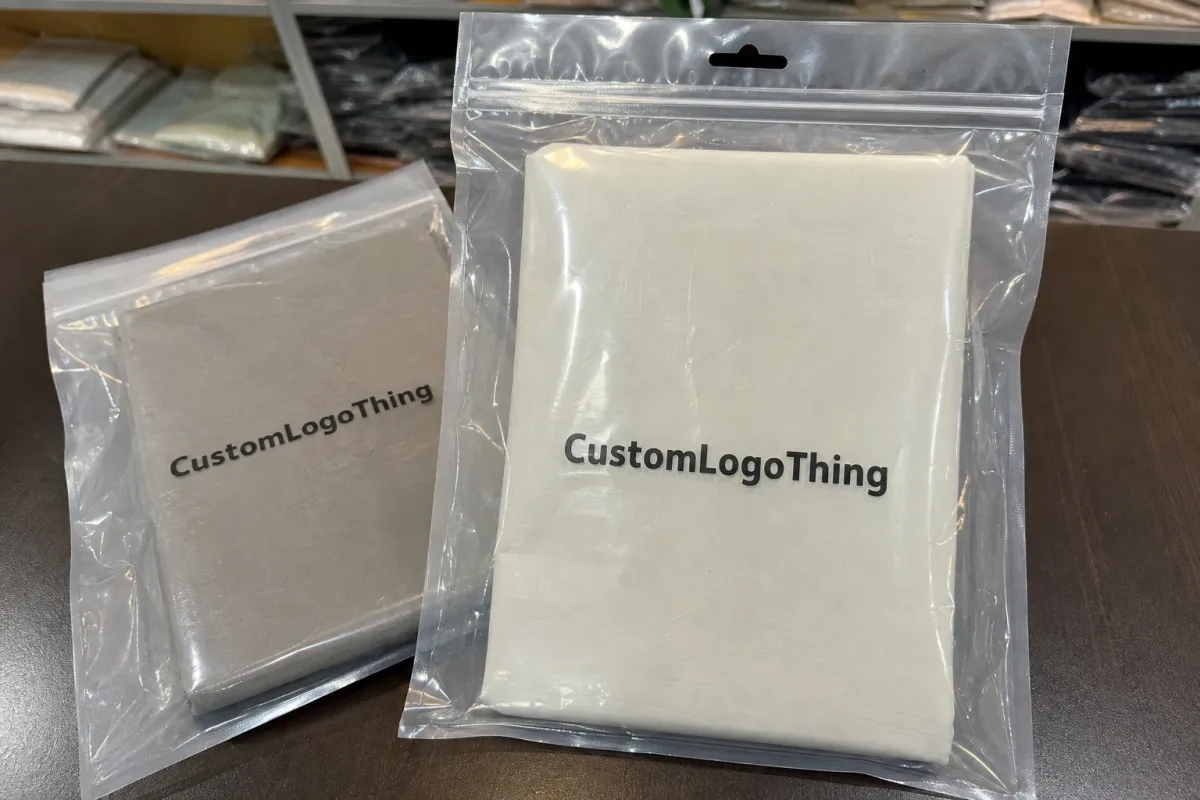
The savings often come after production, not during it. A clear hanging sleeve lets staff identify contents without opening the package, which cuts handling time and reduces dust exposure. It also lowers the chance that garments get folded, opened, and handled again during fulfillment.
That matters for spa robes, clinic uniforms, event apparel, and staff kits, where presentation still matters but the goods move through warehouse lanes like everything else. If the bag helps teams verify the SKU quickly, pack-out gets cleaner and error rates usually drop.
There is also a protection benefit. Garments that arrive wrinkled, dusty, or half-opened create extra work for receiving teams and can weaken the customer experience. A well-sized bag keeps the product clean and reduces unnecessary handling.
The same bag can become a liability if the spec is wrong. Too tight, and staff fight the closure. Too light, and the bag looks weak on the rack. Too flimsy at the hang hole, and it can tear in transit. The value needs to be measured in labor saved, errors avoided, and damage prevented.
These bags make the most sense when the pack-out is repeatable. If the same garment sizes and packaging rules come back month after month, the workflow becomes more efficient and the per-unit cost is easier to justify.
Product Build: Clear PVC, Hanging Format, and Finish Options
The standard build is clear PVC film with a hanging opening or reinforced top, sealed sides and bottom, and a closure matched to the use case. The bag may look simple, but the details determine both price and performance.
For display or short-term storage, an open-top hanging sleeve may be enough. For shipping or repeated handling, buyers usually need a zipper, snap, flap, or another secure closure. Open sleeves are faster to make; closed bags protect better.
Clear PVC is chosen because it shows color and texture without hiding the garment. Clarity matters. Low-grade film can haze, curl, or distort under bright lighting, which is a problem if the bag is being used in a retail-facing or client-facing setting.
Film weight affects how the bag behaves. Heavier film holds shape better and resists wrinkling, which is useful when the bag stays on a rack or moves through multiple touchpoints. Lighter film can work for temporary use, but it is less forgiving for shipping, returns, or repeated opening and closing.
Finish options add cost quickly: die-cut handles, hanger holes, reinforced edges, printed logos, binding, and top inserts all introduce labor or material. A cleaner top finish can make the bag look intentional instead of disposable, but that only matters if the program needs that level of presentation.
Fit matters as much as finish. A robe, a folded uniform, and a promotional set do not load the same way. If the item is bulky or has a lot of surface friction, the bag should be sized for easy loading and removal. Cramped packaging slows the line and increases the risk of damage.
For buyers comparing packaging methods, references from the Institute of Packaging Professionals and transit-testing methods from ISTA are useful context. They do not produce a quote, but they help frame performance expectations.
Thickness, Dimensions, and Print Specs Buyers Should Lock In
If the specification is loose, the quote will be loose too. Before requesting pricing, lock down finished width, height, gusset depth if there is one, film thickness, closure style, hanger opening details, and any top reinforcement. Those details determine the material yield and the labor involved.
Thickness is one of the easiest places to overbuy or underbuy. A lighter gauge can be fine for internal handling or short-term display. A thicker gauge makes more sense if the bag will be reused, shipped, or touched by several people before it reaches the customer.
Dimensions matter just as much. A bag that is too large wastes film and carton space. A bag that is too small slows loading and can crease the garment. Small differences on paper can create real friction on the packing line.
Print specs need to be explicit. “Logo printed on the bag” is not enough. Buyers should define the print area, number of colors, one side or two, and whether there are any registration or coverage limits. A small one-color mark and a full-panel print have very different cost profiles.
Ask for a sample or dieline before bulk production starts. That catches bad assumptions early and confirms whether the hanger opening is strong enough, the closure works smoothly, and the garment fits as intended. Packaging drawings are useful; samples are better.
- Define the finished size first so every supplier quotes the same yield.
- Use microns or mils instead of vague terms like “thick” or “premium.”
- State the print area clearly before artwork is sent for quoting.
- Ask for a dieline or sample if the top opening, gusset, or closure is unusual.
- Confirm pack count per carton because freight cost changes with pack efficiency.
Skincare PVC Garment Bags Unit Cost Review: What Drives the Number
The unit cost is mostly driven by size, film gauge, closure complexity, print coverage, order volume, and packing method. The film itself matters, but it is rarely the only factor. A clean spec sheet often saves more money than aggressive price shopping.
MOQ has a direct effect on price per piece. Fixed costs such as cutting, setup, proofing, inspection, and print prep are spread across the run. A 500-piece order will usually cost more per unit than a 5,000-piece order even if the design is unchanged.
Simple clear sleeves are usually cheaper than custom-shaped bags with extra reinforcement, zippers, binding, or multiple print steps. Some suppliers also charge tooling separately if a custom die is needed, and that should be shown as a one-time cost, not hidden in the unit price.
| Build Option | Typical MOQ | Unit Cost at 1,000 | Unit Cost at 5,000 | Best Fit |
|---|---|---|---|---|
| Plain clear PVC, simple hanger opening | 500-1,000 pcs | $0.42-$0.68 | $0.22-$0.36 | Retail display and basic garment protection |
| Printed logo, one-color | 1,000 pcs | $0.58-$0.88 | $0.30-$0.50 | Brand visibility with modest print coverage |
| Heavier gauge with zipper or flap | 1,000-3,000 pcs | $0.95-$1.45 | $0.58-$0.90 | Repeated handling, shipping, and premium presentation |
Those figures are factory-level estimates before freight, duties, carton loss, and local receiving charges. A low factory quote can still land high if the carton pack is inefficient or the bags need extra protective packaging. Freight cares about volume, weight, and stackability.
That is why quote comparison has to be strict. Same size. Same thickness. Same closure. Same print coverage. Same carton count. If one supplier comes in much lower, check whether the bag is thinner, smaller, unprinted, or missing a setup fee.
Quality loss can also change the real cost. If the seal is weak or the hanger area tears, replacements and extra labor show up later. A useful unit-cost review includes defect risk, not just the invoice line.
A clean quote is not the cheapest one. It is the one that makes the same bag, in the same quantity, with the same assumptions, every time.
For this category, repeatable specs are the main lever for savings. Once the dimensions and artwork stabilize, the quote usually stabilizes too. That is when buyers can judge whether the bag is truly economical or just inexpensive on paper.
Production Steps, Proofing, and Lead Time Expectations
The production flow is predictable: spec confirmation, artwork review, sample or proof approval, production, inspection, packing, and shipment. If any step is rushed, the rest of the job usually pays for it.
For straightforward clear bags, lead time is often around 12-15 business days after proof approval. That can stretch if the order needs custom tooling, more complex print work, or if the factory schedule is busy. Small orders are not always fast orders.
Buyers should ask how quality is checked during production. At a minimum, the factory should verify dimensions, seal strength, hanger opening reinforcement, print placement, and film clarity. If the bag will be handled repeatedly, it is also worth confirming resistance to whitening at folds or cracking in cooler storage conditions.
Packing matters too. How many pieces fit per carton? Are they folded flat or nested? Is the carton strong enough for export? A bag that costs a few cents less can become more expensive if it forces inefficient packing or creates transit damage.
If the launch date is fixed, make room for proofing. The first sample is where layout issues usually appear: the hanger opening may be too tight, the print may sit lower than expected, or the bag may look better on screen than in hand. Catching that before production starts is cheaper than correcting it later.
For shipping performance, many buyers use ISTA methods as a reference point. For material definitions, ASTM language helps keep the discussion specific. Standards do not replace judgment, but they keep “good quality” from becoming the whole quality discussion.
What a Reliable Packaging Partner Should Confirm Before Quote
A reliable supplier asks about the end use before talking about price. Storing garments for retail display is not the same as shipping sealed sets or handling returns. The right bag depends on the job.
The partner should confirm material grade, finished dimensions, thickness, closure style, print details, carton count, and ship-to location. They should also identify any one-time costs, including tooling or print setup. If those items are unclear, the quote is not ready.
Good suppliers also call out problems early. Weak hang holes, oversized seams, artwork that will distort during sealing, or a shape that wastes material should not appear after approval. Buyers need correct answers, not cheerful ones.
Sustainability requirements are worth discussing up front too. PVC may be acceptable for some programs and a poor fit for others. If the broader packaging system includes inserts, cartons, or outer mailers, material disclosure matters there as well. FSC certification can be relevant to paper components even if the bag itself is still PVC.
The best quote process is transparent and a little boring. That is a good sign. It means the factory is asking the right questions, the buyer knows what is being priced, and nobody is hiding a thinner film behind a prettier email.
Buyers should also be wary of polished sales language. “Premium,” “high-end,” and “custom” are not specs. They do not tell you seal strength, print coverage, or whether the same bag can be reordered later without a redesign. Numbers and samples do that work.
Next Steps: Build a Clean RFQ and Compare Quotes
To get usable pricing, the RFQ has to be specific. Include finished size, quantity, thickness, closure type, print requirements, packing count, and target delivery window. Add the product that will go inside the bag. A robe, a folded uniform, and a promotional kit do not behave the same way.
Ask for a sample or mockup before bulk production. For printed bags, send a clean vector file and confirm placement in writing. If the bag will be reordered, ask for pricing at more than one quantity tier so you can see where the cost curve flattens.
Comparing quotes only works if the assumptions match. A lower number may reflect a thinner gauge, smaller dimensions, fewer cartons, or a missing setup charge. That is why a skincare pvc garment bags Unit Cost Review should focus on total value, not a single line on a spreadsheet.
It also helps to compare landed cost, not just factory cost. Freight, duties, handling, and the cost of a delayed launch can change the math quickly. The best order is the one that arrives on time, fits the garment correctly, and does not create extra work for the packing team.
What affects the unit cost of custom PVC garment bags most?
Size and film thickness usually have the biggest impact because they change material usage and cutting yield. Closure style, print coverage, reinforcement, and carton pack count also matter. MOQ matters too, since setup costs get spread across the run.
What MOQ is typical for skincare PVC garment bags?
MOQ depends on whether the bag is plain or printed, and whether the build is simple or reinforced. Plain clear sleeves often support lower minimums than custom printed versions. Ask for several quantity breaks so you can see where bulk pricing becomes more efficient.
Can I get a sample before placing a bulk order?
Yes, and you should. A sample is the fastest way to confirm size, clarity, closure function, and print placement. For custom artwork, request a mockup or pre-production proof before the line starts running.
How long does production usually take after approval?
Simple orders can move in roughly 12-15 business days after proof approval. Custom tooling, print complexity, or a crowded factory schedule can extend that. The supplier should confirm the schedule before production begins.
What information do you need for an accurate quote?
Provide finished dimensions, thickness, quantity, closure type, artwork file, packing requirements, and destination. Include the garment or bundled item inside the bag. That helps the supplier judge whether the structure is appropriate.
Should price be the only decision factor?
No. A low quote is not useful if the bag tears, slows the packing line, or arrives late. The better test is whether the bag protects presentation, fits the workflow, and holds up through the actual handling path.

