Book logo patch beanies Unit Cost Review is the kind of phrase buyers search when they need merch that is easy to approve, easy to wear, and less risky than fully custom knit decoration. A patch gives the logo a defined surface, keeps the artwork readable, and usually avoids the distortion that can happen with direct embroidery on stretch knit.
The useful question is not whether the beanie looks good in a mockup. It is whether the order still makes sense after you add body material, patch method, setup charges, packaging, freight, and reorder consistency. If any of those are left vague, the final quote can change fast.
A clean quote is not always a complete quote. Buyers need the landed number, not just the number that looked good in the email.
For bookstores, reading clubs, publishers, campus groups, and literary events, patch beanies usually get approved faster than more complex decorated knitwear. The item looks intentional, the logo stays legible, and the product feels closer to retail than to a throwaway giveaway.
Why Book-Patch Beanies Get Approved Before the Sample Arrives
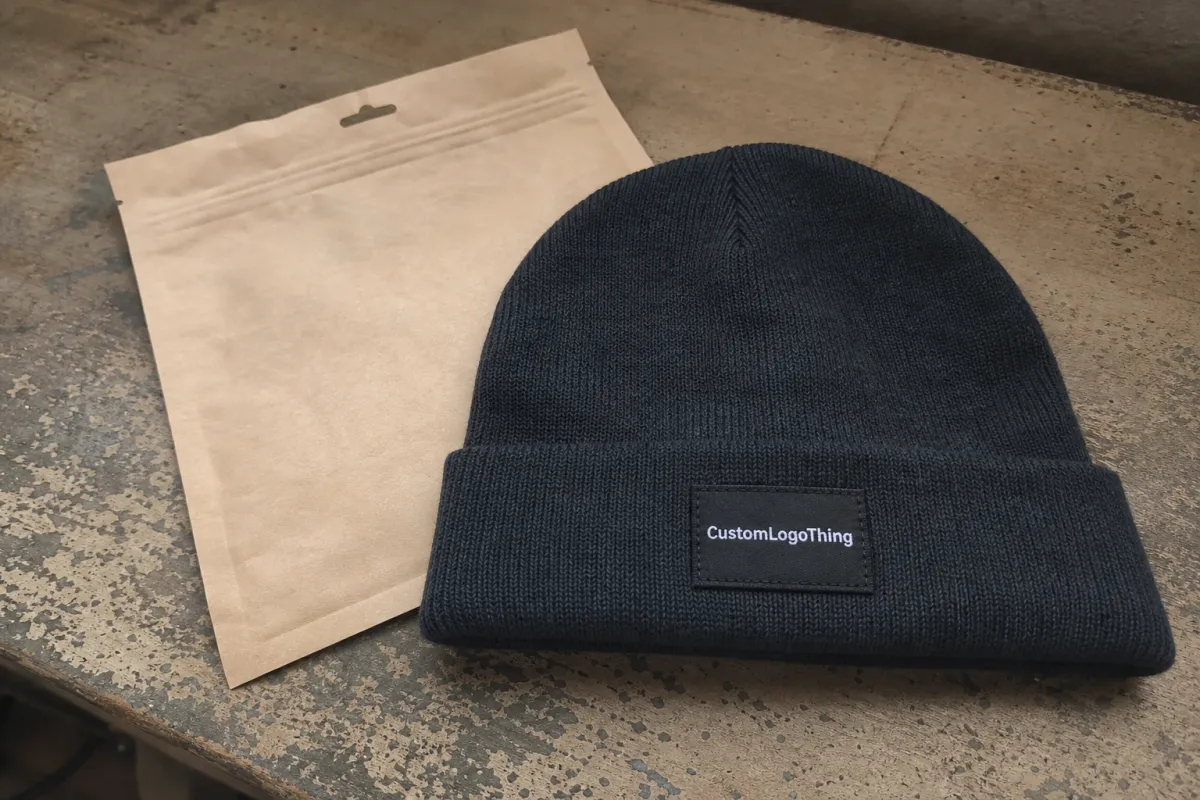
Most buyers are trying to hit a date and stay inside a budget. Patch beanies help because the artwork reads clearly in a mockup. Teams can sign off earlier, which matters when the real delay is internal review rather than production itself.
Direct embroidery can still work, but knit fabric is unforgiving. Fine text can blur, narrow lines can disappear, and stitch density can make a logo feel heavier than expected. A patch keeps the design cleaner and more repeatable from unit to unit.
It also feels more retail-ready. A modest patch on a cuff looks deliberate without pushing the item into a high-cost zone. For book merch, that balance is usually more valuable than chasing the most complicated decoration possible.
Approval gets slower when the brief keeps expanding. One body color, one patch style, one placement, and one packaging choice are easy to manage. Add multiple patch options or placement debates, and the schedule starts slipping. Tight specs help more than extra emails.
Patch Types, Beanie Styles, and Brand Look Choices
Patch type drives both appearance and price. Woven patches are the best fit when the logo has small text or detail. Embroidered patches have more texture and a more traditional feel. PVC patches look modern and durable. Faux leather works well for simpler marks and a more polished finish. Screen-printed patches can be economical, but they are best when the art is simple.
For literary brands, the safest move is often restraint. A clean patch with limited color usually looks better than a badge that tries to say too much. Book merch has a short shelf life if it reads like a hard sell, so a quieter design often performs better over time.
Beanie style matters just as much as patch type. Cuffed beanies are the easiest to decorate and approve because they offer a stable placement zone. Fisherman beanies feel more current, but they leave less room for branding. Slouch styles can work for casual or younger audiences. Rib-knit bodies stretch well, but the patch still needs enough structure to sit cleanly.
Placement changes the product more than most buyers expect. Centered on the cuff is the default because it photographs well and is easy to understand in ecommerce listings. Side placement feels subtler. Fold-over placement can lower the logo and make it less promotional. The right choice depends on how the item will be sold and who will wear it.
Color choice should stay focused. Black, charcoal, navy, cream, and oatmeal cover most needs without creating inventory chaos. Those colors also make patch contrast easier to manage. Seasonal shades can work, but too many options split inventory and make reorders harder.
- Woven patch: best for detail and a clean retail finish.
- Embroidered patch: textured, slightly bolder appearance.
- PVC patch: durable and modern, but not always the lowest-cost option.
- Faux leather patch: polished look for simple logos and minimal branding.
Materials, Fit, and Decoration Specifications Buyers Should Lock In
The spec sheet is where the order gets controlled. If body material, knit gauge, cuff height, crown depth, patch size, and attachment method are vague, the quote will wander. Acrylic is still the most common starting point because it balances warmth and price. Acrylic blends can feel softer. Polyester can help with color stability. Wool blends cost more, but they can make sense when the buyer wants a warmer hand feel and a more premium story.
Fit needs real attention. Adult unisex sizing covers many orders, but not all. Youth sizing matters for schools and family events. Oversized or long-cuff styles can look better for fashion-oriented merch, but they can also raise the unit cost. A one-size beanie sounds simple until the sample sits too shallow or too tight.
Color consistency should be documented early, especially if the order might repeat. If the buyer wants the same navy, heather gray, or cream across multiple runs, the stock yarn and shade reference need to be clear. Patch size and placement should be measured, not described as approximate. Loose instructions create avoidable revision rounds.
Artwork also needs discipline. Vector files are the baseline. Pantone targets help when thread or patch color must match an existing system. Stitch limits matter for embroidered patches because fine detail does not survive production forever. If the logo is too complex for the patch size, it should be simplified before production starts.
Packaging belongs in the spec too. Some buyers want individual polybags. Others want simple bulk cartons to reduce cost and material use, or paper-based hang tags for retail display. If sustainability is part of the brief, the standard should be real. For paper-based packaging, FSC certification is the right reference point. If the goods will travel through rough shipping channels, transit testing should be considered as well; ISTA methods are the right place to start.
Unit Cost, Pricing Tiers, and MOQ Tradeoffs
Here is the part buyers care about most. A proper Book Logo Patch Beanies unit cost review should break the order into body cost, decoration cost, setup charges, packaging, and freight. If the quote arrives as one neat number, ask what it includes. Neat numbers often hide something.
Setup fees matter most on smaller runs. Molded PVC and some faux leather applications can add tooling charges that lift the first order. Woven and embroidered patches usually behave better at lower volumes, but they still require art prep and attachment labor. In many cases, the patch method influences price more than the beanie body itself.
| Order size | Typical cost per piece | Setup charges | Best use case |
|---|---|---|---|
| 100-199 pcs | $5.80-$8.50 | Higher relative setup impact | Testing demand, author events, pilot merch drops |
| 300-499 pcs | $4.20-$6.10 | Moderate per-unit impact | Bookstore merch, club orders, regional promotions |
| 1,000+ pcs | $3.10-$4.80 | Setup spread across volume | Retail programs, seasonal campaigns, repeat SKUs |
Those are planning bands, not universal rules. Final pricing shifts with body material, patch complexity, color count, packaging, and whether the order is a first run or a repeat. A basic acrylic beanie with a woven patch may be more cost-effective than a heavier knit with a fancier patch that brings tooling charges.
MOQ logic matters too. A small run may be possible, but the floor usually rises when the patch method requires extra setup. Multiple colors, alternate logos, or two patch versions can tighten the MOQ quickly. If margin matters, ask for pricing at two or three breakpoints. One quantity shows a quote; three quantities show the pricing curve.
Hidden costs deserve their own check. Rush fees, split shipments, art revisions after approval, alternate packaging, and late color changes can all distort the landed number. Freight can also change the picture quickly. A serious book Logo Patch Beanies Unit Cost review has to look at landed cost, not just headline unit price.
Production Steps, Approval, and Turnaround Timing
The production sequence is straightforward: quote, artwork check, sample, approval, yarn sourcing, patch production, beanie knitting, patch attachment, inspection, and packing. The delays usually happen before the machines are doing useful work. Artwork revisions, color questions, and slow approvals cost more time than the actual factory steps.
Turnaround depends on how custom the order is. A repeat order with an established body color and patch spec can move faster than a brand-new design. A custom yarn color, specialty patch, or special packaging format stretches the schedule. For straightforward runs, a realistic production window after sample approval is often 12-18 business days, plus transit time.
Approval method changes the risk profile. A mockup-only approval is quicker, but it leaves more room for surprises. A physical sample takes longer and costs more time upfront, but it catches fit and finish problems before bulk production begins. If color accuracy matters, pre-production swatches or yarn dips are worth the pause.
Deadlines should be treated as fixed. A launch tied to a bookstore promotion, school event, or holiday drop needs buffer time. Production delays plus freight delays are a bad combination. And if someone wants to change the logo size after approval, that is usually not a small tweak. It is a schedule event.
What Makes a Reliable Supplier for Repeat Book Merch Orders
A reliable supplier is the one that can repeat a prior order without turning it into a new design problem. For book merch, that means clear documentation, consistent output, and proofing discipline. If the supplier records patch size, placement, yarn color, thread references, and packaging details, reorder risk drops immediately.
Communication matters, but process matters more. Knitting, patch production, and inspection need to work together. When those steps are spread across disconnected vendors, small errors multiply. A patch that is slightly off becomes a placement issue. A placement issue becomes a sample rejection. Buyers do not need that chain reaction for a beanie order.
Reliable service should reduce risk instead of creating extra work. That means fewer vague answers, fewer surprises, and fewer basic questions going back and forth. It also means the supplier can handle bookstore merch, club merch, and publishing promos without treating every job like a custom exception.
Packaging coordination is part of the same picture. A supplier that can manage retail cartons, barcodes, hang tags, or simple bulk packing saves time and avoids cost creep later. If the product will sit in stores, ship direct to members, or move through distribution centers, transit packaging should be planned, not improvised.
What to Send for a Fast Quote and Cleaner Reorder
If the goal is a fast quote, send the useful information first: logo file, patch size, beanie color, quantity breakdown, target delivery date, and packaging requirement. If the order is for resale, giveaway, or internal merch, say that too. The use case helps the supplier recommend the right body material and patch method instead of guessing.
Visual references help when the buyer wants a specific feel. "Make it premium" is not a specification. A reference image, a shape preference, or an example of cuff placement is. The more clearly the buyer describes the target, the fewer sample revisions usually follow.
Here is the approval checklist I would use before production starts:
- Body style: cuffed, fisherman, slouch, or rib-knit.
- Patch method: woven, embroidered, PVC, faux leather, or print.
- Placement: centered cuff, side placement, or fold-over.
- Colors: beanie body, patch, thread, and any Pantone targets.
- Order details: quantity, split sizes if needed, packaging, deadline.
When comparing quotes, ask whether the number includes sample, setup, packing, and freight. If one supplier includes a sample fee and another does not, the quotes are not comparable. Landed cost is the useful number. Unit price by itself is only half the story.
For reorders, send the prior spec sheet and the approved sample photos if you have them. That gives the supplier a stable reference and lowers the risk of drift. A good book logo patch beanies Unit Cost Review should make the next order easier, not harder.
FAQ
What affects book patch beanie unit cost the most?
Patch method usually drives the biggest swing. Woven, embroidered, PVC, and faux leather sit in different price bands, and molded options can add tooling charges. Quantity matters too because setup costs spread out as volume rises. Body material, packaging, and shipping can shift the landed number as well.
What MOQ is normal for custom logo patch beanies for bookstores?
Small runs are possible, but pricing usually improves once the order moves past the lowest setup tier. Multiple colors or multiple patch versions can raise the floor quickly. If the order is meant for resale, ask for pricing at two or three volume points so you can see where the margin works.
How long does production usually take after sample approval?
Simple repeat orders are faster because the specs are already locked. Custom colors, specialty patches, or busy shipping periods extend the timeline. A practical production window for straightforward orders is often 12-18 business days after sample approval, plus transit time.
Which patch style gives the best value for book logo beanies?
Woven and embroidered patches are often the best balance of price, clarity, and brand feel. PVC and faux leather can look premium, but they are not automatically the best value. The right choice depends on logo detail, the desired finish, and whether the item is for retail, events, or giveaways.
What files do you need for an accurate beanie quote?
Send vector artwork if possible, plus Pantone references or a clear color target. Include patch size, placement, quantity, beanie color, and deadline. For reorders, include the previous spec sheet so the quote matches the approved version instead of starting from scratch.
For buyers comparing options, the process is simple: lock the spec, ask for landed cost, and check the sample before bulk production begins. That is what keeps a book logo patch Beanies Unit Cost Review useful. Get the details right early, and the order behaves like a normal purchase instead of a guessing exercise.


