Slider Lock Bags for sports clubs are rarely a packaging vanity project. They are for the ugly little jobs that happen at check-in tables, kit rooms, and tournament desks: wristbands that need sorting, shirts that need protecting, receipts that need keeping flat, and volunteers who need to move fast. Get the spec right and the table runs clean. Get it wrong and someone ends up reopening every pack with frozen fingers while a queue forms behind them. Brilliant use of everyone’s time.
From a buyer’s point of view, these bags do three useful things at once. They sort. They protect. They present. That matters because the same format may be used for registration packs one week, sponsor inserts the next, and post-match handouts after that. The bag is not the star. It is the tool that stops small items from turning into a mess.
This slider lock Bags for Sports Clubs order guide focuses on the decisions that actually change outcomes: size, thickness, closure feel, branding, repeat order consistency, and the practical limits that affect cost and lead time. Fancy packaging is not the goal. Reliable packaging is.
What buyers notice first
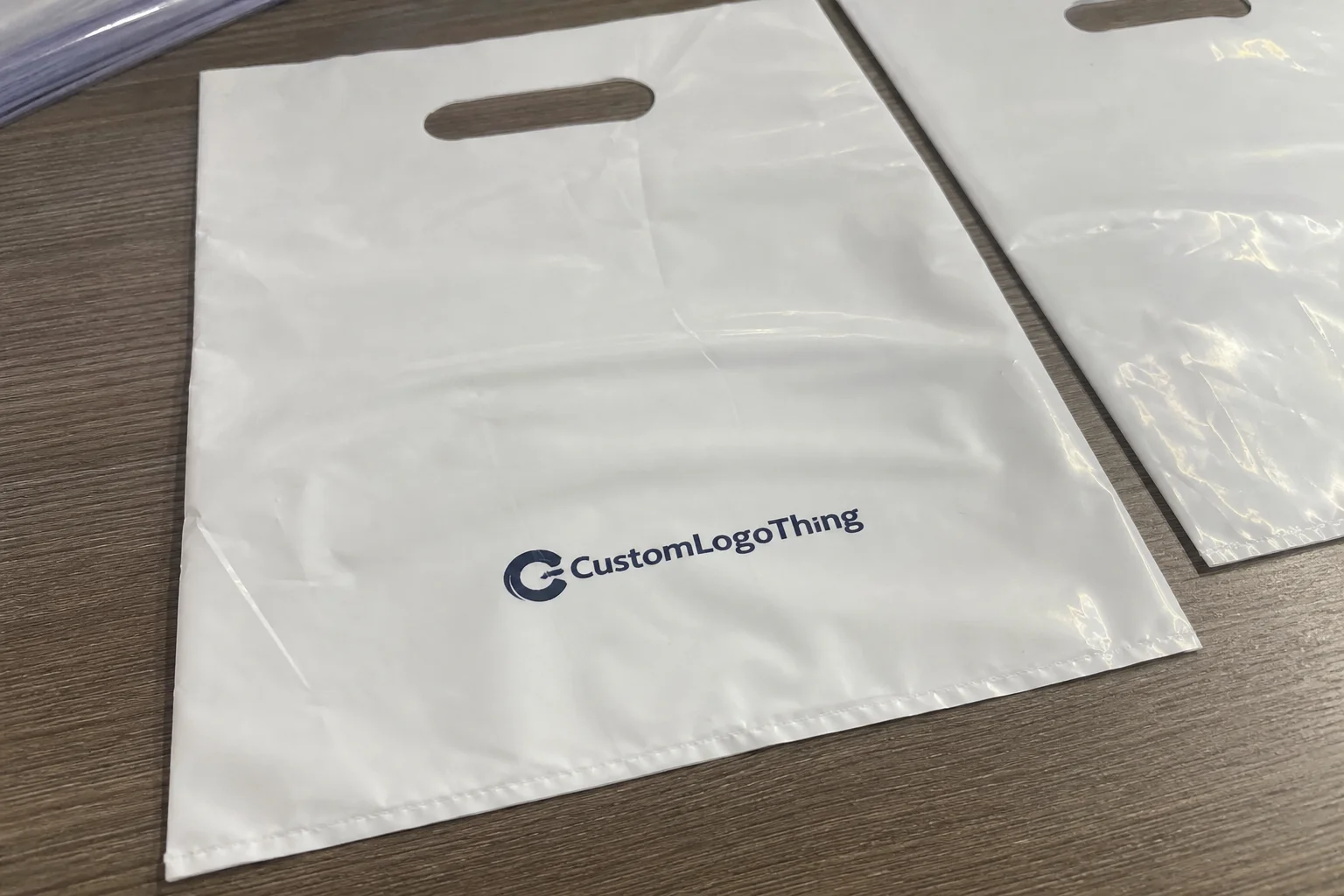
The first thing people notice is speed. A slider closure is generally quicker to open and close than a plain press-to-seal style for many users, especially when hands are cold, wet, or covered in tape residue. That sounds minor. It is not. At check-in, three seconds saved per pack becomes a real difference by the time you have handed out a few hundred kits.
The second thing is visibility. Clear bags let staff identify contents without opening every pack. That reduces mistakes when one box holds wristbands, another holds pins, and another holds folded inserts or receipts. If a club manages multiple age groups or teams, that visibility quietly saves time all season.
The third thing is repeatability. Clubs reorder. Volunteers change. Committees rotate. A good packaging spec survives all of that. The strongest reason to standardize slider bags is not presentation for presentation’s sake. It is being able to buy the same item again next year without rebuilding the whole workflow.
“Most clubs do not need fancy packaging. They need a bag people can open quickly, store neatly, and reorder without surprises.”
There is also a training benefit. If every event pack uses the same closure and the same size, new staff learn faster. Fewer decisions. Fewer errors. Better handoff. That is the kind of boring efficiency that only becomes obvious when it is missing.
For clubs with seasonal inventory, color coding and printed labels can turn a simple pouch into a basic tracking tool. That helps when separating membership kits, sponsor packs, referee supplies, and event-day extras. It is not glamorous. It does work.
Choose the right size
Start with the contents, not the catalog. A bag for lapel pins and raffle tickets needs a very different footprint than one for folded jerseys, recovery gels, or mixed welcome kits. Buyers often over-specify here. They choose a size that “seems safe,” then pay for wasted space, awkward stacking, and higher shipping cost.
Small-format bags work well for registration packs, membership cards, and giveaway items. Mid-size bags suit mixed event packs and sponsor inserts. Larger formats make sense for apparel, safety items, and multi-piece club handouts. If the pack has to sit inside a storage bin or distribution tray, the outside dimensions matter more than the marketing label of small, medium, or large.
Fill behavior matters too. A bag can be technically large enough and still look bad if the contents bunch in one corner or leave too much empty space. That empty space affects presentation, stackability, and the way the bag feels in hand. No one wants a kit pack that looks like it was assembled by someone in a hurry. Because it probably was.
For sports clubs that hand bags to volunteers, parents, and athletes, easy opening and resealing should be high on the list. A slider closure with enough internal clearance is usually more useful than forcing everything into the smallest possible footprint. If the zipper line is too tight, people fight the bag. The bag should not be winning.
Here is a simple sizing comparison to keep quotes aligned with actual use:
| Typical club use | Practical size range | Best fit | Buyer watch-out |
|---|---|---|---|
| Wristbands, pins, tickets | Small to compact | Fast distribution, sorting, storage | Avoid oversizing; it raises cost and wastes shelf space |
| Membership kits, receipts, inserts | Mid-size | Balanced presentation and easy handling | Check that the fold thickness still closes cleanly |
| Apparel, mixed packs, sponsor bundles | Large | Multi-item handoff and higher perceived value | Confirm storage bin dimensions before ordering |
If you want a cleaner reorder later, write down what the bag must hold in real terms: one folded shirt, two wristbands, three inserts, one receipt. That is much better than “medium size,” which is how reorder mistakes start.
Film thickness, closure feel, and branding
Thickness drives performance more than many first-time buyers expect. Lighter film can lower unit cost, but heavier film resists tearing when bags are opened repeatedly during check-in, distribution, or post-game cleanout. For club buyers, that trade-off usually only becomes obvious after the first run. By then, the order is already in use and nobody wants to hear the phrase “we can probably make it work.”
A practical way to think about film gauge is simple: if the bag will be handled once and discarded, a lighter spec may be enough. If it will be opened, resealed, transported, and reopened several times, move up the material. Many sports club orders perform well in the 2.5 to 4 mil range, though the right choice depends on content weight, edges, and how often the bag gets handled.
The slider itself deserves testing. A stiff closure becomes a volunteer problem. A snagging closure becomes a return issue. Try opening the bag with one hand, with gloves, and with cold fingers if the bags will be used outdoors or in early-season conditions. That tells you more than a polished product sheet ever will. Packaging fails in the hand, not on the spec sheet.
Branding should match the job. A clean club logo, event name, or sponsor mark can be printed clearly without covering the contents. For transparent bags, limited print area often works better than full coverage. Why? Because readability matters more than decoration. A bright graphic that blocks the contents defeats the point of a clear pouch.
For most clubs, simple print wins. Strong contrast. Short text. One or two colors. The aim is recognition, not visual noise. If the bag is for a youth tournament, a swim meet, or a fundraising day, a neat logo usually does more for usability than a crowded design with too many elements and too little whitespace.
Useful branding options include:
- One-color logo print for lower setup friction
- Event name and date block for seasonal reuse control
- Write-on panel for team or player names
- Hang hole for retail-style display or kit-room storage
For compliance-minded buyers, material specs should match the use. If the bag may touch consumables, ask about food-contact requirements. If it only holds uniforms, accessories, or receipts, the compliance question is different. Clear use cases speed up approval and reduce rework. Vague briefs do the opposite, which is somehow still a surprise to some procurement teams.
Spec details that protect inventory and reorders
The best order specs read like instructions someone else can repeat later without calling you for clarification. That means dimensions, film thickness, closure type, print colors, bag color, and any special features should all appear in the written brief. If the club wants a write-on panel, say so. If the bag needs a hang hole, say so. If there is a preferred carton count, add that too.
Ask for tolerance ranges, not just nominal sizes. A few millimeters can matter when the bags must fit the same storage tray or distribution bin every time. This sounds fussy until the first reorder arrives and the cartons no longer stack the way the original run did.
Traceability matters more than many clubs realize. SKU codes, carton labels, and artwork version control keep future orders aligned. Otherwise, a club thinks it is reordering the same item and receives a slightly different closure, thickness, or print placement. That is a familiar headache, and it is avoidable.
For hygiene-sensitive uses, the packaging should help, not complicate. Clear separation of damp items, sealed storage of small gear, and a reusable closure all support cleaner handling. For wet kit, greasy parts, or sharp edges, confirm the material choice rather than assuming a standard bag will handle it. Standard is useful. Standard is not magic.
Two references can help buyers frame the technical conversation. The ISTA testing framework is useful when transit damage is a concern, and the EPA recycling guidance can help clubs think clearly about disposal and recovery where applicable. Packaging affects handling, waste, and storage discipline. It is not just a bag in a drawer.
For clubs that reuse packaging internally, practical checks are worth adding to the spec. Confirm seal engagement after repeated openings. Check that print stays readable after rubbing against other items in storage. Make sure the slider track does not deform when the bag is fully packed. Those are small details, but they are exactly where cheap orders fail.
Cost, pricing, and MOQ
Unit price is usually driven by five variables: size, film gauge, print complexity, quantity, and whether the bag uses a standard or custom closure. The cheapest-looking quote is not always the lowest landed cost. Freight, carton count, and storage can push the real spend higher than expected.
MOQ matters because setup effort has to be spread across the run. If a club only needs a few hundred bags, a stock size with minimal print may be the smarter starting point. A fully custom build can make sense later, once the format is proven and demand is steady.
Print count changes pricing faster than many buyers expect. One clean color is often enough for a logo and line of text. Add multiple colors or full-coverage graphics, and both setup and approval time increase. More artwork is not automatically better artwork.
Here is a practical pricing frame for common club buying patterns:
| Order style | Typical MOQ | Indicative unit cost | Best for |
|---|---|---|---|
| Stock bag, no print | Low to moderate | $0.10-$0.22 per unit | Fast replenishment and simple storage |
| Stock size, one-color print | Moderate | $0.18-$0.35 per unit | Clubs that want branding without heavy setup |
| Custom size or custom closure | Higher | $0.28-$0.60+ per unit | Special kit packs, sponsor programs, repeat use |
Those ranges are directional, not fixed. Quantity, film gauge, and print area move them up or down. Still, they are more useful than vague “affordable” language because they let a buyer compare options before requesting a quote.
For clubs that buy regularly, compare the unit price against storage space and reorder frequency. A slightly higher price can be worth it if the bag stacks better, ships more efficiently, or prevents emergency rush orders before a tournament. The cheapest pack is not always the cheapest decision.
There is also a practical difference between short-run buying and season-long buying. A club that orders once a year can accept more setup cost if the bag format is stable. A club that orders monthly should care more about repeatability, carton counts, and how easily the same spec can be reissued by a new committee member who has no memory of the last order.
Process, timeline, and production steps
The smoothest projects follow a basic sequence: inquiry, spec confirmation, artwork review, proof approval, production, quality check, and shipment. Skipping one of those steps usually creates delay later. That is not bureaucracy for sport. It is prevention.
Lead time depends on whether the order is stock-supported or fully custom. Stock-supported bags can move quickly once artwork is approved. Custom sizes, custom colors, or special closures add more production steps and more chances for a correction before manufacturing begins.
Approval speed is often the hidden variable. If the club has one decision-maker and final artwork ready, the timeline compresses. If approval has to pass through several coaches or board members, the schedule stretches. That has little to do with factory speed and everything to do with decision latency.
A realistic timeline for a straightforward order is often 12 to 15 business days from proof approval, plus transit. Simpler stock orders may move faster. More complex builds may take longer. The point is not to promise a magic number. The point is to ask for a written timeline that separates proofing, manufacturing, and shipping.
If the bags are linked to registration deadlines, sponsor launches, or game-day handouts, build in a buffer. A three-day delay on artwork can become a one-week problem once shipping and handoff are added. That is why experienced buyers ask for milestone dates, not one projected ship date with optimistic music underneath it.
For clubs that operate across multiple departments, name one approver. One person. One final file. One sign-off. That simple move cuts errors more effectively than most buyers expect.
It also helps to request a pre-production sample when the order is custom or the content is sensitive. A physical sample is not always necessary for a stock reorder, but it is useful when closure feel, print placement, or fit around thicker contents could become a problem. Fixing that before production is a lot cheaper than explaining it after shipment.
What to send for a fast quote
If you want a quick, accurate quote, send four things first: the size you need, the contents it must hold, the target quantity, and any branding files in vector format. Those four details eliminate most of the back-and-forth and reduce the chance of getting quoted the wrong spec.
Add context on use case. A bag for youth soccer registration has different priorities than a bag for swim meet gear, referee supplies, or sponsor giveaways. The more specific the use, the better the recommendation. That is especially true for film thickness and closure style.
Ask the supplier to confirm minimums, sample options, and whether they can match a previous run exactly. If your club already uses packaging, send photos and measurements. Good reference material is faster than trying to describe a “similar” bag in words. “Similar” is one of those words that causes expensive misunderstandings.
When comparing options, do not stop at the unit price. Check carton count, freight assumptions, artwork charges, and whether the quoted closure is standard or custom. For clubs that buy repeatedly, the cleanest route is often to align the new order with a stable spec, then store that spec in a procurement note for the next reorder.
One more practical point: if the club buys through multiple committees or sports sections, connect the order to a shared spec sheet. That prevents duplication and keeps different teams from ordering slightly different versions of the same bag. It sounds minor. It is not.
A simple spec sheet should include internal dimensions, preferred film thickness, closure style, print colors, any special features, carton count, and whether the bag is for dry items, damp items, or mixed contents. If the supplier does not have to ask those basics, the quote process gets faster and the first run usually goes better.
FAQ
What size slider lock bags work best for sports club orders?
Small bags suit wristbands, pins, tickets, and membership cards. Mid-size and larger bags work better for apparel, mixed kits, and event packs that need clearer sorting. The best size is the one that fits the actual contents without wasting space.
Can clubs print logos on slider lock bags?
Yes. Most orders can include a logo, club name, event title, or sponsor mark. Simple artwork with strong contrast usually gives the best readability and the lowest setup friction.
What MOQ should I expect for custom club packaging?
MOQ depends on size, print count, and whether the bag is stock or custom. If quantity is limited, a standard size with minimal print usually gives the best starting point.
How long does a custom slider bag order usually take?
Timing depends on proof approval, production complexity, and shipping distance. Stock-supported orders move faster than custom sizes or special print combinations. A straightforward order often lands in the 12 to 15 business day range after proof approval, plus transit.
Are slider lock bags suitable for wet or sweaty sports gear?
They work for separating damp items and keeping small contents contained during transport. For heavy moisture or sharp edges, specify a stronger film and confirm the exact use case before ordering.
Should clubs choose printed or unprinted bags?
Printed bags make sorting easier and help with branding, but they add setup time and cost. Unprinted bags are cheaper and faster to reorder. The better choice depends on whether the bag is mainly for internal sorting or for handoff to athletes, parents, or sponsors.
What quality checks matter most on a first run?
Check closure smoothness, print placement, actual dimensions, carton count, and how the bag handles a full load. If the bags will be reused, test the slider after repeated openings. A pretty sample is useful. A working sample is better.
Used well, slider bags are not just containers. They are a repeatable system for storage, handout, and presentation. Follow the basics in this slider lock Bags for Sports clubs order guide, and you get cleaner quotes, fewer surprises, and a reorder that fits how the club actually operates instead of how a catalog wishes it did.


