If you are buying a slider-lock clothing bag and want to avoid guessing wrong on price, fit, or finish, this Slider Lock Clothing Bags sample cost guide is the right place to begin. A quote can look neat on paper and still miss the issues that matter in practice: how the slider feels in the hand, whether the seal holds under repeated handling, whether the garment fits without bunching, and whether the finished bag looks premium enough for the shelf or mailer.
For Custom Logo Things buyers, the objective is practical: validate the spec quickly, reduce rework, and move into production with fewer surprises. That is especially true with packaging, where a small detail can change labor time, presentation, or damage rates later on.
Why sample a slider-lock clothing bag before placing a bulk order
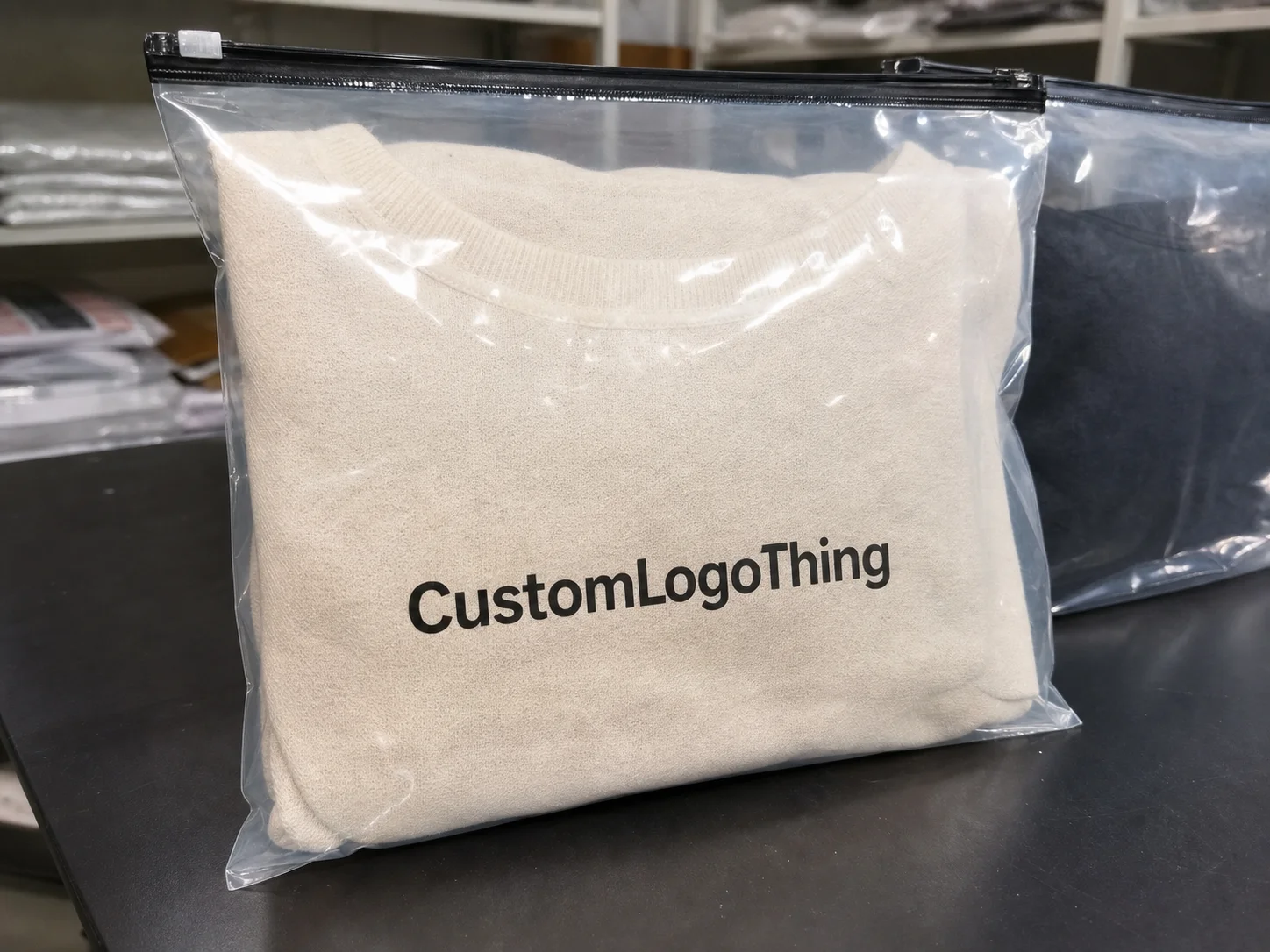
A slider-lock clothing bag can look fine in a product photo and still fail in the hand. The size may be correct on a drawing, yet the slider may feel brittle, the film may crease too easily, or the garment may catch as it is packed. That is a nuisance during review, but it becomes expensive once thousands of units are moving through fulfillment or retail replenishment.
Sampling matters most when the packaging is part of the product experience. Premium apparel lines, subscription programs, multi-SKU assortments, and retail launches all benefit from a physical check. If you are packing folded tees, hoodies, sleepwear, or intimate apparel, you want to confirm that the bag closes cleanly, presents well, and protects the garment without slowing the pack-out team down.
Skipping samples is often the expensive decision dressed up as efficiency. Three problems show up again and again:
- Rework because the bag is too tight, too loose, or printed in the wrong area.
- Returns and complaints because the closure feels weak or the film splits at a stress point.
- Retail presentation issues because the bag looks cheap under store lighting even though the spec sheet seemed acceptable.
Sample cost is usually a modest test fee, but it changes with custom size, print coverage, material thickness, and closure hardware. That fee is easy to dismiss until a full production run exposes a problem. The point of the Slider Lock Clothing Bags sample cost guide is not to push the cheapest sample. It is to help you Buy the Right sample and move on with confidence.
“A sample is not a formality. It is the cheapest mistake you can buy.”
Slider-lock bag construction, materials, and closure options that affect the quote
The price starts with the structure. Most slider-lock clothing bags are made from polyethylene, usually LDPE for flexibility and clarity. Thickness is one of the first things that moves the quote. A lighter film costs less and folds neatly, but it may feel softer and provide less puncture resistance. A thicker film gives a more premium hand feel and better protection, but it adds cost and can make the bag stiffer.
Common construction choices include straight top seal, bottom seal, side gusset, and flat pouch style. If the garment is bulky, a gusset can make packing easier. If the bag is meant to create a clean retail presentation, a flat profile with good clarity often works better. The closure mechanism matters too. A standard slider is the baseline. A tamper-evident slider, reinforced edge, or double-track style adds material and assembly complexity, and that shows up in the unit cost.
Not all slider closures behave the same in real use. Some glide smoothly and close with very little effort. Others snag if the film edge is poorly trimmed or the seal is too rigid. That is why two bags that look almost identical in photos can quote differently and perform differently.
Customization also changes the number. The usual cost drivers are straightforward:
- Size — wider bags and longer bags use more film.
- Print coverage — a one-color logo is not the same as full-coverage branding.
- Finish — clear, frosted, tinted, or matte effects may require different film.
- Features — hang hole, euro slot, tear notch, anti-static additives, and reinforced edges all affect the quote.
- Closure type — standard slider versus tamper-evident or double-track design.
If you define the spec clearly on the first request, you usually avoid extra sample rounds. Vague requests create revised samples, and revised samples create delay. That is how a cheap-looking request turns into an inconvenient project.
For buyers comparing recycled-content or lower-impact options, ask whether recycled PE is available and what percentage is actually blended into the film. Ask for documentation if your program requires it. The packaging industry has useful background resources at the Packaging Corporation of America’s industry resources, and the EPA offers material management guidance that helps set realistic expectations for packaging choices.
Key specifications buyers should confirm before requesting a sample
Before you ask for a sample, lock down the basics. The fastest way to waste time is to send “we need a bag for shirts” and hope someone guesses the rest. A capable supplier can work from a rough brief, but a good buyer gives enough detail to avoid correction cycles.
Start with inner usable size, not just overall dimensions. If a folded shirt needs 11 by 14 inches of usable space, say that. Include gusset depth if the garment is thick. A hoodie and a tank top do not need the same bag, and quoting them as if they do usually leads to a second round of sampling.
Thickness should be discussed in real terms. Lightweight retail bags may sit in the 40–60 micron range. Midweight everyday clothing packaging often lands around 60–80 micron. Heavier-duty or premium presentation bags may go higher. The exact choice depends on the item, the feel you want, and how much abuse the bag will face during packing and shipping.
Print specs matter if branding is involved. Clarify whether you want a one-color logo, spot-color work, or full-color coverage. Ask about register tolerance and the difference between transparent and opaque print areas. If your brand depends on crisp white logos over clear film, you need to know whether the ink system can hold that contrast without looking muddy.
Performance should not be left vague. A proper sample check should cover:
- Smooth slider action without snagging.
- Seal integrity at the bottom and side edges.
- Clarity under store lighting.
- Resistance to splitting where the closure and seams take stress.
- Fit for the actual folded garment, not just a flattened mockup.
Ask for a measured drawing and sample photos before production release. If the supplier can provide a physical proof with measured dimensions, that is even better. The sample should be checked against the real fold, real logo placement, and real retail use, not an idealized version of the product.
Slider lock clothing bags sample cost guide: pricing, MOQ, and hidden fees
Buyers usually want the number first: what does a sample actually cost? The honest answer is that it depends on complexity, but there are useful ranges. For a plain stock-style sample, you may see $15-$40 plus shipping. For a custom-sized sample with simple printing, a common range is $40-$120. If the sample needs special closure hardware, color matching, or tooling, the cost can move into the $120-$300+ range.
That is the slider lock clothing bags sample cost guide in practical terms. Simple sample, lower fee. Custom sample, higher fee. Nothing mysterious there.
Several factors push the price up:
- Tooling fees if a new size, zipper track, or special closure component is needed.
- Setup charges for print preparation, plate making, or press setup.
- Artwork changes when the supplier needs to redraw or reformat files.
- Color matching for brand-specific shades.
- Freight if the sample needs expedited courier service.
MOQ behavior is worth separating from sample pricing. Samples often fall below production MOQ, sometimes by a wide margin. You might order one or two sample pieces even if the production MOQ starts at 5,000 or 10,000 units. The key is not to confuse the test piece with the bulk run. A sample is for validation. Bulk pricing rewards volume.
| Option | Typical sample cost | What affects it most | Best for |
|---|---|---|---|
| Stock plain sample | $15-$40 | Shipping, size, stock availability | Basic fit and closure check |
| Custom size, no print | $40-$90 | Material use, cutting, closure spec | Garment fit validation |
| Custom size with logo | $60-$150 | Artwork, setup charges, print method | Brand presentation review |
| Custom closure or special film | $120-$300+ | Tooling fees, sourcing, revisions | Premium or highly specific programs |
Ask for a line-by-line quote. You want the sample fee, tooling if needed, production unit cost, and freight listed separately. If those numbers are bundled into one opaque figure, your first invoice can create a surprise later. Packaging quotes should be readable, not mysterious.
For bulk planning, ask how the cost per piece changes at 1,000, 5,000, and 10,000 units. That gives you a usable view of scale without pretending every order size behaves the same. Volume matters a great deal in packaging pricing.
Process and timeline: from inquiry to approved sample
The process is usually straightforward if you send complete information. First, provide dimensions, garment type, logo file, closure preference, quantity target, and delivery deadline. Then the supplier confirms the material and construction, issues the quote, and collects the sample fee. After payment and proof approval, the sample goes into production.
Lead time depends on whether you are ordering a stock-style sample or a fully custom one. A stock-style piece can often ship in 3-7 business days plus transit. Custom printed samples usually land around 7-15 business days after proof approval. If tooling or a special material is involved, 2-4 weeks is more realistic. Rush service can shorten that, but rush service is rarely free.
Common bottlenecks are predictable:
- Artwork needing correction because the logo file is too low-resolution.
- Missing measurements, especially usable width and fold depth.
- Special material sourcing, such as frosted or recycled-content film.
- Production backlogs around holiday or peak season periods.
Your approval checklist should be practical. Check the bag under real lighting. Put the folded garment inside. Open and close the slider several times. Look for print blur, off-center logos, and seal weakness. If the bag is meant for retail, compare it against the shelf presentation you actually want, not the one you imagine in your head.
The fastest approvals happen when one person owns the decision and feedback is specific. “Make it look nicer” is not feedback. It is a delay disguised as direction.
What separates a reliable manufacturing quote from a guessing game
A reliable quote shows the business clearly. You should see sample fee, production unit cost, MOQ, tooling fees if any, freight estimate, and whether taxes or duties are included. If a supplier hides all of that in one number, you are not comparing quotes. You are comparing mystery boxes.
Good suppliers also help with pre-production support. That includes dieline guidance, print feasibility review, and material recommendations based on garment type. A lightweight tee bag and a premium outerwear bag do not need the same spec. A serious supplier will say so instead of agreeing to everything.
Quality control should be part of the quote discussion, not an afterthought. Ask how incoming material is checked, whether seals are tested, how closure cycling is inspected, and what packaging review happens before shipment. Those checks are basic, not exotic, and they matter more than a polished sales pitch.
For buyers with tighter compliance requirements, ask about testing to relevant standards where applicable. Packaging and transport performance can be evaluated against industry methods such as ISTA protocols, and material claims may need documentation from recognized certifiers like FSC when paper-based components are involved. Standards do not fix weak design, but they do reduce guesswork.
A reliable quote is valuable because it reduces revision cycles, unnecessary freight, and production errors. Clear pricing is not a luxury in packaging. It is basic risk control.
Next steps to request a sample and move into production confidently
If you want a smoother start, prepare five things before you send the request: target garment type, bag dimensions, logo file, closure preference, and quantity target. Add your delivery deadline too. That gives the supplier enough context to tell whether the sample is standard, custom, or rush.
When the project is uncertain, ask for two versions: one budget spec and one premium spec. That gives you a direct comparison for clarity, feel, and cost. In many cases, the better option is not the fanciest one. It is the one that fits the garment properly and keeps your bulk pricing where it needs to be.
Always ask for a written approval path. Production should start only after final sign-off on sample size, film thickness, print, and closure type. That sounds obvious, and it is also the step people skip and later regret.
Before payment, confirm shipping method and total landed cost, especially for international orders. A low sample fee can look attractive until freight doubles the total. It is better to see the full number early than discover it after approval.
Here is the cleanest sequence:
- Send the specs.
- Request the sample quote.
- Review the drawing and sample fee breakdown.
- Approve the proof.
- Check the physical sample.
- Release production only after everything matches.
That is the most practical way to use a slider lock clothing bags sample cost guide in a real buying process. The goal is not to chase the lowest number. It is to Buy the Right sample, confirm the right spec, and move into production with fewer surprises.
FAQ
What affects slider lock clothing bags sample cost the most?
Size, material thickness, print complexity, and whether tooling or setup is needed have the biggest impact. Rush timelines and shipping usually increase the total sample price too.
Can I order a sample below the production MOQ?
Yes. Most suppliers allow samples in small quantities or even single pieces. MOQ mainly applies to the production run, not the test sample.
How long does a custom slider lock bag sample usually take?
Stock-style samples can move quickly, while custom sizes or printed samples take longer. Artwork approval and material sourcing are usually the biggest timeline variables.
What should I check when I receive the sample?
Confirm garment fit, closure smoothness, seal strength, print quality, and overall appearance. Test the bag under real handling conditions, not just on a desk.
How do I get the best production price after sample approval?
Lock the specs early, keep artwork simple if possible, and order at a higher quantity. Ask for separate pricing for sample, tooling, and bulk production so comparisons stay clear.


