If you are sourcing apparel packaging, the difference between acceptable and genuinely well-executed shows up quickly. A Slider Lock Clothing Bags private label supplier can help you package folded tees, hosiery, loungewear, underwear, and premium basics in a way that keeps them clean, visible, and resealable instead of crushed into a thin sleeve that looks temporary. That matters because packaging is often the first physical proof that a brand is organized, careful, and worth a second look.
The bag itself does more work than many buyers expect. It protects against dust, supports shelf presentation, simplifies returns handling, and improves the unboxing experience without adding much to unit cost when the spec is chosen well. The real challenge is separating the details that matter from the ones that only sound impressive on a quote sheet. That is where a Slider Lock Clothing Bags private label supplier earns its keep: by matching structure, film, closure, and print to the actual product and channel.
What slider lock clothing bags are and why brands use them
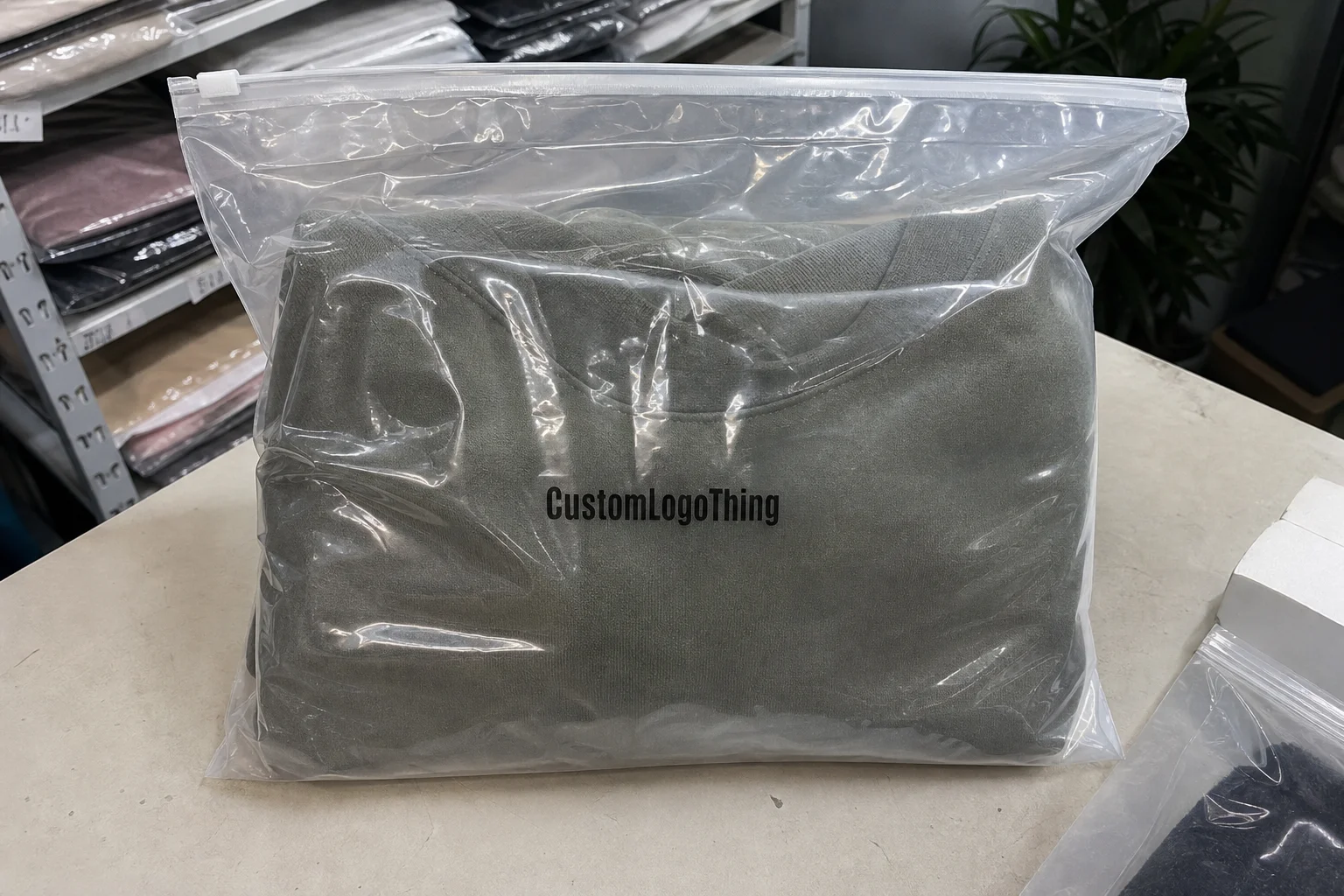
Slider Lock Clothing Bags are resealable poly or film bags with a sliding closure that runs along a zipper track. They are commonly used for folded garments that need protection but still benefit from visibility: tees, sets, sleepwear, socks, underwear, hosiery, and branded basics. Compared with a simple open-top poly sleeve, a slider bag gives the consumer a more finished experience and gives the retailer a package that is easier to open, reclose, and inspect.
The private label side matters because packaging is not just a container; it is part of the product presentation system. A slider lock clothing Bags Private Label supplier can customize dimensions, print your logo, adjust transparency, add frosted film, and tune the closure format to match the garment category. That turns the bag into something closer to branded packaging than generic supply.
Why does that matter? Because packaging shapes perception. A clean, clear bag can make a $28 basic feel more intentional than a wrinkled sleeve ever will. It can also affect returns in quiet but real ways. If customers can inspect the item without damaging the pack, if the seal closes properly, and if the bag survives warehouse handling, the whole experience feels more premium.
“Most brands do not lose margin because the bag is expensive. They lose margin because the bag is wrong, and then they pay for repacking, damage, or customer complaints.”
That is the real starting point for this kind of sourcing decision: spec, fit, pricing, process, and the mistakes that push costs up after the order is already underway.
How the slider lock closure works in retail packaging
The closure is simple in concept. The slider rides along the zipper track, opening and sealing the bag with less effort than a press-to-close strip. For shoppers, that matters. A good slider glides. A bad one sticks, catches, or separates unevenly. Once that happens, the packaging stops feeling premium and starts feeling fiddly.
In retail packaging, the closure has practical value beyond convenience. It helps reduce accidental opening in transit, keeps dust away from folded garments, and supports merchandising where staff may need to inspect or refold the product. For e-commerce, it can also improve the return experience because the customer can reseal the bag instead of improvising with tape.
Not every product needs the same structure. Lighter items such as tees or underwear packs can work with thinner film and a narrower opening. Heavier items, thick knits, hoodie sets, or multi-piece bundles usually need a wider mouth and a stronger gauge so the bag does not feel overstressed at the corners.
- Hang holes help with peg or rack display.
- Tear notches improve first-openability when the bag is sealed tightly.
- Venting can reduce trapped air for bulky items.
- Warning text may be required for child-safety or retailer compliance.
- Anti-slip or frosted finishes can improve the premium feel and reduce glare on shelf.
For buyers, the closure is a quality signal. A clean-sliding mechanism suggests the bag was made with decent tooling and consistent tolerances. A sticky one suggests the opposite. That is why a slider lock clothing bags private label supplier should be evaluated on more than print quality alone.
Key specs that affect cost, fit, and branding
If you want a quote that actually means something, you need to break the bag into its working parts. The biggest cost drivers are material type, film thickness, bag dimensions, print coverage, closure style, and quantity. That sounds obvious, but sourcing mistakes usually happen because buyers compare only the headline price and ignore the spec underneath it.
Material choices are the first fork in the road. Clear PE film is common for visibility. Frosted film softens the look and can hide slight wrinkles in folded garments. Recycled-content options may improve sustainability positioning, though availability and clarity can vary by supplier and region. If your team needs to make recyclability claims, keep the wording precise and confirm what the target market actually supports; vague environmental language creates problems later.
Fit is equally important. Measure the folded garment, then add room for insertion, branding, and a clean stack. A bag that is too small compresses the product and looks cheap. One that is too large lets the garment slide around and wastes material. For thicker apparel, bag width and usable seal area matter more than a flat dimension on paper.
Branding choices can also shift cost and perception. Full-bleed printing costs more than a single-color logo. Matte finishes usually feel more refined than high-gloss film, but they can change print contrast. Clear bags show the product best; frosted bags hide minor imperfections in folding and can make the pack feel more elevated. Custom inserts or labels can add another layer of identity, especially if the same bag is used across multiple SKUs.
| Option | Typical use | Relative cost impact | Buyer takeaway |
|---|---|---|---|
| Clear unprinted bag | Basic apparel, internal packing | Lowest | Good for visibility, weak for branding |
| Clear bag with logo print | Retail basics, DTC | Low to moderate | Strong balance of cost and presentation |
| Frosted printed bag | Premium basics, giftable items | Moderate | Better shelf feel, slightly higher material cost |
| Thicker gauge with full coverage print | Sets, heavier knits, wholesale | Highest | Best protection and branding, but only if the product justifies it |
Warehouse handling is another factor buyers often miss. Bags that stack well reduce damage and repacking labor. If your cartons are heavy, your labels are awkward, or your bags snag on each other, a cheap spec can become expensive very quickly. A solid slider lock clothing bags private label supplier should ask about your fulfillment environment, not just your artwork.
For packaging structure references, the ISTA testing standards are useful when you want to think beyond appearance and into transit performance. And if your brand is evaluating recycled content or environmental claims, the EPA is a better starting point than vague marketing language.
Cost and pricing: what changes your unit price
Pricing is usually built from a few buckets: tooling or setup, print plates or digital setup, material, labor, packaging, freight, and duties if applicable. Once you understand that structure, supplier quotes become much easier to compare. A low unit price is not always a low total cost if setup fees are high or the bags need extra labor at packing time.
MOQ behavior matters a lot. Smaller runs almost always cost more per unit because the supplier spreads setup across fewer bags. That is why a pilot order of 1,000 pieces can look dramatically more expensive than a 10,000-piece run, even when the design is unchanged. The first quote often reflects the learning curve of the production run as much as the material itself.
To make pricing concrete, here is a realistic pattern buyers often see:
- A plain clear slider bag at moderate volume may fall into a lower cost band.
- Add logo printing, and the price increases modestly.
- Move to a thicker gauge, larger format, or frosted finish, and the unit price rises again.
- Introduce multi-color print, insert cards, or special packaging requirements, and the quote shifts more sharply.
For many apparel programs, quoted pricing might land roughly in the range of $0.08 to $0.18 per unit for simple standard bags at higher volumes, while custom-printed or heavier-duty versions can move into the $0.18 to $0.35+ range depending on size, material, and print coverage. Lower quantities can sit well above that. These are directional ranges, not promises, because freight, artwork complexity, and supplier capability change the math.
The good news is that savings are usually available if you know where to look. Standard sizes reduce waste. Fewer ink colors reduce setup. Simplified artwork lowers risk. Consolidated shipments can improve landed cost. Asking for three-tier quotes—for example, 5,000, 10,000, and 20,000 units—shows you the break point between a test run and a production program.
A careful slider lock clothing bags private label supplier will give you that structure without being vague. If the quote only gives one number and avoids the spec sheet, treat that as a warning sign.
Process and timeline: from artwork to production steps
The sourcing sequence is usually predictable: inquiry, spec confirmation, artwork review, sampling, approval, production, inspection, and shipment. The individual steps are straightforward. The delays happen between them, usually when the artwork is unclear or the sample does not match the intended production spec.
Artwork is often the first bottleneck. Buyers sometimes send a logo file that works for a website but not for print. Pantone targets matter. So do barcode rules, warning text, and carton labeling instructions. If you want production to move cleanly, prepare those assets before you ask for a quote. Otherwise, the process will drift while everyone waits for revisions.
Sampling is where reality appears. A sample may look acceptable but be made from a different gauge or material than the quoted production spec. That is a classic problem. If you approve the sample without confirming material parity, you can end up with a production bag that feels thinner, closes differently, or prints with another level of clarity.
Typical lead times vary, but many projects run roughly like this:
- Artwork and spec confirmation: 1-3 business days if files are ready.
- Sampling: about 5-10 business days, depending on complexity.
- Revisions and approval: 2-5 business days, often longer if stakeholders are slow.
- Production: often 12-15 business days after final approval for standard runs, though larger or more complex orders can take longer.
- Freight: highly variable, from a few days domestically to several weeks for ocean shipments.
That timeline can shrink or stretch depending on film availability, closure color, print matching, and shipping mode. From a buyer’s point of view, the biggest mistake is letting the order start without a hard approval checkpoint. Set one date for sample approval and another for final sign-off. Otherwise, the project will drift while everyone assumes someone else is holding the schedule.
For brands that want to tighten the workflow, a Custom Labels & Tags program can help align the bag, insert, and garment identity so the packaging system looks intentional instead of assembled piece by piece.
Common mistakes when choosing a private label supplier
Price-only buying is the first trap. A low quote can hide poor seal consistency, sloppy print alignment, or cloudy film that makes the garment look less premium. If the package arrives with defects, the savings disappear fast because someone still has to sort, reject, or repack it.
Another frequent mistake is approving the wrong sample. Buyers sometimes sign off on a sample made with a different film thickness than the final order. That creates a false sense of confidence. When production arrives, the bag feels different, closes differently, and may not survive the same handling conditions. A sample only matters if it matches the quoted spec.
Size errors are common too. If the bag is undersized, the garment wrinkles and the presentation suffers. If it is oversized, the package looks loose and wastes film. Neither is ideal. This is especially true for hoodies, sets, and bulkier knits, where thickness matters as much as flat width.
Regulatory and retailer requirements can also surface late and cause delays. Some channels require warning text, carton marks, or labeling language that needs to be on the pack before shipment. If you do not ask about those rules early, you may end up reworking approved artwork under pressure.
Finally, many buyers fail to ask how the supplier handles quality checks and claims. What is the defect threshold? How are sealing issues documented? What happens if the closure is inconsistent across cartons? Those questions are not paranoid. They are basic purchasing discipline. A reliable slider lock clothing bags private label supplier should be able to answer them clearly.
Expert tips for better packaging decisions and next steps
If you are still deciding whether the packaging program is worth the effort, start with one hero SKU. That gives you a clean read on shelf appeal, handling, and customer response without forcing a full rollout across every product line. One successful pack test usually tells you more than a long internal debate.
Ask for a sample kit with multiple film weights and closure options. Seeing the difference side by side is useful. Transparency changes the way the product reads. Film thickness changes the feel in hand. Closure action changes perceived quality almost instantly. A bag that looks acceptable on a PDF can behave very differently in person.
Build a simple supplier scorecard. Weight communication, spec accuracy, sample quality, pricing transparency, and timeline reliability. That keeps procurement discussions grounded. If the supplier answers questions quickly but misses dimensions, the score should reflect that. If the price is good but the lead time slips every cycle, that should be visible too.
- Confirm garment dimensions before requesting a quote.
- Define the minimum order quantity and preferred reorder level.
- Request pricing at three volumes so you can compare break points.
- Lock the artwork, warning text, and carton marks before approval.
- Verify that the sample material matches the production material.
If you want to reduce risk, ask the supplier for a production-proof checklist before final approval. It should cover dimensions, film thickness, closure style, print layout, barcode placement, and carton labeling. That single document prevents a lot of expensive misunderstandings.
For brands planning a broader packaging system, the next move is simple: gather garment dimensions, define order volume, request three quotes, approve a sample, and only then release production once the spec sheet is frozen. That is the disciplined way to work with a slider lock clothing bags private label supplier and avoid paying for avoidable mistakes. It is not flashy. It is just sound buying.
What should I ask a slider lock clothing bags private label supplier before ordering?
Ask about MOQ, unit price breaks, material thickness, print options, sample cost, and expected lead time. Also confirm that the quoted spec matches the production material and closure style, not just the sample you saw.
How do I choose the right size for private label slider lock clothing bags?
Measure the folded garment, then add room for easy insertion and a clean presentation. Do not forget thickness; hoodies, sets, and heavier knits need more room than flat tees or socks.
Are custom printed slider lock apparel bags worth the extra cost?
Usually, yes, if the package is visible in retail, wholesale, or unboxing. Printing can improve brand recognition and make the product feel more premium, but only if the artwork is clean and the bag size is correct.
What affects the lead time for private label slider lock bags the most?
Artwork revisions, sample approvals, and material availability usually have the biggest effect on timing. Shipping method and order size also matter, especially if you are moving product internationally.
How can I reduce unit cost without lowering quality?
Use a standard size, limit the number of print colors, and increase order volume where possible. Ask suppliers to quote multiple quantities so you can see the best balance between price and inventory risk.


