A bag can look clean in a product photo and still fail once it starts moving through packing, transit, and customer handling. That is why a Slider Lock Clothing Bags quality inspection checklist matters before shipment leaves the factory. The defects that cause the most trouble are often the quiet ones: a slider that catches, a seal that looks fine until pressure is applied, or a print shift that only becomes obvious when cartons are opened at receiving.
For apparel packaging buyers, the checklist is less about paperwork and more about preventing surprises. It helps confirm presentation, closure reliability, and consistency across the run before the order is released. On custom logo bags, that kind of control can be the difference between a clean delivery and a round of rework that slows down the rest of the packing schedule.
Slider Lock Clothing Bags Quality Inspection Checklist Basics
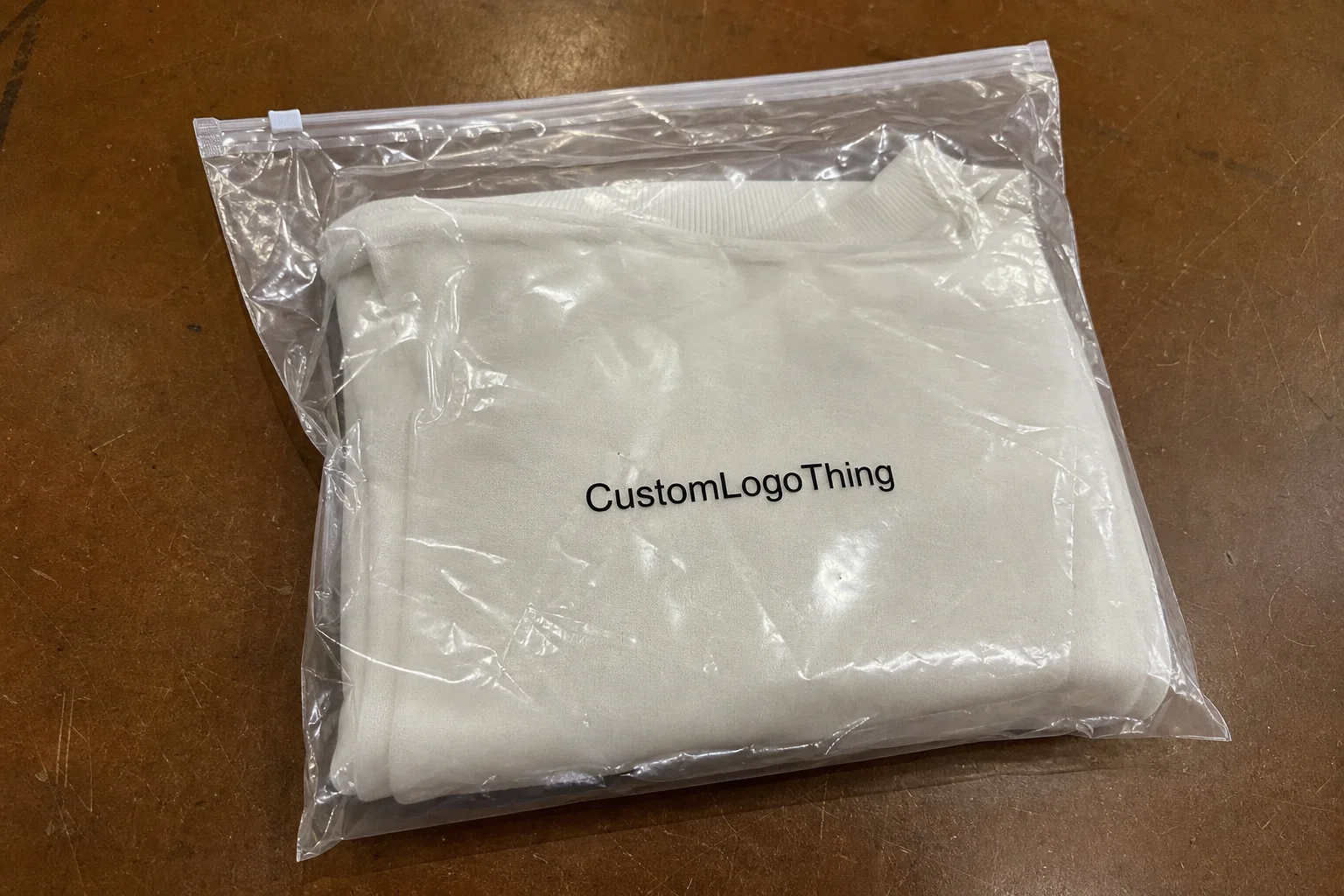
The purpose of a Slider Lock Clothing Bags quality inspection checklist is straightforward: confirm that the bag works as a package, not just as a sample under ideal lighting. A neat-looking bag can still fail if the locking profile is weak, the side seals are uneven, or the film gauge changes enough from one roll section to the next.
The most common failure points are predictable. Inspectors should watch for torn tracks, weak seals, crooked sliders, haze in the film, seal burn marks, scuffs, trapped dust, and size variation from bag to bag. These issues matter because they affect both product presentation and protection during packing, transport, and retail handling.
Scope should be defined before inspection starts. Some programs need incoming film checks, some need in-process checks during bag forming, and some require a final finished-goods review before freight booking. If the buyer expects one level of control and the factory is working to another, disagreements usually show up too late to fix without delay.
A good checklist sets the standard before the first carton is sealed, so “acceptable” means the same thing to both sides.
For teams that want to stay close to broader packaging practices, it can help to align inspection language with general transit and handling expectations. Depending on the product and channel, reference points from the ISTA and Packaging School / PMMI packaging resources can be useful when defining pack-out and handling performance.
How the Slider Closure Should Perform on the Line
A slider lock bag is a small mechanical system made up of the film body, the locking profile, the slider hardware, the side seals, and sometimes a hang hole or euro-slot feature. If one part is off, the bag feels wrong in the hand almost immediately, and buyers usually notice that before they even get to the printed details.
The closure should travel smoothly without snagging the film edge. It should lock firmly enough that the mouth stays closed under normal apparel handling, then reopen cleanly without feeling gritty or loose. If the slider skips teeth, drags, or needs too much force, the cause is usually profile alignment, mold wear, contamination, or film gauge inconsistency.
Apparel use also changes the performance target. Folded tees, knitwear, intimates, hosiery, and e-commerce insert packs do not behave the same way. A lighter T-shirt pack may work with a thinner gauge, while bulkier knitwear needs more puncture resistance and better shape retention. A retail display bag, meanwhile, usually needs clearer film and better scuff control than a plain warehouse pack.
Line-side conditions matter more than many buyers expect. Dust on the sealing jaws, static cling, humidity swings, fast operator pacing, and rough carton handling can all change how the slider feels once the bags are packed. For that reason, repeated checks across multiple cartons are more reliable than relying on one polished sample from the top of the stack.
| Inspection focus | What to verify | Typical acceptance signal |
|---|---|---|
| Slider travel | Smooth movement, no skipping, no drag points | Consistent open-close feel across sampled bags |
| Lock performance | Profile fully engages along the track | Bag stays closed under normal handling |
| Film body | Clarity, gauge, scuff resistance, flatness | No obvious haze, warping, or weakness |
| Side seals | Seal width, uniformity, edge trimming | No splitting, pinholes, or burn-through |
Material, Seal, and Print Factors That Decide Pass or Fail
Material choice usually decides a large part of the outcome before the line even starts. Film grade, thickness consistency, clarity, and scuff resistance affect both protection and presentation. For many apparel programs, buyers look at LDPE or co-extruded film in a thickness range that varies by use case, but the more useful question is whether the gauge stays consistent enough across the roll to support the closure and seal.
Seal quality is the other major gate. A wide, even weld with clean edge trimming is more dependable than a narrow, irregular seal that looks acceptable until a carton is stacked or dropped. If the seal is too hot, too thin, or contaminated, weakness, whitening, or splitting can show up later. That is why many buyers ask for seal pull checks and visual review of the heat-affected zone, not just a quick look at the finished edge.
Print variables deserve the same attention. Custom logo work often includes brand marks, size notes, care instructions, barcodes, or SKU codes, and every one of those can introduce risk. Check registration, ink adhesion, color consistency, and barcode readability across the run. A slight shift in logo placement may seem minor on the line, but it becomes obvious when thousands of bags are packed side by side in retail or fulfillment use.
Contamination checks should never be skipped. Haze, fish-eyes, odor, gel spots, trapped debris, and dust nibs are common rejection triggers because they make the bag feel low-grade even when the dimensions are correct. If the inspection only covers appearance, it usually misses the issues that customers notice first.
For teams working with sustainability claims, material quality should be separated from environmental messaging. If the program includes recycled content, paper inserts, or combined material systems, verify the claim path and the paperwork instead of relying on what is printed on the carton. The FSC site is a helpful reference when paper components are part of the pack and chain-of-custody questions come up.
Step-by-Step Inspection Sequence for Production Approval
A practical inspection plan should move in a clear order: pre-production sample review, first-article approval, in-process checks, and final pack-out verification. Skipping one of those gates increases the odds of a surprise defect, especially on larger runs or orders with several artwork versions.
Start with the sample. Confirm dimensions, film thickness, slider color, print placement, and closure feel against the approved spec. Then move beyond the “best sample” problem. Pull bags randomly from multiple cartons and different stack positions, because variation often hides in the middle layers where nobody wants to check.
The inspection should include both visual and functional tests. A solid baseline is repeated open-close cycling on a meaningful sample count, followed by seal pull checks, handling checks, and dimensional measurement against the drawing or approved reference sheet. For apparel bags, even a modest shift in mouth width or bag length can affect fold fit and shelf presentation.
Defect severity should be ranked clearly. Cosmetic, minor, major, and critical problems should not be grouped together. A scratched slider that still functions is not the same as a weak lock that opens under tension. Clear ranking keeps decisions repeatable when the factory, buyer, and freight team all need the same answer.
- Review approved artwork and physical sample side by side.
- Measure dimensions, gauge, and seal width from random cartons.
- Cycle sliders multiple times on sampled bags.
- Check print quality, barcode readability, and alignment.
- Inspect contamination, odor, haze, and scuffing.
- Record defect counts with photo evidence and severity.
- Release only after the final approved standard is confirmed.
Common Mistakes That Let Defective Bags Ship
The first mistake is checking appearance only. A clean-looking bag can still fail on lock strength, seam durability, or slider alignment. That is why the Slider Lock Clothing Bags quality inspection checklist should always combine visual and functional criteria instead of treating them as separate steps.
The second mistake is vague tolerances. If the buyer never defines acceptable variation for size, thickness, or print position, the factory is left guessing, and guessing is expensive. Small disputes often last longer than they should because one side treats a 2 mm shift as fine while the other expects much tighter control.
Another issue is ignoring carton count and pack configuration. Overfill can stress seals and distort the bag shape, while underfill can create presentation problems or suggest packing errors. For high-volume apparel orders, the carton is part of the quality system, not just a shipping container.
Teams also forget to separate cosmetic flaws from functional defects. A minor scuff may be acceptable on a warehouse pack, but a weak slider, torn track, or split seal is a different matter. If severity ranking is missing, the factory cannot tell what needs rework and what can pass with a note.
Odor complaints are also easy to dismiss too quickly. In enclosed packaging, smell can matter a great deal, especially for intimate apparel or premium retail goods. If the film or ink carries a lingering odor, the end customer will notice it long before procurement does.
Cost, Pricing, MOQ, and Quote Variables Buyers Should Compare
Pricing for custom slider bags moves with specific variables. Resin grade, film thickness, slider hardware quality, print coverage, color count, and bag size all affect cost. To compare quotes fairly, use the same basis every time instead of a loose “same bag” description that hides material or inspection differences.
MOQ matters a great deal. Lower minimums usually carry a higher unit price because setup time, scrap risk, and labor are spread over fewer pieces. Larger runs may reduce unit cost, but only if the buyer can hold the spec steady and absorb the lead time. For some programs, that tradeoff is manageable; for others, inventory risk becomes the larger concern.
Two quotes that appear close can still mean very different things. One may include basic inspection and folded carton packing, while another assumes tighter QC, stricter bag stacking, and additional freight-ready labeling. Ask what the quote includes, because unit price without the full packing method is only part of the picture.
| Quote factor | Lower-cost option | Higher-cost option |
|---|---|---|
| Film thickness | Thinner gauge for light apparel | Thicker gauge for better puncture resistance |
| Printing | Single-color logo | Multi-color print with tighter registration |
| Slider hardware | Standard color and profile | Custom slider color or tighter fit spec |
| MOQ | Higher unit cost at smaller volume | Lower unit cost at larger volume |
| Inspection scope | Basic final check | Incoming, in-process, and final QC |
A practical buyer habit is to request the same quote fields every time: exact size, material spec, closure style, print colors, carton count, defect allowance, and packing method. That makes supplier comparison fair and much easier to defend internally.
Process, Timeline, and Production Steps to Confirm Before Release
The order flow should be locked before production starts: spec confirmation, sample approval, tooling or print setup, production, inspection, and dispatch. If any of those steps is unclear, the schedule can slip even when the factory is doing its part correctly.
Delays usually come from a few predictable places. Artwork revisions are common, especially when logo placement or barcode size changes late in the process. Material shortages can push the run, and rework after QC can add several days if the first pass does not meet the approved standard. None of that is unusual, but it should be planned for instead of treated as a surprise.
Before release, freeze the details that matter most: dimensions, film specification, slider color, print copy, pack format, and test criteria. If those details are still changing while bags are in production, the checklist loses value because there is no stable reference point to inspect against.
For planning, many programs benefit from building in a buffer of several business days for inspection, corrections, and freight booking. That buffer helps avoid the awkward situation where the bags are finished, but there is no time left to verify them properly before shipping.
There is also a packaging-side compliance angle. If the pack-out uses paper inserts, printed cartons, or mixed-material systems, check whether any part of the setup affects your environmental claim or filing. For broader packaging waste and compliance context, the EPA site is a useful general reference: epa.gov.
Next Steps to Lock the Spec Before You Approve the PO
The cleanest way to use the Slider Lock Clothing Bags quality inspection checklist is to turn it into a one-page spec sheet that both buyer and supplier can sign. Include dimensions, material callouts, print limits, defect thresholds, carton count, and the people who can approve exceptions. That single page avoids a surprising amount of confusion later.
Ask for a pre-production sample with photo approval before the full run is released, then keep that sample as the reference standard. When a disagreement comes up, the approved sample usually settles it faster than an email thread.
Set the inspection plan in writing for incoming, in-process, and final checks, and make sure everyone knows which gate they own. That is how the process stays repeatable instead of depending on memory or whoever happens to be on the line that day.
Used properly, the checklist belongs to procurement as much as to quality control. Review it before shipment release, not after a customer finds the problem, because that is where the cost becomes real.
What should a slider lock clothing bag quality inspection checklist include?
It should cover dimensions, film thickness, slider movement, lock strength, seal integrity, print quality, carton count, and visible contamination. It should also define defect severity so the factory knows which issues are cosmetic, which are functional, and which require rejection.
How many samples should be checked before approving slider lock apparel bags?
Inspect random samples from multiple cartons, not just the top layers, so variation across the full run is more likely to surface. Include repeated open-close cycles and at least one functional test for every critical size or artwork version being approved.
What defects are most common in slider lock clothing bags?
Common issues include sticky or loose sliders, weak side seals, haze, scuffs, misaligned print, odor, and trapped debris. Size drift and carton packing errors also show up often when the spec is not defined tightly enough.
How do MOQ and pricing change with custom slider lock bags?
Custom film, special slider colors, multi-color printing, and thicker gauges usually raise unit cost. Lower MOQs often increase price because setup time, waste risk, and inspection effort are spread over fewer bags.
How long should production and inspection take before shipment?
The timeline depends on sample approval, artwork finalization, material availability, run size, and final QC. Build in extra time for corrections and re-inspection so shipping does not start until the approved standard is confirmed.


