A mailer can look correct on paper and still cause headaches on the packing line. That is why a Poly Mailer Bags material and sizing guide matters for wholesale shipping teams: the choice affects fit, seal integrity, freight cost, product presentation, and how quickly an operator can complete an order without rework. If the bag is too tight, seams take the stress and the adhesive flap has to fight the package. If it is too large, the shipment consumes more film than necessary and often lands in a higher postage bracket because the parcel carries extra air.
The decision is rarely just about whether the item fits inside the bag. A better way to think about it is this: does the mailer support the packed shape, protect the finish, close reliably, and keep the order moving through the warehouse at a normal pace? That question brings film thickness, usable dimensions, closure style, print coverage, and product form into the same conversation. It also keeps buyers from overpaying for a bag that solves one problem while creating two more.
Soft goods, boxed accessories, catalogs, and multi-item kits all demand slightly different packaging behavior. A thin poly film may be enough for a compressible garment, while a rigid box or sharp-edged accessory may need stronger film and more clearance around the corners. The right answer is usually not the heaviest bag available; it is the bag that matches the product, the line speed, and the shipping environment.
The cheapest mailer on the quote sheet is rarely the cheapest choice if it creates one extra touch, one repack, or one damaged order.
Teams also compare poly mailers against kraft paper mailers, corrugated cartons, and other shipping formats. Those options can be right for certain products, especially when recycled materials, post-consumer waste content, or FSC certified paper is part of the brief. But sustainability labels do not fix a poor size decision. The package still has to fit the item cleanly and hold up in transit.
Why Poly Mailer Bags Material and Sizing Affect More Than Fit
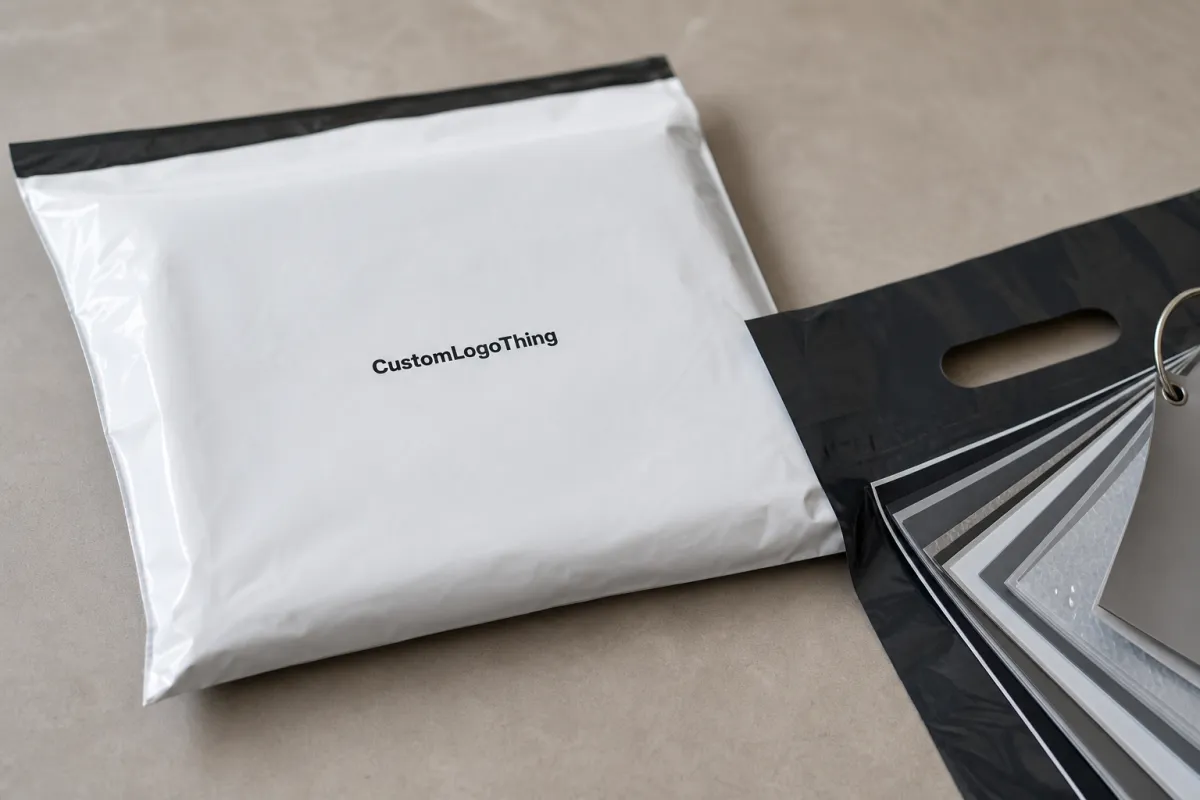
On a busy packing line, small differences multiply fast. A mailer that is a little too narrow can slow operators, crease product corners, and put stress near the closure. A bag that is only slightly too short can force the adhesive strip to carry more load than intended. That extra tension may not fail immediately, but it raises the chance of seal creep, peeling, or a visibly stressed top edge after the parcel goes through sorting.
Oversizing causes a different kind of loss. The package may still close, but you pay for extra film and often for extra dimensional weight. In many shipping networks, dimensional weight matters more than actual weight once the parcel gets bulky. That means a mailer that is two inches larger than needed can quietly raise costs across thousands of shipments. It can also make the order look sloppy, which matters more than many procurement teams admit.
Material and size are tied together because film behavior changes with load. A soft, flexible poly film can handle compressible items well, but that same film may be too forgiving for a rigid insert or a product with hard corners. Thicker film increases puncture resistance, yet a thicker bag that is too large still shifts around the item and wastes space. The smarter comparison is not “thin versus thick”; it is “what film and what dimension combination gives the lowest total cost with acceptable protection?”
Some buyers focus only on the item weight, which is a trap. Weight tells you almost nothing about edge pressure, corner puncture risk, or how much the package will swell after inserts, tissue, or return cards are added. A lightweight but rigid product can be harder on a mailer than a heavier soft item. That is why experienced buyers measure the packed form, not the loose product.
Print coverage and privacy finish matter too. A heavy printed area can stiffen the film slightly, and opaque white, black, or metallic finishes change how the bag feels and handles. None of that is cosmetic only. The print layer affects flexibility, the seal area affects real closure space, and the finish can change how visibly the package shows scuffs during transit.
How Poly Mailer Construction Affects Performance
Most poly mailers are simple at a glance: film, seal, adhesive strip, and a closure flap. In production, the details are where performance lives. The outer layer has to survive stacking, sliding, and warehouse abrasion. The inner layer has to tolerate the product surface without sticking or scratching. The adhesive has to hold after compression, vibration, and repeated handling. If the mailer includes tamper-evident cuts or dual adhesive strips, those features should support the operation rather than complicate it.
Film thickness is usually expressed in mils, and buyers often assume a higher number automatically means better results. That is only partly true. A 3 mil coextruded film can outperform a poorly made 4 mil film because the layer structure, seal strength, and consistency are better. Quality control matters as much as the nominal gauge. If the seal line is inconsistent, the bag can fail at the top even when the material itself is strong enough.
Low-density film tends to feel softer and more flexible, which helps with apparel and other compressible items. Coextruded film usually gives a better balance of puncture resistance and pliability. For dense or angular goods, a stronger gauge is often the safer choice. For flat and soft products, the right move may be to stay moderate on thickness and let the package do its job without adding unnecessary freight weight.
There is also a practical limit to what a mailer can absorb. If a product has hard corners, zippers, rivets, battery packs, or raised hardware, the material needs enough resistance to prevent stress points from punching outward. A thinner bag may work in a sample test but fail after a longer shipment route. That is why transit conditions matter. A package that only has to travel a short regional route faces less handling than one moving through multiple hubs and conveyor systems.
Here is a common observation from warehouse testing: two bags with the same label size can behave differently once loaded. One may have a slightly narrower seal margin, slightly softer film, or heavier ink coverage, and those differences change how easy the mailer is to close. The practical lesson is simple. Nominal dimensions are not enough; usable dimensions and closure overlap are the numbers that matter.
How to Size Mailers for Product Shape and Packout
The cleanest sizing method starts with the packed item, not the product before preparation. A folded shirt may measure 12 x 16 inches on the table, but once it is folded, pressed, tagged, and stacked with tissue or inserts, the working packout may be closer to 10 x 13 x 1 inch. That final form is what the mailer has to handle. Measuring too early is one of the fastest ways to choose the wrong bag.
Width and length do different jobs. Width governs how much the product has to flex sideways, which affects seam stress and how hard the bag is to load. Length governs how much closure overlap remains after insertion. A bag can technically be long enough and still be a poor choice if the top edge lands too close to the item. A bag can also be wide enough yet feel awkward if the sides have to stretch too far to admit the product.
As a rule, leave enough room for insertion without forcing the seam line, and then reserve extra space for the closure flap. Soft apparel can tolerate a little compression because the contents flatten as air escapes. Boxed products need more margin because corners do not compress the same way fabric does. If the bag has to stretch hard to accept the item, the size is wrong even if the package closes.
Repeated packs deserve a different approach. If the same hoodie, accessory kit, or book set ships every week, custom dimensions often make more sense than forcing the item into a stock size that is almost right. A custom width and length can reduce wasted film, improve line speed, and create a cleaner front face for branding. The savings are not dramatic in a single order, but over a season or a program run, they are easy to see in labor and freight.
Always test the real packout. Include labels, return cards, barcode inserts, tissue, or any protective sleeve that will be used in production. Those additions change bulk. A bag that fits the product alone may be too tight once the complete shipping configuration is assembled. That kind of miss usually appears at the packing table, not in the spreadsheet, which is why physical sampling is worth the time.
For boxed products, measure the box after it is fully assembled and loaded. Then add enough room for smooth insertion and stable closure. If the box only fits when the mailer is pulled taut, move up a size. A mailer should contain the package, not fight it.
Pricing, MOQ, and Total Cost Considerations
Unit price is only one part of the total cost. Poly mailer pricing depends on size, film gauge, print coverage, color count, closure style, and whether the order is stock or custom. A plain stock mailer can be very economical. A fully printed custom order with special dimensions, multi-color artwork, or thicker film usually costs more and may require a larger commitment.
MOQ changes the economics in a very real way. A lower minimum order quantity reduces inventory risk, which helps when assortment changes often or a new product line is still being tested. A larger MOQ can lower the per-unit price, but it also ties up cash and storage space. If the size is slightly off, the buyer then owns a lot of material that is only partly useful. That is a poor trade unless the volume is stable.
| Option | Typical Use | Relative Cost | Performance Notes |
|---|---|---|---|
| Stock 2.5 mil mailer | Light apparel, soft goods | Lowest | Good for compressible items; limited customization |
| Stock 3 mil mailer | General-purpose shipping | Low to moderate | Common balance of strength and flexibility |
| Custom printed 3 mil mailer | Branded apparel, repeat programs | Moderate | Adds brand value; proofing and setup matter |
| Heavy-duty 4 mil mailer | Sharper edges, dense packed items | Higher | Better puncture resistance, usually heavier freight |
Freight is easy to overlook. A larger case count, heavier film, or bulky finished size can raise inbound shipping costs. Storage matters too. A size that takes twice the shelf space of another size carries a hidden cost in warehouse planning. Damage risk belongs in the comparison as well, because a cheaper bag that fails more often is not actually cheap.
When comparing quotes, ask for usable dimensions, not just nominal flat size. Confirm seal type, adhesive style, film thickness, print setup fee, carton pack quantity, and lead time. If you are also evaluating kraft paper or FSC certified paper alternatives, compare not only the unit price but also the ship weight, storage footprint, and handling time. Some paper programs align better with recycled content goals, but a heavier ship weight can quickly offset the benefit in freight-sensitive categories.
For teams that want a technical reference point, the ISTA packaging test standards are useful because they connect package design to actual distribution conditions. For fiber-based packaging, FSC certification guidance is a practical place to verify sourcing claims without relying on marketing language.
Process and Lead Time: From Spec Sheet to Delivery
The easiest orders to manage begin with a complete spec sheet. That should include packed dimensions, target quantity, film type, thickness, closure style, print area, and brand colors if the mailer is printed. A clear spec lets the supplier recommend a stock size, a semi-custom option, or a fully custom build without guesswork. Guesswork usually shows up later as delays, extra proofs, or a sample that misses the mark.
The workflow is usually straightforward. First, collect measurements and define what the mailer has to do: protect the product, present the brand, or maximize throughput. Next, review a sample or proof. Then approve the final version and move into production. Stock or semi-custom mailers can move faster when the artwork is simple and the size is standard. Fully custom orders usually need more time, especially if the print has multiple colors or the dimension is unusual.
Lead time extends for a few predictable reasons. Late artwork changes are a common one. Heavy print coverage can also add time because the setup and inspection take longer. Larger quantities naturally need more production and packing time. Rush orders compress every stage, which can expose problems that would have been caught in a normal timeline. That is why sample approval should happen before the launch schedule gets tight.
Packaging should be tested under the conditions it will actually face. For some products that means a simple drop test or vibration check. For others it means in-house inspection on the same packing line that will use the mailer. If the product is sensitive, or if the route includes multiple handling stages, it is worth using a formal reference framework rather than relying on intuition. The point is to see how the package behaves once the line speed, handling, and closure tension are real.
One practical reality: clear specs shorten approvals more than almost anything else. When the buyer knows the packed form, the acceptable gauge, the print requirements, and the acceptable lead time, the rest of the process becomes much easier to control. That is the part of a Poly Mailer Bags material and sizing guide that saves time in production, not just on the quote request.
- Measure the packed product, not the loose product.
- Confirm width, length, and closure overlap together.
- Request samples before volume approval.
- Approve material and print specs in writing.
- Build in time for freight, receiving, and internal QA.
Common Sizing Errors That Create Damage or Waste
The most common mistake is measuring too early. A garment before folding, or a boxed item before inserts are added, rarely gives a usable number. The result is either a bag that is too small and forces the packer to fight the package, or a bag that is too large and wastes film, space, and freight efficiency. Both errors are expensive, just in different ways.
Overstuffing creates its own problems. Once the flap is under tension, the seal may peel, the edge can bulge, and the parcel can look damaged even when it technically closes. A mailer should close with a margin. If the operator has to pull hard to make the flap reach, the chosen size is too aggressive for the product.
Weight alone does not tell the whole story. Sharp corners, trapped air, and irregular shapes often cause more trouble than raw ounces or grams. A light item with a rigid edge can puncture a thin film, while a slightly heavier soft item may pack beautifully in a smaller bag. That is why material, shape, and sizing should be reviewed together rather than treated as separate decisions.
Presentation is another cost center that often gets overlooked. An oversized mailer can look careless even if the contents arrive safely. It may wrinkle more in transit, shift inside the parcel, and give the customer a weaker first impression. That matters in brand-led shipping programs, where the package itself is part of the purchase experience.
Quality control checks help prevent those errors before they scale. A simple incoming inspection can catch seal inconsistencies, misprints, off-size bags, or weak adhesive. On the production floor, the most useful checks are often the least glamorous: measure the usable interior, verify the seal width, confirm the print placement, and test closure on a fully packed sample. Those checks take minutes. Replacing damaged returns takes much longer.
Next Steps for Buying the Right Poly Mailer Bags
Start with the packed product and work outward. Measure the final width, length, and thickness after folding, boxing, sleeving, or staging for shipment. Note any pressure points such as zippers, corners, buttons, labels, or inserts. Those small details determine whether a mailer behaves well in production or becomes a recurring packing issue.
Then compare two or three practical options side by side. One may be lower cost but too thin. Another may be stronger but oversized. The best choice is usually the one that balances protection, appearance, and total landed cost without adding labor. Sometimes the right answer is stock. Sometimes it is custom. The difference shows up in film use, line speed, and how often the packing team has to pause and adjust.
If branded shipping supplies are part of the program, review the full spec before approval: film type, thickness, dimensions, closure style, print area, MOQ, and lead time. If related packaging formats are also in play, the broader catalog of Custom Packaging Products can help align mailers with labels, inserts, and secondary packaging. For dedicated branded shipping bags, Custom Poly Mailers is the more direct starting point.
A practical buying process is rarely dramatic. It is measured, tested, and a little unglamorous. That is usually a good sign. The right mailer is the one that fits the real packout, protects the product through handling, and keeps postage and labor under control. A solid poly mailer Bags Material and Sizing guide should make those tradeoffs visible before the first purchase order goes out.
FAQ
How do I choose poly mailer bag material for folded apparel?
Use a flexible film that can wrap the folded garment without putting stress on the seams or adhesive strip. A thicker gauge helps when the apparel includes zippers, buttons, rivets, or hard labels that can press into the film. Test the actual folded pack size rather than relying on the flat garment measurement, because the packed form is what the bag has to handle.
What size poly mailer bag do I need for a boxed product?
Measure the finished box, then allow room for easy insertion and enough overlap for a full closure. Corners need extra clearance because rigid edges do not compress the way soft goods do. If the box only fits by stretching the bag, move up to the next size rather than asking the seal to carry too much tension.
Does thicker poly mailer material always mean better protection?
Not always. Protection depends on both film strength and how well the bag fits the product. A heavier bag that is too large can still let the contents shift, and a thinner bag that fits properly may perform better than a thicker bag that is overfilled. Thickness should be judged alongside puncture risk, product shape, and shipping conditions.
How much extra space should I leave when sizing poly mailer bags?
Leave enough room for the product to slide in cleanly without forcing the seam line or closure strip. Add clearance for compression, especially with apparel, soft goods, or items packed with inserts. Avoid too much slack, because excess room can make the parcel bulky and less secure.
What should I send for an accurate poly mailer quote?
Provide packed dimensions, product type, desired film thickness, and whether printing is needed. Include target quantity and any MOQ limits so pricing is accurate. Share timing needs as well, because samples, artwork approval, and production volume can all change the lead time.


