A snapback Caps Factory Quote request should do one job well: turn a rough idea into a number that can survive production. That sounds obvious, yet many requests arrive with only a logo and a hope. A factory cannot price hope. It prices panel count, fabric weight, decoration steps, packing, and the odds that the order will need a second round of correction before shipment.
The clearer the brief, the less guesswork sits inside the quote. Buyers who know the use case early usually get better numbers, because a cap for retail, event merch, teamwear, or resale can sit in very different cost lanes. The same snapback shape can be built as a lightweight promo item, a heavier streetwear piece, or a cleaner retail SKU with custom labels and higher inspection standards. Those are not cosmetic differences. They change labor, material choice, and approval risk.
Good quoting starts before sampling. If the cap style is unsettled, the decoration method is still open, or the artwork is not in a usable file format, the factory has to price a moving target. That is how buyers end up comparing vague emails instead of actual options. A clean brief removes that problem fast.
For a practical starting point, send the factory the full spec once rather than feeding details in fragments. If the project is already close to production, use the Contact Us page to pass the request in one message and let the factory price the real order instead of a guess.
Snapback caps factory quote request: what moves price first
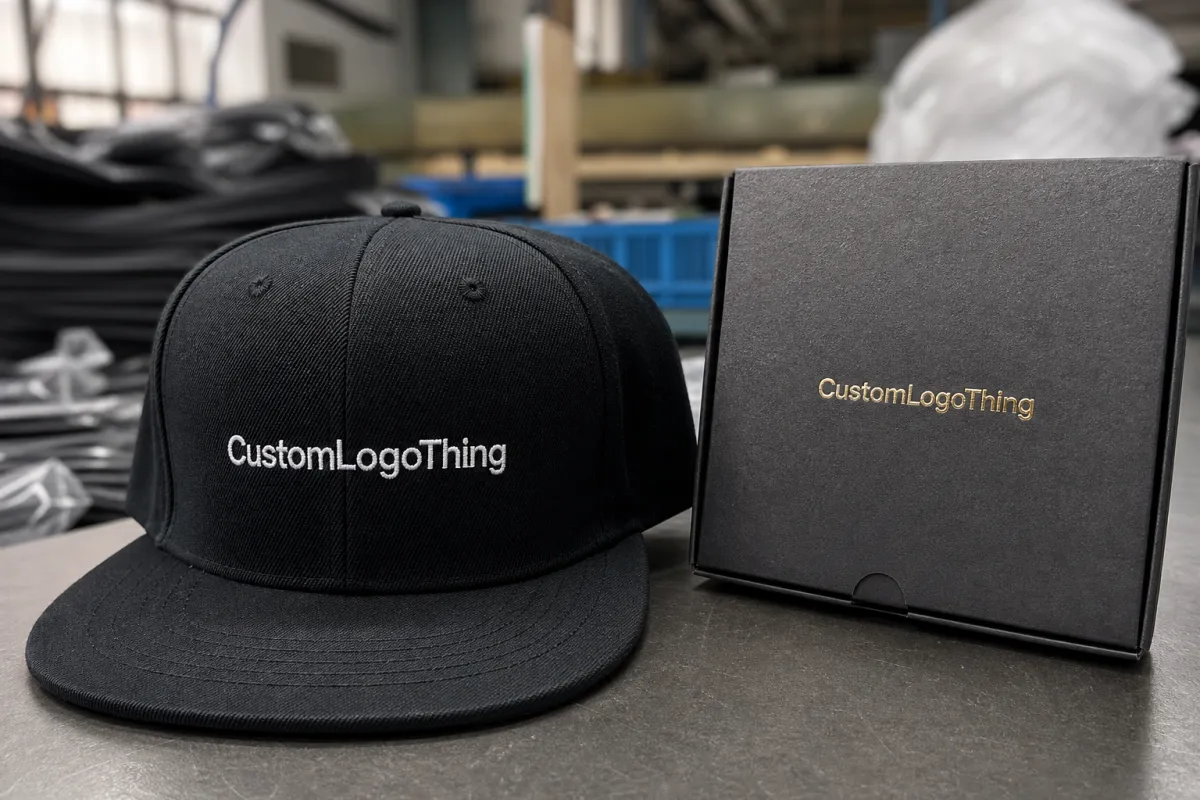
The biggest price differences usually come from construction, fabric, and decoration. “Snapback” itself is not the expensive part. A structured 6-panel cap with standard embroidery and a plastic snap closure sits in a very different range from a 5-panel cap with a woven patch, contrast stitching, a branded inner tape, and custom labeling. Buyers sometimes treat those as small details because they all look like caps on a screen. In production, they are separate operations with separate setup costs.
Use case changes the quote too. A retail launch needs cleaner finishing, more consistent color, and better packing. Event merch can often tolerate simpler fabric and fewer finish upgrades. Teamwear may prioritize durability and repeatability over premium hand feel. Resale sits somewhere else again: the buyer usually wants a sharper silhouette and a more controlled look because margin depends on how the cap reads in photos and in hand.
Artwork quality has more influence than most first-time buyers expect. If the logo file is low resolution, cropped, or missing clear placement notes, the factory has to make assumptions about stitch path, patch size, and edge treatment. Assumptions are expensive. A good request includes the art file, color targets, cap color, quantity, packing needs, and delivery deadline. Without those basics, the quote may look complete while still being too loose to use.
A useful way to think about the request is this: the quote should let you compare versions before you spend money on samples. Flat embroidery versus 3D puff. Cotton twill versus a wool blend. Standard packing versus retail-ready polybagging and insert cards. If the request does not expose those choices, it is not helping you make a buying decision.
- Use case: retail, event, team, or resale.
- Build: 5-panel or 6-panel, structured or softer front.
- Decoration: embroidery, patch, print, or mixed finishing.
- Deadline: sample date, bulk date, and ship-to country.
Pick the right snapback build before you ask for samples
The standard snapback formula is familiar: flat brim, structured crown, plastic snap closure, and a fit that adjusts across roughly 55-60 cm in most adult styles. That formula still leaves a lot of room for variation. A 5-panel front gives a wide, uninterrupted face for logos and usually reads more streetwear. A 6-panel build can feel more balanced on the head and is often easier to pair with traditional branding layouts, especially if the logo needs seam-aware placement.
Crown height changes the personality of the cap more than the mockup suggests. A taller crown gives the front panel more vertical space and tends to feel more fashion-forward. A lower crown sits closer to the head and often wears better for everyday merch. Brim shape matters too. A flat brim keeps the classic snapback profile. A slightly pre-curved brim softens the silhouette and can make the cap feel more casual without losing the adjustable closure that buyers expect.
Material choice should follow the price tier and the expected wear pattern. Cotton twill remains common because it stitches well, feels familiar, and keeps the structure easy to control. Poly-cotton often lands as the middle ground when the buyer wants a cleaner price without giving up too much body. Wool blend fabric adds weight and often gives the cap a more premium read. Acrylic can hold bold color well and suit seasonal palettes, though it is not always the first choice for brands chasing a softer, more natural hand.
| Build option | Typical feel | Best use | Cost pressure |
|---|---|---|---|
| Cotton twill | Clean, familiar, easy to wear | Promotions, retail basics, teamwear | Lowest to moderate |
| Poly-cotton | Slightly lighter, practical | Bulk merch, repeat orders | Low |
| Wool blend | Heavier, more premium | Streetwear, higher retail positioning | Moderate to higher |
| Acrylic | Bright color hold, structured | Bold brand colors, seasonal drops | Moderate |
Extras should wait until the base build is settled. Inner tape, custom labels, underbrim print, contrast stitching, and special closures all add cost and review time. A buyer who asks for every upgrade before deciding between a 5-panel and 6-panel frame is creating avoidable delays. It is better to lock the structure, then price the finishing layers on top of it.
Packaging choices also belong in the early conversation. A cap that ships loose in bulk is not the same order as a cap that needs individual polybags, size stickers, barcodes, or retail cartons. If the order has a sustainability requirement, keep the language specific. FSC chain-of-custody matters for paper components and inserts; see FSC for the basic standard.
Decoration specs that affect fit, finish, and approval
Decoration is where buyers usually think in logos and factories think in operations. That difference matters. Flat embroidery is often the cleanest value choice and usually handles most logos well. 3D puff gives the front a stronger visual lift, but it adds setup and can be less forgiving with fine detail. Woven patches work well when the design has detail that thread would simplify too much. Leather patches push the cap toward a premium retail look. Printed patches can handle gradients and tiny type better than embroidery. Direct print has a place, but only when the artwork and fabric actually support it.
Logo size affects the final cap more than a mockup usually shows. A front mark that looks balanced on a flat screen can become cramped once it sits on a curved crown with seam lines and stiffness behind it. Stitch density, patch border width, backing material, and placement from the brim all shape the result. Dense embroidery can also stiffen the front panel, which changes how the cap sits. That is why approval should focus on dimensions and finish, not just on whether the logo is visible.
Before sampling starts, the buyer should settle a few points in writing:
- Artwork format: use vector files where possible; screenshots create avoidable errors.
- Color target: specify Pantone references if repeat color accuracy matters.
- Placement: front only, side logo, back embroidery, or multiple locations.
- Decoration method: choose one primary method before asking for alternatives.
- Logo scale: give a maximum width or height rather than “make it pop.”
A strong Snapback Caps Factory Quote request shows the decoration method and the finish target, not just the logo name. It should also make clear whether the cap needs a raised effect, a matte look, a patch border, or extra branding inside the sweatband. Those details affect labor time, machine setup, and approval risk. Leaving them out forces the factory to estimate high or low, and neither result helps the buyer.
Quality control starts here, not at the end. A useful sample review checks stitch count, edge cleanliness, thread tension, patch alignment, and whether the front panel still holds the intended shape. If there is a second location, check the spacing against the main logo. Small placement errors are easier to catch on a sample than on a bulk run.
If the order will ship in cartons and needs to survive transit, think about crush risk as well. Caps are not fragile in the glassware sense, but a crowded carton can flatten a crown, mark a brim, or shift inserts out of place. The International Safe Transit Association publishes testing language that helps buyers ask better questions about packing strength without turning the order into a lab project.
Pricing, MOQ, and unit cost ranges buyers should expect
Quote accuracy depends on quantity, decoration method, fabric, and packing level. A blank cap price and a retail-ready cap price are not close cousins. Add custom patches, custom labels, special fabric, and individual polybagging, and the unit cost rises quickly. That is normal. The factory is not padding the number; it is pricing setup, handling, and the risk of rework.
For a standard custom snapback, MOQ often begins around 100 to 300 pieces if the build is simple and the decoration is straightforward. Once the order includes custom patches, difficult color matching, or a fully custom fabric run, 300 to 500 pieces is more realistic. Some factories can go lower, but the unit price usually climbs because setup costs have fewer pieces to absorb them. Low MOQ is not free. It just moves the cost into the per-unit line.
These working ranges are useful for planning, not for promises:
- Flat embroidery snapback: about $2.40-$4.20 per unit at 300-500 pieces.
- 3D puff embroidery: about $2.80-$5.00 per unit at similar volume.
- Patch decoration: about $3.20-$6.50 per unit depending on patch type and application.
- Premium build: about $4.00-$7.50 per unit when custom fabric, labels, and packing are included.
Those figures move. Heavier thread coverage, harder-to-match colors, multiple branding positions, and custom pack-out can push pricing higher. Larger runs usually reduce unit cost because sampling, setup, and inspection are spread across more pieces. That cost logic is simple, but it is easy to forget when the order is small and the deadline is loud.
A quote only helps if it reflects the exact cap that will be approved, packed, and shipped.
Ask the factory to separate the price into sample fee, any tooling or plate cost, unit price by quantity tier, packaging, and shipping terms. If the response is only one number, the buyer does not yet have a real quote. The number may be useful as a rough anchor, but it is not enough for budgeting.
Tiered pricing matters because it shows where the real savings begin. If the request only asks for 500 pieces, the buyer may miss the difference between 300, 1,000, and 3,000 pieces. A better snapback caps factory quote request asks for the ladder up front. That is how buyers see the breakpoints instead of guessing at them later.
Production process and timeline from brief to shipment
The production path is straightforward if the brief is complete: inquiry review, spec confirmation, artwork check, sample development, approval, bulk production, inspection, and shipment. Miss a detail early and the whole sequence slows down. A loose logo file, unclear placement, or an undecided fabric choice can add days before the sample even starts.
Sampling usually moves faster than bulk production. For a simple cap, a sample may be ready in about 7 to 12 business days once the spec is confirmed. Bulk production often takes 12 to 25 business days, depending on quantity, decoration complexity, and how busy the factory is. Revisions stretch that window. If the buyer wants changes after the sample, those changes can add another round of confirmation and a few more days to the schedule.
Do not assume the sample clock and the bulk clock behave the same way. Samples prove the construction. Bulk repeats the approved version at scale. That is where details that looked harmless on a screen become practical issues: thread tension, panel symmetry, color consistency, and carton packing density. If the sample already misses the mark, bulk only magnifies the problem.
Seasonal orders need more buffer than most people plan for. A campaign launch, trade show, sports event, or retail drop can absorb delay very badly. The deadline should be stated in the first message, not after the quote arrives. If the factory knows the target date early, it can plan fabric reservation, decoration time, and ship-out timing more honestly.
Inspection should be part of the conversation too. Buyers usually care about cap dimensions, logo placement, thread consistency, and packing count, even if they do not say it that way. If the order is large enough, request pre-shipment photos or a third-party inspection window. That is especially useful when the order includes multiple colorways or more than one decoration method, because the risk of small variation rises with complexity.
Build the timeline backward from shipment, not from the quote date. That gives room for review, approval, and one round of correction. A snapback caps factory quote request that ignores the calendar often turns into air freight, and air freight tends to erase the margin the buyer was trying to protect.
One more practical point: packing materials are part of the schedule. If the order needs custom cartons, branded inserts, or special labels, those items can create their own lead time. They are small in size and large in consequence.
What reduces risk on repeat snapback orders
Repeat orders live or die on consistency. The buyer is not asking for a “similar” cap on the second run. They want the same crown shape, the same stitch density, the same color, and the same placement as the first approved order. A good sample is useful. A repeatable production record is better.
That is why the approval record matters. The factory should keep the approved spec, artwork notes, decoration method, and packing method on file. If those details are not preserved, the next run starts from memory, and memory is a poor production system. Even small drift can matter: a slightly taller crown, a different thread sheen, or a patch border that grows by a few millimeters can make a repeat order look off.
Stable communication also lowers cost. Buyers should ask for written spec confirmation, timeline checkpoints, and a clear point of contact for the order status. Too many handoffs create errors. Errors create rework. Rework is where budget leaks quietly, especially on orders with several colorways or branded inner details.
Factories that handle repeat work well usually do a few boring things consistently. They confirm stitch counts, inspect logo position against a template, check carton counts before release, and flag any fabric mismatch before bulk continues. None of that is glamorous. All of it matters. The quiet checks are usually the reason a second order looks like the first one.
If the order is meant to recur through the year, keep the spec stable. Avoid changing the closure, changing the brim insert, or swapping fabric just because a newer version looks slightly better in a mockup. Small changes are often expensive because they force a new sample and a fresh approval path. Brands with seasonal drops can still vary colors, but the core build should stay fixed if the goal is predictable reorders.
That is the practical value of a disciplined quote request. A good request does not just get a price. It creates a baseline the factory can repeat.
Next steps to send a clean quote request and move fast
If you want a quote that is useful, send the complete request in one message. Include the cap build, logo file, color references, quantity, decoration method, packing needs, and ship-to destination. Buyers who drip those details out over several emails usually spend more time clarifying than quoting. The factory cannot price a moving target efficiently.
Before you send the request, check the following:
- Confirm the cap build: 5-panel or 6-panel, flat brim, crown height, and closure style.
- Attach the logo file in a workable format, ideally vector.
- State the decoration method and logo placement.
- Give quantity by tier so the factory can quote volume breaks.
- Include packing needs, label requirements, and delivery deadline.
If you are still undecided on a few points, say that directly and ask for the most efficient option. That is faster than pretending the spec is fixed when it is not. It also prevents re-quoting later, which is where buyers lose time without noticing it at first. The cost of ambiguity usually shows up after the sample round, not before.
When the order is ready, send the snapback caps factory quote request with clear artwork and a real deadline, then compare the result against your budget and production window. If the brief still needs cleanup, use the Contact Us page to send the file set and the quantity in one pass. Clean brief first. Quote second. Sample third. That sequence saves the most time because it keeps the decisions in the right order.
What details do I need for a snapback caps factory quote request?
Send quantity, logo artwork, cap color, decoration method, packing needs, and target delivery date. Add Pantone references if color matching matters, and include the sample format you want. The fewer guesses the factory makes, the more usable the quote becomes.
What is a normal MOQ for custom snapback caps?
MOQ depends on the fabric, decoration method, and whether the cap uses standard or custom components. Simple embroidery orders can often start lower than patch-heavy or fully custom builds. Ask for tiered pricing so you can see where the unit cost improves.
How long does sample approval and bulk production usually take?
A simple sample may be ready in about 7 to 12 business days after confirmation. Bulk production often takes 12 to 25 business days, depending on quantity and complexity. Revisions and special packing usually add time.
Which decoration method gives the best value for snapback caps?
Flat embroidery often gives the best balance of cost, durability, and clean branding. 3D puff creates more visual impact, but it is not always the cheapest route. Patches can look premium, but they add process steps and usually raise cost.
Can I mix colors or styles in one snapback order?
Yes, but mixed colorways or mixed decoration can affect MOQ and pricing. The more variables you add, the more setup time and cost control matter. If you need variety, ask for the most efficient mix before you lock the order.


