Snapback Caps Factory Quote Guide for Sports Teams
If you are comparing suppliers for a team cap program, the Snapback Caps Factory Quote checklist for sports team orders matters more than the headline price. The cheapest quote is rarely the cleanest one. What usually gets expensive is not the cap body itself, but the small items that were never spelled out: artwork setup, sample revisions, packing, roster sorting, or freight assumptions that were too vague to survive contact with production.
A useful quote should let you compare suppliers on the same spec sheet. Not “similar enough.” The same crown shape, the same visor, the same decoration method, the same quantity, the same packing, the same delivery point. Once those variables are aligned, the real differences show up fast. One factory may be cheaper because it is quoting a simpler build. Another may be more expensive because it is including proofing, carton labels, and a pre-production sample rather than hiding those costs elsewhere.
What a quote should prove
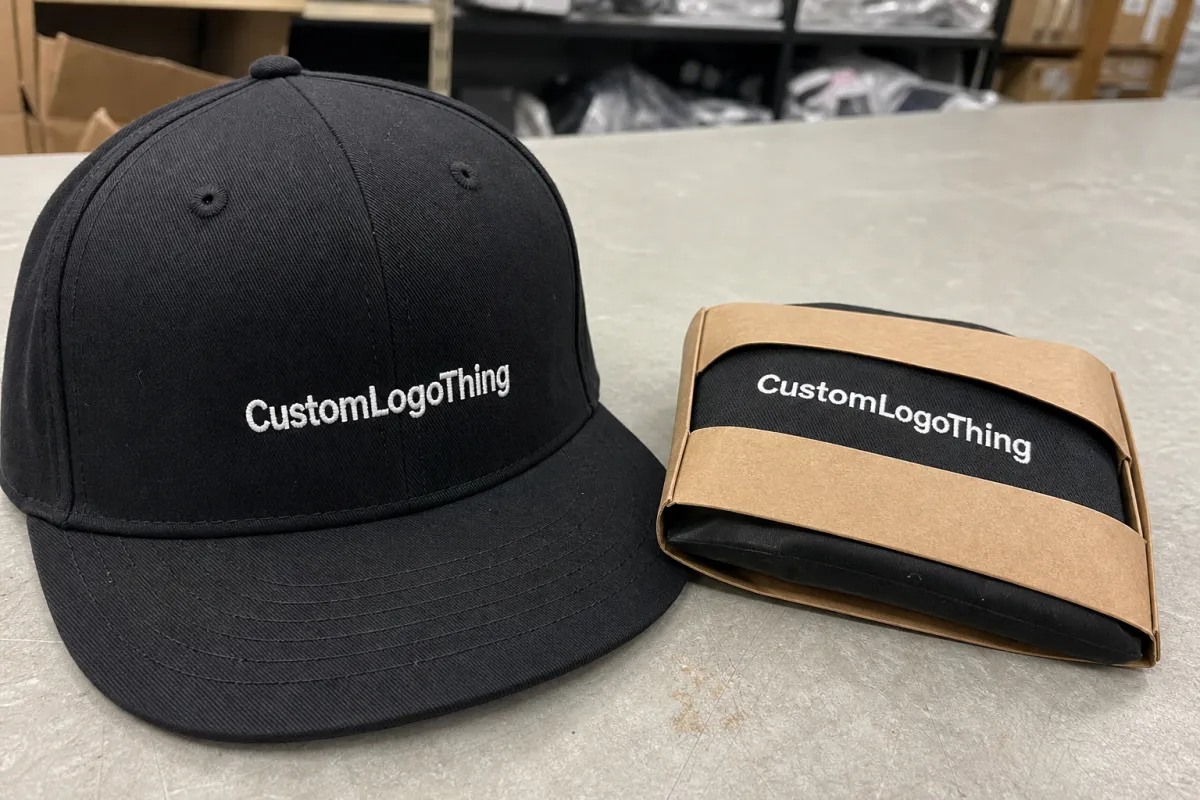
A good cap quote does not try to impress with a low number and a vague promise. It proves that the factory understood the order. That means the quote should identify the cap build, the decoration method, the packing method, the sample policy, and the assumptions around delivery. If any of those are missing, the number on the page is only a starting point.
This is where the snapback Caps Factory Quote checklist for sports team orders earns its keep. Team buyers are not usually shopping for a generic promotional hat. They need a cap that looks consistent across a roster, photographs well under bright light, and survives repeated wear. That requires more than “snapback cap, embroidered logo.” The devil is in the build.
The most common quoting mistake is comparing two suppliers that are not quoting the same product. A structured six-panel cap with a flat visor is a different object from a soft-front five-panel with a pre-curved brim. A matte snap closure is not the same as a color-matched one. Even the sweatband can shift cost and comfort. If a quote leaves those details open, the factory has room to make assumptions that may not match the buyer’s expectations.
Packaging creates its own problems. Bulk-packed caps in master cartons are one thing. Individually polybagged caps with size stickers, player sorting, or retail-style inserts are another. If the team is distributing caps across multiple coaches, camps, or school locations, the packing line matters as much as the sewing line. A quote that ignores that part is incomplete.
A clean quote is a production brief in disguise.
That is the practical test. Can a buyer look at two quotes and tell whether the factories are pricing the same cap, the same decoration, and the same packing standard? If not, the lower price may only look lower because it excludes pieces the buyer will still have to pay for later.
Choose the right snapback build for team wear
Sports teams usually want two things that do not always sit comfortably together: a sharp, uniform look and a cap people actually wear all day. The build decides how well those goals hold up. A structured cap keeps its profile, gives embroidery a firm base, and usually looks better in group photos. A softer build can feel more casual and less rigid, but it may not hold a front logo as cleanly.
Panel count matters. A six-panel snapback is the familiar athletic default. It gives enough surface area for front embroidery and keeps the cap balanced. A five-panel version can create a cleaner, flatter front for larger graphics, but it changes the silhouette. That may be exactly what a brand wants, or it may feel too fashion-forward for a school or club program. The quote should identify the panel structure clearly, because “snapback” alone tells you very little.
The visor is another decision that changes both appearance and function. Flat visors carry the classic snapback look. Pre-curved visors feel a little more ready-to-wear for coaches, staff, and older athletes who do not want a rigid brim. Neither is better in the abstract. The real question is whether the cap is meant for sideline use, fan merchandise, or a mixed team-and-retail program.
Fabric choice is equally practical. Polyester twill is common because it keeps color consistency and handles repeat production well. Cotton blends can feel less synthetic, but they may show wear faster in heavy-use settings. If the order needs a moisture-wicking sweatband or a softer internal finish, that should be stated before quoting. Small comfort upgrades often cost only a little on paper, but they help a cap stay in circulation rather than being tossed after one season.
You also need the size plan in writing. Adjustable snapbacks cover a wide adult range, but youth programs sometimes need a smaller internal profile or a different closure range. If the order is for both players and staff, say so. A factory can quote a better fit and avoid the common mistake of building everything around the average head size that nobody on the roster actually has.
Decoration specs that change the look and the price
Decoration is where cap orders become fragile. A logo can look excellent in a PDF and still be a poor candidate for stitching if the lines are too fine or the letters are too close together. Flat embroidery is the safest route for clean lettering and straightforward crests. It is usually the easiest to quote, easiest to sample, and easiest to repeat across a large run.
3D puff embroidery creates more impact, but it asks more of the artwork. Letters need breathing room, lines need thickness, and the design must tolerate extra height without collapsing into itself. That makes puff a strong choice for bold initials, mascots, or short team marks. It is a weaker choice for tiny sponsor text or intricate crests. If the logo is not built for puff, the quote should say so plainly rather than pretending the issue will resolve itself in production.
Patches open up different options. Woven patches handle fine detail better than dense stitching. Felt patches bring a more traditional sports feel. PVC badges give a raised, durable finish that works well for modern graphics and hard-edged logos. The factory should price each method separately because the tooling, setup, and labor are not interchangeable. Even when the finished cap looks similar from a distance, the production path underneath can be completely different.
Printing is useful for under-brim art, internal labels, or secondary sponsor marks. It should not be treated as a generic add-on. Print position, ink durability, and placement tolerance all matter. A slightly off-center under-brim print is hard to justify if the rest of the order is carefully constructed. For that reason, printed elements should be approved against a proof that shows placement, scale, and color reference, not just a thumbnail image.
The quote should also capture practical production details: Pantone references, stitch density, patch size, logo position, and whether the side or back of the cap carries additional branding. Fine text is especially sensitive. A factory may need to simplify tiny lettering, remove a thin outline, or reduce thread colors to keep the art sewable. That is not a failure. It is the reality of turning a screen design into a stitched object.
If the team logo is still being redrawn from a low-resolution file, the buyer should expect added time and possibly added cost. Vector art saves everyone trouble. It does not eliminate the need for proofing, but it reduces the chance that the factory is guessing at curves, corners, or color boundaries.
For team orders with player names or numbers, the art process gets more complicated. Variable data affects setup, proofing, and sorting. If personalization is part of the order, it should be priced as personalization, not buried in a generic cap quote.
Pricing, MOQ, and unit cost benchmarks
Cap pricing is a stack of small decisions, not a single number. Body construction, decoration method, logo size, sample requirements, packing, and quantity all move the final price. On a larger run, a small difference per unit can matter more than a one-time setup fee. On a smaller run, the opposite is often true. A $50 or $100 art charge can weigh more than the per-piece savings.
As a rough benchmark, blank snapbacks can sit in the low single digits ex-works, while decorated team caps often fall somewhere in the mid-single digits before freight. More involved builds, especially those with patch tooling, multiple colors, special closures, or individual personalization, can move higher. Those are broad ranges, not promises. The real quote depends on region, material choice, decoration complexity, and the factory’s own production structure.
MOQ is where buyers often lose time. Some factories set the minimum by colorway, others by artwork version, and others by total order volume. For a simple embroidered cap, MOQ may sit around 100 to 300 pieces per design, but complex patch programs or mixed personalization can push that higher. A useful quote should separate the minimum for the cap body, the decoration method, and each colorway. If one supplier says “500 minimum” and another says “200 minimum,” they may still be talking about different things.
| Option | Typical use | Common quote impact | Buyer watch-out |
|---|---|---|---|
| Flat embroidery | Simple logos, team names, short phrases | Usually the lowest setup and labor burden | Thin lines and tiny text may need simplification |
| 3D puff embroidery | Bold initials, mascot marks, strong front logos | Adds stitch time and more complex setup | Needs thicker artwork and wider spacing |
| Woven or felt patch | Detailed crests, vintage sports looks | Patch tooling or setup may add a one-time charge | Ask if the tooling can be reused for reorders |
| PVC badge | Raised modern logos with a durable finish | May add mold or tooling cost | Confirm color count, edge detail, and lead time |
| Printed element | Under-brim art, labels, secondary branding | Often a smaller add-on, but not always | Check ink durability and placement tolerance |
One-time charges deserve their own lines. Digitizing, art cleanup, sample revisions, mold fees, and carton labels can distort a quote if they are hidden inside the unit price. A buyer comparing two suppliers should calculate the landed cost, not just the headline unit cost. On a 300-piece run, a difference of $0.25 per cap is meaningful. On a 5,000-piece run, it can become substantial.
Packing can change cost in quiet ways. A bulk carton order may be efficient for production, but if the caps need to be sorted by player, school, or event location, the factory may need extra labor for labeling and count verification. If the order includes custom inserts or branded boxes, ask whether the paper components are FSC-certified and whether the cartons are sized to protect the crown during normal transit. If the shipment is moving through a distributor or fulfillment center before it reaches the team, that protection matters more than most buyers expect.
For buyers who care about transport resilience, packing discussions often overlap with ISTA-style transit assumptions. The question is not whether a box can be sealed. It is whether the box can survive ordinary handling without crushing the shape of the cap inside it.
Production steps and approval milestones
A workable timeline starts before sewing begins. The usual sequence is artwork submission, spec review, quote confirmation, digital proof, sample or pre-production approval, bulk production, inspection, packing, and dispatch. If a supplier skips one of those stages, the process may look faster on paper, but the risk is transferred to the buyer.
For a straightforward embroidered run, production after proof approval often lands around 12 to 15 business days. Larger quantities, patch-heavy builds, or orders with mixed personalization can take longer. That window does not include shipping. Freight, customs, and domestic distribution can add several more days or several weeks, depending on the lane. A realistic schedule separates factory time from transit time.
Sample approval is where many orders either stabilize or drift. If the buyer changes the logo after the proof is approved, the schedule usually resets. That can be frustrating, but it is normal. A cap factory can only build to the file it has in hand. A team manager can only hold the deadline if the proof, roster, Pantone reference, and packing instructions are locked before bulk work starts.
Roster files deserve special care. If the order includes player names, staff titles, or number-based sorting, the list should be clean before production. Even small spelling mistakes become expensive once the caps are already sewn. It is better to slow down the data check than to speed past it and discover a carton of misnamed caps on arrival day.
Packaging instructions should be part of the timeline, not a last-minute note. If caps need to be grouped by size, role, or event location, the carton map should be confirmed before bulk production. Label placement, outer carton counts, and any barcode system should be written into the order confirmation. A factory that understands the packing logic can usually reduce the amount of back-and-forth later.
What sets a reliable cap supplier apart
The best supplier is not the one with the most polished sales language. It is the one that can quote line by line, explain what is included, and point out where the risk sits. Team buyers often need to satisfy more than one decision-maker. A coach cares about the logo. An administrator cares about the budget. Someone else cares about the deadline. A useful supplier can speak to all three without changing the spec midstream.
Quality control should be visible, not implied. Ask whether the supplier checks the first production pieces for stitch placement, color consistency, and closure alignment. Ask whether there is a photo proof before bulk production starts and whether carton counts are verified before shipping. If the answer is vague, that is a signal. Small alignment errors are easy to miss on a screen and obvious when twenty caps are lined up together.
There is also a difference between a supplier that promises custom work and one that has a repeatable process for it. A factory should be able to say which details are standard, which are optional, and which are likely to add lead time. That matters for sports programs that reorder the same cap every season. Once the approved build is on file, the next order should not have to start from scratch.
Factory-direct quoting helps because it reduces interpretation gaps between sales, sampling, and production. If the cap body, decoration, and packing flow are all understood in one place, the order is easier to manage and the re-order is easier to repeat. That matters more than most buyers think, especially when a program scales from a one-time team run to a recurring merchandise item.
Internal references can still be helpful. A supplier’s FAQ can answer process questions, and Wholesale Programs may be useful if the same cap is likely to be ordered across multiple seasons or across several teams.
What to send before you request a quote
The clearest quote requests are short but precise. The factory should receive the cap style, quantity, color, logo file, decoration method, placement, packing needs, delivery location, and target in-hands date. Leave one of those out and the supplier has to guess, which usually means another round of questions before the quote can be trusted.
Here is the smallest useful brief for a snapback caps factory quote checklist for sports team orders:
- Cap build: 6-panel or 5-panel, structured or unstructured, flat or pre-curved visor.
- Quantity: total pieces plus the split by colorway, roster group, or size.
- Artwork: vector file, Pantone references, and a note on any fine text.
- Decoration: embroidery, patch, PVC badge, print, or a mix of methods.
- Packing: bulk pack, polybag, hang tag, carton label, or player sorting.
- Timing: proof deadline, sample approval deadline, and final delivery date.
Vector art is still the safest starting point. If the team logo uses specific colors, give Pantone numbers instead of just “red” or “navy.” That sounds minor until the proof arrives and the shade is not what the team expected. If names or numbers will be added later, say so now. Variable data changes the workflow and may change the MOQ, Lead Time, or carton sorting plan.
A simple spreadsheet is often enough to keep the order organized. One row per colorway and one column each for decoration, packing, and notes usually does the job. The point is not to build a perfect system. The point is to make sure the factory and the buyer are reading the same instructions.
How to finalize the order without slowing it down
Once the quotes come in, compare them line by line. Check whether the cap body is the same, whether the decoration method is identical, whether sample and digitizing costs are included, and whether freight or packaging was treated as a separate charge. If the quotes differ in only one place, that is a fair comparison. If they differ everywhere, the buyer needs to re-spec the order before choosing a supplier.
The cleanest approval chain is simple: confirm the spec, compare itemized quotes, approve the proof, verify the sample, then release the production order with the final roster and shipping details. That sequence sounds ordinary because it is. Ordinary is what keeps team orders from sliding into avoidable delays.
The best corrections happen before bulk sewing starts. A small change in logo size, closure color, or carton labeling is easy at proof stage and expensive after production. That is why the quote checklist matters. It keeps build, decoration, packing, and delivery in the same frame long enough to spot the mismatch.
For repeat programs, the approved spec should be stored and reused. Reordering a cap should feel like pulling a file forward, not rebuilding the whole order from memory. That is where a disciplined quote process saves more than money. It saves time, and time is usually the tighter constraint on sports orders.
Frequently asked questions
What should be included in a snapback cap quote for a sports team order?
Quantity, cap style, color, logo file, decoration method, placement, packing, and delivery location should all be listed. Ask for sample charges, setup fees, carton details, and freight assumptions so the quote reflects the real landed cost. If digitizing, revisions, or personalization are involved, those should be stated separately.
How do I compare two snapback cap quotes fairly?
Compare the exact cap build, decoration method, and packing standard rather than only the unit price. Check whether one supplier is including sampling, artwork cleanup, or freight while the other is not. Make sure both quotes use the same quantity, logo placement, and colorway before judging the total.
What MOQ should I expect for custom snapback caps?
MOQ depends on the decoration method, cap structure, and whether the order is blank or decorated. A simple run may sit around 100 to 300 pieces per design, but patch-heavy or personalized orders can require more. Ask the factory to quote MOQ by colorway and by artwork version, because those are not always the same thing.
How long does a custom snapback cap order usually take?
After proof approval, straightforward orders often need about 12 to 15 business days for production, though larger or more complex runs can take longer. That does not include shipping time. Add extra time if the order needs a sample, artwork revisions, roster sorting, or multiple approval rounds.
Can player names or numbers be added to snapback caps?
Yes, if the decoration method and workflow support variable data. The factory needs a clean roster file and clear spelling rules. Personalization can change the MOQ, unit cost, and production timeline, so it should be priced and scheduled as part of the original quote.
The snapback caps factory quote checklist for sports team orders works because it keeps the order honest: same build, same decoration, same packing, same delivery assumptions. That is what makes a quote comparable, and what makes the production run less likely to drift once it starts.


