The custom Caps Factory Quote checklist is what keeps a $2.90 cap from quietly becoming a $4.80 landed cost after decoration, closure upgrades, packing, and freight are added back in. I have sat through enough quote reviews to know the pattern: two suppliers can look close on paper and still differ by 25% to 40% once the spec is normalized. That gap is rarely about pricing power alone. More often, it is about missing detail, and the factory filling in the blanks with its own assumptions. The same thing happens in branded packaging all the time. Vague requests create fake comparables, and then somebody spends three days untangling a mess that should have been caught in the first email.
Here is the part buyers learn the hard way. A clean custom Caps Factory Quote checklist does not just protect budget; it protects fit, consistency, and margin. It tells the factory whether you need a structured six-panel snapback or a relaxed dad hat, whether the logo should be flat embroidery or a patch, and whether the order is a promo run or a retail program. That is a small sentence with a big effect. It turns guessing into specification, which is exactly what good packaging design does for Custom Printed Boxes and package branding. Caps need that same discipline, maybe more than people expect.
Why a Custom Caps Factory Quote Checklist Saves Real Money
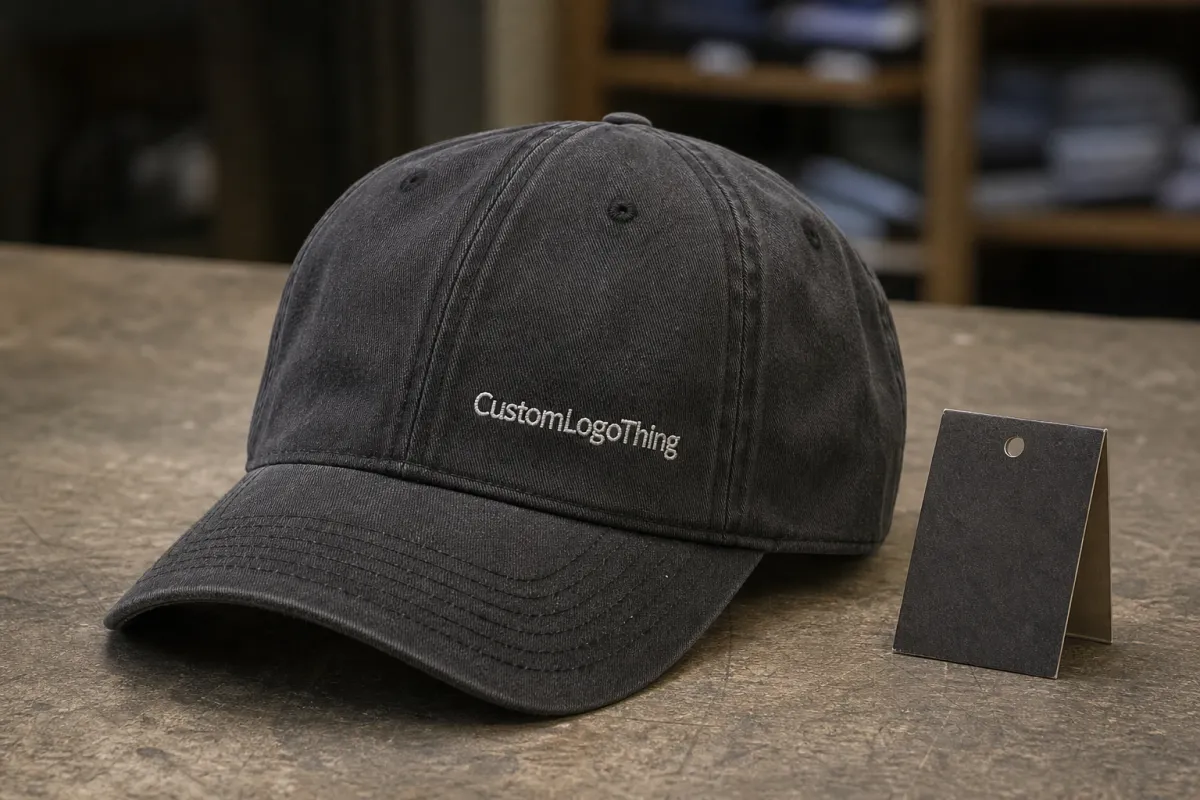
The first mistake buyers make is assuming every cap quote is pricing the same thing. It usually is not. One supplier may quote a structured 6-panel cotton twill cap with a pre-curved brim and embroidered logo. Another may price a softer unstructured dad hat with a lower crown, lighter fabric, and a different closure. On paper, both might say “black cap with logo,” but that is not a real comparison. The custom caps factory quote checklist exists to expose those hidden differences before they become cost surprises.
The price gap is often larger than buyers expect. A cap with tighter internal structure, a higher stitch count, and premium hardware can cost 25% to 40% more than a loosely specified promo version. If crown height, brim shape, panel count, and logo placement are not defined, each factory fills in the blanks using its own default build. One quote may be based on a $2.40 blank, another on a $3.10 blank, and the buyer compares only the headline number. That is how bad comparisons sneak in. The custom caps factory quote checklist keeps them out.
I once watched a buyer compare three “black dad hat” quotes that were all technically correct and commercially useless. One was garment-washed cotton, one was brushed twill, and one had a reinforced front panel that changed the whole feel of the cap. Same color name. Totally different product. That kind of mismatch is common enough that I almost trust the label less than the sample. A good checklist makes the supplier name the real build, not just the category.
Packaging teams will recognize the pattern immediately. In packaging design, a buyer who asks for “a box” gets a dozen different interpretations. Cap sourcing works the same way. A request for “black dad hats” could mean cotton twill, washed canvas, polyester blend, soft brim, reinforced front panel, plastic snap closure, or strap-back with a brass buckle. Every one of those choices changes material use, labor, and minimum order size, which is why the custom caps factory quote checklist has to start with the spec, not the budget.
There is another cost hidden in vague requests: time. Every missing detail creates a clarification round, and every clarification round adds friction. The factory may need to revise patterning, re-run digitizing, check a new color match, or recalculate packing. Buyers often blame “slow suppliers,” but the real delay comes from incomplete RFQs. A disciplined custom caps factory quote checklist gives the factory enough information to quote once, confirm once, and move forward. That cuts email chains, shortens proof cycles, and improves the odds that the final order matches the approved sample.
A quote only has value if every supplier is pricing the same cap.
The checklist earns its keep in the small details. A retailer launching a seasonal cap line may care about repeatability across a 3,000-unit run, while a promotion buyer may care more about hitting a target unit price under a hard deadline. The custom caps factory quote checklist lets both buyers ask the right questions without getting buried in technical noise. The same discipline that keeps custom printed boxes consistent across print runs also keeps cap orders aligned across factories. Standardize the request, and the pricing becomes much easier to trust.
For shipping and carton expectations, some teams also ask whether the supplier follows recognized transit-testing or fiber-sourcing practices. For reference, organizations such as ISTA publish test methods for distribution stress, and the FSC provides a recognized framework for responsibly sourced fiber claims. Those standards do not price a cap by themselves, but they do matter if the order includes retail-ready packaging or bundled product packaging. They also help separate a supplier that understands compliance from one that is just tossing around buzzwords.
One more point: the custom caps factory quote checklist is not only for large buyers. Smaller brands can get burned faster because they have less room for rework. A 500-unit order with a $0.60 error per unit is a real problem. A 5,000-unit order with the same mistake becomes painful fast. The checklist reduces that risk by forcing the supplier to answer in the same language the buyer will use at approval.
For programs that include hang tags, inserts, or presentation cartons, the buying process becomes closer to package branding than a simple apparel purchase. That is why some teams pair cap sourcing with our Custom Packaging Products options when the final customer experience matters. If the product leaves the factory in a branded mailer, a rigid carton, or a custom printed box, the cap quote needs to reflect that reality from the start.
Custom Caps Factory Quote Checklist: Product Details Buyers Must Send
The most useful custom caps factory quote checklist begins with the cap style itself. “Cap” is too broad to mean anything useful in procurement. A dad hat, a snapback, a trucker cap, a five-panel camp cap, a fitted baseball cap, and a performance cap all use different patterns, material weights, and finishing steps. A factory may quote one style quickly and struggle with another. If you want a clean number, name the style before you ask for a unit price. The custom caps factory quote checklist should make that decision non-negotiable.
After style, define the build. Structured or unstructured? Low-crown or mid-crown? Curved brim or flat brim? Adjustable or fitted? These details sound small, but they change the cost structure in ways buyers often miss. A structured front panel needs reinforcement. A curved brim may require different shaping. A fitted cap can increase size complexity, while an adjustable closure broadens the size range but adds hardware cost. The custom caps factory quote checklist should force every one of those choices into the RFQ, because ambiguity here is expensive.
Then specify closure and hardware. Plastic snap, metal buckle, Velcro, strap-back, or fitted sizing each affects both price and production timing. A plastic snap is generally lower cost and faster to source. A metal clasp or branded buckle can add setup and component lead time. A fitted cap may reduce closure complexity but tighten the fit tolerance. If a buyer leaves this out, the factory will quote a default, and that default is rarely the one the buyer had in mind. The custom caps factory quote checklist removes that guesswork.
Quantity needs the same discipline. Do not send a single total if the order has multiple colors, sizes, or artwork versions. A supplier cannot price a 1,200-unit program fairly if 400 units are black, 400 are navy, and 400 are forest green unless the split is clear. The same is true for logo versions. If one SKU uses a front logo and another uses a side mark, that changes decoration time and possibly the MOQ. The custom caps factory quote checklist should list every SKU separately so the factory can quote the real mix.
Use case matters more than many buyers expect. Retail caps need better consistency, cleaner finishing, and tighter color control. Promo caps can tolerate simpler construction if the goal is reach and volume. Team wear may demand durability, sweat resistance, and repeat ordering. Workwear may require a more forgiving fit and less fragile decoration. The custom caps factory quote checklist should state the use case in plain language so the factory can align the build to the job rather than overspecifying or underspecifying it.
If the cap will ship as part of a kit, say so. That one sentence changes the way the supplier thinks about folding, carton count, bagging, and presentation. A cap that is fine in a bulk polybag may not be acceptable in a retail-ready set alongside custom printed boxes or printed inserts. In that case, packaging design becomes part of the cap request. The custom caps factory quote checklist works best when it includes the whole delivery experience, not just the cap shell.
Color specification is another place where RFQs fall apart. “Black” is not enough if you care about dye lot, finish, or trim contrast. A buyer may want cap body, brim, stitching, and under-brim all matched to one color family, or may want a black crown with a white logo and tonal stitching. The factory needs those distinctions up front. A strong custom caps factory quote checklist names the exact cap color, panel color if relevant, thread color, and any contrast elements.
Here is the practical version of the checklist in list form:
- Style: dad hat, snapback, trucker, five-panel, fitted, or performance cap.
- Structure: structured or unstructured, with crown height and brim curve noted.
- Closure: snap, buckle, Velcro, strap-back, or fitted size range.
- Quantity: total units and split by color, size, and artwork version.
- Use case: retail, promo, event giveaway, team wear, or workwear.
- Packaging: bulk pack, polybag, hang tag, insert, or retail-ready carton.
The strongest custom caps factory quote checklist also includes a reference photo. Not because photos replace specs, but because they remove interpretation errors. A factory can read “dad hat” and still picture a different silhouette than the buyer had in mind. A photo with a short note like “match this crown height, bill curve, and wash effect” closes that gap fast. In sourcing, visual reference is not decoration; it is a risk-control tool.
If you are buying for a branded merchandise program, treat the cap like any other branded packaging asset. The same way product packaging needs a hierarchy of must-have specs and optional features, the custom caps factory quote checklist should separate non-negotiables from nice-to-haves. That distinction helps the factory quote accurately and helps you protect the budget if you need to trim cost later.
Materials, Construction, and Decoration Specs That Change the Quote
The most expensive surprise in a custom caps factory quote checklist is often not the fabric. It is the combination of fabric, construction, and decoration. A cotton twill cap priced against a polyester mesh-backed cap will rarely land at the same unit cost, and the differences grow once the cap moves from basic embroidery to patches, mixed media, or printed panels. The supplier is not being difficult; the build itself is different. The custom caps factory quote checklist should make those differences explicit.
Start with the fabric. Cotton twill is common because it is easy to sew, easy to embroider, and familiar to most buyers. Washed cotton can create a softer hand and a more casual look, but it may increase finishing variability. Polyester is useful for performance and moisture-wicking programs, while nylon and nylon blends can add a sharper, more technical appearance. Mesh-backed trucker styles reduce material cost in one area and add venting in another. The custom caps factory quote checklist should identify the fabric by type and weight where possible, not just by feel.
Fabric weight matters more than many buyers think. A 240 gsm cotton twill cap feels different from a 280 gsm version. The heavier option may hold structure better, but it can also change sewing effort and overall hand-feel. For performance styles, a lightweight fabric may reduce cost but also reduce the premium impression. In retail packaging, those details are the difference between a commodity cap and a display-ready item. The same logic applies to the custom caps factory quote checklist: specify the weight if you care about price stability and repeatability.
Construction details are equally important. Panel count, seam finish, lining, sweatband type, eyelets, and interior taping all affect labor. A 5-panel cap is not the same as a 6-panel cap. A taped interior finish can add time. A padded sweatband can raise material cost. Even the eyelet style can shift the quote if the supplier uses metal, embroidered, or self-fabric ventilation. The custom caps factory quote checklist should call out these features in plain language so the factory does not quietly substitute a simpler build.
Decoration is where quotes separate fastest. Embroidery is still the standard for many cap programs because it reads as durable and premium. But embroidery is not a single price point. A small one-color logo with 5,000 stitches is different from a dense full-front logo with 12,000 stitches and multiple thread colors. Patches, woven labels, applique, screen printing, heat transfer, and mixed-media decoration each create different labor and setup profiles. The custom caps factory quote checklist must ask for the exact decoration method and logo coverage.
If the art is embroidery, the factory may also need digitizing. That is a setup step, not just a production step. Digitizing fees can range from roughly $25 to $60 for a simple mark and higher for complex, layered art. A buyer who ignores that fee may think the quote is inflated. A buyer who includes it in the custom caps factory quote checklist can compare suppliers fairly. If the art is a patch, tooling or mold charges may enter the picture. If the decoration is printed, screens or transfers may need separate setup.
Artwork detail drives cost in less obvious ways too. A logo with thin lines, small text, or heavy color separation can force the factory to modify the decoration method. A design that looks fine on a screen may lose clarity at cap scale, especially on the curved front panel of a structured style. Ask for the vector file, intended logo size, placement area, and color count. If you are using embroidery, add stitch density expectations. The custom caps factory quote checklist becomes much more reliable when the artwork is production-ready.
Special finishes should never be an afterthought. Distressed treatments, garment washes, reflective elements, UV-resistant fabric, and moisture-wicking finishes can all raise the price and change the minimums. Some of these finishes also add risk because they affect consistency from batch to batch. A distressed cap might look intentional, but if the wash pattern varies too much, the order can drift away from the approved sample. The custom caps factory quote checklist should ask whether those finishes are standard, optional, or sample-dependent.
Buyers who source retail packaging already understand this logic. A custom printed box with a foil logo, a matte lamination, and a soft-touch coat is not just “a box.” It is a stack of production choices that affect cost, appearance, and timing. Cap sourcing works the same way. The more detailed the custom caps factory quote checklist, the more stable the final pricing becomes.
The safest way to structure the RFQ is to separate mandatory specs from flexible preferences:
- Mandatory: style, fabric, structure, closure, decoration method, artwork file, quantity.
- Flexible: thread shade family, packaging format, minor trim details, alternate closure hardware.
That split helps the factory know what it can substitute without changing the product identity. It also helps you see where a lower quote is real and where it is just a tradeoff. A disciplined custom caps factory quote checklist does not chase perfection. It locks the business-critical details first, then leaves room for the supplier to offer practical options.
If you want a simple rule, use this: the more visible the design detail, the more likely it should be written into the custom caps factory quote checklist. If the buyer cares enough to notice it in a sample, it should be in the quote request.
Custom Caps Factory Quote Checklist for Pricing, MOQ, and Unit Cost
Pricing only makes sense if it is broken apart. A useful custom caps factory quote checklist should ask for base cap cost, decoration cost, digitizing or tooling, sample charges, packaging, inland freight, export handling, and international shipping as separate lines. When all of those pieces are bundled into one number, you lose the ability to compare offers. Worse, you cannot see which supplier is actually giving you the better commercial structure. The custom caps factory quote checklist is a comparison tool, not a guess sheet.
MOQ is another number that gets misunderstood. Buyers often ask, “What is your minimum?” as if minimum order quantity were fixed. It is not. MOQ changes by style, fabric, decoration method, closure type, color count, and whether the order uses stock blanks or a fully custom pattern. A simple embroidered stock cap may accept a lower MOQ than a mixed-material cap with custom patches and branded packaging. The custom caps factory quote checklist should ask for MOQ on the exact spec, not on a generic cap.
A smart buyer also asks for tiered pricing. The difference between 100 units and 500 units can be dramatic, and the difference between 500 and 1,000 may be smaller than expected. That matters because the real business question is not “What is the cheapest quote?” It is “Where does the unit cost drop enough to justify the extra inventory?” The custom caps factory quote checklist should request price breaks at 100, 300, 500, and 1,000 units whenever possible.
Below is an example of how quote structures can vary. These are illustrative ranges, not universal pricing, because fabric market swings and labor conditions change by region and season. Even so, the pattern holds: the custom caps factory quote checklist needs to normalize every line before comparison.
| Quote Type | Example Spec | Typical MOQ | Estimated Unit Price | Lead Time | What Drives the Number |
|---|---|---|---|---|---|
| Stock blank with embroidery | 6-panel cotton twill, structured, curved brim, one-color front logo | 100-200 | $2.40-$3.80 | 10-18 business days | Simple construction, fewer setup steps, minimal decoration coverage |
| Semi-custom promo cap | Custom colorway, woven label, adjustable buckle, multi-color thread | 300-500 | $3.90-$5.60 | 15-25 business days | Color matching, label cost, extra trim, moderate decoration work |
| Fully custom retail cap | Heavy twill, patch, interior taping, custom sweatband, retail packaging | 500-1,000+ | $5.80-$9.50 | 20-35 business days | Patterning, tooling, higher QC, more labor, presentation packaging |
The most common mistake is comparing ex-factory pricing as if it were landed cost. A quote may look lower until freight, customs, carton upgrades, or sample fees are added. That is why the custom caps factory quote checklist should ask the supplier to show the exclusions in writing. If the lower quote excludes packaging upgrades or shipping, it may be more expensive in the end. Buyers who source branded packaging already know this lesson: the headline number is rarely the full number.
There is also a difference between setup cost and recurring cost. Embroidery digitizing, patch tooling, and sample development are one-time or low-frequency charges. Decoration and assembly are recurring costs. If you are planning a repeat program, that split matters a lot. A supplier with a slightly higher setup charge may offer a lower unit price on every reorder. The custom caps factory quote checklist should capture both first-order and reorder economics, not just the first invoice.
Ask for a landed-cost view if the supplier can provide it. Not every factory will quote freight and duty, but good partners can at least tell you what is excluded. A landed-cost view is especially useful for retail packaging and bundled merchandise because small errors in shipping assumptions can wipe out savings. A correct custom caps factory quote checklist helps you compare total spend, not just base production.
Another practical rule: do not let the quote hide decoration variables. Some suppliers will price embroidery by “logo” without stating stitch count or size. Others will quote a patch without clarifying whether the patch is woven, felt, PVC, or embroidered. The custom caps factory quote checklist should insist on those details because they determine whether the quote is truly fixed. If the artwork changes, the pricing may change too, and that is fair as long as it is transparent.
Here is the mental model I recommend. A fair quote contains three layers:
- Product layer: cap style, material, structure, closure, and size approach.
- Decoration layer: embroidery, patch, print, label, placement, and stitch or color complexity.
- Commercial layer: MOQ, sample cost, packaging, transit, and payment terms.
If one of those layers is missing, the custom caps factory quote checklist is incomplete. And if the supplier cannot explain a price difference in those three layers, the buyer should slow down before approving the order. A cheaper number is not useful if nobody can explain why it is cheaper.
For buyers who manage multiple merchandise categories, this approach will feel familiar. The same way custom printed boxes are assessed by board grade, print coverage, finish, and pack-out, caps need a structured comparison based on build and commercial terms. That discipline keeps package branding coherent across categories and protects margin where the product is less visible than the box.
Process, Timeline, and Lead Time: How the Quote Becomes an Order
A good custom caps factory quote checklist does more than collect numbers. It also maps the process from RFQ to delivery so you can spot schedule risk early. Most cap programs move through the same sequence: brief review, quote confirmation, artwork proof, sample or pre-production approval, bulk production, inspection, and shipping. If the buyer knows the sequence, the order feels manageable. If the buyer only knows the final ship date, every delay feels like a surprise. The custom caps factory quote checklist keeps the process visible.
Quote response time is not the same as production lead time. A supplier may answer in 24 hours but still need 15 to 25 business days to produce the caps after approval. That distinction matters because many buyers judge the factory by the speed of the first email. A polished quote that arrives fast is useful, but it is not a delivery promise. The custom caps factory quote checklist should ask for four timing points: quote turnaround, proof turnaround, production window, and transit time.
Where do schedules slip? Usually in the same five places: missing artwork, unclear color references, late sample approval, changed decoration after proofing, and spec changes after production begins. None of those delays are mysterious. They are the consequence of weak front-end documentation. A strong custom caps factory quote checklist reduces that risk because it makes the factory confirm the most important details before materials are ordered.
Here is a useful timing split for cap sourcing:
- RFQ to quote: 1-3 business days for standard styles, longer for complex custom builds.
- Proof approval: 1-4 business days, depending on artwork revisions.
- Sample or pre-production sample: 5-12 business days when the style is not stock.
- Bulk production: often 12-20 business days for simpler caps, 20-35 for more customized programs.
- Transit: varies by mode and destination, plus customs clearance if applicable.
The custom caps factory quote checklist should also ask whether the supplier can support rush orders. Rush is possible in some cases, but it is rarely free. A faster order may require a surcharge, simplified decoration, a stock blank, or less complex packaging. That is not a red flag. It is a commercial tradeoff. Buyers run into trouble only when they expect standard pricing on an expedited schedule. The checklist makes that tradeoff visible before the PO is issued.
One practical way to reduce risk is to separate the cap program into a simple and a complex path. A basic embroidered cap might move straight from proof to production if the art is straightforward and the blank is in stock. A fully custom patch cap with custom lining, woven labels, and presentation packaging may need a pre-production sample before bulk release. The custom caps factory quote checklist should help the buyer decide which path fits the program.
Below is a simple timeline comparison that buyers can use internally. It shows why a fully custom build usually needs more calendar time than a basic embroidered style.
| Step | Simple Embroidered Cap | Fully Custom Patch Cap | Typical Risk Point |
|---|---|---|---|
| Brief review | 1 day | 1-2 days | Missing artwork or unclear spec |
| Proofing | 1-2 days | 2-4 days | Logo size, placement, color changes |
| Sample approval | Not always required | Usually required | Stitch density, patch finish, fit |
| Production | 10-15 business days | 15-25 business days | Material availability and line capacity |
| Shipping | Mode dependent | Mode dependent | Carton count, customs, and transit damage |
If the caps are moving as part of a retail launch, that timeline must also fit into the broader merch plan. The schedule for product packaging, inserts, and custom printed boxes may be just as important as the cap run itself. A good custom caps factory quote checklist leaves room for those coordination points because a product launch is only as strong as its slowest component.
For shipping quality, it is worth asking how the supplier protects cartons and polybags in transit. A lower-priced cap can become a false economy if it arrives crushed, stained, or badly packed. That is where standards such as ISTA test methods become relevant. Not every cap order needs a formal lab test, but the logic behind transit testing still matters. If your program includes retail packaging, ask the factory how it protects shape, carton count, and carton compression. That information belongs in the custom caps factory quote checklist.
One more area to watch is approval discipline. A quote is not an order until the proof is signed off. A sample is not a green light until the buyer confirms fit, color, and decoration. If the buyer changes the logo after approval, the timeline changes. That is not a factory failure; it is a process issue. The custom caps factory quote checklist should define approval owners and deadlines so nobody loses a week waiting for the wrong person to answer.
In practice, the cleanest programs have one decision-maker for artwork, one for commercial approval, and one for schedule sign-off. That keeps the workflow from stalling in email limbo. The custom caps factory quote checklist works best when the buyer’s internal process is just as clear as the supplier’s process.
Why Choose Our Caps Factory for Repeat Programs
Repeat programs expose the real strength of a supplier. The first order can be made to look good. The second and third are harder. That is why the custom caps factory quote checklist should not stop at price; it should evaluate whether the factory can hold color, size, and decoration consistency across reorders. For brands that live on seasonal drops, team programs, or retail replenishment, repeatability is worth more than a one-time bargain.
The first thing to check is quality control. A reliable cap factory should be able to describe its checkpoints in practical language: fabric inspection, stitch verification, logo placement review, closure check, packing verification, and carton count confirmation. That is not marketing fluff. It is process control. A strong custom caps factory quote checklist should ask for those checkpoints because they reduce the chance of finding defects after the goods have already shipped.
Communication matters even more than promises. A factory that responds quickly, confirms changes clearly, and issues updated proofs without confusion is easier to work with than a supplier who claims perfection but leaves details vague. Repeat orders live or die on communication quality. If a buyer has to chase the supplier for every answer, the program will eventually slip. The custom caps factory quote checklist should measure responsiveness because slow clarification usually becomes slow delivery.
Capacity is another real differentiator. Some suppliers can handle one large order but struggle when multiple SKUs or seasonal surges hit at once. Others can manage a recurring program without changing the product standard. If your cap line needs replenishment across multiple colorways, ask how the factory handles schedule stacking, material reservation, and line balancing. The custom caps factory quote checklist should identify whether the supplier can support a repeat program without reinventing the spec on every reorder.
One-point accountability is especially useful. If artwork, sampling, production, packing, and shipping all sit inside a single workflow, there are fewer handoff errors. Every extra handoff increases the odds that a note gets missed or a dimension gets misread. Buyers in packaging already understand this. The fewer times a design file moves between teams, the fewer errors appear in the final custom printed boxes or retail packaging. The same logic applies to caps. The custom caps factory quote checklist should favor suppliers who can own the full process.
Repeat programs also benefit from archive discipline. Keep the approved artwork, stitch file, color references, and signed proof in one place. That way the next reorder starts from a known standard instead of a fresh interpretation. If the supplier maintains a consistent file library, even better. The custom caps factory quote checklist should ask whether the factory retains the previous spec and can recreate it without starting over. That saves time and lowers the risk of drift.
For brands building out broader merchandise systems, caps are often part of a larger package branding strategy. The cap may ride alongside boxes, labels, inserts, and shipping mailers. That is why some buyers prefer to coordinate with a supplier that understands both apparel and branded packaging. A cap vendor that can speak the language of product packaging is usually faster to align on presentation and unboxing goals. The custom caps factory quote checklist gives you a way to test that understanding early.
There is also value in asking for re-order continuity. Will the factory match the same fabric lot if possible? Can it maintain the same stitch count? Will it flag a closure substitution before production? Those details sound small until a reorder lands next to the original batch. The custom caps factory quote checklist should ask for continuity controls because customers notice subtle differences faster than suppliers do.
If you are building a premium line, ask how the supplier handles presentation. Some caps look fine in bulk and lose their edge once they are paired with retail packaging. Others become more valuable if they ship in a more deliberate format, such as a folded insert, tissue wrap, or branded carton. If that is part of your strategy, our Custom Packaging Products page can help you think through the supporting materials. The cap itself matters, but the full package branding story matters too.
Why choose our caps factory for repeat programs? Because repeat orders reward factories that are disciplined, not flashy. The custom caps factory quote checklist surfaces that discipline. It tells you whether the supplier can quote accurately, hold standards, and keep the reorder from becoming a new project every time.
Next Steps: Build a Better RFQ Before You Request Quotes
The fastest way to improve purchasing results is to build the RFQ before you ask for the quote. That sounds simple, but it is where most buyers lose money. A complete custom caps factory quote checklist starts with the spec sheet, not the email subject line. Before you send anything, gather cap style, quantity by color, artwork file, preferred decoration method, target ship date, packaging need, and any special finish. Then send that package as one request, not six scattered messages.
Next, normalize every quote to the same spec. If one supplier quoted a structured cap and another quoted an unstructured one, the numbers are not directly comparable. If one included packaging and another excluded it, the numbers are not directly comparable. If one priced embroidered logos and another priced patches, the numbers are not directly comparable. The custom caps factory quote checklist is most useful when it becomes a comparison sheet that forces apples-to-apples review.
Ask every supplier for one reference sample, photo set, or prior production image if available. That does not replace the quote; it helps you judge whether the finish, fit, and decoration quality are in the range you need. In apparel sourcing, visual evidence matters because cap construction can hide shortcuts that only show up in the hand. The custom caps factory quote checklist should always include a quality reference request.
Be explicit about exclusions. Freight, duty, sample fees, packaging upgrades, and rush charges should not be discovered after approval. Put them on the table early. If the supplier cannot state them, ask for them in writing. The custom caps factory quote checklist works because it removes hidden costs before they affect margin.
Use a simple internal comparison form. Three columns are enough in many cases: supplier, normalized spec, and landed cost. Add lead time if you are managing a deadline. Add MOQ if inventory exposure matters. Add notes if one supplier offers better sampling or packaging support. The custom caps factory quote checklist becomes much more powerful once the buyer stops reading quotes as narratives and starts reading them as data.
If you manage merchandise across categories, the same method will improve buying elsewhere. Custom printed boxes, inserts, mailers, and caps all benefit from a structured RFQ because all of them hide setup, material, and finishing costs inside the visible unit price. A disciplined custom caps factory quote checklist protects the cap order while strengthening your broader branded packaging workflow.
One final practical tip: send the factory one sentence that defines success. For example, “We need a 500-unit black dad hat run with consistent fit, one-color embroidery, and retail-ready packaging by the stated ship date.” That sentence gives the supplier a commercial target. Then the custom caps factory quote checklist does the rest. It turns a loose request into a quote the buyer can trust, compare, and approve without second-guessing every line.
Actionable takeaway: before you request quotes, build one RFQ that locks style, structure, closure, decoration, artwork, quantity splits, packaging, and shipping assumptions into a single spec sheet. If a supplier quotes against anything else, ask for a revised quote against the same sheet. That one move usually does more to improve pricing accuracy than haggling ever will.
What should I include in a custom caps factory quote checklist?
Start with cap style, structure, closure, color, and quantity by SKU. Add artwork file, decoration method, logo size, logo placement, target ship date, packaging needs, and any special finishing requirements. The more specific the custom caps factory quote checklist is, the less likely you are to get a quote built on assumptions.
How do I compare two custom caps factory quotes fairly?
Normalize both quotes to the same cap style, fabric, decoration, and quantity. Then check what is excluded, especially freight, tooling, sample fees, and packaging upgrades. The custom caps factory quote checklist works best when you compare landed cost and lead time, not just the headline unit price.
What MOQ should I expect for a custom caps factory quote?
MOQ changes by style and decoration method, so ask for the minimum on your exact spec. Stock-style caps often run lower than fully custom or mixed-material designs, and multiple colors or artwork versions usually push MOQ higher. A precise custom caps factory quote checklist helps the supplier quote the right threshold instead of a generic minimum.
How does lead time affect a caps factory quote checklist?
Lead time includes proof approval, sampling, production, and transit, not just manufacturing days. Rush orders can add fees or limit decoration options, and late artwork or unclear approvals often extend the schedule more than production itself. That is why the custom caps factory quote checklist should always include timing checkpoints.
Why does my custom caps factory quote change after I send artwork?
Artwork can reveal higher stitch counts, more colors, or a larger decoration area. The factory may also need digitizing, revised placement, or a different decoration method. Vector files and exact color references help stabilize the price, and they make the custom caps factory quote checklist much more reliable.
Can a custom caps factory quote checklist help with retail packaging?
Yes. If the cap ships with inserts, hang tags, tissue, or custom printed boxes, the checklist should include those items so the supplier can price the full presentation accurately. That is the same logic used in product packaging and package branding, and it keeps the custom caps factory quote checklist aligned with the final customer experience.

