A soap brand Frosted Zipper Bags artwork proof is the last controlled checkpoint before a design becomes inventory. It is also where small errors become visible: a logo too close to the zipper, a scent name drifting into the gusset, a barcode sitting on a curve, a pale green that looked botanical on screen and tired on frosted film. The proof is not decoration. It is a production document with brand consequences.
Soap packaging has an odd tension built into it. The product is tactile, fragrant, often handmade or small-batch, but the bag must still behave like engineered retail packaging. It has to fill, seal, scan, ship, sit on a shelf, and make the bar feel worth the price. A clean proof protects all of that before film, ink, labor, and freight are committed.
Why Your Soap Brand Frosted Zipper Bags Artwork Proof Matters
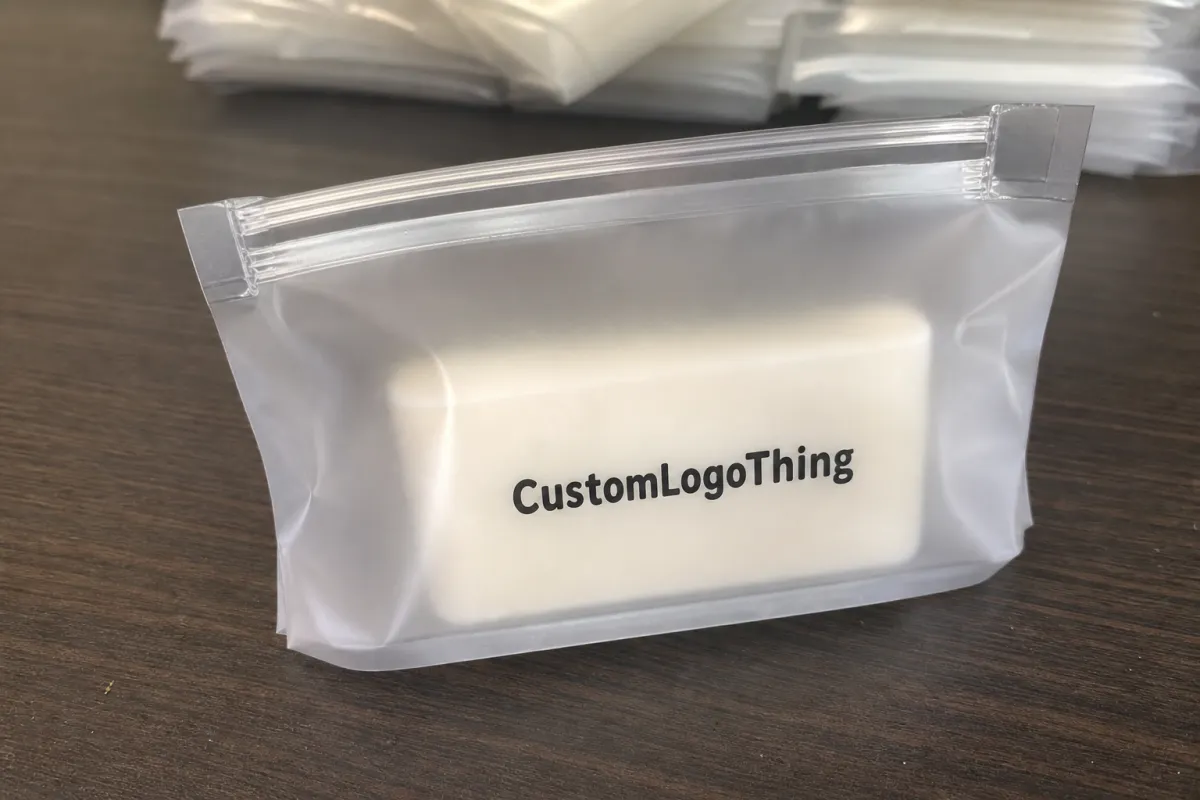
Frosted Zipper Bags are flattering until they are not. The semi-matte surface softens glare and gives soap packaging a calmer, more premium look than clear glossy plastic. The same film also diffuses contrast, dulls delicate color shifts, and makes thin type less forgiving. A layout that feels crisp on a bright monitor can look underpowered once printed on hazy film.
The artwork proof turns the design into instructions. It should show pouch size, front and back orientation, logo placement, zipper track, tear notch, hang hole, gusset, seal zones, transparency level, barcode position, warning copy, and color notes. If any one of those lands a few millimeters off, the bag may still be technically printable while looking careless.
The proof asks a blunt question: can this bag be printed, filled, sealed, scanned, and sold without embarrassment?
That sounds severe because packaging mistakes are rarely abstract. If the net weight is wrong, the problem is regulatory. If the barcode is too close to a seam, the problem is retail. If the scent name is too small, the problem is customer confusion. If the white ink layer is missing, the whole bag can look faded before it ever reaches a shelf.
For soap brands, the proof also protects consistency across scents. A lavender pouch, charcoal pouch, and citrus pouch may use different accent colors, but shoppers should still recognize the line at a glance. This is where disciplined templates earn their keep. Random alignment and inconsistent copy hierarchy quietly make a product line look cheaper than the formula inside the bar.
Structural packaging choices affect print and shipment, not just appearance. The Institute of Packaging Professionals at packaging.org and the International Safe Transit Association at ista.org are useful reference points for broader packaging performance. Once a pouch becomes part of a filled retail system, artwork is only one variable.
How Frosted Zipper Bag Artwork Proofs Actually Work
The normal proofing workflow is simple enough. The soap brand sends files and order specs. The packaging team places the artwork on the correct bag template. Prepress checks resolution, color setup, fonts, bleed, and technical fit. A digital proof then goes back to the buyer for review.
The dieline is the map. It marks the cut line, seal area, zipper track, tear notch, hang hole, bottom gusset, front panel, back panel, and safe print zone. Anything outside the safe zone is vulnerable to trimming, distortion, sealing pressure, or visual interruption. Flexible packaging usually has less usable design space than the flat PDF suggests.
A digital proof and a physical sample do different jobs. A digital proof confirms layout, copy, orientation, dieline fit, and the basic technical setup. A physical sample shows material feel, haze, ink opacity, zipper behavior, and readability under real lighting. On frosted film, the difference can be dramatic. White ink backing, ink density, and film opacity all influence whether a design reads as soft and intentional or simply weak.
For repeat orders with proven artwork, a digital proof may be enough. For a new retail launch, a premium line, detailed illustration, unusual color palette, or strict brand-color target, a printed sample deserves serious consideration. It adds time and cost, but it reduces guesswork before thousands of bags are made.
Proof approval is also a legal and production signal. Written approval usually means the buyer accepts the layout, spelling, dimensions, colors as specified, and print placement within normal manufacturing tolerance. It does not mean the printer can fix vague concerns later by instinct. “Approved” is a small word with expensive gravity.
Key Artwork Factors Soap Brands Need To Check
Start with scale. Soap bars are compact, and pouch real estate disappears quickly once the zipper, seal, gusset, tear notch, and margins are accounted for. The logo needs enough presence to identify the brand, but not so much that it crowds the scent name or required information. A good soap brand frosted zipper Bags Artwork Proof makes the usable print area obvious.
Safe margins are not a design preference. Keep important type, logo edges, claims, icons, and barcodes away from seal zones and zipper tracks. Flexible film shifts slightly during manufacturing, filling, sealing, and handling. A margin that looks generous in a file may feel tight on the finished pouch.
Color setup needs sober expectations. CMYK, Pantone references, and white ink layers all change the final result, and frosted plastic will not match coated paper labels, glass jars, or phone screens exactly. The film mutes saturation. A dusty rose may become beige. A sage green may turn gray. A pale yellow may nearly disappear unless backed with white ink or strengthened in the file.
If the brand depends on a signature color, state whether the printer is matching a target or approximating from supplied artwork. Pantone references help, but flexible packaging has normal tolerances. Buyers should ask what tolerance range is realistic for the material and print method rather than assuming laboratory precision from a pouch order.
Typography is the next failure point. Tiny scripts, hairline serifs, and condensed ingredient lists may survive on a paper carton but lose clarity on frosted film. Small type can work when it has enough weight, contrast, and spacing. It fails when it is treated like filler.
Barcodes need a flat, quiet, scannable area. They should be checked at actual printed size, not judged from a zoomed PDF. Retailers may reject packaging that scans inconsistently, and the problem is harder to solve after printing than before approval. For curved or flexible surfaces, generous quiet zones are cheap insurance.
Soap-specific content deserves the same discipline. Ingredients, net weight, warning text, company details, scent name, batch-code space, and any claim language should be final before proof approval. If the pouch must hold handmade bars with size variation, leave enough room for the product to settle without distorting the front panel. If the bar has strong color, botanicals, exfoliants, or texture, the bag should support that feature rather than smothering it under graphics.
- Front panel: brand name, scent, product type, net weight if required, and one clear visual cue.
- Back panel: ingredients, company information, warnings, barcode, batch space, and any required storage notes.
- Safe print area: keep critical content away from zipper, seal, notch, and gusset zones.
- White ink: specify where opacity and contrast are needed on frosted film.
Process And Timeline From File Upload To Approved Proof
Proof timing depends on file quality and decision speed. A basic file review may take 1 to 2 business days when artwork, dimensions, quantity, and material specs arrive complete. A first digital proof often takes another 2 to 4 business days. Each revision round can add 1 to 3 business days, especially if the layout needs resizing, fonts are missing, or a barcode changes.
The common delays are familiar: low-resolution logos, artwork built at the wrong size, missing fonts, no Pantone references, incomplete ingredient copy, late SKU changes, and uncertainty about bag dimensions. Canva files, screenshots, and flattened images can work for mockups, but they often create prepress cleanup before real printing can begin. Vector logos and packaged design files save time.
A practical sequence looks like this: submit artwork, confirm bag size and film type, answer prepress questions, review the digital proof, request specific edits or approve, then move to sample or mass production. Proofing time and production lead time are separate. Production starts after final written approval, not after the first file upload.
That distinction matters for launch planning. A holiday soap drop, wholesale deadline, subscription box shipment, or market season needs more than factory days on a calendar. Build in time for sample review, internal approval, freight, customs if applicable, and at least one revision round. The packaging schedule that assumes everyone approves the first PDF by lunch is not a schedule. It is a hope with a date attached.
Rush proofing may be available. Rush production depends on material stock, print capacity, order volume, curing or finishing requirements, and freight options. Small custom orders may move quickly if the structure is standard. Larger runs, specialty finishes, or multiple SKUs need more coordination.
If the project includes paper inserts, outer cartons, belly bands, or label stock, documentation may enter the picture. FSC chain-of-custody claims, recycling marks, and compostability language should be settled before the final proof. Sustainability claims are not decorative copy; they need support from the actual material and supplier documentation.
Cost, MOQ, And Quote Details That Affect The Proof
The digital artwork proof is often included with a custom order, but that does not mean every proofing activity is free. Physical samples, repeated layout rebuilds, complex prepress repair, specialty print setup, extra SKUs, and late-stage changes can add cost. The proof may look like a simple PDF, yet the work behind it reflects materials, print method, and order complexity.
The main quote drivers are bag dimensions, film thickness, material structure, frosted finish, zipper style, gusset type, print coverage, number of colors, white ink usage, quantity, SKU count, and shipping destination. A one-color front logo on a standard pouch is a different job from a full-bleed illustrated bag with back-panel copy, white ink masks, and five scent variations.
Price ranges vary widely by supplier, region, print method, and order size. As a rough buying pattern, digital samples may be modest if they are part of a larger custom order, while printed prototypes can carry setup charges. Low MOQs usually raise unit cost. Higher quantities usually lower unit price but increase inventory risk. For a new soap line, the cheapest unit cost is not always the smartest cash decision.
| Proof Option | What It Shows | Typical Use | Tradeoff |
|---|---|---|---|
| Digital PDF proof | Layout, copy, dieline, barcode, placement | Most standard orders and repeat runs | Does not fully show opacity or material feel |
| Printed sample | Color behavior, film haze, finish, readability | New launch, premium line, color-sensitive art | Extra time and added sample cost |
| Preproduction prototype | Near-final structure and visual behavior | Retail presentation or complex artwork | Highest setup effort, but lowest guesswork |
MOQ changes the risk profile. Lower MOQ is useful for seasonal scents, limited drops, market testing, or a new brand still learning demand. Higher quantities make more sense for staple SKUs that sell steadily. If a fragrance is proven and reorder timing is predictable, a larger run may reduce unit cost enough to justify storage. If the line is experimental, smaller runs reduce regret.
For a useful quote, send bag width, height, gusset if needed, film preference, thickness target, quantity range, number of SKUs, artwork file, fill weight, launch date, shipping destination, and whether a physical sample is required before mass production. Without those details, the quote is not anchored. It is packaging astrology with a currency symbol.
Case Studies can be helpful when they show how a brief becomes a finished package: structure, file prep, proofing, production, and delivery. A static price line rarely explains why one pouch costs more than another. The proof often reveals the reason.
Common Proofing Mistakes That Make Soap Bags Look Cheap
The classic mistake is approving from screen zoom. A scent name that looks elegant at 200 percent can become a gray smudge at actual size. Print the proof at 100 percent before approval. Cut it out if needed. Hold it where a customer would hold the bag.
Another recurring error is ignoring the zipper area. Artwork placed too high can crash into the zipper track or disappear under the top seal. Even when nothing is technically cut off, the pouch can feel crowded and poorly planned.
Low-resolution files create a different kind of damage. Screenshots, compressed web logos, and social media graphics are not print artwork. They may pass casual review and still produce fuzzy edges, uneven curves, or pixelated icons. Vector files are cleaner, easier to scale, and safer for repeat production.
Color disappointment is also common, especially with frosted film. The material does not reproduce color like glossy labels or coated cartons. It softens edges and lowers saturation. If buyers judge the proof against a laptop screen in bright office light, they are comparing two different color systems and then blaming the pouch.
Missing white ink layers can flatten a design fast. On semi-translucent film, ink without white backing may look smoky, pale, or uneven over the product inside. That can be beautiful for minimal branding or window effects. It becomes a problem when opacity was expected but never specified.
Compliance mistakes make packaging look amateur and can create real downstream costs. Missing net weight, incomplete ingredient lists, incorrect company information, unsupported claims, no batch-code area, or bad barcode placement should be caught before approval. The proof is the cheapest place to find them.
Over-design is quieter but just as damaging. Too many badges, icons, scent notes, borders, claims, and textures make a small pouch feel frantic. Soap buyers often associate restraint with confidence. If every square inch is shouting, the product begins to look less premium, not more informative.
Transit should not be ignored either. If filled pouches will be boxed, shipped to retailers, or sent through e-commerce fulfillment, ask whether the outer pack-out needs an ISTA-style distribution test. A beautiful pouch that scuffs, bursts, or arrives distorted is still a failed package.
Expert Tips For Cleaner Proof Approval
Use one master layout system across the soap line. Keep logo placement, copy hierarchy, barcode location, batch-code area, and back-panel structure consistent, then change scent names, color accents, and product-specific details. Consistency makes the line easier to shop and easier to reorder.
Increase contrast more than the monitor suggests. Frosted film softens artwork, so thin strokes and pale colors need extra help. If the brand mark must remain recognizable from a shelf or market table, give it weight, space, and a strong relationship to the background.
Print the proof at actual size and tape it to a blank pouch or folded paper mockup. This crude test catches top-heavy layouts, dense copy, oversized logos, and awkward barcode placement quickly. It also gives a better sense of how the pouch will feel in the hand than a floating PDF ever will.
Leave a dedicated batch-code or date-code area if the soap is handmade, seasonal, or produced in small runs. This tiny space is easy to forget during design and irritating to retrofit later. A small blank box or light panel can prevent messy sticker fixes.
Approve one hero SKU first when changing materials, print methods, or the overall layout. Once the main pouch works, apply the system to other scents. Rolling an untested mistake across ten variants is efficient in the worst possible way.
Make revision notes measurable. “Move logo down 4 mm,” “increase scent name by 2 pt,” and “add white ink behind the botanical icon” are useful. “Make it feel more balanced” belongs in an internal brand discussion, not a prepress instruction.
Clean proofing is mostly discipline: clear files, clear notes, clear approvals, no drama.
Next Steps Before You Approve Production
Before signing off, compare the proof with the actual order specs. Confirm bag size, film type, thickness if specified, zipper location, hang hole, tear notch, gusset, front and back orientation, safe margins, color references, white ink, barcode size, copy accuracy, SKU count, and shipping quantity. Do not approve a tidy PDF if it no longer matches the purchase order.
Assign one final approver inside the soap brand. Multiple reviewers can be useful early, but final proofing by committee often produces contradictory edits and diluted judgment. One decision-maker should own the approval and check every practical detail.
Review the proof against the soap bar dimensions, not only the flat template. Fill weight, bar shape, bevels, wraps, inserts, and product thickness affect how the pouch stands, seals, and displays. A design centered on a flat dieline can look slightly low, high, or stretched once the product is inside.
Clarify whether approval covers the digital proof only or whether a physical sample must be approved before mass production. Those are different commitments and should be documented in writing. If future reorders are likely, save the final approved proof, dieline, color notes, barcode files, and revision history. Reorders are smoother when no one has to reconstruct decisions from old email threads.
The goal is not to make proofing theatrical. The goal is to make the bag difficult to misunderstand later. A well-reviewed soap brand Frosted Zipper Bags artwork proof protects the brand, the production run, the retailer, and the customer experience. Check the boring details first. They are usually the ones shoppers notice after the bag is already on the shelf.
What should I check on a frosted zipper bag proof for soap packaging?
Check logo placement, zipper clearance, seal zones, safe margins, front and back orientation, barcode size, ingredients, net weight, scent name, warning copy, batch-code space, and white ink layers. Print the proof at actual size so you can judge readability and balance on the real bag dimensions. Review it against the soap bar size and fill weight, not only the flat pouch template.
Is a digital artwork proof enough for custom soap frosted zipper bags?
A digital proof is usually enough for layout approval, repeat orders, and simple one-color designs. Request a physical sample if you are using frosted film for the first time, launching retail packaging, printing detailed artwork, or matching a specific brand color. Digital proofs cannot fully show film haze, tactile feel, ink opacity, or how muted colors may look on frosted plastic.
How long does artwork proof approval take for soap brand zipper bags?
A first digital proof often takes 2 to 4 business days after complete files and specs are received. Each revision round can add 1 to 3 business days, especially if the artwork needs resizing, font replacement, color clarification, or barcode changes. Production lead time starts after final proof approval, so slow feedback can push the entire order schedule.
Why do colors look different on frosted zipper bags than on my screen?
Screens use light, while printed bags use ink on semi-translucent film. Frosted plastic softens contrast and can make colors look lighter, grayer, or less saturated than the digital file. White ink backing and Pantone references improve control, but exact screen matching is not realistic.
Can I use the same artwork proof for multiple soap scents?
Yes, if the bag size, layout, material, print method, and required information stay the same across scents. Each scent still needs review for name length, ingredient changes, color accents, barcode differences, and batch-code space. A master template keeps the line consistent and usually makes future proofing faster.


