The soap woven label beanies Unit Cost Review starts with a simple point: the label is rarely the most expensive line in the order, but it often changes how the whole quote is built. A buyer can focus on the knit body and still miss the costs hiding in label size, weave density, attachment method, packing, and approval time. Those details are small on paper and real in production.
That matters because a minor trim change can push an order into a different pricing structure. For retail, team merch, or a seasonal drop, the gap between a clean quote and a messy one usually comes from these small choices. The useful way to compare quotes is to separate unit cost, sample cost, and landed cost before anything else. Unit cost is the per-piece price at a stated quantity, sample cost is what you pay to approve the build, and landed cost is the actual delivered number after freight, duties, and packaging.
Use the same discipline you would use for Custom Labels & Tags: define the trim first, then price the garment around it. If the label spec is vague, the quote will be vague too.
Soap Woven Label Beanies Unit Cost Review: Why Small Changes Add Up
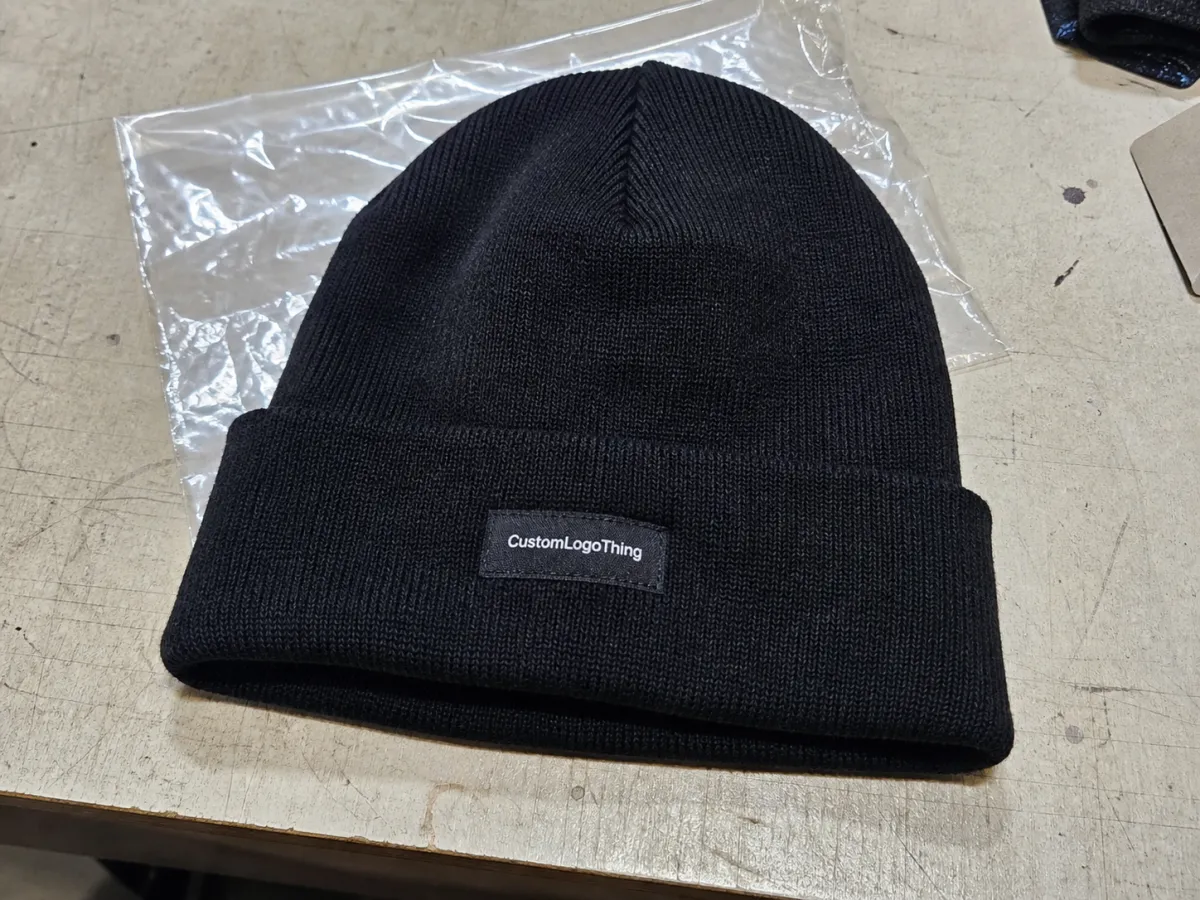
Woven labels look tiny, but they influence cost more than many buyers expect. One more color in the weave, a tighter thread count, or a larger folded label can change labor and setup enough to alter the quote. On lower-MOQ orders, that effect is stronger because fixed costs are spread across fewer pieces.
A quote is a stack of assumptions: base knit cost, label cost, attachment labor, packing, setup, and sometimes tooling. If one supplier quotes a plain cuffed beanie and another quotes the same beanie with folded labeling, barcode stickers, and individual polybags, the price gap is not a real comparison. It is a scope problem.
Material choice matters too. Acrylic stays common because it is predictable on cost and easy to knit in bulk. Wool blends, recycled yarns, or thicker rib structures can raise the price, but they can also improve hand feel, shape retention, and shelf appeal. That tradeoff is often worth it if the beanie is intended for retail instead of giveaway use.
One detail gets missed often: a label that looks simple in a mockup may not be simple in production. A narrow cuff gives less room to center the trim. A slouchy crown can shift the label off axis. Dark yarn can make registration errors more visible. None of that is a reason to avoid woven labels. It is a reason to spec them carefully.
If the program is small, the trim decision can matter more than the beanie body itself. A serious cost review should start with the label dimensions, weave detail, placement, and attachment method, then move outward to the garment. Reversing that order usually creates rework later.
Beanie build options that change perceived value fast
Buyers usually compare cuffed, slouchy, rib-knit, and double-layer styles. Each affects cost differently, but they also change how premium the item feels in hand. A cuffed beanie with a centered woven label is easy to read and easy to repeat across a run. A slouchy style can look more fashion-led, but it is less forgiving during label placement. Double-layer knits usually add structure and warmth, which improves retail appeal while raising the base cost.
Placement matters almost as much as the label itself. Front cuff placement has the strongest visibility. Side seam placement feels more understated and can work well for subtle branding. Hem-edge labels are neat when the factory has control, though they are harder to align consistently on fast production runs. Exterior patches create a bolder read, but they increase handling and inspection time.
- Cuffed beanies usually offer the cleanest label presentation and the most reliable repeatability.
- Slouchy styles look relaxed, but label placement can drift more easily.
- Double-layer knits cost more, yet they hold shape better and often read more premium.
- Mixed trim builds raise labor and usually need tighter approval control.
The best value is often the least crowded build: one clear logo label, one placement, one standard fold. That can outperform a busier design with multiple trims if the yarn quality is solid and the proportions are right. Buyers sometimes add extra labels hoping to make the product feel more expensive. The opposite often happens when the piece feels overworked.
If the beanie is meant for a launch or a team program, it is usually better to keep the garment simple and let the woven label do the brand work. A hangtag or insert can support the presentation without turning the product into a trim experiment. That is also why woven label options and packaging choices should be priced together.
Specs to lock before you send artwork or ask for samples
Before anyone prices the job, lock the spec. That means material, knit gauge, weight, cuff height, label size, placement, and attachment method. If those details are loose, the factory has to guess or pad the quote. Vague specs also slow down sampling because the sample becomes a placeholder for decisions that should already be made.
Artwork alone is not enough. The production team needs measurement context. A 40 mm label behaves differently on a wide cuff than it does on a narrow one. Ask for a flat mockup with dimensions, center points, and placement notes. If the brand uses Pantone references, include them. If the only color reference is RGB, the conversation starts with translation problems and costs time.
Send the factory a file set it can actually use:
- Vector logo file in AI, EPS, or PDF format
- Exact spelling, punctuation, and capitalization
- Brand color references
- Preferred weave detail or stitch density
- Packaging copy if the hangtag or polybag needs print
Yarn composition belongs in the same discussion. Acrylic is common, but not every acrylic knit behaves the same. Some blends feel softer; some hold shape better; some show pilling earlier. Wool blends may feel warmer and more premium, though they can bring a higher price and different care considerations. Recycled yarns can support sustainability goals, but they may introduce color variation or hand-feel differences that need approval before bulk starts.
Packaging also affects price and lead time. Hangtags, barcode stickers, folded insert cards, or individual polybags add handling. The same is true for recycled paperboard or retail cartons. If the packaging needs to align with FSC-certified materials, that requirement should be part of the quote from the beginning, not added after sample approval. For reference, check whether the supplier can work to standards recognized through FSC.
The buyer who sends one complete spec sheet usually gets a faster, cleaner quote. The buyer who sends partial emails usually gets a delayed one. That difference is bigger than it looks.
Unit Cost, MOQ, and quote ranges you should expect
MOQ drives the whole conversation. Lower quantities carry a setup premium; larger runs spread the trim work and labor across more pieces. That is why the same beanie can look expensive at 100 units and reasonable at 500. The factory is not being inconsistent. It is allocating fixed costs differently.
For a basic cuffed acrylic beanie with one woven label, these budget ranges are a practical starting point:
| Order level | Typical cost per piece | Common setup charges | What usually drives the price |
|---|---|---|---|
| Under 100 pieces | $5.50-$9.00 | $30-$120 | Sample handling, label setup, small-run labor |
| 300-500 pieces | $3.40-$5.80 | $20-$80 | Better spread of labor, stronger bulk pricing |
| 1,000+ pieces | $2.60-$4.20 | Often reduced or waived | Scale, simpler packing, cleaner production flow |
Those figures shift with yarn quality, knit density, label color count, and packing requirements. A thicker gauge beanie costs more than a lighter rib-knit. A woven label with six colors costs more than a one-color version. A folded insert, individual bagging, or barcode sticker adds handling. The comparison only works when the scope is identical.
Ask for the price lines that are easiest to hide:
- Sample charges for pre-production approval
- Tooling fees for label setup or special trims
- Rush fees when the timeline is compressed
- Freight and duties for the delivered price
- Special packaging such as hangtags, inserts, or retail polybags
Compare quotes only when the scope matches exactly: same beanie style, same label size, same quantity, same packaging, same delivery terms. If one quote includes carton marking and the other does not, the difference is not meaningful. A real bulk pricing comparison has to be apples to apples. It also helps to ask for the next pricing break. On many programs, the jump from 300 to 500 pieces lowers unit cost enough to justify the extra inventory.
Process, proofing, and lead time from mockup to shipment
The workflow should be ordinary: quote, artwork review, digital proof, sample approval, bulk production, quality check, packing, and shipping. If a supplier cannot explain those steps clearly, the schedule is probably less certain than it looks. Good production teams tell you where the time goes. Weak ones keep the schedule vague until the delays are already baked in.
Reasonable timing depends on the scope. Digital proofing can move quickly if the file is clean. Sampling usually takes several business days. Bulk production often runs in the 12-20 business day range after approval, though that can stretch with larger quantities, more colors, custom packaging, or seasonal congestion. Freight is separate again. A fast production schedule does not shorten transit.
Delays usually come from familiar places: unclear artwork, missing dimensions, slow approvals, color corrections, or packaging changes after sampling has already started. These are ordinary workflow problems, which makes them easier to prevent than to fix. A buyer who locks the spec once and approves it without second-guessing the basic structure saves both time and money.
Quality control should be specific, not ceremonial. Check label centering, stitch tension, color match, knit consistency, folding, and packing accuracy. For retail or distribution orders, carton packing should match the shipping route. If the goods are moving through long-haul freight or shelf-ready distribution, ask whether the packaging plan reflects recognized transit assumptions such as guidance from ISTA.
A useful supplier gives stage-by-stage timing instead of one broad ship date. That helps the buyer see where the schedule can slip and where the order is still protected. Keep a written approval record for the final label artwork, packaging, and carton count. It does not make the beanie faster to sew, but it makes disputes easier to resolve if the order arrives with a spec mismatch.
Why repeat buyers stay with the same beanie supplier
Repeat buyers do not stay because the supplier is charming. They stay because the second order is easier than the first. The measurements are already set, the label placement is already approved, and the production team knows which details matter most. That saves time and cuts down on mistakes.
Consistency has real value. A supplier that can keep the cuff depth the same, hold color across reorders, and place the label in the same position is often more useful than the one that offered the cheapest first quote. A low price does not matter much if the next run has crooked labels or a noticeably different hand feel. That kind of inconsistency is expensive in retail, corporate programs, and seasonal merch.
Service matters in unglamorous ways: fast responses, clear proof revisions, realistic lead times, and reorder quoting without starting from zero. Suppliers who understand brand tags and trims usually manage the whole build more cleanly because they see how the knit, the label, and the packaging interact.
For seasonal work, novelty is overrated. If the beanie sells, the safest path is often to repeat the exact build and only adjust the quantity, not the spec. That is how margin stays intact on the second and third runs. The soap woven label Beanies Unit Cost Review becomes most useful on reorders because the first round reveals the true cost structure. Once the spec is stable, the buyer can tighten MOQ, trim format, and packaging without reopening the whole job.
Next steps to quote and place a beanie order confidently
A clean quote starts with one complete request. Send quantity, target delivery date, beanie style, label size, artwork file, packaging needs, and shipping destination in the same message. If there are size splits or color splits, include them up front. The goal is to avoid back-and-forth that bloats the schedule.
Ask for two scenarios: one at the minimum quantity and one at the next pricing break. That will show whether the order should stay small or scale up. On many programs, unit cost falls enough at the higher tier to offset the added inventory. On others, the savings are too small to matter.
Order a sample only after the spec is stable. Changing logo size after sampling wastes time. Changing the label construction after sampling wastes more. The sample exists to confirm the build, not to restart it.
Do not compare headline price alone. Compare landed cost, including freight, packing, and any extras that affect delivery. A quote that looks higher before shipping can still win once the full delivery cost is added. If the quote does not break out the major cost drivers, ask for that breakdown before approval.
What drives soap woven label beanies unit cost the most?
Quantity, label complexity, and the number of colors in the logo usually matter most. Attachment method, knit weight, and packaging style also move the price. Samples and freight should sit outside unit cost so the comparison stays clean.
What MOQ should I expect for woven label beanies?
Small test runs are possible, but they usually carry a higher unit price. A few hundred pieces is often where pricing starts to improve because setup cost is spread more efficiently. For reorder programs, ask for the minimum tier and the next volume tier in the same quote.
How long is the usual lead time after artwork approval?
Proofing is usually quick if the file is complete and the dimensions are clear. Bulk production often takes 12-20 business days after approval, though larger orders, custom packing, and peak season can extend that. Shipping time should be added separately.
Can I mix colors or sizes in one beanie order?
Yes, but the pricing structure may change because packing and inventory handling become more complicated. More color or size splits usually reduce efficiency and can raise the unit cost. Ask for the split exactly as you plan to ship it so the quote reflects the real job.
What should I send to get an accurate quote fast?
Send the logo file, quantity, target date, beanie style, and label size. Include color references, packaging needs, and the delivery location. A complete spec sheet is the fastest way to get a useful quote instead of a loose estimate.


