A supplement Ribbed Winter Beanies Unit Cost review only helps if it separates real cost from decorative noise. A beanie can look inexpensive on a quote sheet and still become the most polished item in a winter campaign once you account for knit density, decoration, freight, and packaging. That gap is why buyers keep revisiting this product instead of treating it like a throwaway seasonal extra.
For supplement brands, the case for Ribbed Winter Beanies is practical rather than trendy. They fit most adults, they photograph well, and they stay in rotation long after a paper insert or sticker pack would have disappeared into a drawer. Every time the hat comes back out, the logo gets another impression without additional media spend.
The downside is equally practical. Cut the spec too aggressively and the knit starts looking thin, the logo loses edge, and the item stops carrying the brand as intended. The cost difference between “acceptable” and “worth keeping” is often smaller than buyers expect, especially once a project leaves the factory floor and lands in the real world.
Why ribbed winter beanies win for supplement brands
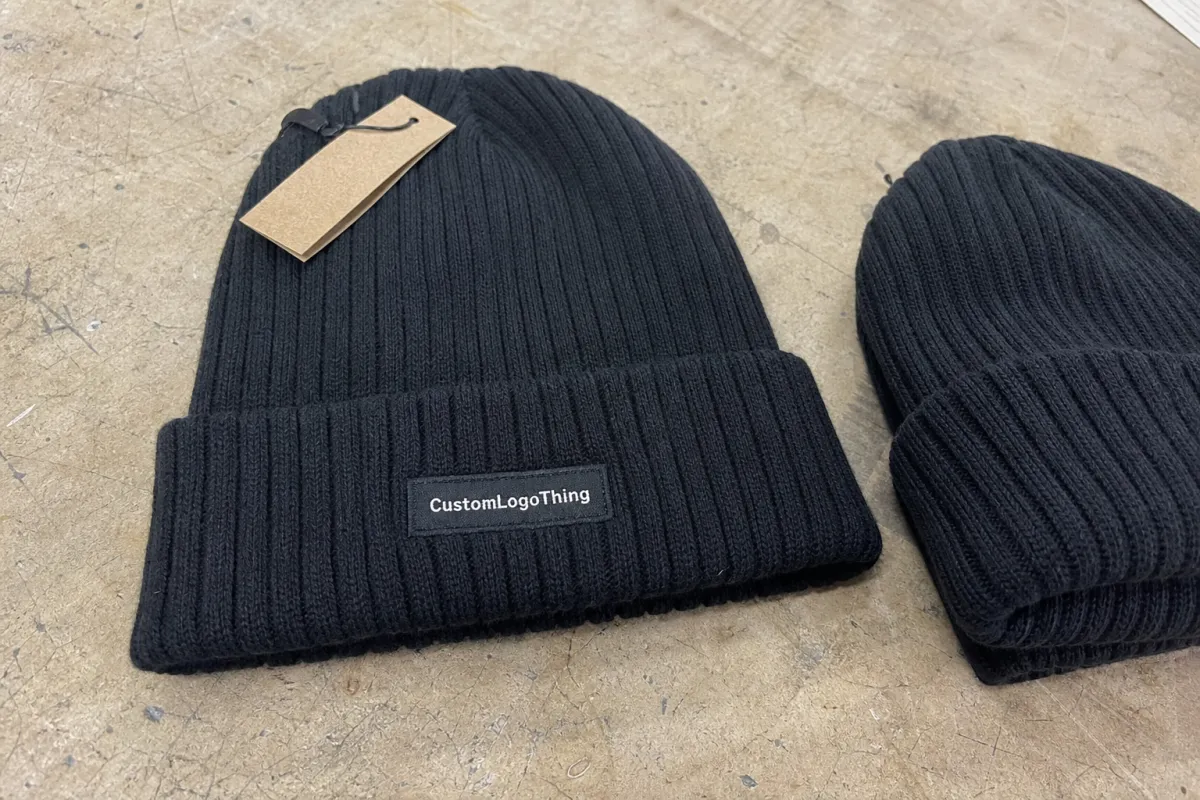
Ribbed winter beanies work because the construction gives you stretch without giving up shape. That matters for supplement campaigns, where the audience is broad: gym members, retail buyers, event attendees, athletes, and customers who are not measuring head size before they accept a promo item. One SKU covers a lot of people.
The ribbed structure also gives the surface enough texture to feel intentional. A 1x1 rib usually reads tighter and cleaner. A 2x2 rib feels chunkier and a little more relaxed. Neither is universally better. A premium sports nutrition brand may want the cleaner look of a fine rib, while a harder-edged performance label may prefer a heavier texture that feels more rugged in hand.
Buyers should think beyond appearance. Ribbed beanies compress well for shipping, tolerate folding better than structured caps, and can be packed in bulk without collapsing into a sad heap of fabric. That reduces handling risk and keeps unit cost sensible. Compared with items that need molded shape protection or exact sizing, beanies are refreshingly forgiving.
They also fit several campaign types without feeling off-brand:
- gym promotions and membership drives
- subscription box inserts during colder months
- event handouts tied to product launches
- retail add-ons and bundle upsells
- team apparel for coaches, ambassadors, and field staff
The real advantage is perceived utility. A hat that gets worn twice a week for three months will usually outperform a cheap item that looks clever but never leaves the package. That matters because supplement branding tends to live or die on trust, and practical merchandise feels more credible than novelty merchandise.
There is a line, though. Overly thin yarn, fuzzy stitching, or a logo that stretches oddly across the ribs can make the item feel cheaper than it is. Saving a few cents while undermining presentation is a poor trade. On a 1,000-piece order, even a small cost bump for better yarn may be easier to defend than replacing an entire run that photographs badly.
Ribbed knit construction, fit, and decoration choices
Construction should be the first comparison point. 1x1 rib has a tighter face and a cleaner, more uniform stretch. 2x2 rib adds visual texture and often feels warmer or more substantial because the knit looks denser. Cuffed styles give you a branding zone that sits well on the forehead. Uncuffed styles can feel sleeker, but the decoration area is less controlled.
Cuff height is one of those small details that changes the whole impression. Around 2.5 to 3.5 inches is usually enough room for a logo without making the hat look overbuilt. Too tall, and the beanie starts to resemble folded fabric. Too short, and the mark sits awkwardly close to the crown. The difference is visible in person, even if a mockup makes both options look acceptable.
Fit is not just about stretch. It is about recovery after wear. A beanie should bounce back after being pulled on, stuffed in a bag, or worn under a hood. If it stays baggy or the rib opens up too much, the item looks tired before the campaign has even ended. That is where material and gauge start to matter.
Decoration choice should match the artwork, not the mood board. The most reliable options on ribbed winter beanies are:
- Embroidery for simple marks, especially one- to two-color logos
- Woven patches for crisp edges and more detailed artwork
- Faux leather patches for a tougher, gym-forward look
- Jacquard knit logos when the brand wants the art built into the fabric
Embroidery is often the cleanest low-friction option, but it has limits. Very small text gets muddy, thin strokes can break visually, and heavy satin stitching on a stretchy surface can pucker if the pattern is not set properly. Woven patches handle detail better because they are produced separately from the knit. Jacquard is attractive for certain designs, but it requires discipline in the artwork because complex gradients and tiny copy do not translate well into knit structure.
Oversized artwork is another common failure point. A large logo can fight the stretch of the beanie and make the whole front panel look distorted. A centered, legible mark usually performs better than an ambitious layout that looks clever on screen and confused in fabric. If the brand is betting on a product photo, the design has to read in two seconds or less.
Color choice can quietly change the price perception. Black, charcoal, heather gray, navy, forest, and bone tend to feel more premium than neon shades, and they are usually easier to match across production runs. If the brand wants the hat to sit beside a premium supplement bundle, muted shades generally do more work than loud ones. They also hide minor wear better, which extends the useful life of the item.
Size, yarn, and color specs to lock before you quote
A quote is only as good as the spec behind it. If the buyer leaves size, yarn, color, and decoration open-ended, the factory has too much room to interpret the order. That usually means the pricing will be vague too. Before asking for numbers, lock the hat depth, cuff width, body length, yarn type, stitch density, logo placement, and packaging method.
For a standard adult ribbed winter beanie, the useful range is fairly predictable: body length around 8.5 to 10.5 inches, cuff height around 2.5 to 3.5 inches, and a medium-to-heavy knit that feels warm without turning rigid. A 7-gauge to 9-gauge construction usually creates a thicker winter feel. A tighter 12-gauge knit looks cleaner and more refined, but it can feel lighter in the hand.
Yarn choice is one of the main levers on unit cost. Acrylic is generally the lowest-cost base because it is common, consistent, and easier to source in stock shades. Acrylic-wool blends cost more, but they often improve warmth and handfeel enough to justify the increase. Recycled yarns can be a smart brand move, although they sometimes carry higher minimums and longer lead times. The lower-impact story only works if the paper trail and packaging support it.
Color control has a direct cost impact too. Stock yarn colors are cheaper and faster because the factory does not need to reserve a custom dye run. Custom-dyed yarn raises MOQ and can add setup time, especially if the shade requires multiple approvals. If the brand color is close to a standard shade, close is usually the smart choice. Very few customers can distinguish between exact corporate navy and a slightly warmer navy once the hat is on a shelf or in a social post.
Packaging details should not be an afterthought. They affect both the quote and how the product lands with the customer:
- individual polybag or bulk pack
- hang tag, belly band, or no retail card
- size sticker, woven label, or printed care label
- carton marks and barcode requirements
- retail folding versus simple bulk folding
If the order includes paper inserts, it is sensible to ask for FSC-certified stock where possible. If cartons need to withstand multiple handoffs, shipping expectations should be aligned with recognized testing methods such as ISTA. These details do not change the campaign concept, but they can determine whether the product arrives looking ready or roughed up.
Supplement ribbed winter beanies unit cost review: pricing, MOQ, and volume breaks
This is where the real comparison starts. Unit cost changes with yarn type, stitch density, decoration method, packaging, and whether the factory is working from stock components or custom materials. A useful supplement ribbed winter beanies Unit Cost Review should always distinguish factory cost from landed cost. A quote that ignores freight and duty is not a quote buyers can actually use.
For typical promotional and mid-volume runs, realistic ex-factory ranges usually fall somewhere in the following band:
| Option | Typical MOQ | Unit cost range | Best use |
|---|---|---|---|
| Stock acrylic, small embroidery | 100-300 pcs | $1.35-$2.40 | Fast promo drops and event giveaways |
| Acrylic-wool blend, woven patch | 300-500 pcs | $2.20-$3.80 | Premium bundles and retail-style merch |
| Custom color yarn, jacquard knit logo | 500-1,000 pcs | $2.80-$5.20 | Brand programs with stronger visual identity |
Those ranges are not inflated fantasy numbers, and they are not bargain-basement numbers either. They reflect material choice, labor, and the friction created by custom setup. If a quote lands dramatically below that band, the buyer should ask what has been removed: packaging, better yarn, sampling, artwork setup, or decoration quality. Lower numbers often hide a reduction somewhere else.
Several cost drivers matter more than most buyers expect:
- Yarn type: stock acrylic is usually cheapest; blends and recycled yarns are costlier
- Decoration: simple embroidery tends to be cheaper than complex patchwork or dense jacquard
- Setup charges: digitizing, patch creation, labels, and custom artwork prep can add $30-$150 per style
- Tooling fees: more common on custom knit patterns or specialty finishes
- Packaging: basic polybags are low cost; retail-ready presentation adds real money
A low quote is not a good quote if it leaves out the work that still has to be paid for later.
Landed cost is the number that matters once the hats are moving toward a campaign date. Freight, duties, receiving fees, and local handling can add more than expected, especially on smaller orders or rushed timelines. Air freight is fast and expensive; ocean freight is slower but usually better on per-piece cost if the schedule allows it. The trap is comparing one supplier’s factory price against another supplier’s total delivered cost and calling the cheaper one “better.”
MOQ usually rises when the spec becomes more custom. Stock beanies with standard decoration may start low. Once the order asks for custom yarn, special labels, or a more complex patch, the factory needs to commit more material and production time. A practical way to compare suppliers is to request two versions of the same idea: one stock version and one custom version. The gap between them is often more useful than three pages of sales language.
Volume breaks tend to be modest until the order is large enough to absorb setup. That means buyers sometimes save more by standardizing the spec across multiple campaigns than by chasing a single deep discount. If one run can be repeated with the same yarn and decoration, the second order often becomes easier to price and faster to approve.
Process and timeline from artwork approval to shipment
The order flow is usually predictable, which helps buyers avoid needless surprises. First comes the quote and spec check. Then the artwork proof. Then the sample or pre-production sample. After that, the bulk knit, decoration, finishing, packing, and dispatch. Skipping any of those steps tends to create avoidable corrections later.
A practical schedule looks like this:
- Quote and spec confirmation: 1-2 business days if the brief is complete
- Artwork proof: 1-3 business days
- Sample or pre-production sample: 5-10 business days
- Bulk production: often 12-20 business days after approval
- Freight: add 3-7 business days by air or longer by ocean
The knit itself is rarely the biggest source of delay. Buyers are. Slow artwork approvals, logo files that need cleanup, color changes after proofing, or last-minute packaging edits can move a schedule more than the production line does. A factory can only work with the information it has. If the brief changes three times, the calendar changes with it.
Seasonal congestion matters as well. Once colder weather starts driving more promos, lead times tend to stretch. The smart move is to leave time for sample review, one revision round if needed, and freight buffers. If the beanies must land before an event, the schedule should be built around the last safe approval date, not the hoped-for one.
For orders tied to a subscription box or retail launch, a milestone schedule is worth requesting in writing. It should identify proof approval, bulk start, packing date, and ship date. That kind of visibility reduces confusion, and it also makes it easier to spot slippage before the order is already late.
Quality checks, packaging, and presentation that protect margin
The least expensive hat can become the most expensive mistake if the run looks uneven. On ribbed beanies, the key checks are stitch consistency, logo placement, stretch recovery, seam finish, and color match across the batch. A single loose thread is normal. A batch full of them suggests the production line was not controlled closely enough.
Before bulk approval, the sample should be checked in daylight and under indoor lighting. Knit texture can hide flaws in product photos, and mockups are even less reliable. The buyer wants to see whether the logo sits flat, whether the cuff holds its shape, whether the knit is dense enough to feel intentional, and whether the color still looks rich after folding.
Packaging changes perception quickly. Bulk folding and carton packing keep cost down, which works for large giveaways or low-margin promos. A premium supplement bundle usually benefits from a cleaner presentation: a simple band, a branded insert, a care tag, or a better folding method. Those details do not need to be ornate. They just need to feel considered.
Carton treatment deserves the same attention. If the shipment will be handled several times, the outer pack should protect shape and reduce abrasion. Paper inserts and hang tags should also support the brand message rather than pretending that every piece of paper is automatically sustainable. If the sustainable angle matters, the claims should be backed by the material choice, not the color of the ink.
Quality points to confirm before release:
- logo centered and sized correctly
- no loose stitching around seams
- no visible color mismatch between sample and bulk lot
- folding method matches the packing plan
- cartons labeled for the correct destination
Margin protection is not only about shaving cents off the quote. It is about reducing rework, avoiding replacement runs, and keeping the item credible enough that people actually wear it. In supplement merchandising, that credibility matters. A neat beanie can make a bundle feel intentional. A sloppy one makes the whole offer feel compromised.
Order-ready quote checklist and next steps for buyers
Fast quotes come from clear briefs. A mood board may be useful for internal alignment, but it is not enough for pricing. The supplier needs the actual build details. A clean request should include the logo file, the beanie color, the decoration method, the target quantity, the packaging requirement, and the delivery destination or port.
- vector logo file
- preferred beanie color or reference shade
- decoration method
- target quantity
- packaging requirement
- delivery destination or port
Ask for both unit price and landed price. That one habit clears away a lot of fake savings. Two suppliers can appear far apart until freight, setup, and packaging are added back in. Once the numbers sit on the same basis, the comparison usually becomes much simpler.
Request a sample photo or pre-production proof before confirming the run, especially if the logo is small or the yarn color is critical. Knit products are visual products. Mockups tend to be generous. Samples are less polite and much more useful.
For supplement brands, the smartest comparison is usually two or three suppliers on the exact same spec, not five suppliers on five slightly different interpretations. Keep the material consistent, keep the decoration consistent, approve the proof promptly, and lock the ship date before the season tightens. That is the cleanest way to get a meaningful supplement ribbed winter beanies Unit Cost Review without turning the process into guesswork.
What drives supplement ribbed winter beanies unit cost the most?
Yarn choice usually moves the number the most. Stock acrylic is generally the lowest-cost base, while wool blends, recycled yarns, and custom-dyed materials raise the price. Decoration method comes next, followed by packaging, sampling, and any rush fee. If a quote looks unusually low, the missing line item is usually hiding somewhere in the middle.
What MOQ should I expect for ribbed winter beanies with logo branding?
Stock beanies with standard decoration can often start around 100-300 pieces. Once the order needs custom color yarn, special labels, or patch work, MOQ usually rises because the factory has to commit more material and setup time. Asking for both a stock version and a custom version helps expose the true cost difference.
Which decoration method keeps the unit cost lowest on beanies?
Small, clean embroidery is often the lowest-cost branded option when the logo is simple. Woven patches can be efficient for more detailed artwork, though setup and attachment still matter. If the design is too detailed for knit surfaces, simplifying the art usually saves more than changing suppliers.
How long does the process and timeline usually take after approval?
Stock-based orders can move faster, while custom knit or custom-dyed beanies need more time for material preparation and production. A practical range is often 12-20 business days for bulk production after approval, plus shipping time. Sample revisions and delayed proofs are usually what stretch the schedule, not the knitting itself.
Can I get a sample before placing a bulk order for ribbed beanies?
Yes, and it is usually worth doing. Knit texture, logo scale, and color tone are much easier to judge on a sample than on a flat mockup. A pre-production sample is especially helpful if the order uses a new supplement brand color or a more premium packaging style. Ask whether the sample fee is refundable against the bulk order.


