Source Custom Corrugated Plastic Boxes Without Waste
Why Custom Corrugated Plastic Boxes Are More Than Tough Totes
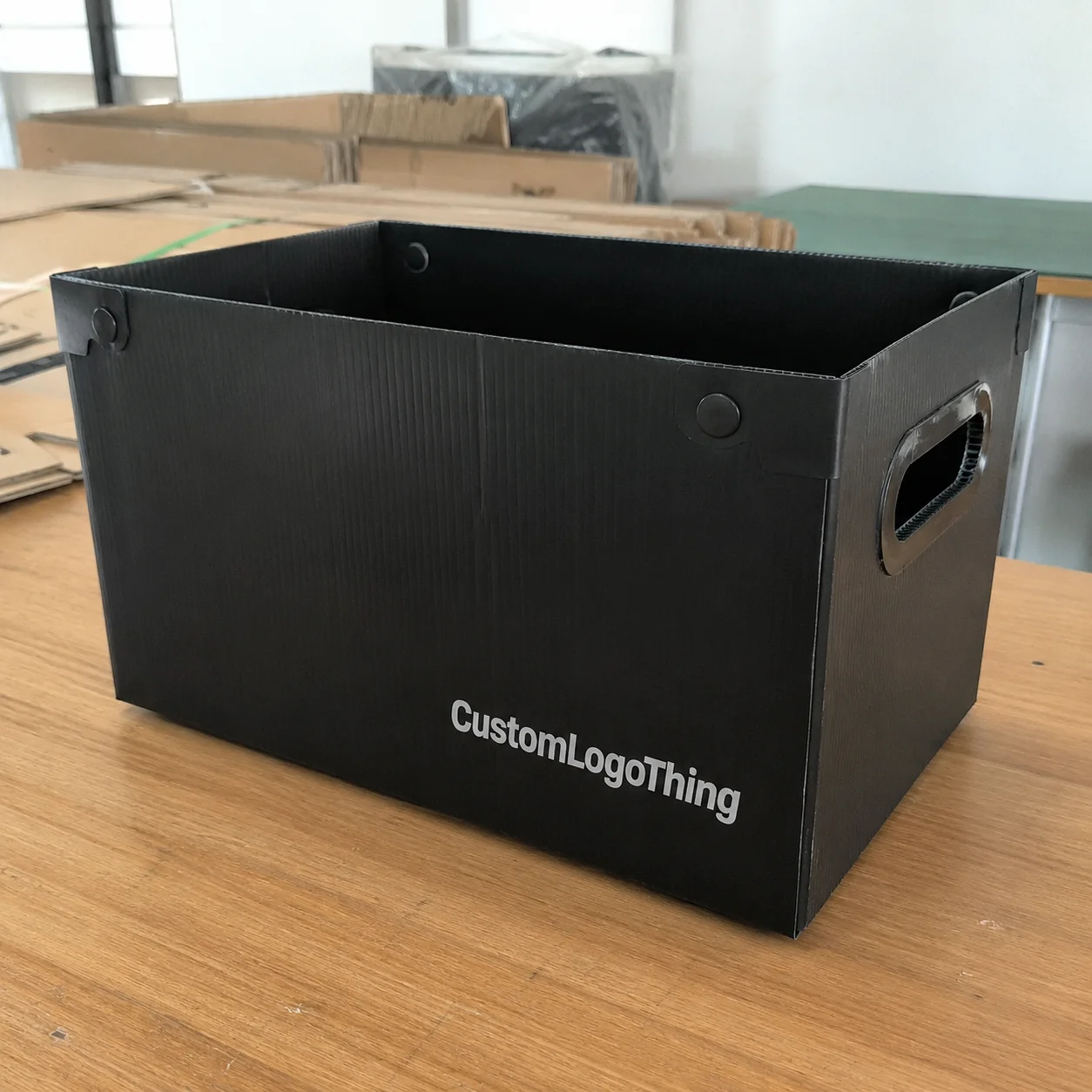
A returnable parts program can bleed money quietly. Not from the purchase price of custom corrugated plastic boxes, but from boxes that are 18 mm too shallow, totes that trap condensation, cartons that ride half-empty on pallets, and parts that need rework after bouncing through a warehouse transfer loop. The invoice is visible. The waste around the box is harder to see.
These containers are made from fluted polypropylene, polyethylene, or a similar plastic sheet. Think of them as the reusable cousin of corrugated fiberboard: lightweight, cut and creased into shape, but resistant to water, many oils, repeated handling, and basic wash-down routines. They show up in automotive component loops, produce handling, medical kits, electronics transfers, trade show materials, and internal warehouse moves where paper may collapse, absorb moisture, or look worn after a few cycles.
The comparison with paper corrugated is blunt. Fiberboard is inexpensive, printable, recyclable in many local systems, and excellent for one-way distribution. Plastic corrugated costs more upfront. It also cleans more easily, tolerates humidity better, and can keep its structure across repeated trips if the design is right. That last condition carries most of the value.
Buyers often start with the wrong question. “Is plastic stronger?” is too broad to be useful. A better question is: “Will the trip count, storage conditions, cleaning needs, and damage reduction justify the higher specification?” A $14 box that survives 70 trips costs $0.20 per trip before freight and handling. A $1.10 paper box used once may still be cheaper if the loop is uncontrolled or boxes disappear after delivery.
Practical rule: reusable packaging earns its keep through trip count, damage reduction, labor savings, cleaner presentation, or better cube utilization. If none of those improve, the material upgrade may be unnecessary.
For buyers comparing Custom Shipping Boxes with reusable plastic options, the decision usually sits at the intersection of durability, handling labor, freight density, and product protection. Toughness is only one variable.
How Corrugated Plastic Box Construction Works
Corrugated plastic sheet looks simple until specification begins. The basic structure has two flat plastic skins joined by internal flutes. Those flutes create stiffness without the weight of solid plastic sheet. A 4 mm fluted polypropylene sheet, for example, can feel surprisingly rigid because the air gap works like an engineered beam.
Polypropylene is the common choice for many reusable box programs because it balances stiffness, moisture resistance, printability, die-cutting behavior, and cost. Polyethylene may be selected for better impact resistance or cold-temperature performance, especially when containers move through refrigerated or freezer-adjacent environments. Special grades can add UV resistance, anti-static or conductive properties, flame-retardant additives, or food-contact suitability. Each upgrade can affect Price, Lead Time, and minimum order quantity, so it should be tied to a real requirement rather than a vague preference.
Fabrication methods vary. Many boxes start with die cutting and scoring, much like paperboard converting. From there, a supplier may use sonic welding, heat bending, stitching, riveting, plastic hinges, hook-and-loop closures, snap hardware, or welded corners. Inserts can be made from the same sheet, foam, molded plastic, or conductive materials for electronics. Hand holes, label plates, drain holes, vents, and document pockets may be added during cutting or assembly.
Flute direction deserves more attention than it gets. If the flutes run vertically on a side panel, the box usually gains better compression strength in stacking. If they run horizontally, the panel may bend differently and resist side impact in another way. A buyer can change the life of a container across dozens of trips by adjusting flute direction, wall thickness, corner construction, or closure style.
Common formats include regular slotted containers, tuck-top boxes, sleeve packs, open-top totes, stackable bins, divider sets, and collapsible returnable packs. A sleeve pack on a pallet may be ideal for bulk parts. A small tuck-top container may be better for medical kits or trade show samples. A color-coded bin may serve internal warehouse transfers where speed matters more than retail appearance.
For teams already investing in Custom Packaging Products, corrugated plastic can sit alongside paperboard, foam, labels, and Custom Printed Boxes as part of a broader packaging system. The trick is matching the construction to the handling cycle, not simply replacing one substrate with another.
Specs That Decide Strength, Fit, and Reuse Life
The most useful specification starts inside the box. Define internal length, width, and depth; usable clearance after folds or inserts; tolerance; and whether parts need space for labels, separators, desiccant, foam, or operator fingers. A box that is perfect on outside dimensions can still fail if the part has to be tilted awkwardly to load it.
Thickness is usually discussed in millimeters. Common sheet gauges include 2 mm, 3 mm, 4 mm, 5 mm, and 6 mm, with heavier structures available for demanding returnable packaging. Thicker sheet generally improves rigidity and puncture resistance, but it also increases material cost and can reduce cube efficiency. If each wall adds 2 mm more than needed, that penalty multiplies across every box on every pallet position.
Load factors matter as much as sheet thickness. What is the loaded weight: 4 kg, 12 kg, 25 kg? Will boxes stack three high or eight high? Do they sit in dry warehouse racks, humid produce rooms, cold-chain staging areas, or trailers that see wide temperature swings? Will they move on conveyors, ride in bulk bins, get lifted manually, or sit under forklift vibration for hours? These details decide whether the design should prioritize compression strength, impact resistance, grip, venting, washability, or operator ergonomics.
Closures shape daily use. Tuck flaps are simple and low-cost. Locking tabs reduce accidental opening but can frustrate operators if the sheet is too stiff. Hook-and-loop is handy for repeated access, though it adds assembly cost and can collect lint or debris. Snap closures and lids provide a cleaner feel, but they introduce components that can break or go missing. Tamper-evident features may be necessary for medical kits, controlled parts, or higher-value product packaging.
- Hand holes: useful for manual handling, but they reduce panel area and may weaken compression if poorly placed.
- Drain holes and vents: helpful for produce, washing, or condensation control, yet they can let small parts escape.
- Label plates and pockets: better for reusable loops than printing changing SKU data directly on the box.
- Foam, dividers, or conductive inserts: often essential for electronics or finished surfaces, but they add labor and cleaning questions.
- Color coding: effective for sorting by product family, destination, or process stage; special colors may require higher minimums.
The best spec is rarely the strongest possible box. It is the lightest, simplest container that survives the required handling cycle with acceptable damage rates. That distinction can save real money. Overbuilding by one sheet gauge on 2,000 units might add thousands of dollars before a single trip happens.
Cost, Pricing, and MOQ Factors Buyers Should Expect
Pricing for custom corrugated plastic boxes is shaped by sheet thickness, resin grade, size, die complexity, print coverage, hardware, inserts, assembly labor, and quantity. A small 3 mm tuck-top box ordered in a simple color with one-color print may price very differently from a 6 mm riveted tote with foam dunnage, label windows, and reinforced corners.
As a rough buying frame, small custom plastic corrugated boxes may land around $3 to $8 per unit at moderate quantities, while larger reusable totes or divider systems can run $12 to $45 or more depending on size and build. Heavy-duty collapsible packs, conductive materials, or complex insert sets can exceed that. These are broad ranges, not a substitute for a quote. Resin prices, sheet yield, freight distance, and labor content can swing the final number.
Compared with paper corrugated, plastic usually loses on first cost and only wins if reuse is real. A $0.95 paper shipper used once is cheaper than a $9 reusable box if the reusable box disappears after two trips. If that $9 box completes 60 controlled cycles, the container cost falls to $0.15 per trip before cleaning, storage, and return freight. Add reduced damage or less repacking labor, and the math can turn quickly.
| Option | Typical Upfront Cost | Best Fit | Buyer Watchout |
|---|---|---|---|
| Paper corrugated shipping box | $0.60-$3.50 per unit for many common sizes | One-way shipping, retail packaging, low-moisture storage | Weakens with water, crushing, and repeated handling |
| Basic corrugated plastic box | $3-$12 per unit depending on size and gauge | Warehouse transfers, kits, reusable internal moves | Needs controlled return to justify cost |
| Heavy-duty plastic tote or sleeve pack | $12-$45+ per unit depending on hardware and inserts | Automotive, electronics, produce, closed-loop logistics | Can waste cube if overbuilt or poorly palletized |
| Plastic box with custom inserts | $8-$60+ per unit depending on dunnage | Fragile parts, finished surfaces, medical kits | Insert cleaning, replacement, and assembly cost matter |
Tooling and setup deserve a separate line in the budget. A custom cutting die may be needed if the box shape, lock, handle, or insert layout is unique. Simple layouts can sometimes use existing tooling or digital cutting for prototypes, lowering the initial spend. Production dies vary widely, but buyers should expect setup or tooling charges from a few hundred dollars to more than $1,500 for larger or more complex designs.
Minimum order quantity is not a supplier trick; it usually reflects sheet purchasing, machine setup, die-cutting time, print preparation, and assembly flow. A supplier may accept 100 pieces for a simple unprinted prototype run but need 500, 1,000, or more for efficient production pricing. Special resin grades, custom colors, or branded packaging with heavy print coverage can push MOQs higher.
Hidden cost drivers are less obvious. Oversized shipping dimensions can trigger dimensional-weight charges. A box that wastes 12% of pallet space may cost more in freight than it saves in unit price. Rush production can add fees. Complex assembly can turn a reasonable material design into an expensive labor project. Print choices matter too: a one-color logo on a flat panel is a different job from full-coverage package branding over multiple faces.
Ask for two quote paths: a value-engineered spec and a heavier-duty spec. Then compare each against expected reuse cycles, handling risk, and damage history. Packaging standards from groups such as the International Safe Transit Association can also help frame test methods for distribution and transport performance.
Process and Timeline From Box Idea to Delivered Order
A good custom box project follows a predictable path: discovery, product measurement, CAD dieline, material recommendation, prototype or sample, approval, production, quality check, and delivery. Skipping steps can feel faster. It often is not.
Before requesting a quote, gather the information that affects design. Measure the product in the orientation it will actually ship or move. Weigh the loaded box, not just the part. Photograph the handling path: shelf, cart, pallet, conveyor, truck, wash area, or return lane. Note stacking height, pallet pattern, trip count, temperature exposure, moisture exposure, cleaning method, and whether operators wear gloves. These details help a supplier avoid both overbuilding and underbuilding.
Timelines vary by supplier and design complexity, but a practical planning range is 3 to 7 business days for concept review and pricing on a straightforward project. CAD dielines may take another few days once dimensions are confirmed. Digitally cut samples can often be produced faster than tooled samples, while printed or welded prototypes may take longer. Full production may run 2 to 5 weeks after proof approval, with custom print, tooling, material availability, and quantity pushing the schedule.
Prototypes reveal problems drawings hide. A hand hole can look fine on a dieline and still feel awkward when a loaded 18 kg box is lifted from a low shelf. A lid may interfere with an insert. A locking tab may wear after repeated opening. A corner may bow under stacked load. Palletization may expose a bigger problem: the box protects the part beautifully but leaves a 90 mm dead strip across each pallet layer.
Build review time into the schedule. Operations, purchasing, warehouse, quality, and safety teams see different risks. One group may focus on unit cost. Another may notice that the box forces a wrist twist during loading. Another may question whether the label pocket survives washing. A shared sample prevents the classic mistake: procurement approves a neat design that production quietly hates.
For formal distribution programs, consider test references from ASTM or ISTA, and review waste and reuse claims carefully. The U.S. EPA Sustainable Materials Management resources are useful for thinking beyond simple recyclability claims and into lifecycle tradeoffs. Timeline planning is risk control. The earlier the box is tested, the less likely a buyer is to pay rush fees, accept a compromised design, or discover a pallet problem after production.
Common Specification Mistakes That Create Expensive Boxes
The first mistake is overbuilding. Buyers choose the thickest sheet, the most secure closure, the heaviest insert, and the most complicated print because they want certainty. Fair instinct. Expensive result. If a 4 mm polypropylene box with a simple tuck closure survives the required loop, moving to 6 mm with snaps and riveted reinforcements may only add cost, weight, and handling friction.
The opposite mistake is under-specifying. This shows up as boxes that looked good in a conference room and failed on the floor. The load was heavier than stated. Stacking height doubled during seasonal peaks. Forklift vibration loosened parts. Moisture pooled after washing. Freezer exposure made a closure brittle. Repeated cleaning degraded labels. None of those are exotic failures; they are normal packaging design misses.
Outside dimensions alone are not enough. Internal clearance determines whether the product fits with dunnage, whether operators can load quickly, and whether parts rub during transit. A box may have the right footprint for a pallet but the wrong internal depth for a part with a protruding bracket. That 15 mm bracket becomes a damage claim if it touches the lid on every trip.
Copying a paper corrugated design directly into plastic is another trap. Plastic sheet scores differently. It has more panel memory. Closure friction behaves differently. Tabs that work in fiberboard may feel too tight in polypropylene. Flaps may spring back. Corners may need welding, stitching, or a revised lock style. Similar appearance does not mean identical mechanics.
Print planning can also create waste. Barcodes placed near hand holes may distort. Logos printed on high-abrasion panels may scuff quickly. Variable destination data printed permanently on a reusable box can become obsolete after a routing change. For many reusable loops, a replaceable label window beats permanent custom printed boxes, especially when SKUs or plant destinations change often.
Quality checks should be practical, not decorative. Confirm inside dimensions after folding, not just flat sheet dimensions. Check corner alignment, weld or stitch consistency, closure fit, handle comfort, insert fit, print adhesion, and label pocket placement. Stack a loaded sample for the intended duration. Open and close it repeatedly. If the program involves washing, test the actual cleaning method before approving production.
Skipping a sample is the mistake that multiplies fastest. One flaw across 20 samples is annoying. One flaw across 2,000 production units is a meeting nobody enjoys. For custom corrugated plastic boxes, sampling is not cosmetic proofing; it is a stress test for fit, lift, closure, stacking, labeling, cleaning, and return logistics.
Next Steps Before You Request a Box Quote
Before asking for pricing, assemble a short specification packet. It does not need to be fancy. It needs to be accurate. Measure the product in its packed orientation, including protrusions, connectors, caps, or protective wraps. Weigh a fully loaded box. Define the expected trip count: 10 cycles, 40 cycles, 100 cycles, or “unknown because the box may leave our control.” That last answer is useful too.
Next, document the environment. Note moisture, wash-down, outdoor exposure, refrigerated handling, freezer staging, dust, oils, or chemical contact. Photograph the handling path from packing bench to pallet to truck to return area. If the box rides on conveyors, mention belt type and transfer points. If operators carry it by hand, state the target loaded weight and lift height. Small ergonomic details can change handle placement and closure style.
Calculate a target cost per trip. Divide the estimated unit cost by expected reuse cycles, then compare that figure with current damage, disposal, replacement, cleaning, and labor costs. If your current paper box costs $1.25 and produces a 3% damage rate on a $60 component, even a modest reduction in damage may matter more than the packaging line item. Numbers beat hunches.
Separate must-have features from nice-to-have features. Must-haves might include 18 kg loaded weight, two-high stacking in a humid cooler, removable labels, and blue color coding for one product family. Nice-to-haves might include a second print location, premium closure hardware, or a custom color that is close to a brand standard. Strong package branding has value, especially for outward-facing product packaging, but internal returnable loops usually reward function first.
- Confirm internal dimensions and usable clearance.
- Define loaded weight, stacking height, and pallet pattern.
- State trip count and whether the loop is controlled.
- List moisture, temperature, washing, and chemical exposure.
- Choose required closure, label, handle, and insert features.
- Ask for a CAD dieline, prototype, palletization estimate, and written quote assumptions.
Also ask what assumptions sit behind the quote. Did the supplier price 4 mm polypropylene or 5 mm? Is print one color or full coverage? Are inserts assembled or shipped flat? Does the quote include tooling, sampling, freight, and packaging for delivery? Clear assumptions protect both sides.
Well-specified custom corrugated plastic boxes should reduce damage, improve handling, and earn back their higher upfront cost through repeated use. The best ones are not flashy. They fit the part, fit the pallet, fit the operator’s hands, and fit the economics of the loop.
FAQ
What are custom corrugated plastic boxes usually made from?
Most are made from fluted polypropylene sheet because it balances stiffness, moisture resistance, printability, and cost. Polyethylene may be used when impact resistance or cold-temperature performance is more important. Special grades can include anti-static, conductive, UV-resistant, flame-retardant, or food-contact materials depending on the application.
Are corrugated plastic boxes cheaper than cardboard boxes?
They are usually more expensive per unit than cardboard at the time of purchase. They can become cheaper on a cost-per-trip basis when reused many times in closed-loop shipping, warehouse transfer, or returnable packaging programs. The break-even point depends on trip count, damage reduction, cleaning needs, disposal costs, and freight efficiency.
How long do custom plastic corrugated boxes last?
Service life depends on load weight, stacking, handling abuse, temperature, cleaning methods, and sheet thickness. In controlled returnable systems, a well-specified box may survive dozens or even hundreds of cycles. A prototype test with real loading and handling conditions is the safest way to estimate useful life.
What information is needed to quote corrugated plastic packaging?
Provide internal dimensions, product weight, quantity, desired color, print needs, closure style, and any inserts or dividers. Share how the box will be handled, stacked, stored, cleaned, shipped, and returned. Include photos, pallet layout requirements, and expected reuse cycles so the supplier can avoid overbuilding or underbuilding the design.
Can custom corrugated plastic boxes be printed with logos or labels?
Yes. They can often be screen printed, digitally printed, or fitted with label holders depending on the design and quantity. Print placement should avoid corners, hand holes, high-abrasion surfaces, and areas that flex heavily. For reusable systems, replaceable label windows may outperform permanent print when SKUs or destinations change often.