Stationery gift boxes cost is usually less mysterious than buyers expect. In a factory setting, price is not decided by the word gift; it is decided by structure, board grade, print coverage, insert design, and how much human handling the box needs before it can ship. I have sat through more packaging quotes than I can count, and the same pattern shows up every time: once you strip away the sales gloss, the number almost always comes back to material, labor, and freight.
That matters because stationery sets are deceptively tricky. A notebook, a pen, a stack of cards, a few clips, maybe a ribbon or sticker sheet - each item looks harmless on its own, but together they can force a box into a more expensive structure if the fit is sloppy. So stationery gift boxes cost should be judged against presentation, protection, and production efficiency at the same time. A box can look elegant and still be a bad buy if it chews up budget in board, finishing, or shipping volume. Pretty is not the same thing as profitable.
If you are comparing options for retail, corporate gifting, or ecommerce kits, start with Custom Packaging Products and let the spec do the talking. A clear dieline saves money faster than a dozen revision rounds. That sounds boring, but boring is often where the real savings hide.
Stationery gift boxes cost: what actually drives the number
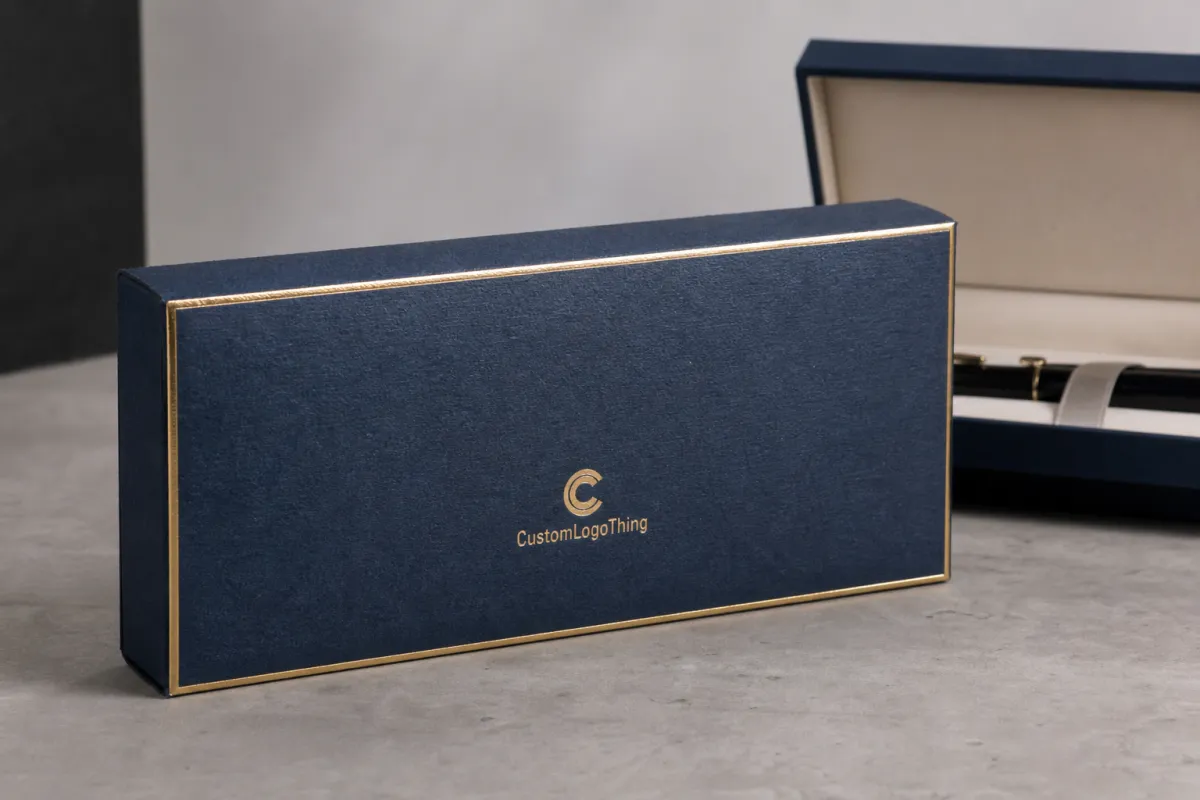
Stationery gift boxes cost is driven more by build decisions than by branding language. Labels are cheap. Board, wrap paper, glue, tooling, and labor are not. A machine does not care whether the box is for a client welcome kit, a retail shelf, or a holiday mailer. It cares about thickness, fold count, insert complexity, and whether the job can run cleanly without extra handwork.
That is where buyers get tripped up. A simple-looking package can cost more than a flashy one if it uses thick chipboard, a wrapped rigid build, or a custom insert that has to be assembled by hand. I have also seen the reverse: a visually busy carton that priced well because it used a standard die line, ran flat, and skipped specialty finishing. Packaging has a sneaky way of punishing assumptions.
In practical terms, stationery gift boxes cost moves with these levers:
- Size: larger boxes use more board, more wrap, and more freight space.
- Structure: rigid setup, drawer, magnetic closure, mailer, and folding carton sit in different labor bands.
- Print coverage: full-coverage artwork usually costs more than limited-area printing.
- Finish: lamination, foil, embossing, debossing, and spot UV add setup and handling.
- Insert complexity: a simple paperboard insert is usually cheaper than a multi-part die-cut build.
- Set contents: the shape and weight of pens, notebooks, clips, and cards change the fit requirements.
A clean example makes the point. A rigid mailer with a single insert and one-color print can come in cheaper than a heavily decorated folding carton if the second version wastes board and slows production. Buyers sometimes assume a restrained design automatically lowers stationery gift boxes cost. Not always. Structure and production path usually matter more than aesthetic taste.
That is why I compare stationery gift boxes cost against shelf impact and shipping efficiency together. A package that looks strong in-store but arrives crushed will create freight claims and replacement expenses. A box that ships beautifully but looks generic may not support sell-through. The useful question is not, “What is the cheapest box?” It is, “Which spec gives the best landed cost for this exact use?”
Rework is another quiet budget drain. A loose dieline or vague content list can turn a low quote into a high invoice pretty quickly. A supplier may give you a tidy stationery gift boxes cost number, then add corrections, revised sampling, or remake charges when the fit turns out to be wrong. That is not rare. It usually happens when the buyer skips measurement and jumps straight to artwork.
A pretty quote is not a good quote if the box has to be remade.
Box styles that fit stationery sets without wasting budget
The quickest way to control stationery gift boxes cost is to match the box style to the actual contents. Not the imagined contents. The real ones. If the set is flat, light, and easy to stack, there is no reason to pay for a premium structure that behaves like furniture.
Common formats fall into a few clear bands. Folding cartons are often the lowest-cost option for simple stationery kits. Rigid Setup Boxes cost more, but they bring a stronger premium feel and better protection. Drawer boxes create a nice reveal, which brands love for gifting. Magnetic Closure Boxes look high-end too, although they add board, labor, and tighter assembly tolerances. Mailer-style boxes sit in the practical middle ground for ecommerce and direct mail.
| Box style | Typical use | Indicative unit cost band | What drives the price |
|---|---|---|---|
| Folding carton | Flat stationery kits, promo sets, retail shelves | $0.35-$1.10 | Board weight, print coverage, die-cut complexity |
| Mailer-style box | Ecommerce sets, influencer kits, direct mail | $0.70-$2.20 | Structure strength, coating, inside print, insert type |
| Rigid setup box | Corporate gifts, premium journal sets, presentation kits | $1.60-$4.50 | Chipboard thickness, wrap paper, manual assembly, inserts |
| Drawer box | Gift sets that need a reveal moment | $1.80-$5.00 | Tray fit, sleeve wrap, pull ribbon, finishing labor |
| Magnetic closure box | High-end gifting, branded presentations | $2.20-$6.00 | Magnet hardware, rigid build, wrap quality, QC time |
Those ranges are broad on purpose. Stationery gift boxes cost changes with quantity, dimensions, insert design, and finish level. A neat 1,000-piece run of a plain rigid box can sit near the lower end of the range. The same format with foil, embossing, and a custom die-cut insert can climb fast. Nobody gets a bargain just because the box is labeled “premium.”
Insert choice deserves real attention. Foam inserts protect well, but they can raise cost and complicate recycling. Paperboard inserts are usually easier to produce at volume and easier to ship. Molded pulp supports a more sustainable story, although it needs more lead time and tighter shape planning. Die-cut cardstock is often the cleanest answer for flat stationery kits because it is light, flexible, and easy to customize.
My rule is simple. If the set is mostly flat items like notebooks, note cards, envelopes, stickers, and business-card-sized accessories, choose a shallow box with a simple insert. If the kit contains mixed shapes or fragile pieces, spend on support structure instead of oversizing the carton. Oversizing is a lazy fix. It inflates stationery gift boxes cost and makes the product look less disciplined. I’ve seen that mistake more than once, and it is never as harmless as it sounds in the briefing call.
Retail sets need restraint as much as presentation. A magnetic box with thick foam for a basic stationery pack is often overkill. A folding carton with a smart insert and one strong visual finish can do the job for less, and do it cleanly. That is how good buyers protect margin without making the package feel cheap.
Materials, sizes, and print specs that change unit cost
Material selection is where many buyers overspend without realizing it. They see a sample, like the hand feel, and stop asking questions. That is how stationery gift boxes cost rises without any meaningful improvement in the product. Board thickness and wrap paper are not decorative details. They are the structure of the quote.
For rigid boxes, chipboard commonly falls around 1.5 mm to 3 mm, depending on the size and the weight of the stationery set. Heavier inserts and premium presentation boxes usually sit closer to the thicker end. For folding cartons, paperboard often runs from 250 gsm to 400 gsm, again depending on the load and how much stiffness the buyer expects. Thicker board can improve hand feel, but it also increases material cost and, sometimes, freight weight. Small change. Real money.
Wrap paper has the same effect. Standard art paper is usually cheaper than textured specialty wrap, soft-touch stock, or heavily coated decorative papers. If the box needs a luxury finish, the wrap can become one of the bigger drivers of stationery gift boxes cost. That is especially true on rigid boxes, where every panel must be wrapped and aligned by hand or semi-hand assembly.
Size sounds obvious, yet it gets ignored constantly. Larger boxes use more board and wrap, but they also increase shipping volume and can reduce the number of cartons per pallet. That hits freight efficiency. If the set only needs 240 mm by 180 mm by 40 mm, do not quote a 300 mm by 220 mm by 60 mm box because it feels safer. Empty space is expensive. It adds material, air, and avoidable stationery gift boxes cost.
Print specs move the number too. A simple uncoated print or one-side CMYK print is usually the lowest-cost path. Matte or gloss lamination adds another stage. Spot UV, foil stamping, embossing, and debossing move the job into a more premium pricing tier because they need extra tooling, extra setup, or extra handling. Full-coverage specialty effects can look excellent, but the buyer should know where the jump happens before approving the proof.
For certified fiber, you may need FSC material. If that matters to your retail or corporate buyer, verify chain-of-custody instead of assuming it exists. The FSC standard is a real checkpoint, not a decorative logo. If the boxes are going through a tougher distribution chain, transit testing matters too. The ISTA approach to transport testing is a useful benchmark for how packaging should behave under drop, vibration, and compression.
Tolerances matter more than most people expect. A tight-fit stationery gift box needs accurate dimensions, especially when the kit includes multiple components. A small change in notebook thickness or pen size can break the fit. Then the supplier has to revise the dieline, recut the insert, and resample. That is how a low quote turns into a higher invoice, and why stationery gift boxes cost should always be read beside the dieline, not apart from it.
Stationery gift boxes cost, pricing, MOQ, and quote levers
This is the section buyers usually need most. Stationery gift boxes cost changes sharply with quantity because setup work, die cutting, proofing, and sourcing get spread across more units as volume rises. A quote for 100 units should not look like a quote for 5,000. If it does, the seller is guessing or the spec is too vague to trust.
MOQ matters because a minimum order quantity is a production reality, not a sales trick. Lower MOQ almost always means higher unit pricing. The same tooling, proofing, and production setup happens whether you order 100 boxes or 1,000. The difference is how many units absorb the setup charges. Buyers want bulk pricing at tiny volumes. Manufacturers would enjoy that too, but math is blunt and does not negotiate.
Here is a practical way to think about stationery gift boxes cost by volume:
| Order quantity | Typical pricing behavior | What to watch |
|---|---|---|
| 100 units | Highest cost per piece; setup charges dominate | Sample fees, tooling fees, and manual labor |
| 500 units | Unit cost starts to settle | Artwork changes and insert complexity still matter |
| 1,000 units | Common sweet spot for many custom runs | Price stability improves if the spec is locked |
| 5,000 units | Lower cost per piece and better bulk pricing | Storage, cash flow, and freight volume become relevant |
For a rigid stationery gift box, a small run might land in the $3.50-$8.00 range per unit depending on the build, while a cleaner 1,000-piece order can fall toward $1.60-$3.20 if the finish stays modest. A folding carton may dip below $1.00 at volume, but only if the board, print, and insert stay simple. That is the pattern. The exact number depends on the spec, but the direction is steady.
Read every quote line by line. Separate the box structure, printing, inserts, finishing, packaging, and freight. If the supplier bundles everything into one mystery number, ask for the split. Otherwise you cannot tell whether the stationery gift boxes cost is competitive or just vague. Vague is not a pricing strategy. It is a problem wearing a tie.
Use this checklist when comparing offers:
- Confirm the box style and exact dimensions.
- Ask what board and wrap paper are included.
- Separate print, lamination, foil, embossing, and insert pricing.
- Check whether tooling fees are one-time or repeated.
- Ask for freight terms and packing assumptions.
- Request the reorder price, not just the first-run price.
The reorder price matters more than many buyers think. First runs often include artwork handling, die creation, and sample approval work. Reorders should be cleaner if the spec stays unchanged. If a supplier cannot hold the same spec on repeat orders, your stationery gift boxes cost will swing for no good reason. That is not normal. That is a supplier problem.
One practical quote trick: compare at least two structures, not just two prices. A lower-cost folding carton may beat a rigid box on unit cost, but the rigid version may win on retail value and perceived brand quality. That is why the best quote is not always the lowest. The best quote is the one with the best landed cost, acceptable lead time, stable quality, and a spec the factory can actually repeat without drama.
If the quote hides insert, finish, and freight in one lump sum, it is not a quote. It is a guess with nice stationery.
Process, timeline, and production steps from dieline to delivery
A clean production process keeps stationery gift boxes cost from drifting. Buyers often think the quote is the hard part. It is not. The hard part is locking the structure early enough that the job can move without corrections. A polished box with a moving target behind it becomes a timeline problem very quickly.
The normal sequence is straightforward. First, confirm the box style and collect exact dimensions for every item in the set. Second, approve the dieline. Third, review artwork on the real structural template. Fourth, sample the box and check fit. Fifth, move into production. That order sounds basic because it is basic. Skipping steps is how delays get baked into the schedule and how stationery gift boxes cost climbs through avoidable revisions.
Typical timing, assuming the artwork is ready and the spec is clear:
- Dieline confirmation: 1-2 business days if dimensions are already measured.
- Artwork proofing: 1-3 business days for a straightforward layout.
- Sampling: 5-10 business days for simple structures, longer for complex inserts.
- Production: often 12-20 business days after approval, depending on finish and quantity.
- Freight and packing: add transit time, palletizing, QC, and buffer time for launch schedules.
Finishing-heavy jobs need more patience. Foil, embossing, debossing, and specialty lamination can add days because they introduce more handling and more chances for a proof mismatch. If the box includes a custom insert, the schedule gets tighter again. That is one reason buyers should ask how the finish level affects stationery gift boxes cost and lead time together, not separately.
Delay points are usually the same across projects. Missing artwork files. Unclear dimensions. Last-minute content swaps. A sample that gets rejected because one accessory was measured incorrectly. Buyers sometimes blame the supplier for the timeline, but the schedule usually breaks where the spec was loose. Tight brief, fewer surprises. Loose brief, more invoices.
Shipping deserves space in the schedule too. A box can look ready on paper and still need QC, packing, palletizing, and transit. For retail launches, do not pretend freight is a magic teleport. Build in a buffer. If the set has a launch date tied to a sales event, plan backward and leave room for sample approval. That buffer often protects more margin than negotiating a tiny discount on stationery gift boxes cost.
There is another practical reason to sample before full production. A prototype shows whether the insert supports the actual contents, whether the lid sits cleanly, and whether the finish feels right in hand. A spreadsheet cannot show any of that. A prototype can. If the set includes pens, ribbons, or odd-shaped accessories, prototype first. The cost of one sample is small compared with the cost of a batch that fails fit checks.
Why choose us for stationery gift boxes that sell
Good suppliers do more than quote a number. They help buyers keep stationery gift boxes cost aligned with what the package is supposed to do. That means clear specs, honest feedback, and a willingness to say, “No, that finish is going to inflate cost without improving the box enough to matter.” That kind of answer saves money. It also saves time, which is the same thing in a different coat.
We focus on practical value: the right structure, the right materials, and a repeatable result that looks clean on a shelf, in a shipping carton, and on camera. The point is not just to make a nice-looking box. The point is to make a box that stays consistent from proof to reorder. That consistency matters more than a one-off sample that photographs well and falls apart in real use.
For buyers comparing formats, our Custom Packaging Products page is a good starting point because it narrows the choice before the quote stage. That is usually where the real savings happen. If you select the wrong structure too late, no amount of polishing will rescue the stationery gift boxes cost problem.
What Buyers Should Expect from a serious packaging partner:
- Sample support: so the fit gets tested before a full run.
- Proof control: so artwork and dimensions match the dieline.
- Stable sourcing: so board and wrap quality do not drift between lots.
- Insert accuracy: so stationery components sit neatly instead of rattling around.
- Honest recommendations: so you do not pay for a finish that adds little value.
That last one matters. Good suppliers save clients from expensive bad ideas. If Foil Stamping on a tiny logo will barely read, say so. If a soft-touch wrap will raise stationery gift boxes cost more than the market will reward, say that too. That is not being difficult. That is being useful.
If your order needs certified paper, shelf-ready presentation, or packaging that can hold up under shipment, the spec should reflect that from the start. A nice-looking box that fails in transit is just a waste of good board. A cheap box that looks cheap usually costs more in lost sales than it saved in production. Buyers know this after a few bad orders. The rest learn it the expensive way.
You can also use our Custom Packaging Products listing to compare structure types before asking for a quote. That keeps stationery gift boxes cost grounded in the actual construction, not in a rough idea that changes three times during sampling.
Next steps: lock specs, request samples, and compare quotes
Start with the contents. List every item that goes into the box, then measure it properly. Not “roughly.” Properly. Once you have the contents, lock the box dimensions, finish level, insert style, and target quantity before asking for a quote. That is the cleanest way to keep stationery gift boxes cost predictable.
If the order includes multiple pieces or a premium finish, request a sample or prototype. Seeing the fit in person often exposes problems that look fine in a spreadsheet. A slightly loose notebook slot, a pen that shifts in transit, a lid that lifts because the insert is too tall - those are the kinds of issues a sample catches fast. The cost of a sample is small. The cost of fixing a full run is not.
Then compare at least two quote structures. One should be optimized for lower unit cost. The other should be optimized for stronger presentation. That makes the tradeoff obvious. It also keeps the buyer in control instead of guessing. If the cheaper option saves 20% but looks flat, you can decide whether the brand can live with that. If the premium option raises stationery gift boxes cost by a modest amount but improves shelf impact and unboxing, that may be the smarter buy.
Keep the decision in this order:
- Define the stationery set contents.
- Measure the actual fit.
- Choose the box structure that fits the channel.
- Set the finish level before asking for pricing.
- Request quotes at multiple quantities.
- Check the sample before full production.
The main takeaway is simple: compare stationery gift boxes cost by structure, Material, Print, MOQ, and timeline together, then choose the version that protects margin and matches the real use case. If you do that, you stop paying for fluff and start paying for packaging that earns its keep.
And yes, the exact number still matters. So does the fit. So does the finish. Once you look at stationery gift boxes cost the right way, you can buy with less guesswork and more control. That is the whole trick, honestly.
Before you approve a run, compare the structures, lock the dimensional spec, and ask for a sample-based quote. That gives you a real answer on stationery gift boxes cost instead of a number that falls apart as soon as production starts.
What affects stationery gift boxes cost the most?
The biggest drivers are box style, material thickness, print coverage, and finish complexity. Insert type and custom sizing can push the price up faster than an extra color change. Freight and packing matter too if the boxes are large or shipped in small quantities. If you want a clean read on stationery gift boxes cost, ask for each part separately.
How does MOQ change stationery gift boxes cost?
Lower MOQ usually means higher unit cost because setup and proofing are spread across fewer boxes. At higher quantities, material sourcing and machine setup become more efficient, so the per-box price drops. Ask for pricing at several breakpoints so you can see where the bulk pricing actually starts and how fast the cost per piece falls.
Which box style is most affordable for stationery sets?
Folding cartons are often the lowest-cost option for simple stationery kits. Rigid boxes cost more, but they deliver a better premium feel and more protection. The right choice depends on whether the set is for retail shelf appeal, gifting, or shipping. The cheapest style is not always the smartest one for your brand.
How long does production usually take for stationery gift boxes?
Simple runs move faster, but custom print and finish work adds time. Sampling, artwork approval, and insert confirmation are the steps that most often extend the schedule. Build in shipping time and a buffer for revisions if the order is tied to a launch date. If the spec is clean, stationery gift boxes cost is easier to manage and the schedule usually stays tighter.
How can I lower stationery gift boxes cost without making the box look cheap?
Use a clean structure with one strong visual finish instead of stacking multiple expensive effects. Right-size the box and simplify the insert so you are not paying for empty space or unnecessary material. Spend on one detail buyers notice and cut the parts they do not. That usually gives the best balance between presentation and stationery gift boxes cost.


