Two stationery shops can order 5,000 paper bags and receive quotes that look close at first glance, then land 30-40% apart once the details are exposed. One price may assume thin kraft, a stock size, one-color printing, and basic carton packing. The other may include heavier paper, a twisted handle, broader ink coverage, a printed side gusset, and freight to a commercial address. Same quantity, very different bag.
Stationery Paper Bags Unit cost is not a single number floating loose from the product. It is built from paper grade, bag dimensions, gusset depth, handle construction, print method, finishing, packing, waste allowance, and shipping terms. If those specs are missing, the price is only a placeholder.
For stationery retailers, gift shops, bookstores, craft brands, event suppliers, and office supply sellers, the aim is usually modest but specific: a bag that looks polished at checkout, carries the product safely, and does not eat the margin on a $14 notebook or a $28 planner set. Cheap can be useful. Flimsy usually becomes expensive.
What Stationery Paper Bags Unit Cost Really Buys You
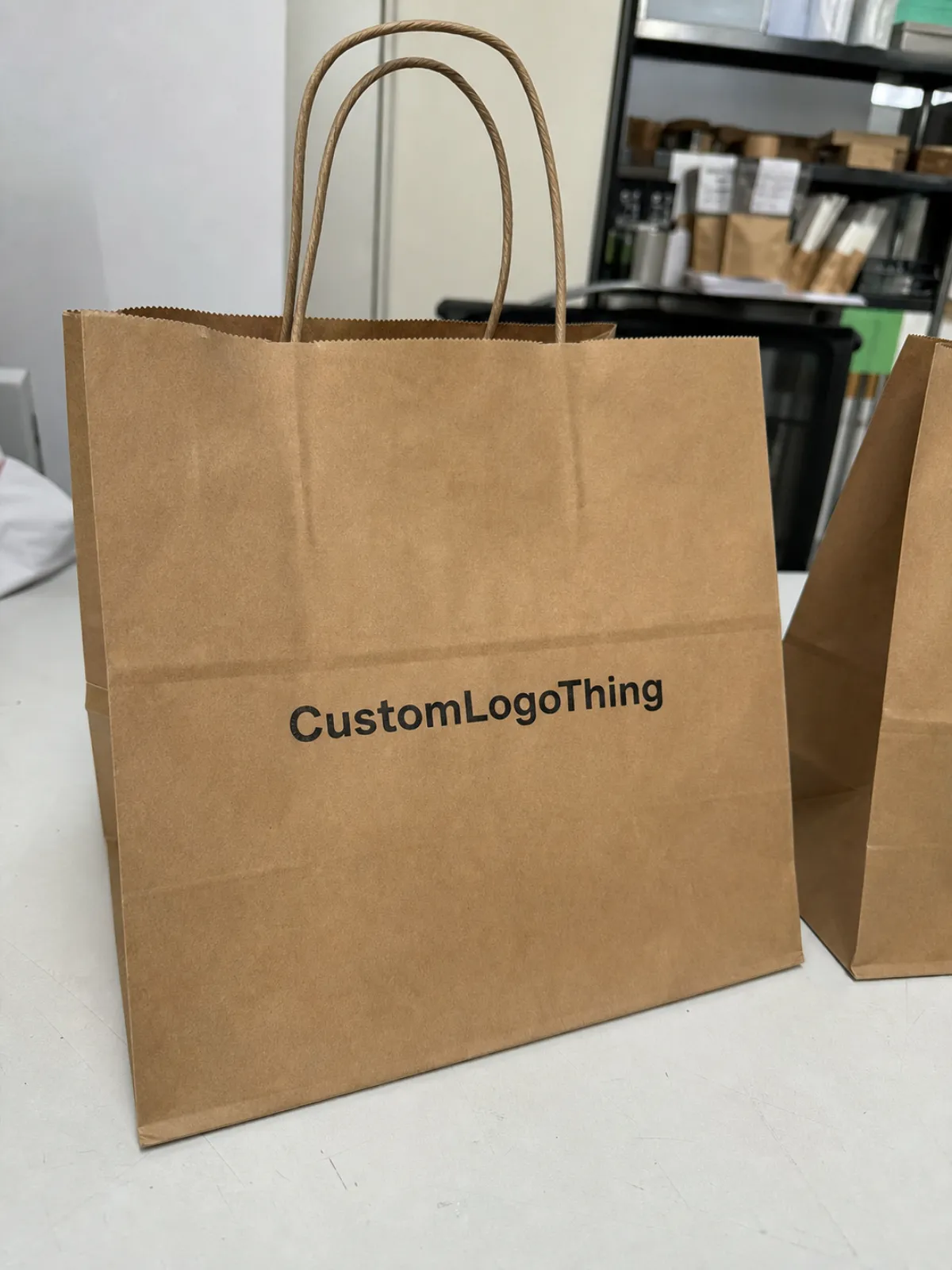
Stationery bags are often smaller than apparel or grocery bags, but they are not always lighter-duty. Notebooks, planners, boxed pen sets, card packs, calendars, rigid covers, and art prints create pressure points. A soft shirt can forgive a weak bag. A stack of spiral notebooks will find every thin spot, especially at the bottom fold, side gusset, and handle area.
That is why a bag price should be judged against the work the bag has to do. A 100 GSM kraft bag may be suitable for greeting cards, stickers, envelopes, washi tape, and light checkout items. Move into journals, hardbound planners, or boxed stationery sets and 120-150 GSM often becomes the safer working range. Premium gift bags may run 150-210 GSM with reinforced folds, stronger handles, lamination, or thicker boards in the base.
Paper weight is one of the simplest cost levers, and one of the easiest to misuse. Thinner paper reduces material cost and can reduce carton weight. It can also crease, sag, split near the gusset, or tear around the handle if the product load is too concentrated. Heavier paper improves hand feel and structure, but it raises material cost, packed weight, and often freight.
Freight deserves more attention than it usually gets. Paper bags ship flat or nested, but they still take carton space, and heavier GSM adds real weight across a large run. A quote that excludes freight may look cleaner than one that includes it, yet the invoice will not stay clean for long.
Good buying rule: do not chase the cheapest bag. Chase the lowest safe cost for a bag that carries the product cleanly, prints well, and does not embarrass the brand at checkout.
A useful quote is specific. “Premium paper bag” does not tell a buyer enough to compare anything. “140 GSM white kraft, twisted paper handle, one-color print on two sides, 5,000 pieces, packed 200 per carton, delivered to commercial address” gives everyone something real to work from.
Paper Bag Styles That Fit Stationery Products Without Overbuilding
Bag style changes cost more than many buyers expect. A flat-handle kraft checkout bag and a laminated rope-handle gift bag may both be paper bags, but they use different materials, machines, labor steps, and packing methods. Treating them as interchangeable leads to messy comparisons.
Common stationery packaging formats include:
- Flat handle kraft bags: budget-friendly for cards, stickers, small notebooks, envelopes, and everyday retail checkout.
- Twisted handle shopping bags: a stronger, cleaner-looking choice for bookstores, stationery shops, craft brands, and mid-range gift packaging.
- Rope handle gift bags: a premium option for boxed stationery sets, holiday bundles, event kits, and higher-ticket retail presentation.
- Die-cut handle bags: compact and tidy when the handle should stay visually quiet or the product is relatively light.
- Gusseted merchandise bags: practical for journals, planners, catalogs, and mixed checkout orders that need base depth.
- Laminated boutique bags: best for elevated gift presentation, not for buyers trying to shave every cent from a high-volume checkout bag.
Size affects both performance and price. Small bags work for cards, stickers, pen refills, wax seals, and small craft accessories. Medium gusseted bags fit notebooks, journals, planners, and greeting-card assortments. Tall narrow bags suit calendars, rolled paper goods, slim art prints, or portfolio-style products. Wider base bags make sense for boxed stationery sets because the product can sit flat instead of leaning and stressing the side walls.
Stationery products often need a flat bottom and a usable side gusset. Rigid corners, spiral bindings, thick covers, and box edges are harder on paper than soft merchandise. A 9 x 4 x 10 inch bag may carry several notebooks better than a narrow flat bag that looks elegant in a mockup but folds under real weight. Mockups do not walk across a parking lot in the rain.
Handle choice is another cost lever. Flat paper handles are usually the most economical and work well for lighter retail purchases. Twisted handles cost more but feel better in hand and distribute weight more comfortably. Rope handles add material and labor, and they often bring higher minimums on fully custom bags. Side gusset printing can look sharp, but it should earn its place in the budget; if customers rarely see it, front-and-back printing may be the better spend.
Specifications That Move the Price More Than Buyers Expect
A serious quote request should include width, gusset, height, paper GSM, material type, handle type, print colors, print coverage, finish, order quantity, packing requirements, and destination. Leave out several of those details and the quote becomes a guess with a logo attached.
Paper selection affects strength, color, texture, and print result. White kraft gives cleaner ink color and a crisp retail look. Brown kraft suits natural, recycled, handmade, or cost-conscious branding, though ink colors can appear more muted. Art paper provides a smoother surface for detailed graphics and premium color control. Recycled paper can support sustainability goals, but buyers should expect more variation in shade and texture. Laminated paper creates a polished boutique finish, although film choice can affect recyclability depending on the local waste stream.
For many stationery orders, 100-120 GSM is a light retail range suitable for cards, stickers, envelopes, and small accessories. The 120-150 GSM range is a safer standard for notebooks, planners, journals, and mixed checkout orders. For boxed sets, thick planners, premium gifting, or heavier bundles, 150-210 GSM or reinforced structures often make more sense. The right choice depends on product weight, bag size, handle style, and how the bag will be used after purchase.
Printing can move the price just as quickly as paper. One-color flexo or screen printing keeps logo bags economical. Offset printing handles detailed artwork and larger production runs with better control, especially on smooth coated or art papers. Foil stamping adds a premium accent, but it also brings die charges, setup time, registration control, and a higher spoilage allowance. Full-coverage artwork can look excellent, though it is rarely the cheapest route.
Finishes should be chosen with restraint. Matte lamination, gloss lamination, spot UV, embossing, debossing, hot foil, varnish, and specialty coatings all add process steps, machine time, labor, inspection, and waste. A clean one-color logo on good paper can look more confident than five finishes competing for attention on a thin bag.
Sustainability claims need to match the actual material. Buyers may request FSC-certified paper, recycled content, soy-based inks where suitable, recyclable handles, plastic-free finishes, or specific retail labeling language. FSC guidance is available through the Forest Stewardship Council. For recycling and waste-reduction language, general guidance from the U.S. Environmental Protection Agency is a useful reference. A recyclable paper body with plastic lamination or synthetic rope handles may need more careful wording than a plain kraft bag.
| Specification Choice | Best Fit | Typical Cost Effect | Buyer Caution |
|---|---|---|---|
| 100-120 GSM kraft | Cards, stickers, light checkout | Lower unit cost | May crease or sag with heavy planners |
| 120-150 GSM kraft or art paper | Notebooks, planners, journals | Moderate cost per piece | Confirm handle strength and gusset size |
| 150-210 GSM premium paper | Gift sets, boxed stationery, boutique retail | Higher material and freight cost | Avoid overbuilding for low-ticket items |
| Foil, embossing, lamination | Premium presentation | Adds tooling fees and setup charges | Can increase MOQ and production time |
Unit Cost, MOQ, and Quote Ranges for Stationery Bags
Unit cost usually drops as quantity rises because setup, plates, dies, color matching, machine preparation, and administrative work spread across more pieces. A 1,000-piece custom run carries more setup pressure per bag. A 10,000-piece run gives production more room to run efficiently.
Illustrative ranges help buyers set expectations, provided they are treated as working ranges rather than fixed market prices. Simple kraft logo bags at larger quantities may fall from the lower cents to under $0.60 per unit depending on size, GSM, print, handle, packing, and freight. Standard twisted-handle stationery bags commonly sit around $0.35-$1.20 per piece across many custom runs. Premium laminated rope-handle gift bags can move from about $0.90 to $2.50+ per piece, especially with thicker paper, foil, special handles, full-coverage print, or complex carton packing.
A tiny one-color kraft bag at 20,000 pieces is not comparable to a full-color laminated boutique bag at 1,000 pieces. If a supplier gives one number without specs, the quote is not ready for decision-making.
MOQ depends on how the bag is produced. Stock-size Bags with Logo printing can sometimes support lower minimums. Fully custom size, custom paper, offset printing, foil stamping, lamination, special handles, and mixed-size assortments usually require higher MOQs. A practical buyer asks for 1,000, 3,000, 5,000, and 10,000 piece pricing if storage and forecast allow. The jump from short run to efficient production can change the per-bag price quickly.
A complete quote should show the bag size, material, paper weight, print method, print colors, finish, quantity tiers, sample cost, plate or die fees, packing method, carton dimensions, shipping terms, and estimated lead time. It should also state whether pricing includes proofing, export cartons, local delivery, duties, taxes, or freight. The cheapest quote often becomes less impressive once the missing pieces are added back.
Side-by-side pricing is useful because it turns vague preferences into decisions. A buyer may save $0.18 per bag by dropping lamination, spend $0.12 more for stronger handles, or keep the premium finish because the bag functions as gift packaging. Good cost control is not about removing everything; it is about knowing what each choice costs and what it actually contributes.
Production Process and Timeline From Artwork to Delivery
The production path is straightforward, but it needs discipline: confirm specifications, review artwork, prepare the dieline, issue a digital proof, approve a sample or pre-production proof if needed, print, convert, finish, inspect, pack, and ship. Skip an approval step and the problem may not appear until thousands of bags are already printed.
Artwork and proofing may take 2-4 business days when files are clean. Sampling may take 5-10 business days for custom structure, special paper, foil, lamination, or unusual handles. Mass production often runs 12-25 business days after final approval for many stationery paper bag orders, depending on quantity, complexity, material availability, and the production schedule. Freight can add several days by air or several weeks by ocean.
Lead time starts after final specifications, artwork, proof, and deposit are approved. A blurry screenshot, a rough logo pulled from a website, or “about notebook size” is not production-ready information. It is the beginning of cleanup.
Vector artwork is preferred: AI, EPS, or editable PDF. Pantone references help color matching, especially for stationery brands using soft pastels, muted greens, warm neutrals, or delicate monograms. Dieline placement matters because folds, handles, bottom panels, and side gussets can interrupt artwork. Front-center logo placement is the safest retail choice. Double-sided printing improves walkout visibility. Side gusset printing can be worthwhile when the bag sits on shelves or appears in photography, but not every order needs it.
Sample type should match the risk. Digital mockups work for basic layout approval. Blank structural samples help test product fit and handle comfort. Printed samples are useful for premium orders, foil, lamination, tight color requirements, or complex artwork. A pre-production proof is a reasonable safeguard when finish accuracy matters and the buyer cannot absorb a surprise.
Common timeline killers include late artwork changes, unclear product dimensions, missing delivery addresses, last-minute Pantone matching requests, holiday congestion, and approving a bag that looks beautiful but is physically too small. Store launches, trade shows, subscription-box drops, back-to-school promotions, and holiday retail all need buffer time. Packaging rushed at the end often costs more and performs worse.
How to Compare Suppliers Without Getting Burned
Compare quotes line by line, not by unit price alone. If one supplier quotes 150 GSM paper and another quotes 100 GSM, those are not equal bags. The lower-cost option may be perfectly valid for light products, but it should not be treated as the same structure.
Useful supplier checks include paper bag specialization, available print methods, sample policy, quality-control process, export packing quality, response clarity, and willingness to explain cost differences. A strong supplier should challenge a weak spec before production begins. If the bag is likely to fail under the product weight, that should be said plainly.
Custom printing experience matters for stationery packaging because fine lines, small type, delicate brand marks, pastel colors, and textured papers expose poor prepress quickly. A deep black bookstore logo on kraft may forgive some variation. A pale sage monogram on white kraft will not. Small registration shifts also become more visible on foil borders, thin frames, and repeated patterns.
Quality-control checks should cover paper thickness tolerance, handle attachment strength, glue-line cleanliness, color consistency, fold accuracy, bottom construction, scuffing, lamination bubbles, foil registration, odor, and carton packing. For heavier products or retail kits that ship to stores, ask how the supplier thinks about transit handling. ISTA publishes widely used package performance testing standards at ista.org. A simple retail bag may not need a formal test program, but the principle still applies: packaging must survive real handling, not only a studio photo.
Online marketplace quotes can be useful for early research, but vague specifications and recycled images create risk. Ask for actual GSM, bag dimensions, handle material, print method, finish, MOQ, carton quantity, and freight terms. “Luxury” is not a material. “Premium” is not a paper weight. A quote built on adjectives will not protect the buyer when the cartons arrive.
For a custom packaging order, the supplier’s job is not just to take artwork and print it. The useful work is in matching the structure to the product, recommending practical print choices, explaining tradeoffs, catching dieline problems, and packing the finished bags so they arrive clean and usable.
Cost-Saving Moves That Do Not Make the Bag Look Cheap
There are smart ways to reduce stationery paper Bags Unit Cost without making the bag look like an apology. Use standard sizes where possible. Limit print colors. Keep artwork away from folds and heavy crease lines. Choose brown kraft when it fits the brand. Skip lamination if the paper and logo already look good. Consolidate sizes across product lines so one bag can serve cards, notebooks, and small gift sets.
Spend more where customers notice or where failure gets expensive. Heavier paper makes sense for hardbound planners. A stronger bottom helps boxed stationery sets. Better handles matter for premium retail and heavier checkout orders. Foil or embossing can be justified when the bag doubles as gift packaging and customers are likely to reuse it. Reuse is quiet advertising, and often more valuable than another loose insert.
Design around one strong brand moment. A centered one-color logo on 140 GSM white kraft can look sharp and controlled. Too many finishes on thin paper can look confused. More decoration does not automatically create better branding; sometimes the best decision is to stop before the bag becomes overworked.
Order planning affects the economics. Larger runs reduce per-piece cost, but over-ordering ties up cash and storage. Forecast by season, store count, launch schedule, reorder timing, and product mix. If the brand uses 700 bags per month and the artwork will stay stable, a 10,000-piece run may be reasonable. If a rebrand is likely in eight weeks, filling a stockroom with obsolete bags is not savings.
Think about the whole packaging system. Bag size should work with tissue paper, stickers, thank-you cards, inserts, and shipping cartons where relevant. Random sizing creates waste and slows packing. A manufacturer can often value-engineer the bag by adjusting GSM, swapping handle type, modifying dimensions, simplifying print coverage, or using a standard die while keeping the brand presentation intact.
Practical rule: cut cost from hidden construction choices first, not from the feature the customer actually sees and touches.
Next Steps to Get a Clean Stationery Bag Quote
Before requesting pricing, gather product dimensions, expected carry weight, preferred bag style, target quantity, logo file, brand colors, deadline, shipping destination, and sustainability requirements. A few minutes of preparation can prevent several rounds of revised quotes.
Use this quote checklist:
- Bag size: width x gusset x height, or product dimensions if the bag size is not decided
- Paper type and GSM: brown kraft, white kraft, art paper, recycled paper, or laminated paper
- Handle style: flat paper, twisted paper, rope, die-cut, or no handle
- Print details: one-color, two-color, full-color, Pantone match, one side or two sides
- Finish: none, varnish, matte lamination, gloss lamination, foil, embossing, or spot UV
- Quantity tiers: 1,000, 3,000, 5,000, 10,000 pieces, or the buyer’s actual forecast
- Sample needs: digital proof, blank sample, printed sample, or production proof
- Delivery address, deadline, and any carton labeling or packing requirements
Ask for two or three spec options: budget, standard, and premium. One quote can make a specification feel fixed before the tradeoffs are visible. Several options show whether the smarter move is lighter paper, fewer print colors, a better handle, a standard size, or a cleaner finish package.
If the size is uncertain, send product dimensions or photos. Guessing bag dimensions from appearance alone is how brands end up with products sticking out, handles sitting too high, or bases too narrow for boxed sets. A clean quote should make the practical version, the polished version, and the higher-finish version visible before production begins.
A reliable stationery bag price starts with clear specifications and quantity tiers, not a mystery number with missing details. Once the product size, artwork, bag target, quantity, delivery address, and deadline are known, the unit cost becomes easier to control because the production choices are finally on the table.
FAQ
What affects stationery paper bag unit cost the most?
The biggest drivers are bag size, paper GSM, handle type, print method, number of print colors, finish, order quantity, packing method, and freight. A small kraft bag with one-color printing costs much less than a laminated gift bag with rope handles, foil stamping, and full-color artwork. Quantity also matters because setup costs spread across more bags, so higher runs usually lower the per-piece price.
What MOQ should I expect for custom stationery paper bags?
MOQ depends on whether the order uses a stock-size bag with logo printing or a fully custom structure. Lower MOQs are usually possible for simple logo-printed stock styles, while custom size, offset printing, lamination, foil, and rope handles often require higher minimums. Ask for quantity tiers so you can see where pricing becomes more efficient.
How do I lower the unit cost of stationery bags without making them flimsy?
Use a standard size, reduce print colors, avoid unnecessary lamination, choose a practical handle, and keep artwork simple enough for efficient production. Do not automatically cut paper GSM if the bag must carry notebooks, planners, or boxed stationery sets. Adjusting dimensions, print coverage, finish, or handle style can often save money while keeping the bag strong enough for retail use.
How long does custom stationery paper bag production take?
Timing depends on artwork readiness, sampling needs, print method, finishing, order quantity, and shipping method. Artwork and proofing may take a few business days, sampling can add 5-10 business days, and mass production often runs 12-25 business days after final approval for many orders. Lead time starts after specs, artwork, proof, and deposit are approved.
What should I send to get an accurate stationery paper bags quote?
Send bag dimensions, product weight, paper preference, GSM target if known, handle style, print colors, finish, quantity, delivery address, and deadline. Include vector artwork such as AI, EPS, or editable PDF when possible, plus Pantone colors if color matching matters. If size is uncertain, send product dimensions or photos so the manufacturer can recommend a practical bag structure.

