Wine club Ribbed Winter Beanies Bulk Order planning tips
Wine club Ribbed Winter Beanies bulk order planning looks straightforward until the proof comes back too busy, the cuff is too shallow for the logo, or the shipment lands after the cold-weather selling window has already narrowed. Beanies sit in a useful middle ground: practical enough that members will wear them, visible enough that the brand keeps traveling, and compact enough to ship without the freight headaches that come with bulkier apparel.
The buying mistake is treating them like a simple novelty item. They are not. Ribbed knit, decoration method, color choice, and packaging all affect how the final piece feels, how it holds up, and how much margin survives once the quote is finalized. The cleanest orders usually come from a narrow brief: one blank, one decoration method, one approval path, and a realistic ship date. That discipline matters more than chasing a flashy concept that adds setup cost and delays production.
Wine clubs also have a particular set of incentives. The merch has to work for members who expect a gift to feel considered, but it may also need to sell in a tasting room or support a higher-tier bundle. A ribbed winter beanie can do all three if the spec is controlled from the start.
Wine club ribbed winter beanies bulk order planning: why bulk orders work
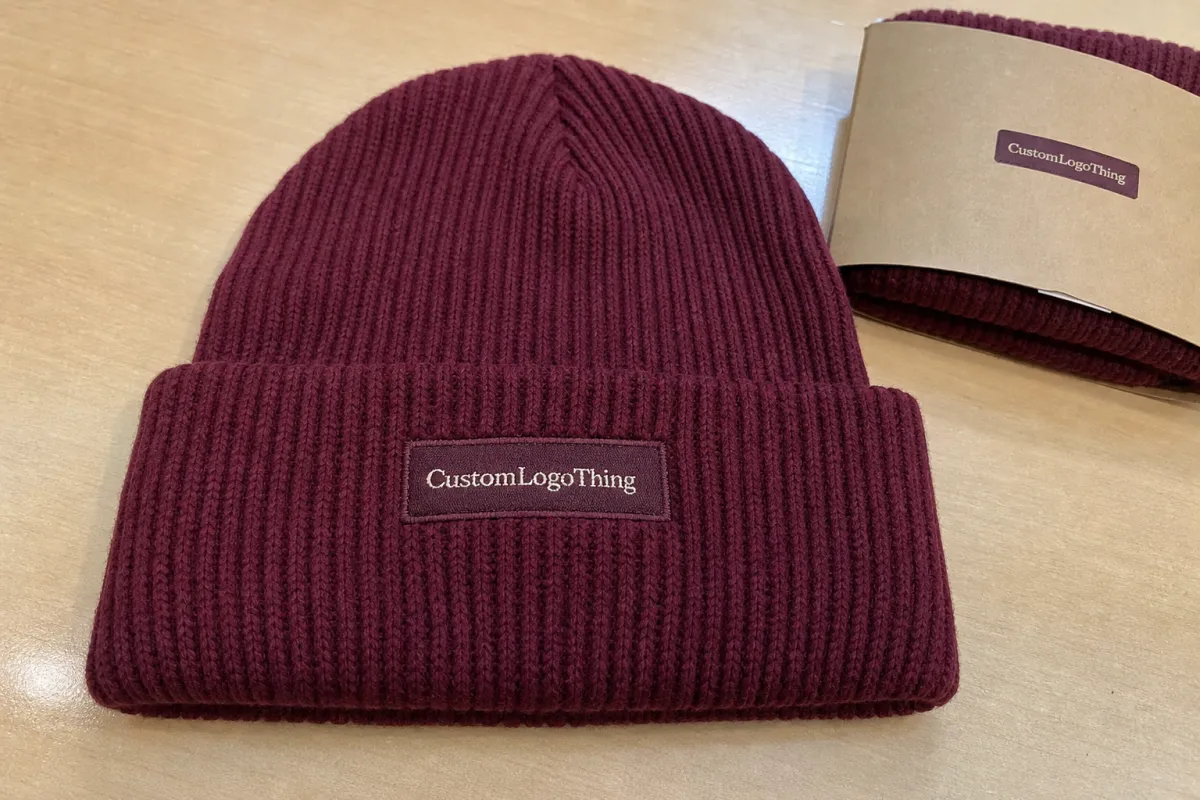
Ribbed Winter Beanies earn their place because they get worn. That sounds obvious, but it is the reason they outperform a lot of seasonal giveaways. A member who puts on a beanie in December becomes a moving brand impression for the rest of the season. A hat that lives in a drawer does nothing after the unboxing photo.
Ribbed construction gives the beanie more stretch and a little more visual depth than flatter knit options. It tends to recover shape better after repeated wear, and it usually looks less flimsy once a logo is added. For clubs that want the item to feel closer to retail than promo, that texture is doing real work.
Bulk buying also makes sense because beanies are comparatively easy to standardize. Once the style is chosen, the rest of the order becomes a numbers exercise: quantities, decoration, packaging, and deadline. That is easier to manage than apparel with multiple sizes, and it is much less volatile than items that depend on custom cut-and-sew work. The fewer variables, the fewer surprises in the quote.
Ribbed Winter Beanies are especially useful in four scenarios:
- Member gifts: practical enough to feel generous, not disposable.
- Tasting-room retail: a seasonal item that pairs naturally with jackets, scarves, and gift bundles.
- Event merch: useful for harvest dinners, winter releases, and pairing events.
- Staff wear: easy to unify a team without moving into heavier uniform programs.
The real advantage is flexibility. One run can support multiple uses if the color and logo treatment are restrained. A beanie that looks good in a retail display often also works for a holiday club shipment. That overlap is what makes the math work.
Lock the artwork early. Most budget problems start with late design changes, not with the blank itself.
Ribbed knit details that affect fit, feel, and resale value
The knit structure changes more than buyers expect. Rib density affects stretch. Cuff height changes the usable decoration area. Yarn blend changes warmth, softness, and how the beanie behaves after repeated wear. If you only look at the mockup, you can miss the practical differences that matter once the order is in hand.
Acrylic remains the budget workhorse. It is widely available, easy to decorate, and usually the most predictable path to a lower unit price. It can look clean and sell well if the construction is decent and the decoration is not overcrowded. The tradeoff is hand feel; acrylic can feel more synthetic than higher-end yarns, especially in lighter weights.
Wool blends sit higher on the ladder. They usually feel warmer, a little more substantial, and more appropriate for premium club drops. The cost rises with that upgrade, and so does the need to keep the spec clean. If the club wants the hat to function as a gift rather than just a logo carrier, wool blend can make sense. It also makes more sense when the beanie will be sold at retail instead of given away.
Some buyers split the difference with blended yarns that sit between acrylic and wool. Those can be useful when the goal is to improve the tactile feel without pushing the order into luxury territory. That said, the blend should be checked against the decoration method. A beautiful yarn means little if the logo looks faint or distorted on the finished knit.
Fit is usually forgiving, but not identical across all beanies. Most ribbed styles are one-size-fits-most, yet crown depth and cuff depth still matter. A deeper cuff creates more room for centered embroidery. A taller crown can create a slouchier shape, which works for some brands and feels sloppy for others. One extra centimeter in the wrong place can change the balance of the entire piece.
Decoration choice matters just as much. Embroidery is the safest default because it is durable, familiar to factories, and cost-effective on clean logos. Woven patches handle detail better and often read more cleanly on a textured surface. Leather or silicone patches move the piece toward premium retail presentation, though they add setup and can be less subtle if the design is already busy.
Color is where many orders get more complicated than they need to be. Dark neutrals remain the most reliable choices for wine clubs: black, charcoal, navy, forest, and deep burgundy. They coordinate easily with existing labels and outerwear. Accent colors work best when they echo a recognizable brand detail. Too many colors, or colors that only vaguely match the label palette, make the product feel assembled rather than designed.
Size, color, and decoration specifications to lock before ordering
A usable spec sheet should leave very little to interpretation. At minimum, it needs the beanie dimensions, cuff width, knit style, yarn color, decoration placement, logo size, and the approved decoration method. If those details are vague, the proof stage becomes a negotiation instead of a check. That slows the order and increases the odds of a mistake that could have been prevented.
Textured knit changes how artwork reads. Thin lines, tiny lettering, and intricate shapes can disappear once they are placed on a ribbed surface. Bold marks are safer. Short club names, strong initials, and clear symbols usually survive production better than long taglines or hairline scripts. If the logo requires too much explanation to understand at a glance, it probably needs simplification before it goes on a beanie.
Cuff placement deserves more attention than it usually gets. A logo centered on the cuff has a clean, balanced look, but that only works if the cuff is deep enough to hold the mark without crowding. Front-panel placement can work too, especially with a woven patch, but the cuff shape and crown depth still need to support the layout. Small design issues look minor on a flat proof and obvious on a finished hat.
Packaging belongs in the spec discussion because it changes both cost and handling. Individual polybags, folded retail presentation, insert cards, and hang tags all add labor. Sometimes that labor is worth paying for. A retail display or a premium club box benefits from tidier presentation. A staff order or a simple member gift often does not.
Color splits should be intentional. Two approved colors can make sense for member tiers, staff versus retail, or a program that needs one neutral and one brand-forward option. Once the order turns into five micro-variants, inventory becomes harder to count and reorders become less efficient. Extra complexity rarely improves the final look enough to justify the operational drag.
For clubs comparing headwear against other branded winter items, a broader wholesale framework can help benchmark whether beanies should be the lead item or part of a wider seasonal package.
| Option | Typical unit price | Best use | Notes |
|---|---|---|---|
| Basic ribbed acrylic beanie with embroidery | $4.50-$7.50 | Member gifts, staff wear, simple retail runs | Usually the easiest path on minimums and lead time |
| Ribbed acrylic beanie with patch | $5.50-$9.25 | Sharper logo detail, more premium presentation | Patch size and placement matter a lot on ribbed knit |
| Wool-blend ribbed beanie with embroidery | $7.25-$12.50 | Higher-end club drops, winter retail | Warmer feel, higher price, stronger perceived value |
| Custom beanie with packaging and hang tag | $8.50-$14.00 | Gift sets, premium club tiers | Setup and labor can move the number fast |
Pricing, MOQ, and unit cost for club beanie orders
Unit cost comes from three places: the blank, the decoration, and the extras. That is the core model. If the quote only seems to reflect the base beanie, the final number can jump once thread colors, artwork prep, labels, or packaging are added. It is a common budgeting miss.
MOQ is rarely random. Smaller orders usually pay for flexibility. As volume rises, the supplier has more room to spread setup and handling costs across the run. A 100-unit order often sits at the expensive edge of the range. Around 250 units, pricing starts to make more sense. At 500 units or more, there is often enough scale to improve yarn quality, decoration consistency, or packaging without forcing the unit price into awkward territory.
The exact break point depends on the decoration method and the complexity of the logo. Embroidery with one thread color is easier to price than a multi-color patch with a woven base and custom label. Special handling, such as folding each piece in a specific way or adding inserts, can also increase labor enough to matter.
Buyers usually ask for the blank price and stop there. That is not enough. Thread count, patch setup, label changes, hang tags, individual polybags, and carton labeling all add up. None of those charges is dramatic on its own. Together, they can move a quote by enough to change the entire strategy.
That is why it helps to request tiered pricing. A quote at 100, 250, and 500 units shows the real curve instead of the fantasy version. Sometimes the smaller run makes sense because the club has limited members and low inventory risk. Sometimes the larger run is smarter because the retail sell-through is predictable and the per-unit savings are real.
When price is the deciding factor, the cheapest route is usually a ribbed acrylic blank, one-color embroidery, and minimal packaging. When presentation matters more, a patch or wool blend can justify the extra spend. A good buyer knows which of those goals matters most before asking for numbers.
Sample fees and pre-production proofs deserve attention too. Some suppliers include them. Others separate them. If the order involves multiple decoration options or color approvals, ask whether the sample cost is credited back on the final order. That detail is easy to miss and annoying to discover later.
Process, timeline, and proofing checkpoints from quote to delivery
The production flow is usually predictable: inquiry, specification review, quote, digital proof, sample or mockup if required, production, quality check, packing, and shipping. The timeline gets longer when the order keeps changing. That sounds obvious, but late artwork revisions are still the most common cause of delay.
Standard production often takes several weeks after proof approval. The clock does not really start until the artwork is signed off. If the order requires custom colors, special labels, or unique packaging, add buffer. Holiday shipping periods and winter freight schedules can compress everything further. A date that seems generous in September can feel tight by November.
Rush orders are possible in some cases, but only when the blank style is already available and the decoration is simple enough to move quickly. A clean embroidery order is easier to accelerate than a patch-based program with custom packaging. If the club needs the beanies for a specific event, the deadline should be stated early, not after the proof is already approved.
Proofing should include more than the logo shape. Check placement, scale, color names, packaging instructions, and ship-to details. The proof is where a small misunderstanding gets caught before it becomes a physical problem. If split shipments are needed for members, retail, and staff, confirm that up front. Dividing the order later is always more expensive than dividing it at the start.
Quality control matters most on textured goods because the knit can disguise mistakes until you look closely. The basic checks are simple: logo alignment, stitch density, patch adhesion, cuff symmetry, color consistency, and finish cleanliness. If the beanie uses a patch, check the edge quality and whether the patch sits flat without lifting. If it uses embroidery, check for loose threads and distorted letters around the rib.
Packaging should be inspected too. A beanie can be perfectly made and still feel less premium if it is folded carelessly or packed unevenly. Carton count, outer packaging strength, and shipper labeling all matter when the order is moving through a warehouse or distribution point. Standards from organizations such as ISTA can be useful if the shipment needs to survive multiple handling points, and responsible material sourcing references from groups like FSC can help when the project includes paper inserts or hang tags.
Why ribbed beanies usually beat flatter knit options for wine clubs
Ribbed texture gives the beanie more depth on a shelf and more visual weight in photos. That sounds cosmetic, but it has a practical effect. A flatter knit can look thin or unfinished once the logo is added, especially in dim retail lighting or on social media where texture needs to work harder. Ribbing holds light better and gives the piece a more grounded look.
There is also a wearability advantage. Ribbed knit stretches more naturally across head sizes and tends to feel less restrictive. That matters because a branded hat only works if people actually wear it. If the fit is awkward, the brand gets left behind in the closet.
Ribbed beanies also tend to handle decoration more gracefully. The texture provides enough visual interest that embroidery or a patch does not need to overcompensate. The logo can stay smaller and cleaner. That restraint helps the product feel more like apparel and less like a billboard.
From a resale standpoint, ribbed beanies usually keep their shape better after repeated use. They may still lose some crispness over time, but they are less likely to collapse into a limp, tired-looking accessory. For tasting rooms and seasonal displays, that difference matters. A hat that still looks presentable after being worn has a longer selling life.
Wine clubs also benefit from the style's flexibility. A ribbed beanie can sit comfortably beside a premium gift set, a staff kit, or a member-exclusive drop without feeling out of place. That versatility makes it easier to justify the order quantity because the inventory can serve more than one channel.
What to prepare before you request a quote
A clean quote request should include the quantity by color, the decoration method, the artwork file, the target in-hands date, and the final ship-to location. If the order needs split shipping, say so immediately. If hang tags, inserts, or retail folding are part of the plan, mention that too. The fewer assumptions the supplier has to make, the better the pricing will reflect the real order.
Logo size deserves a specific target. On ribbed knit, scale matters more than many buyers expect. A design that looks balanced on a digital mockup may feel cramped once it is translated to textured fabric. Give the vendor a clear width or placement guideline instead of asking them to guess the right proportion.
It also helps to decide what you are optimizing for before the quote arrives. Lowest unit cost, faster turnaround, or stronger retail presentation? Most orders can support two of those goals, not all three. If the club is working toward a holiday ship date, speed may outweigh extra detail. If the beanies are meant for a premium box, packaging and decoration may deserve the extra spend.
Before sending the request, check whether the planned quantity matches the likely demand window. That is the part that turns wine club Ribbed Winter Beanies Bulk Order planning from a last-minute scramble into a controlled buying decision. A good order is not the one with the most options. It is the one with the fewest avoidable changes.
What MOQ should I expect for wine club ribbed winter beanies?
Most bulk programs start at a modest minimum, but pricing improves quickly once you move into tiers like 100, 250, or 500 units. The best MOQ depends on decoration method and customization level; simpler embroidery usually supports lower minimums than custom labels or specialty trim. If you only need a small member gift run, ask for a tiered quote so you can compare the unit cost jump before you commit.
How long does ribbed winter beanie production usually take for a wine club order?
A standard order often takes several weeks after proof approval, and the clock really starts once the artwork is signed off. Complex decoration, special yarn colors, or custom packaging can add time, so build in buffer if the beanies need to land before a tasting event or holiday shipment. Rush production is possible in some cases, but only when materials are available and the design is simple enough to move quickly.
Which decoration method holds up best on ribbed knit beanies?
Embroidery is usually the safest all-around choice because it is durable and works well on textured knit fabric. Patches can look more premium and read more clearly, especially for detailed logos, but they add a bit of structure and cost. Very fine text or tiny lines are risky on ribbed knit, so the design should stay bold and simple.
Can I mix colors in one bulk order of wine club winter beanies?
Yes, but every extra color split can change the MOQ math and complicate inventory control. Mixing colors works best when the club has a clear reason for the split, such as member tiers, staff versus retail, or two brand-approved colors. If budget is tight, one strong color usually beats three weak ones.
What do you need to quote ribbed beanies for a wine club order?
You need the quantity, color choice, decoration method, and a usable artwork file. It also helps to know whether you want custom packaging, hang tags, or split shipping to multiple locations. If you already know the delivery deadline, include it up front so the quote reflects a realistic production schedule.