Toy Ribbed Winter Beanies bulk order planning looks straightforward until the sample lands on a desk and the cuff relaxes more than expected, the logo sits too high, or the knit feels lighter than the photos suggested. That gap between a clean catalog image and the finished carton is where margin gets lost. Buyers ordering for seasonal retail, school programs, toy promotions, or employee gifts need winter headwear that is warm, repeatable, and easy to brand before the selling window closes.
The smartest buying decisions happen before the purchase order. Rib density, yarn choice, seam finish, stretch recovery, and decoration placement all change how the beanie wears and how the logo reads after a few weeks of use. A spec sheet does more work here than any polished product photo. If the order is being compared through a wholesale sourcing page, start with measurements and material notes, not the image gallery. The difference between a tidy bulk run and a round of revisions is usually written in the first request.
Toy Ribbed Winter Beanies Bulk Order Planning for Buyers
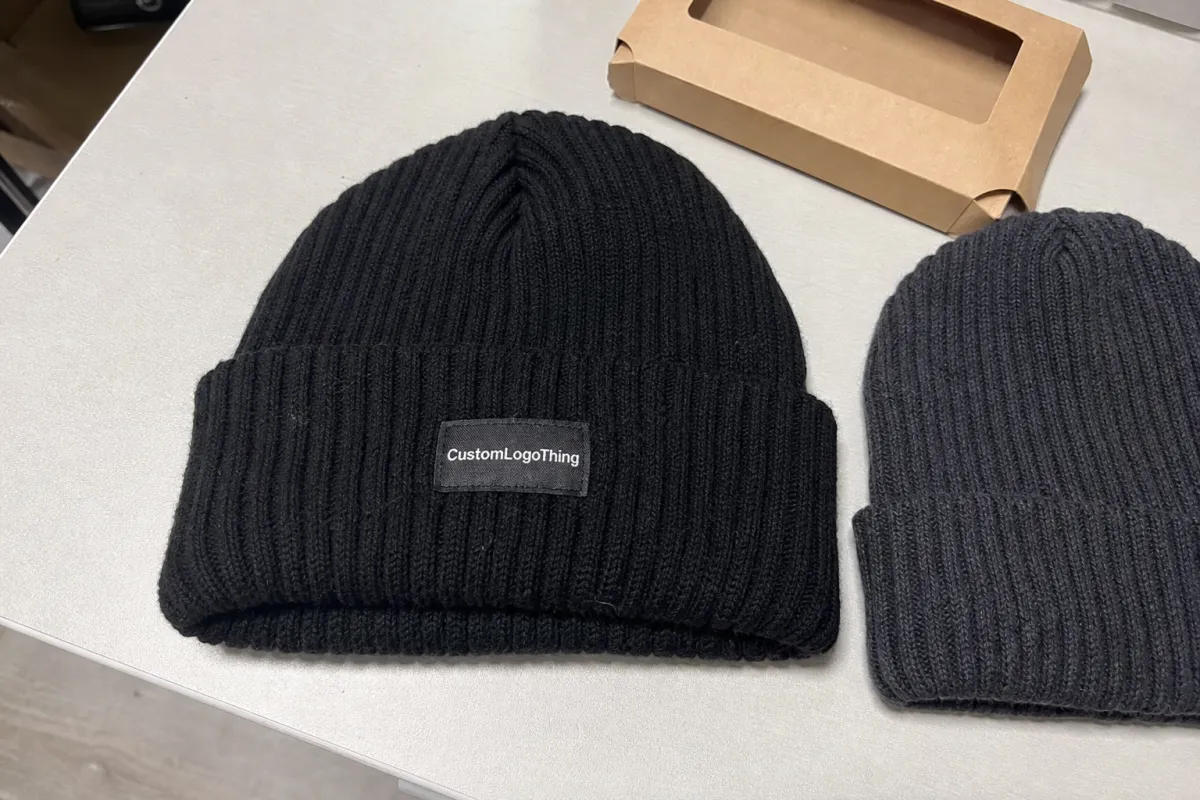
A ribbed beanie is forgiving on the shelf and unforgiving in production. The ribs create stretch, but they also reveal inconsistency faster than a flat knit. A loose construction can look oversized as soon as it is unpacked. A tighter knit may feel better in hand, then read smaller once the cuff is folded and the decoration is attached. For toy ribbed winter beanies Bulk Order Planning, the best buyers treat the product as a set of measurable choices: gauge, yarn, fit, decoration, and packing.
The business logic is simple. A school fundraiser wants low unit cost and a clear logo. A toy brand wants something that feels giftable without pushing freight too high. An employee gift program needs a warm item that fits a broad range of heads and still photographs well in internal campaign materials. Those are not the same order, so the spec should not pretend they are.
The early test is practical: if a supplier cannot explain what changes when the rib width changes, the conversation is too shallow. Rib structure affects stretch, shape retention, and the way embroidery sits after wear. It also changes how much of the crown remains visible once the cuff is folded. That is why bulk planning should be built around approved measurements rather than phrases like “premium quality.”
“A simple beanie becomes expensive when the measurement conversation happens after sampling, not before it.”
One comparison is useful here. Two beanies can share the same color and logo, yet behave differently because one uses a finer, denser rib and the other uses a looser knit. The first may look sharper on a display hook. The second may stretch more comfortably for mixed head sizes. Neither is automatically better. The right choice depends on whether the order is meant for resale, giveaway distribution, or uniform gifting. That distinction affects almost every other decision.
Rib Construction, Cuff Height, and Fit Details
The core variables are easy to list and easy to overlook. Rib width, knit gauge, cuff depth, crown shape, and yarn weight each affect warmth, stretch, and visual finish. Small changes can make the same beanie feel like a different product. A 1x1 rib stretches differently than a 2x2 rib. A deep cuff gives more branding room, but it can also make the hat feel heavier on shorter heads or youth-sized programs.
For large orders, acrylic remains the most common cost-control choice because it is predictable, color stable, and generally easy to source. Blends can improve softness and drape, which matters when the beanie is treated as a gift or retail item instead of a disposable promo. Wool adds warmth and a more premium hand, but it usually raises cost, can change wash expectations, and may narrow the audience if itch sensitivity becomes an issue. Recycled yarns can support sustainability goals, yet they often need clearer approval steps because lot-to-lot variation in hand feel and shade can be more visible.
Fit is where bulk programs succeed or fail. One-size-fits-most only works when rib recovery is strong and the opening does not relax too quickly. For youth programs, a smaller opening or shorter crown can improve comfort and reduce the oversized look that too many buyers accept on sight. For adult programs, the same dimensions may feel too tight if the knit is dense. Ask for a physical sample and check these points:
- Opening size: confirm relaxed and stretched measurements.
- Cuff depth: verify how much branding space is actually usable.
- Stretch recovery: see whether the rib rebounds after handling.
- Crown shape: check whether the top point or flat finish matches the plan.
The cuff and crown also decide how the decoration reads. A woven label on a deep cuff can look clean and stable. A patch can anchor a brand better on textured knit. Embroidery works, but only when the artwork is bold enough to survive the rib pattern and the thread count stays sensible. On a ribbed surface, tiny text tends to close in faster than many buyers expect. That is a structural issue, not a design failure.
Quality control should not stop at appearance. A buyer should ask whether the sample has been checked for seam flatness, yarn snags, and edge curling at the cuff. Those details are easy to ignore in a showroom and easy to regret after packing. A beanie that feels comfortable but twists after repeated use is a poor long-term value, even if it cleared the first photo approval.
Decoration Options and File Specs to Lock In
Decoration should follow the fabric, not fight it. On ribbed knit, the strongest choices are usually embroidery, woven patches, faux leather tabs, and sewn labels. Each has a different price profile and a different risk level. Embroidery is efficient when the logo is bold and the stitch count stays reasonable. Woven patches handle fine detail better. Faux leather tabs can look premium, but they must fit the tone of the brand. Sewn labels are often the quietest option, which is exactly why they work well on textured knit.
Send artwork early and send it cleanly. The supplier should receive vector files, Pantone references, placement notes, size expectations, and any packaging rules that affect hangtags or polybags. Low-resolution logos create delays because the factory has to guess where the edge begins. Small text is a bigger problem on ribbed fabric because the knit texture distorts detail faster than most buyers expect. If the logo must be readable from a distance, say that upfront. If the beanie is meant to feel understated, say that too. The decoration method should match the visual job, not just the budget.
A practical file package usually includes:
- Vector art: AI, EPS, or SVG preferred.
- Color callouts: Pantone or clear tone references.
- Placement sketch: front, cuff, side, or back.
- Size target: patch width, embroidery width, or label height.
- Packaging notes: retail fold, barcode, or bulk carton only.
Mockups matter because knit changes the appearance of the art. A logo that looks balanced on a flat screen may feel crowded once the cuff is folded or the hat is stretched open. Ask for a scale review before the bulk order begins, then check stitch count, contrast, and placement against the actual fabric texture. This is one of the easiest places to save money: the buyer catches the issue while it is still a file decision, not a finished-goods correction.
Common errors to avoid: oversized artwork, unclear label placement, weak contrast, and assuming every decoration method behaves the same on textured knit. They do not. A patch can carry detail that embroidery cannot. Embroidery can hold up better than print on stretch fabric. The wrong choice is not only cosmetic; it can also change the approval timeline and add avoidable setup cost.
Pricing, MOQ, and Unit-Cost Breakpoints
Price moves for a handful of predictable reasons: quantity, color count, yarn choice, decoration method, and packaging format. The base cap style matters less than many first-time buyers assume. A simple ribbed beanie with one-color embroidery and standard polybagging can stay efficient. Add multi-color yarn, special packing, or a higher stitch-count logo, and the quote moves quickly. That is normal, not a warning sign.
MOQ works in different ways. Some factories set it by total units, some by colorway, and some by decoration setup. Ask for the threshold in writing. A quote that looks low may be tied to one color and one logo position, while a second color can trigger another setup charge. For toy Ribbed Winter Beanies Bulk Order planning, that detail defines whether the job fits the budget or not.
| Order Band | Typical Unit Price | Setup Pressure | Best Fit |
|---|---|---|---|
| 300-499 pieces | $5.50-$8.00 | Higher setup share per unit | Short runs, event giveaways, test programs |
| 500-999 pieces | $4.20-$6.20 | Balanced setup and labor | Seasonal retail, school orders, branded kits |
| 1,000-4,999 pieces | $3.10-$4.80 | Better spread on decoration and packing | National programs, repeat promotions, mixed sizes |
| 5,000+ pieces | $2.40-$3.70 | Lowest setup impact per unit | Large retail drops and replenishment orders |
Those numbers only help if they are read as landed cost, not just unit cost. Samples, freight, customs, carton changes, and special packaging can materially change the final spend. A buyer who gets a low piece price but ignores shipping may still overshoot budget. A clean RFQ should include target quantity, destination, deadline, artwork file, and packaging spec. If supplier structure matters to your comparison, a wholesale program page can help define what level of service is included before the quote stage.
Ask whether the quote includes a resale-ready pack-out or a simple bulk carton pack. That single line can change labor cost and warehouse handling more than the decoration itself. It also changes how quickly the order can move through receiving on the buyer side. In practice, the cheapest quote is not always the easiest order to process.
One more caution: if the order mixes multiple colors, the lowest quote may be based on one yarn lot and one decoration run. Splitting into three colors can introduce extra sorting, separate approval checks, and longer packing time. Mixed orders are workable, but they should be treated as a production plan, not a simple quantity change.
Production Steps, Lead Time, and Delivery Windows
A disciplined supplier treats the order as a series of gates. Inquiry, quote, sample, approval, bulk knitting, decoration, quality check, packing, and shipment should each have a clear milestone. When one gate is skipped, the next one absorbs the problem. In practice, that means missed dates or rework.
Lead time depends on three things more than anything else: yarn availability, color matching, and factory load. Artwork changes can add time too, especially if the buyer keeps revising placement after the sample is made. A realistic sample cycle is often 5-10 business days. Bulk production after approval is commonly 12-20 business days, though peak-season congestion can extend that. If you need split shipments, say so before production starts.
Transit planning matters as much as knitting time. Ask how cartons will be packed, whether inner counts are fixed, and whether the supplier can align with an ISTA-oriented shipping test approach. A strong knit product can still arrive damaged if cartons are too soft, stacking is poor, or the pack count is wrong. This is not overengineering. It is cost control.
For orders tied to winter retail, the calendar is usually tighter than buyers think. A two-week production slip in September may be manageable. The same slip in late October can push a sale into dead inventory. That is why the best planning is built backward from the ship date, not forward from the purchase date. Leave room for sample review, freight booking, and one round of corrections. If the supplier cannot fit that schedule, the answer is to resize the order or simplify the build.
Before the first bulk run starts, confirm:
- Carton counts: pieces per carton and cartons per pallet.
- Ship method: air, sea, courier, or mixed mode.
- Delivery address: warehouse, DC, or office receiving point.
- Deadline buffer: exact date versus acceptable window.
- Split shipment need: one drop or staged delivery.
Good planning locks these items before the factory line starts. Once bulk knitting begins, changes are expensive because they ripple through yarn, decoration, and packing. A supplier can usually absorb one small correction. A mid-run format change is a different matter.
Supplier Controls That Reduce Rework and Delays
The best suppliers document more than they promise. Ask for a measurement sheet, pre-production sample photos, carton specs, and the exact approved artwork version. That paper trail protects both sides. If there is a dispute later, the buyer should be able to point to one approved spec instead of three versions in email threads.
Factory-side quality control matters more than a polished sales reply. A consistent knit line, matched dye lots, and finished-count checks reduce reject rates. For repeat orders, the supplier should be able to reproduce the rib structure and shade closely enough that the second run does not look like a different product family. That matters most for brands planning replenishment instead of one-off buying.
Direct-manufacturer sourcing usually gives clearer accountability, but broker-led buying can still work if the communication chain is tight. The question is not simply who is cheaper. The question is who can correct a problem fastest, with the fewest handoffs. Fewer handoffs usually mean faster answers. Faster answers usually mean fewer missed windows.
Documentation also matters for sustainability and compliance claims. If the order includes paper swing tags, retail inserts, or branded cartons, ask what stock is used and whether it can be sourced with FSC documentation. If the supplier cannot explain the carton spec, the packing count, or the approved photo set, the risk is not theoretical. It is already there.
There are a few checks that separate a decent quote from a workable production partner. Ask whether the sample was made on the same machine type that will run the bulk order. Ask whether the yarn lot is locked or if substitution is possible. Ask what tolerance band is allowed on width, height, and cuff depth. Even a small shift in one measurement can change how the beanie presents on a shelf or in a bundled gift set.
Order-Ready Checklist and Next Steps
Before you send an RFQ, get these details settled: audience, final quantity, preferred yarn, decoration type, packaging needs, and the latest acceptable delivery date. The closer the request is to a real specification, the easier it is to compare quotes on equal terms. A vague request can hide a cheap quote that becomes expensive later.
Use this quick buyer checklist:
- Confirm whether the beanies are for adults, youth, or mixed fit.
- Choose the decoration method before asking for pricing.
- Set the target quantity and any color splits.
- Define the package format, from bulk carton to retail-ready pack.
- Ask for sample timing, bulk timing, and freight timing separately.
The order is easier to control when the approval path is short. One sample, one spec sheet, one color standard, one packing format. That is enough for most winter beanie programs. More versions usually mean more room for error without adding much value.
If a second review is needed, the most useful questions are usually not about the logo alone. They are about whether the knit weight supports the design, whether the cuff leaves enough room for decoration, and whether the delivery window still works after freight time is added. Those are the details that decide whether the order holds together from quote to receipt.
For teams comparing sourcing paths, the same logic applies every time: approve one sample, lock the spec sheet, confirm MOQ, and release the bulk order only after timeline and freight are clear. That is the discipline behind toy Ribbed Winter Beanies Bulk Order planning. Fit, cost, and lead time are one linked decision, not three separate ones.
What MOQ should I expect for ribbed winter beanie bulk orders?
MOQ usually depends on yarn color, decoration method, and whether the factory prices by total units or by setup per colorway. Ask for the minimum in writing for each version you want, since one logo or one color can change the threshold. If you need a lower start quantity, expect fewer color options or a simpler decoration method.
How do I choose the right fit for toy ribbed winter beanies?
Start with the audience age range and confirm whether one-size-fits-most is realistic for the program. Check rib recovery and cuff depth on a physical sample, because those two details affect comfort and hold. If the beanies will be worn by kids, ask for narrower proportions or a youth-spec sample before approving production.
Which decoration method lasts best on ribbed knit beanies?
Woven patches and sewn labels usually hold shape well on textured knit because they are less affected by stretch than tiny embroidery details. Embroidery works when the logo has bold lines and enough space to read clearly on ribbed fabric. Choose the method based on wear, wash expectations, and how much texture you want the logo to have.
Can I mix colors or sizes in one bulk order?
Yes, but the quote may change because separate colors or sizes can create extra setup, sorting, and packing steps. Ask whether the MOQ applies to the total order or to each individual colorway so you can plan the mix correctly. Mixed orders often need more lead time, especially if multiple yarn lots must be matched consistently.
What should I send in my first quote request?
Send the target quantity, destination, deadline, logo file, color preferences, and any packaging or labeling requirements. Include whether you want samples first, because that affects the schedule and the pricing structure. The more complete the first request, the faster you can compare quotes and move the order forward.

