A ribbed winter beanie can photograph like a premium item and still feel thin, scratchy, or oddly loose in hand. That gap between image and reality is why this stationery Ribbed Winter Beanies Material Sample guide treats the sample as the decision point, not a courtesy step.
For buyers, the sample is where assumptions break. It shows whether the knit holds its shape, whether the yarn behaves as promised, and whether the decoration actually survives stretch. A good mockup can sell the idea. A good sample proves the build.
What this sample proves
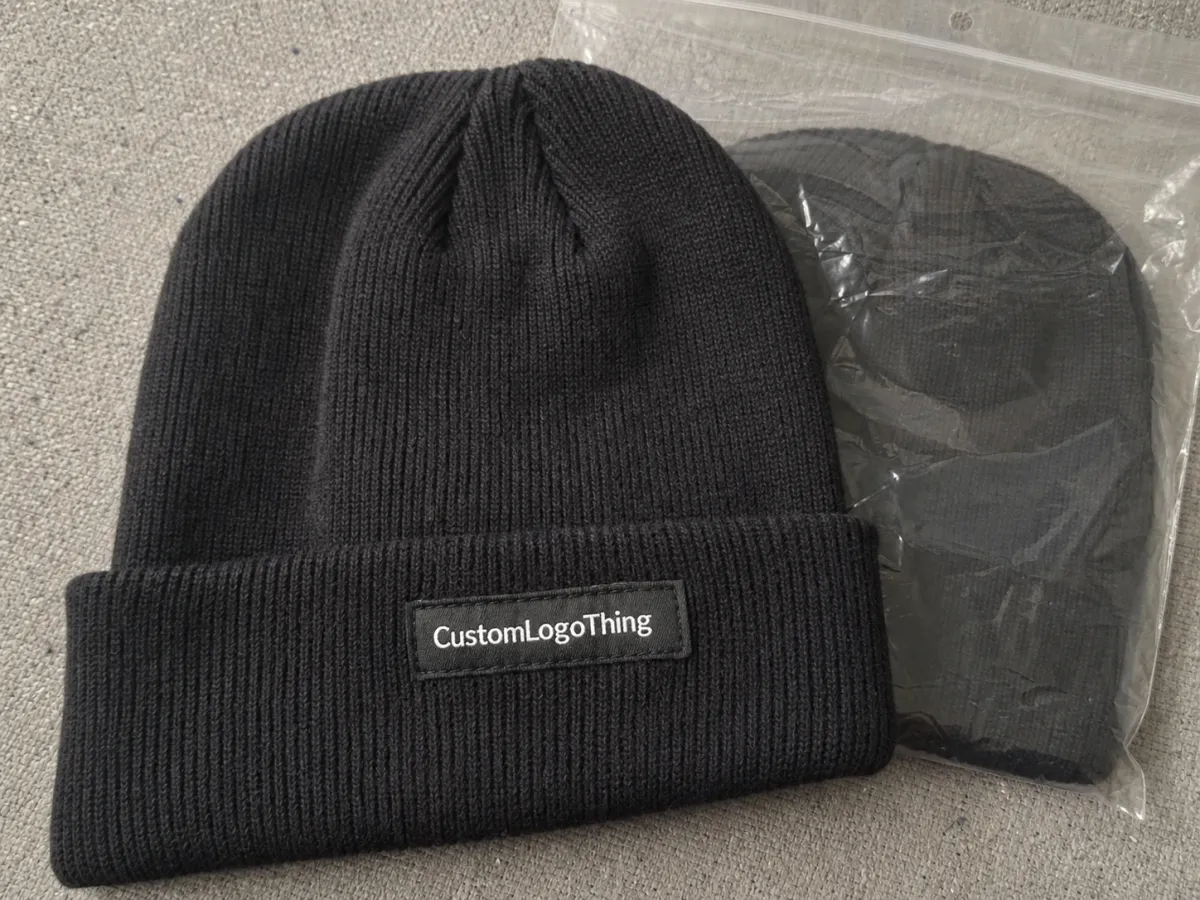
The first sample should answer a blunt question: can this supplier make the hat you specified, or only a close-looking version of it? That distinction matters more than many product teams expect. A beanie is small, but it contains a long list of variables: fiber blend, gauge, rib depth, cuff height, seam bulk, color consistency, and finishing quality.
Look at the sample like a production audit. If the quote promised 100% acrylic, a wool blend, or recycled polyester content, the hand-feel and label details should match that claim closely enough to make sense. If the spec called for a 2x2 rib or a deeper fold, the structure should be visible without debate. Small mismatches in a sample tend to become larger mismatches in bulk.
There is also a mechanical reason to take samples seriously. A ribbed beanie is supposed to recover after stretching. It should sit close to the head without squeezing, and it should keep that balance after repeated wear. If the sample grows baggy after a few pulls, that is not a cosmetic flaw. It is a signal that the yarn, stitch tension, or finishing process is off.
A sample is a risk filter. If it does not expose weak stitching, uneven ribbing, or off-spec yarn weight, it is not doing its job.
The sample also tells you whether the factory understands repeatability. One perfect piece can be luck. Two or three consistent pieces suggest control. That matters because the first colorway often looks the easiest; the second or third reveals whether the supplier can keep the same tension, size, and shade across a longer run.
How rib construction changes fit, warmth, and drape
Rib knitting alternates raised and recessed stitches. The pattern looks simple, but it changes three things buyers care about most: fit, warmth, and drape. The stretch gives the beanie its forgiving fit. The stitch structure traps small pockets of air. The finished surface determines whether the hat falls softly or holds a more structured profile.
Fit starts with density. A tighter rib usually sits closer to the head and recovers better after stretching. A looser rib feels softer at first touch, but it may flare at the hem, twist after folding, or lose its clean shape after a few try-ons. For retail orders, that difference is visible fast. Store handling and shelf presentation punish weak recovery.
The cuff and crown need separate inspection. A deep cuff gives more room for branding and often adds warmth at the ears. A shorter cuff can look cleaner, but it leaves less space for a woven label or patch and may expose seams in colder wear. Crown shaping matters too. A beanie that is meant to slouch should not stand like a tube. One that is meant to fit close should not collapse into a puddle of knit.
Drape affects more than style. It changes how the beanie merchandises on a hook, how it packs in cartons, and how it reads in photography. A soft, collapsing shape can feel modern on one line and sloppy on another. A stiff body may solve the display problem but create a cheap, overfinished look. The sample shows which side of that line you are on.
Packaging teams often test folded units under shipping stress similar to what ISTA protocols are designed to catch. That does not decide knit quality, but it does help predict whether the final hat and its pack-out will survive distribution without looking crushed on arrival. For more on the framework, see ISTA.
Material choices that affect feel, pilling, and decoration
Material choice is where product expectations meet production limits. Acrylic remains the default for many winter beanies because it is predictable, relatively soft, and usually affordable enough for broad retail. Wool blends add warmth and a more natural hand, but the quality swing is wider. A poorly finished wool blend can feel scratchy enough to trigger complaints before the customer even wears it outside. Recycled synthetics can support a sustainability story, but only if the content is documented and the yarn is repeatable from sample to bulk.
The headline fiber content does not tell the full story. Ply count, twist, brushing, and finishing all shape the final hand-feel. A tightly twisted yarn usually gives a cleaner surface and better pilling resistance. A softer, airier yarn can feel richer at first touch, yet fuzz faster after a few wears. That tradeoff is not abstract. Surface wear is often the first reason a consumer decides a hat feels cheaper than expected.
Decoration needs to be tested on the actual sample, not imagined from a flat mockup. Embroidery that looks crisp on screen can sink into a soft rib. A woven label may pull at the knit if the cuff is too elastic. A patch can curl if the base fabric shifts under heat or stitching. The same logo can look precise on one yarn and distorted on another, which is why the sample has to match the final material, not just the final artwork.
Color deserves the same scrutiny. Dark shades, heather tones, and melanges can vary more than buyers expect, especially when the body and cuff are knit separately. Check color under daylight and under indoor light. If two samples are supposed to match, place them side by side rather than judging them alone. Isolated pieces can hide shade drift.
If the packaging plan includes FSC certified cartons, kraft paper inserts, or biodegradable packaging, ask for proof at the same level you ask for yarn composition. Sustainability claims should be tied to actual material specs, not just wording on a quote. For verification, the FSC framework is available at FSC.
| Material path | Typical sample feel | Common bulk cost range | Main risk | Best fit |
|---|---|---|---|---|
| Acrylic | Soft, consistent, easy to shape | $1.90-$3.20 per unit at 5,000 pcs | Pilling if yarn is weak or overbrushed | Mass retail, giveaways, value programs |
| Wool blend | Warmer, denser, more natural hand | $3.10-$5.80 per unit at 5,000 pcs | Scratchiness or shrink risk if finishing is poor | Premium merch, colder climates, higher price points |
| Recycled synthetic | Comparable to standard acrylic or polyester, depending on yarn source | $2.40-$4.70 per unit at 5,000 pcs | Claims need documentation and repeatability | Eco positioning, brand programs, retail gift sets |
These ranges are not universal. Yarn source, decoration complexity, and order size can move them quickly. The point is to compare suppliers on the same basis, not to treat one sample quote as if it were the final landed number.
Cost, MOQ, and unit-cost drivers
Separate sample cost from bulk cost before you judge a supplier. A sample fee of $18-$45 may sound reasonable, but it says little about the actual production price if setup charges, decoration fees, or packaging costs are hidden elsewhere. A quote that looks cheap on the first page can become expensive once the real add-ons appear.
Minimum order quantity usually rises with complexity. Custom yarn sourcing, multiple color changes, specialty labels, embroidery, patches, and retail-ready packaging all raise the labor burden. So does a tighter knit tolerance. A deeper rib or heavier yarn may feel better in hand, but it also increases machine time and can reduce output per shift. That is one reason simple styles often carry lower MOQs than highly customized ones.
One useful way to compare offers is to break the cost into parts that actually move:
- Sample fee: one-off prototype cost, sometimes credited back against bulk.
- Setup charge: pattern preparation, machine programming, or knit test work.
- Decoration charge: embroidery, patch application, woven label sewing, or print placement.
- Landed unit cost: beanie price plus packing, freight, and import handling if applicable.
Ask for pricing at 500 pieces, 1,000 pieces, and 5,000 pieces if the supplier will provide it. The pricing curve tells you more than the base number. A steep drop with higher volume usually means setup cost is being spread efficiently. A flat curve can mean the design is labor-heavy or the vendor has little room to move. Either can be acceptable, but you should see it before you commit.
Packaging can change the economics in a quiet way. A loose polybag is cheaper than a folded beanie placed in kraft paper, tucked into a printed insert, and protected by corrugated cardboard cartons. If the brand wants a polished retail presentation, that should be part of the quote from the start. It should not appear as an afterthought once samples are approved.
Process, timeline, and turnaround from sample to bulk
A clean sample-to-bulk workflow usually follows a simple chain: spec sheet, yarn review or lab dip, prototype sample, revision, pre-production approval, then bulk knitting and packing. The chain gets messy when the brief is vague. If cuff depth, logo size, or color tolerance are left open, the factory has to guess. Every guess adds time.
Timelines vary by complexity. A standard acrylic beanie with a basic label can move through sampling in several business days. Add custom yarn, a new decoration method, or a revised fold, and the schedule stretches. Two sample rounds are common. Three are not unusual if the design is still being tuned for warmth, stretch, or logo placement.
That timing matters because approval delays often slow production more than the knitting itself. A sample that lands in the office on Wednesday and sits unopened until the next week can cost a full production slot. The factory may be waiting on sign-off while the buyer is waiting on internal review. It sounds minor. It rarely is.
If the beanies will be sold with retail packaging, ask the supplier to sample the same presentation you expect in bulk: the same fold, the same label position, the same insert, the same carton count. A sample that is dressed up too much can hide flaws. A sample that is packed too roughly can make a good product look worse than it is. Consistency matters more than theater.
- Approve the spec sheet before knitting starts.
- Confirm yarn, gauge, and label details in writing.
- Test the sample in the same lighting and handling conditions the final buyer will face.
- Approve the pre-production sample only after fit, feel, and decoration are confirmed.
- Reserve the bulk slot only after the sample is signed off.
Pack-out is part of the product, not a separate problem. If the beanies move through distribution channels, carton strength, compression, and fold consistency will shape how they arrive. Recycled corrugated cardboard can be a sensible choice, but only if it holds up through shipping and storage. A pretty beanie in a crushed carton still looks damaged on opening.
Common sample-review mistakes buyers make
The most common mistake is judging a sample under only one light source. Warm indoor lighting can soften shade variation that appears immediately in daylight or ecommerce photography. If the beanie looks right only in the meeting room, it is not really approved.
Another mistake is skipping stretch, wash, and abrasion checks. A ribbed hat can look perfect on the first pass and still lose shape, pill, or twist after a few wear cycles. A simple field test helps. Stretch the body to around 150% of its relaxed width, release it, and check recovery after a few minutes. Then wear it, fold it, and repeat. If the crown slumps or the cuff turns floppy, the knit balance probably needs work.
Comfort issues get missed more often than they should. Seam bulk, scratchy labels, and a stiff cuff trigger complaints faster than buyers expect. A hat can pass visual review and still feel unfinished in thirty seconds. Run a finger along the seam. Press the label against the neck. Bend the cuff several times. These checks take little time and catch problems that photos never show.
Do not rely on images or short video clips alone. They are useful for showing color and silhouette, but they do not reveal the difference between soft and loose, structured and flimsy, warm and merely thick. Physical samples expose that gap. That gap is where returns begin.
- Review the sample in daylight and indoor light.
- Check both head fit and fold recovery.
- Inspect embroidery, patch placement, and label tension.
- Document defects with a marked-up review sheet.
Expert tips before you place the order
Create a one-page scorecard before you compare suppliers. Rate warmth, fit, feel, decoration quality, and price on the same scale for every sample. That keeps the decision anchored in evidence instead of whichever swatch happened to arrive last.
Ask for at least two color samples if the line will ship in more than one shade. The same yarn can read differently once rib depth, finishing, and label contrast change the surface. Gray, navy, and black are especially sensitive to this because small dye differences are harder to spot until the pieces sit side by side.
Request care instructions, carton pack details, and any existing test notes before you approve bulk. If the supplier has wash or abrasion data, review it. If not, and the beanie is meant for heavy retail use, consider a basic internal check before signing off. Quality control is cheapest before the order is large.
Ask the same questions of packaging. If the line includes biodegradable packaging, confirm the conditions under which it breaks down. If the carton is supposed to be FSC certified, verify the certification trail. If the presentation uses recycled materials or post-consumer waste content, ask for the exact percentage. Vague claims are easy to print and hard to defend.
The real purpose of a stationery ribbed winter beanies material sample guide is not to create more process. It is to prevent avoidable surprises. A good sample gives you enough evidence to choose the right yarn, the right knit structure, and the right decoration method before the order becomes expensive.
Frequently Asked Questions
What should a stationery ribbed winter beanies material sample include?
A complete sample should show the exact fiber blend, knit gauge, cuff depth, and decoration method used in bulk. It should also match the final finishing and fold, not a generic mockup, so you can judge structure and hand-feel honestly. Ask for a spec note or sample card so you can compare the piece against the approved requirements later.
How do I compare two samples fairly?
Use the same lighting, the same handling checks, and the same scorecard for both samples so one supplier is not judged more loosely than the other. Measure stretch recovery, seam comfort, color consistency, and logo placement rather than relying on appearance alone. Keep one sample as a reference piece and mark any defects directly on a review sheet.
What affects pricing for ribbed winter beanie samples?
Sample price changes with custom yarn requests, specialty labels, embroidery, and whether the supplier needs to knit a new prototype from scratch. MOQ and unit cost usually track the same factors, so a more complex sample can signal a higher production price later. Always ask whether the sample fee is credited back if you place a bulk order.
How long does the sample-to-production process usually take?
A straightforward sample can move in days, but custom yarns, artwork, and revision loops can add more time before approval. Bulk production usually starts only after the final sample is approved, so delays in review can push the whole schedule back. Build in shipping time both ways so the approval window does not get squeezed.
Can I judge warmth from a ribbed winter beanie sample alone?
You can estimate warmth from rib density, yarn blend, and cuff design, but a sample still needs wear testing to confirm performance. Look for air retention, shape stability, and recovery after stretching, since those details affect real-world comfort. If warmth is critical, ask for a lined version or a second sample built with the final winter spec.
What is the biggest red flag in a sample?
Inconsistent recovery is one of the biggest. If the beanie stretches out quickly, twists after handling, or changes shape from one sample to the next, that usually points to knit tension or yarn quality problems. A small flaw in the sample often becomes a larger flaw in bulk.


