Two stationery bags can share the same GSM and still behave like different products the moment they are folded, loaded, and carried. One keeps its shape. Another buckles at the base, scuffs at the corners, or feels oddly sharp in the hand. That is the value of a stationery Twisted Handle Paper Bags material sample guide: it turns a paper specification into something you can actually inspect, stress, and compare before a large order is locked in.
Buyers often start with appearance because that is the easiest thing to judge quickly. The harder questions come later. Does the twisted handle distribute weight evenly? Does the ink crack on the fold? Does the bag stay upright beside notebooks, invitation kits, or boxed stationery sets? A sample answers those questions far better than a swatch ever can. For branded stationery programs, that difference is not cosmetic. It decides whether the package feels finished or merely printed.
What a stationery twisted handle paper bags material sample guide reveals
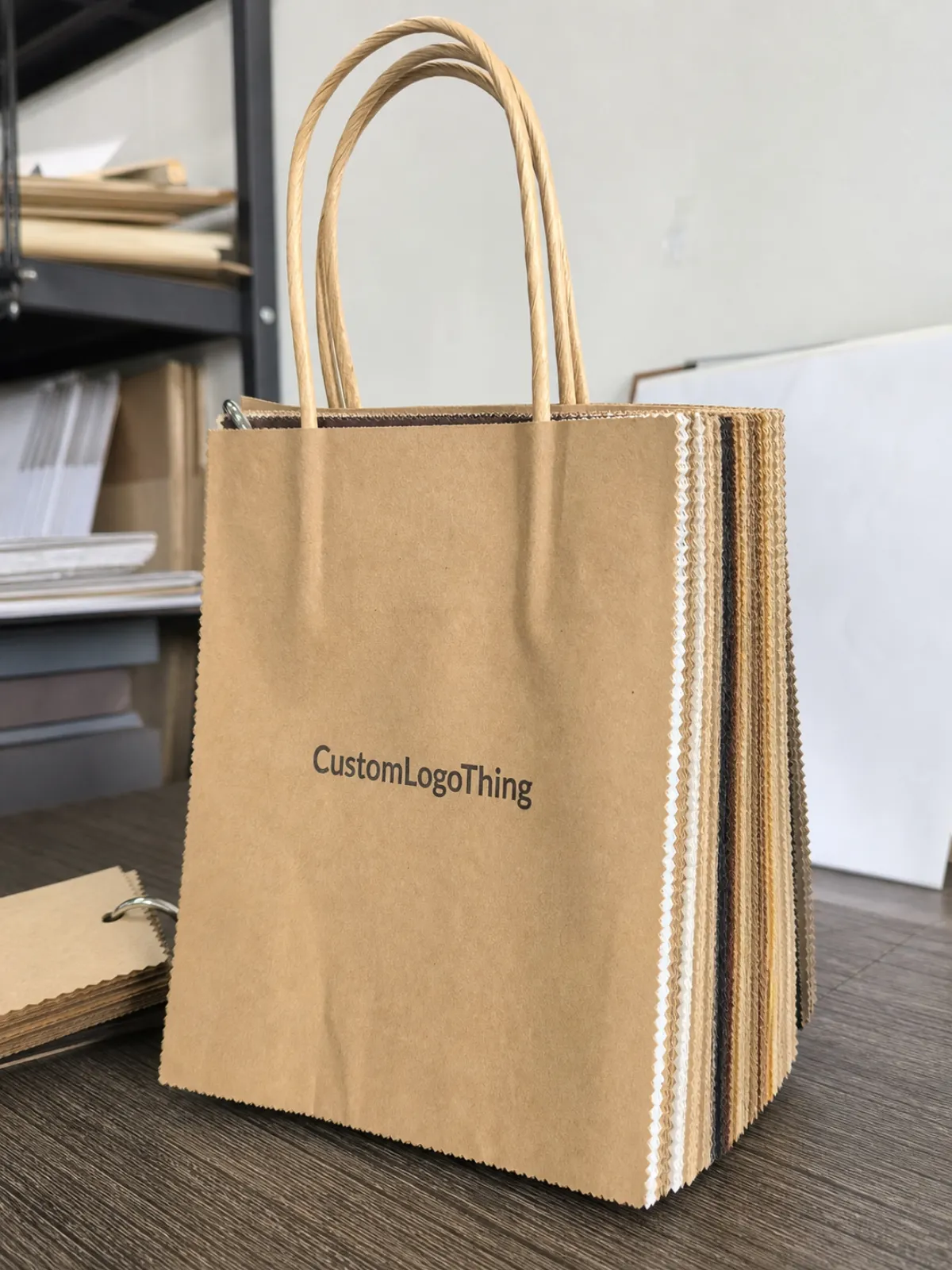
A good sample guide shows much more than paper color. It reveals stiffness, crease memory, handle comfort, print sharpness, and how the whole structure behaves after glue, folding, and reinforcement are added. Two bags can look nearly identical on a screen and still feel different in hand because the underlying fiber structure, coating, and handle construction are not the same.
That matters most in stationery, where the contents are often rigid, angular, and presentation-sensitive. A notebook bundle pushes differently from a soft retail gift set. A folder stack can press on the side walls, while a presentation kit may concentrate weight in the base. The bag has to survive those shapes, not an abstract “standard load.”
The useful sample checklist is practical rather than decorative: paper type, GSM, caliper, coating, handle width, handle twist density, patch size, and adhesive quality. Each one affects the others. A thicker sheet can still feel weak if the fiber structure is open. A lighter sheet can feel surprisingly firm if it is dense and well finished. This is where sample review earns its keep. On paper, the spec may look promising. In the hand, the weak point usually becomes obvious.
“A bag that photographs well still has to survive folding, carrying, stacking, and one awkward lift in a crowded corridor before the design is truly approved.”
If the stationery line uses FSC certified paper, recycled content, or a broader biodegradable packaging claim, the sample also checks whether the material story makes sense from end to end. Heavy plastic-like finishes, incompatible adhesives, or mixed-material handle systems can weaken that story. The sample is where the claim is tested against the actual build, not the marketing line.
That distinction sounds small. It is not. A bag can be visually aligned with a brand and still fail the practical test because the base sags, the print scuffs, or the handles cut into the fingers after a short carry. The sample stage is where those failures are cheaper to discover.
How sample kits translate paper specs into real bag performance
Sample kits usually arrive in stages, and each stage answers a different question. Loose swatches show color and surface texture. Flat mockups show dimensions, print placement, and panel layout. A finished sample shows the part most buyers underestimate: how the assembled bag behaves after glue lines, folds, and handle attachment are added.
The same paper can look brighter under one coating and flatter under another. It can feel smoother in a swatch pad and more rigid when turned into a bag body. Grain direction is another quiet variable. Fold across the grain and the crease may whiten or spring back. Fold with the grain and the line tends to stay cleaner. That is why a real fold test matters more than a color approval.
Useful sample checks are simple, but they need to be repeated under realistic conditions:
- Crease memory: fold and reopen the bag several times to see whether the line stays crisp or crushes.
- Edge cracking: inspect printed corners and sharp folds for whitening, fiber pull, or surface breakage.
- Handle pull strength: load the bag and lift it repeatedly to see how the patch and adhesive respond.
- Moisture sensitivity: leave one sample in a humid room and check whether the top edge waves or softens.
- Standing shape: place the bag on a flat surface with the intended contents and see whether it holds its silhouette.
That last test often exposes the real problem. An empty bag can look excellent and still collapse once it is filled with stationery. Rigid items create pressure points. A stack of notebooks changes the center of gravity. Pens, inserts, and folders shift the load in ways that a generic “sized to fit” assumption will miss. If the sample is for a specific kit, test it with that kit.
Transit also matters. A finished bag may be shipped inside corrugated cardboard master cartons, then handled, stacked, and stored before it reaches the buyer. A decent sample should survive that chain without curling, denting, or picking up scuffs. The ISTA framework is a useful reference when the bag is part of a wider distribution system rather than a single display purchase.
Key paper, coating, and handle factors that change performance
The biggest surprises usually come from a short list of material choices. Kraft paper gives a natural, tactile look and often feels dependable for stationery brands that want restraint instead of gloss. Coated stock sharpens graphics and makes logos stand out, but it can show fingerprints and scuffs sooner if the finish is too shiny or too soft.
Recycled paper is worth a close look. A sheet with post-consumer waste content may have a more varied fiber structure, which affects smoothness, stiffness, and print crispness. That is not a flaw. It is a material reality. The question is whether the bag still matches the brand’s visual language. Some projects benefit from the slight tonal variation and honest texture. Others need a more uniform surface to support fine typography or detailed illustration.
GSM and caliper are related, but they are not the same thing. GSM measures weight. Caliper measures thickness. A 120 gsm sheet can feel firmer than a heavier sheet if the fibers are dense and the coating is balanced. In practical terms, many stationery bags begin to feel noticeably more substantial somewhere around 0.18-0.30 mm caliper, though the right point depends on bag size, print coverage, and expected load.
Handle construction deserves equal scrutiny. Twisted paper handles are common because they balance cost, appearance, and comfort. Even so, small changes matter. A narrower handle may look neat but feel sharp under load. A wider one spreads pressure better for heavier notebook bundles or boxed stationery sets. Twist tightness, adhesive bond, and patch size all influence how the handle behaves after repeated lifting.
Coating is where presentation and durability meet. Matte coating softens glare and suits understated branding. Gloss creates more contrast and makes color appear brighter. Aqueous coating often sits in the middle, offering a practical finish with reasonable scuff resistance. Soft-touch can feel premium, but it needs caution because tactile appeal does not always equal durability. It can mark more easily than buyers expect.
If the project needs a stronger sustainability claim, ask specific questions about the finish stack. A paper bag is not automatically easier to recycle just because the base sheet is paper. Adhesives, coatings, and any added film can change the story. If the packaging brief mentions biodegradable packaging, the supplier should explain the exact build rather than offering a general label.
FSC certification is useful when fiber sourcing matters to the buyer or end customer. It does not replace performance testing, but it does help verify that the paper chain is documented. That becomes especially relevant in stationery programs where the packaging has to support an eco-aware brand message without sounding vague.
One caution: a material that looks premium in a sample may be less forgiving on a production line. Dense coatings can slow drying. Dark, full-coverage print may show tiny rub marks once bags are packed in stacks. A highly textured stock can look beautiful but complicate fine line work. Good samples reveal those limitations early, before the order reaches a scale where rework becomes expensive.
Cost, pricing, and MOQ tradeoffs for sample-led ordering
Sample pricing and production pricing are not the same conversation. A cheap sample can still lead to an expensive production spec if the material choice is underdefined. The reverse happens too: a slightly higher sample cost can save money later by showing that the bag does not need a special coating, an oversized handle patch, or a heavier paper grade to meet the brief.
The main cost drivers are paper grade, print coverage, coating, handle style, reinforcement, and any unusual finishing. A full-bleed design on coated stock will usually cost more than a small logo on kraft paper. Twisted handle bags with double reinforcement patches also cost more than a minimal build. Special effects such as soft-touch lamination, spot UV, or extra die-cut detail add setup time and reduce flexibility in sourcing. MOQ rises for the same reasons: more specialized combinations usually need dedicated material allocation or separate production setup.
| Option | Typical sample cost | Typical production effect | What it signals |
|---|---|---|---|
| Loose paper swatches | $10-$25 | Minimal direct impact | Color, texture, and basic fiber feel |
| Flat mockup or taped prototype | $25-$60 | Low to moderate | Dimensions, layout, and print placement |
| Finished twisted handle bag | $60-$150 | Moderate | Handle comfort, glue quality, fold behavior |
| Pilot production run | Quoted separately | Best predictor of final unit cost | Real output, waste rate, and line speed |
For production, a simple stationery bag at 5,000 pieces might sit around $0.18-$0.28 per unit, while a more decorated version with higher coverage, a stronger finish, and reinforced handles can move into the $0.28-$0.55 range or higher. That spread moves with paper markets, freight, finish complexity, and print yield. It also moves with waste. A design that looks elegant on screen may be costly if it creates a lot of setup loss or slows the line.
Line items matter. Buyers Should Ask what is included in the sample charge, what is credited later, and what becomes an add-on once production starts. A quote that looks lower at first can become expensive once handle upgrades, coating changes, or artwork revisions are added. Comparing quotes line by line is tedious, but it is the only reliable way to separate the real price from the headline price.
There is also a sustainability caveat that gets ignored too often. A bag can be technically recyclable and still be a poor fit for a brand that wants a cleaner end-of-life story. Heavy finishes, mixed materials, and complex adhesive systems may make disposal or recovery less straightforward. If a supplier describes a bag as eco-friendly, ask for the build detail. The answer should be specific, not promotional.
Process, timeline, and lead time from request to approval
The cleanest sample process begins with a complete brief. Send the target dimensions, artwork, expected fill weight, and any reference sample you trust. If the bag needs to work with a notebook set, invitation kit, or retail stationery pack, list the actual contents and their approximate weight. That is far more useful than a vague request for “something premium.” Premium can mean six different things, and factories do not guess well.
Lead time depends on whether the supplier is matching an existing material or building a new combination of paper, coating, print, and handle assembly. A straightforward spec match can move quickly. A new mix usually needs extra proofing, glue checks, and handle testing. If the paper needs to be FSC certified or contain a specific recycled blend, sourcing can stretch the schedule further.
Most delays come from the same places: artwork changes, color correction, unavailable paper grades, and handle strength retesting after a revision. A print can look right while the bag body still needs a higher caliper to hold shape. The paper can be correct while the handle patch needs to be larger to support the load. Every adjustment adds time, and some add cost.
For planning, the safest move is to approve the material sample early so production does not get compressed by late-stage changes. If launch timing is tight, do not wait until the final artwork lock to start reviewing the bag itself. The bag, box, and shipper should be considered together, especially if the finished goods will be packed into corrugated cardboard outer cartons and expected to arrive looking crisp rather than crushed.
Most practical sample timelines fall somewhere between a few days and a few weeks. Loose swatches can move quickly. Finished samples take longer because there is assembly involved, and assembly is where hidden problems appear. If a supplier promises speed, the real question is not how fast the sample arrives. It is whether the sample includes the right variables to make a production decision.
That is also the point where the approval standard should be made explicit. Some elements need to match exactly: size, paper grade, handle type, print coverage, and the overall silhouette. Other elements can vary slightly, such as batch tone or the feel of a recycled sheet. Clear expectations now prevent unnecessary friction later.
Common mistakes when evaluating stationery bag samples
The first mistake is judging the sample by print color alone. Bright branding does not guarantee a durable bag. Buyers sometimes approve a beautiful surface and only later discover that the body dents too easily, the base bows under load, or the twisted handle feels thin once the bag is full. The surface is one variable; the structure is the real test.
The second mistake is testing with the wrong contents. A bag meant for notebooks, catalog inserts, or gift sets should be loaded with the actual intended weight. A random stack of paper can hide problems that only appear with rigid, uneven items. A 400-gram load may look fine during review, but the real kit could weigh twice that and change how the bottom panel settles and how the handle pulls.
Lighting can distort approval too. Warm showroom light flatters kraft paper. Cooler warehouse light can make the same sheet look flatter, grayer, or less refined. If the sample review is spread across teams, use one master sample and one reference photo set. Otherwise people end up approving different objects and calling them the same bag.
Transport and storage are other trouble spots. Paper fibers absorb moisture. Edges soften. Printed areas scuff against carton walls. A sample that looks perfect on a desk may not behave the same way after shipping or a day in a damp room. I like to keep one sample untouched, carry one through transit, and inspect one after short storage. If all three still look good, the material has probably passed a more realistic test than a single desk review.
One more useful check: treat the bag as a system rather than a sheet of paper with handles attached. The paper, adhesive, reinforcement patch, and finish influence each other. A slightly heavier stock can rescue a weak silhouette. A more forgiving coating can reduce rub marks. A better patch can improve comfort without changing the paper. Small changes often matter more than a dramatic specification change.
Expert next steps: turn the sample into a production-ready spec
Once the sample is approved, write the spec down in one place. Record the paper grade, GSM, caliper if available, dimensions, handle type, coating, print coverage, reinforcement detail, and any special notes about tone or texture. That document becomes the anchor when pricing changes, staff changes, or the project is reordered months later.
Keep one signed master sample with the spec sheet. Future reorders, production checks, and color reviews should all point back to that reference. If the factory proposes a change, ask exactly what will remain the same and what may shift. Honest variation is manageable. Unclear variation creates the kind of dispute that starts after the order is already moving.
It also helps to preserve the finish story in writing. If the bag needs to support FSC certified sourcing, recycled content, or a biodegradable packaging claim, verify how the paper, coating, adhesive, and handle assembly affect that claim. The point is not to force every line item into the same label. The point is to make the package coherent.
For stationery kits, the final check should include carton fit and compression. A finished bag inside corrugated cardboard outer packs should still look tidy after stacking, handling, and transit. That last pass is where the sample guide proves its worth. It does not just help you choose a look. It helps you choose a structure that survives production, storage, and shipping without losing the details that made it appealing in the first place.
FAQ
What should a stationery twisted handle paper bags material sample include?
It should show the actual paper grade, handle style, reinforcement method, and finish, not just a loose color swatch. A strong sample also includes the real dimensions and print coverage so you can judge proportion, branding impact, and how the bag feels once it is filled. If possible, request both a flat proof and a finished bag.
How do I compare GSM in a stationery bag sample?
Use the same bag size and load it with the intended contents, because perceived strength changes with shape and weight. Then compare stiffness, caliper, and fold behavior alongside GSM, since a thicker-feeling bag is not always the heaviest one. Check whether the sample keeps its shape after being carried and set down several times.
Can I request samples before confirming MOQ for paper bags?
Yes, sample review should happen before the final MOQ commitment whenever the design or material is still being refined. Ask whether sample charges are credited later, and confirm whether specialty finishes or custom handles create extra sampling costs. The sample stage is the best place to reduce risk before a larger order.
What affects turnaround time for a custom stationery bag sample?
Artwork revisions, paper availability, coating selection, and handle construction are the most common timing variables. A simple spec match is usually faster than a new material combination that needs proofing or extra testing. Shipping time also matters, especially if approvals are spread across several teams or locations.
How do I approve a sample for production without missing details?
Approve against a written spec that lists dimensions, material, color targets, handle style, and finish. Keep one master sample signed or dated so everyone references the same approved version. Then confirm that the final quote and production order match that sample exactly, especially on coating, reinforcement, and print coverage.

