When a Two-Cent Mailer Becomes a Six-Figure Decision
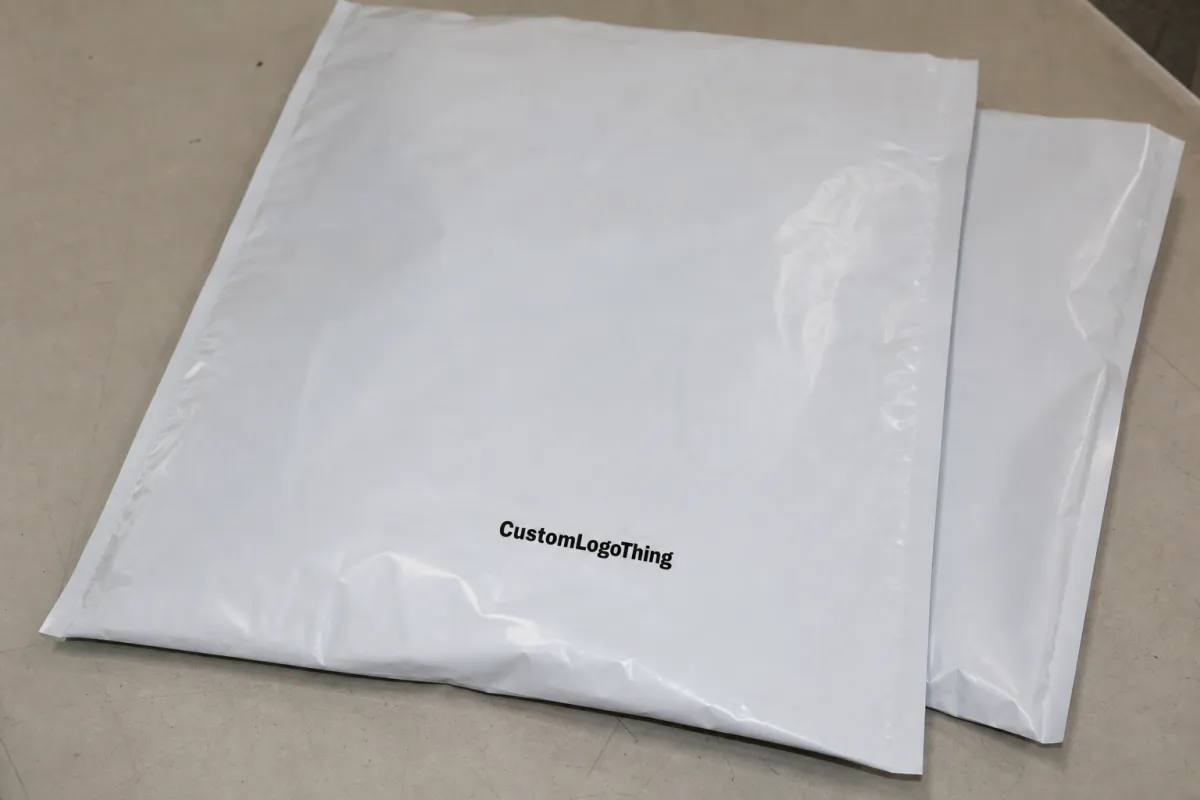
A subscription brand shipping 80,000 monthly orders cannot treat subscription Poly Mailers Unit cost as a rounding error. A two-cent swing is $1,600 per month, or $19,200 per year, before freight, storage, wasted bags, return shipments, customer support time, or replacement products enter the calculation.
That is the quiet problem with “cheap” mailers. The bag looks disposable. The cost appears small. The decision is not small at all.
Poly mailers sit at the intersection of postage weight, product protection, packing speed, warehouse space, and brand recognition. A good one disappears into the workflow: the operator inserts the product, peels the strip, seals it cleanly, applies the label, and moves to the next order. A poor one interrupts that rhythm with torn film, weak adhesive, unreadable print, privacy issues, or inconsistent sizing that makes every packer adjust by feel.
Compared with cartons, poly mailers usually reduce dimensional weight, take less storage space, and move faster through pack-out for flexible or low-crush-risk products. Compared with rigid mailers, they are better suited for apparel, soft goods, refill pouches, beauty samples, small pet accessories, creator merchandise, loyalty rewards, and lightweight kits that do not need corner protection.
From a packaging buyer’s point of view, the target is not the thinnest bag or the lowest number on a quote sheet. The target is the lowest landed cost per shipped order that still protects the product, looks intentional, and survives automated parcel handling. Custom Logo Things helps buyers reduce cost without thinning the film to the point of tearing, ghosting, weak seals, or avoidable subscriber complaints.
Procurement test: if a mailer saves half a cent but increases reships by even a small percentage, it may be the most expensive option on the quote sheet.
A useful poly mailer discussion starts with specifications, shipment volume, packing method, and risk. Once those are clear, the price has context.
Product Details That Change Mailer Performance
Subscription poly mailers are lightweight shipping bags, usually made from LDPE or co-extruded polyethylene film, designed for recurring outbound shipments. Most use a pressure-sensitive self-seal adhesive strip. Some add a second strip for returns, which can make sense for apparel clubs, footwear accessories, and home goods programs where exchanges are part of the operating model.
The core variables are film type, width, length, flap size, thickness in mil, seal strength, opacity, print coverage, perforation, vent holes, recycled content, and finish. Each one has a cost consequence. More importantly, each one has an operating consequence. A weak seal creates reshipments. Poor opacity exposes private contents. Oversizing raises material use, can affect postage logic, and makes a subscription delivery feel underfilled before the customer has even opened it.
Typical poly mailer gauges often sit around 2.0 to 3.0 mil for many soft-goods shipments, although the right range depends on product edges, packed weight, route abrasion, and carrier handling. Low-risk textiles may perform well in lighter film. Multi-item bundles with caps, clips, clasps, or hard corners may need heavier film, internal wrapping, or a different packaging format.
Custom printing is not decoration alone. A clear logo, return address panel, QR code, barcode zone, and recycling instruction can reduce confusion and make recurring deliveries feel deliberate. For replenishment and membership programs, subscriber recognition matters because the parcel arrives before the product is seen.
Useful add-ons include tear notches, dual adhesive strips, matte or gloss finishes, suffocation warnings, barcode-safe white blocks, vent holes for trapped air, and QR codes for reorder pages or disposal instructions. If sustainability claims are part of the brief, buyers should be precise. Recycled content, recyclability, store drop-off messaging, and certification language are not interchangeable. The U.S. Environmental Protection Agency publishes broader guidance on sustainable materials management at epa.gov, which is a useful starting point for responsible claim framing.
Specifications to Lock Before You Request a Quote
A clean quote starts with clean inputs. Before asking for Custom Poly Mailers, prepare the width, length, flap size, thickness, film color, print sides, ink colors, order quantity, packing method, carton weight limits, delivery destination, and required in-hands date. If artwork is available, send vector files. If artwork is not ready, send a rough layout with logo placement, warning copy, label zones, and any barcode or QR code locations.
Sizing deserves more discipline than many buyers give it. Measure the actual packed product stack, not the product laid flat on a studio table. Add enough clearance for insertion and sealing, then stop. A mailer that is 2 inches too wide and 3 inches too long may look harmless, but across 50,000 pieces it adds plastic, carton volume, and visual slack.
Thickness is a risk decision. For soft apparel, sample packs, and fabric-based merchandise, a lighter gauge may be commercially sensible. For accessories with clips, refill bundles with caps, pet products with buckles, or mixed kits, a heavier gauge may prevent punctures. Conveyor abrasion is real: bags rub against belts, chutes, cages, and other parcels long after they leave the packing bench.
Opacity also matters. Cosmetics, wellness products, gifting programs, apparel sizes, and private replenishment categories often need stronger privacy. Translucent film can be cheaper, but cheaper is not the same as suitable. A subscriber should not have to explain the contents of a parcel because the packaging saved a fraction of a cent.
Print complexity is another quote lever. Flood coats, edge-to-edge ink, metallic effects, tight registration, multi-SKU artwork, and large solid panels can increase production complexity, setup charges, and waste allowance. A sharp one-color layout on a colored film may outperform a heavy full-coverage design if the goal is recognition at a controlled cost per piece.
| Specification Choice | Typical Commercial Effect | Buyer Watchout |
|---|---|---|
| 2.0-2.5 mil film | Lower material cost for soft, low-risk items | May be weak for hard corners or heavy bundles |
| 2.75-3.5 mil film | Higher puncture and abrasion resistance | Higher unit cost and carton weight |
| One-color print | Efficient branding and simpler production | Less visual depth for premium campaigns |
| Heavy ink coverage | Strong doorstep brand presence | Higher cost, more scuff risk, longer setup |
| Dual adhesive strip | Supports returns and exchanges | Higher cost, but useful for apparel programs |
Many buyers overbuy design and underbuy function. The lowest quote often removes the features that prevent shipping failures: adequate gauge, proper seal, accurate sizing, and readable compliance copy.
Subscription Poly Mailers Unit Cost, MOQ, and Quote Drivers
The main drivers of subscription Poly Mailers Unit cost are resin price, film thickness, bag dimensions, print coverage, color count, setup or tooling fees, adhesive configuration, order quantity, freight, and duties where applicable. None of these variables operates alone. A larger bag in a thicker gauge with two-sided print and return adhesive will not price like a small one-color outbound mailer.
MOQ is an economic threshold, not an arbitrary obstacle. Film sourcing, press changeover, plate or setup work, color matching, adhesive setup, and quality checks take time whether the run is modest or large. Higher quantities usually reduce unit cost because fixed work is spread across more pieces. That is why bulk pricing can change the conversation quickly once a subscription program has dependable volume.
Quote language matters. Ex-works pricing may exclude freight from the production point. FOB pricing shifts responsibility at a defined handoff. Delivered pricing includes transportation to a named destination. Landed cost should include the bag, packing cartons, pallets if needed, freight, duties, and other import or destination charges. A low quoted bag price can become expensive if freight and storage are sitting outside the number.
For practical planning, evaluate cost per shipped order, not only cost per bag. Include the mailer, label application time, packing labor, damage rate, return handling, replacement freight, and the administrative cost of complaints. A bag that runs smoothly through fulfillment may be worth more than a cheaper bag that slows packers or mis-seals under pressure.
Custom Logo Things can quote multiple quantity tiers so buyers see the price curve at realistic decision points: pilot run, first subscription cycle, monthly reorder, and three-month inventory buy. If demand is predictable, planned replenishment usually beats panic reorders. Rush production and expedited freight can erase savings that looked attractive during sourcing.
As a rough directional example, a simple custom poly mailer in a common size and moderate quantity may price very differently from a larger, heavier, two-sided print bag with a return strip. The responsible way to compare suppliers is to hold the specification constant and ask exactly what each quote includes. If one quote includes cartons, freight, and proofing while another excludes them, the unit numbers are not comparable.
Buyers should also separate first-order cost from repeat-order cost. A first run may carry setup work, artwork checks, or sampling steps that do not repeat in the same way later. Repeat orders with approved artwork and unchanged specs are usually easier to plan, especially when reorder points are tied to actual monthly shipment volume.
Process and Timeline From Artwork to Delivered Bags
A good buying process is sequential. Discovery comes first: product type, shipment volume, mailer size, performance risk, and delivery date. Then specification review, artwork check, material recommendation, quote, sample or proof approval, production, quality control, packing, freight booking, and delivery.
Send the practical details first: target quantity, desired in-hands date, product dimensions, product weight, current mailer size if one exists, print files, delivery address, and any sustainability or compliance requirements. If your brand needs FSC-certified paper inserts alongside the mailers, or if the subscription kit uses mixed packaging formats, say that early. FSC guidance is available at fsc.org for buyers comparing certified paper-based components.
Digital proofs confirm layout, orientation, size, color placement, suffocation warnings, and seal direction. They do not fully prove hand-feel, opacity, puncture resistance, or how the bag behaves on a packing line. Physical samples or comparable material references help when a product has sharp edges, privacy concerns, premium positioning, or tight insertion tolerances.
Lead time depends on material availability, quantity, print complexity, proof approval speed, and freight method. A repeat order with approved artwork can move faster than a first order with unresolved Pantone colors and a changing bag size. In practice, many delays are caused by missing vector artwork, late compliance copy, unclear delivery addresses, and size changes after quote approval.
Quality control should be specific. Buyers should expect checks for dimensions, seal alignment, print clarity, carton counts, and packing labels. International transit and parcel fulfillment add stress that a polished proof will never show. For performance-minded brands, packaging test protocols from groups such as the International Safe Transit Association at ista.org can help frame broader distribution testing conversations.
Custom Logo Things keeps the process specification-led because ambiguity is expensive. The goal is not to push buyers toward a bag before the details are known. The goal is to remove uncertainty before production so the delivered mailers match the cost model, the launch calendar, and the fulfillment workflow.
Mistakes That Inflate Landed Cost After Approval
The cheapest approved quote can leak money after the purchase order. Poor cartonization, loose defect tolerance, weak seal performance, inconsistent sizing, print scuffing, and unexpected storage volume all show up later, often in the warehouse rather than the sourcing spreadsheet.
Under-specifying thickness is the classic mistake. A thinner bag can reduce subscription poly mailers unit cost by fractions of a cent, but one torn shipment can trigger a refund, replacement product, extra freight, customer support time, and subscriber frustration. If the product has hard corners or several loose components, test the actual packed bundle, not the lightest SKU in the assortment.
There is also a postage and presentation trap. Using one universal mailer size for every SKU simplifies purchasing and inventory, but it can create dimensional inefficiency and a loose, careless delivery for smaller orders. A two-size or three-size system often gives better control without making fulfillment chaotic.
Overprinting is quieter but common. Heavy ink coverage can look strong in a mockup, then raise cost, extend production time, increase scuff risk, and complicate color approval. A simple branded layout with one or two well-placed graphics may be enough for recognition, especially if the mailer color already supports the brand system.
Inventory planning deserves the same scrutiny. Ordering too little during a growth phase can force repeated small runs, repeated setup charges, and duplicated freight. Ordering too much can overload storage and trap cash in obsolete artwork if the subscription theme changes. The better answer is usually a planned reorder point tied to monthly shipment volume, supplier lead time, and safety stock.
Compliance copy should not be added at the last minute. Suffocation warnings, recycling language, return instructions, barcode zones, and carrier label areas need space in the artwork. If those details are squeezed in after approval, the design may become cluttered or production may pause while files are revised.
Before approval, confirm size, gauge, artwork, seal type, print sides, carton quantity, carton weight, delivery address, reorder point, and the decision maker responsible for final sign-off. One missed line can change the real cost after the bag is already made.
Supplier Fit for Subscription Operations
Custom Logo Things fits buyers who need commercial clarity from Custom Packaging Products, not just a catalog image. Subscription operations have a rhythm: monthly volume, campaign changes, SKU shifts, returns, storage limits, and subscriber expectations. A quote has to respect that rhythm.
The work often starts by turning a loose packaging idea into a production-ready specification. That may mean rationalizing three proposed mailer sizes down to two. It may mean choosing a stronger film instead of adding a box. It may mean simplifying print so the brand still reads clearly while the cost per piece stays controlled.
Quality priorities are practical: consistent sealing, clean print, accurate dimensions, proper carton labeling, and production checks that reduce fulfillment surprises. Those details are not glamorous. They are the difference between a packing team moving cleanly through 10,000 parcels and a team stopping every few minutes to fight bad seals or confusing carton labels.
The best supplier is not always the one with the lowest first quote. It is the one that helps protect margin across every recurring mailing cycle. Fewer damaged parcels, faster packing, stronger subscriber recognition, and predictable monthly packaging spend are measurable outcomes. That is where a focused review of subscription poly mailers unit cost becomes useful rather than theoretical.
Before You Place a Poly Mailer Order
Before requesting pricing, choose two or three target mailer sizes, estimate monthly shipment volume, identify product weight ranges, gather brand artwork, and decide whether returns need a second adhesive strip. If the subscription includes several product families, group them by packed size and risk rather than by SKU name alone.
Ask for tiered pricing rather than a single quantity. A pilot run may be right for validation. A monthly volume order may support launch. A planned replenishment order may reveal better bulk pricing once setup work and freight are spread across more bags. Compare all three if cash flow and storage allow it.
Calculate landed cost per bag and cost per shipped order. Then compare that number with expected damage reduction, labor speed, return handling, and brand value. For a subscription program, the cheapest bag on paper may not be the lowest-cost packaging system.
Samples are sensible when the product has sharp edges, privacy concerns, premium positioning, or tight insertion tolerances. Material references also help buyers judge opacity, finish, and stiffness before committing to production. A digital proof can approve layout. It cannot prove how the bag feels in a subscriber’s hand.
For a useful quote, send Custom Logo Things the bag size or product dimensions, quantity, artwork, delivery address, and target date. Those details make the cost visible before production begins, which is where the best packaging decisions are made.
FAQ
What is the average subscription poly mailer unit cost for custom orders?
The unit cost depends on size, thickness, print coverage, color count, adhesive style, quantity, setup charges, and freight. A reliable answer requires a quote tied to the exact specification. For subscription programs, compare landed unit cost across several order quantities because the price curve can change materially once fixed costs are spread across more bags. Custom Logo Things can quote a test run, standard monthly volume, and planned replenishment order so the comparison is practical.
How does MOQ affect custom poly mailers pricing?
MOQ affects pricing because setup, film sourcing, press time, and quality control are fixed costs that become more efficient at higher quantities. Lower MOQs can help validate a new subscription program, but they often carry a higher per-bag cost. If shipment volume is predictable, ordering against a three-month forecast may reduce repeated setup and freight expense.
What specifications should I send to get an accurate poly mailer quote?
Send bag width, length, flap style, thickness, material preference, print colors, print sides, quantity, delivery address, target date, and artwork if available. Include product dimensions and weight if you are unsure which mailer size is best. Mention required features such as return strips, suffocation warnings, recycled content, vent holes, barcode areas, or special packing limits.
Can lower-cost subscription mailers still protect products in transit?
Yes, if the lower cost comes from smart sizing, appropriate quantity, simplified print, or better order planning rather than under-specifying the film. Soft goods usually need less protection than items with hard corners, mixed bundles, or heavy accessories. A good quote balances price with seal strength, puncture resistance, opacity, and fulfillment handling.
How long does it take to produce custom subscription poly mailers?
Production timing depends on quantity, material availability, artwork readiness, print complexity, proof approval speed, and shipping method. The fastest timelines usually happen when the buyer provides complete specifications, approved artwork, and a confirmed delivery address at the start. Ask for the timeline at the same time as pricing so your launch or reorder schedule is based on confirmed production logic, not assumptions.


