Supplement Brand Poly Mailers Cost: Get the Right Quote
Supplement Brand Poly Mailers cost more than a generic shipping bag because the bag is doing more than moving a product from A to B. It has to fit the packout, survive transit, and support the brand without creating extra work on the fulfillment line. The cheapest quote is not always the lowest cost once damage, freight, and rework are included.
For buyers, the useful question is simple: what specification gives the best landed cost for the shipment you actually send? A mailer that is too small, too thin, or too heavily printed can create problems that do not show up until the first production run. A well-chosen mailer protects the product, speeds packing, and keeps the customer experience consistent.
Why supplement brands overpay for the wrong mailer
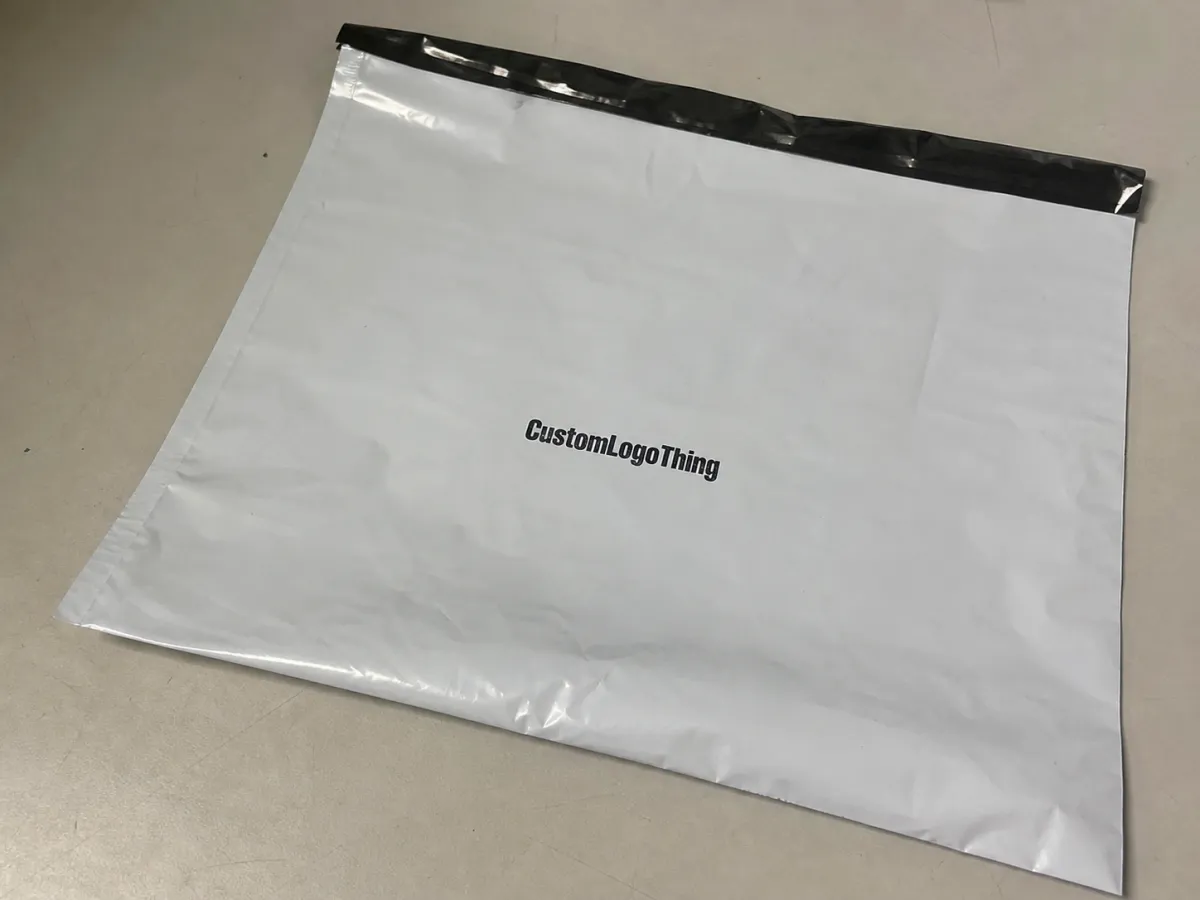
Most brands do not overpay because of hidden fees. They overpay because the quote was accepted before the real packaging requirements were understood. A bag that fits in a mockup can still fail once it meets bottles, pouches, tape, labels, and a live packing table. When that happens, the cost moves from the bag to labor, replacements, and damage claims.
Size errors are the most common cause. A mailer that is too tight can crush shoulders or stress the seal. A mailer that is too large wastes material and can raise dimensional freight. Either problem erodes the savings from a low unit price.
Supplements also tend to ship in repeat programs, bundles, and subscriptions. That means the outside package is part of the brand experience every month, not just at launch. A damaged or generic-looking mailer can make the shipment feel less intentional, even if the product inside is fine.
That is why the right comparison is landed cost, not sticker price. Freight, setup, proofing, overage, and damage risk all belong in the decision. In many cases, a slightly stronger or better-sized mailer is the cheaper choice once those costs are included.
Poly mailer specs that protect supplement shipments
Start with film thickness. For lighter supplement orders with soft-sided contents, 2.5 to 3 mil is often enough. For bottles, multi-packs, or products with sharper edges, 3 to 4 mil is a safer range because it improves puncture resistance and reduces seam stress.
Seal quality matters just as much as thickness. A mailer can look fine and still split if the adhesive or side seam is weak, contaminated, or overloaded. If a bag is packed to the edge, even a good seal can be stressed. The best sign is not how the bag looks in a proof; it is how it holds up in actual handling.
Fit is another cost driver. Bottles need room around the shoulders and enough slack that the seal line is not under tension. Pouches are flatter, but they still need enough space to avoid overcompression. Too much empty space causes abrasion, while too little creates stress and a rough-looking shipment.
Print choices affect both presentation and cost. One-color branding on a solid field is usually the lowest-risk option for a clean look. Full-bleed artwork increases visual impact but also increases print complexity. Inside printing can add a polished unboxing detail without forcing a more expensive structure.
Finish also matters. Gloss can look brighter and retail-forward, while matte tends to hide scuffs better and feels less slippery in hand. Some buyers want recycled-content material or lower-ink layouts, which can support sustainability goals. The key is to make sure the sustainability choice still passes shipping tests.
Before approving a large order, test samples at the packing table. The bag should feed fast, stack cleanly, and seal without correction. If the fulfillment team has to fight the packaging, the “cheap” option is no longer cheap. For technical validation, ISTA testing helps check shipping durability, and FSC matters if any paper components or inserts carry certified fiber claims.
Supplement Brand Poly Mailers Cost: Unit Price, MOQ, and Quote Drivers
Supplement brand poly mailers cost is driven by a few predictable variables: size, thickness, print coverage, color count, and whether the mailer is stock or fully custom. MOQ affects the rest. Higher quantities usually lower unit cost, but only if the inventory will move before it ties up cash.
For reference, a standard branded mailer at 5,000 pieces often lands around $0.16 to $0.28 per unit before freight when the size is standard and the print is straightforward. Larger formats, thicker film, or heavier ink coverage can push that into the $0.24 to $0.45 range. Small runs of 500 to 1,000 pieces typically cost more per unit, sometimes $0.60 to $1.20, because setup is spread across fewer bags.
| Option | Typical MOQ | Approx. unit price | Best use |
|---|---|---|---|
| Stock poly mailer, unprinted | 500-1,000 | $0.08-$0.18 | Fast fulfillment, low branding needs |
| One-color branded mailer | 3,000-5,000 | $0.16-$0.28 | Launches, subscriptions, lean brand presentation |
| Full-bleed custom mailer | 5,000-10,000 | $0.24-$0.45 | Premium visual branding and stronger shelf impact |
| Thicker, oversized, or specialty finish | 10,000+ | $0.35-$0.70+ | Heavy kits, sharper products, higher perceived value |
The table only helps if the assumptions match. A quote can look lower on the first line and still end up higher after plate charges, artwork setup, freight, or overage are added. The cleanest comparison is to ask for the same spec twice: same dimensions, same thickness, same print count, same destination, and same delivery window.
Freight deserves special attention. Oversized mailers and heavier films increase carton weight, and larger cartons can change dimensional rates even when the unit price looks good. A few cents saved on the bag can disappear if the shipping cube grows. That matters especially for brands shipping into distribution centers with strict receiving rules or chargebacks.
Setup is another quiet line item. Plates, color matching, proofing, and sample runs can be minor on a large order and expensive on a small one. Ask whether the quote includes production samples, digital proofs, and reprint allowances. If not, add them before comparing vendors.
If you are still sorting out the broader packaging mix, start by reviewing the categories in Custom Packaging Products. Once the format is clear, a focused comparison on Custom Poly Mailers is easier because the size, thickness, and print choices are already narrowed down.
How to lower pricing without wrecking the brand presentation
The easiest way to reduce cost is to standardize sizes. Many supplement lines can fit into one or two mailer dimensions with minor packout changes. Every extra size adds inventory, reorder complexity, and a higher chance of buying the wrong thing.
Simplifying print is usually the next best move. One-color branding often looks more disciplined than crowded artwork, and it costs less to produce. Full coverage is not always necessary. A clear logo, a readable brand name, and one controlled background color can carry the package if the typography and contrast are handled well.
Do not cut thickness too far. That kind of savings looks smart on paper and expensive in transit. A thin bag may pass inspection at the warehouse and still fail when a bottle corner rubs, a sorter drops the carton, or a customer packs a return. A few tenths of a mil can be cheaper than the first replacement shipment.
Another savings lever is SKU reduction. If three product sizes can ship in one mailer format, one format is enough. Fewer variations mean better purchasing power, fewer packing mistakes, and less dead stock. The brand does not need a different mailer for every SKU to look polished.
There is also a visual trick that often works better than extra decoration. Use the same color family across the mailer, label, and insert. A coordinated palette gives the shipment a finished look without expensive print coverage. Good packaging usually feels organized before it feels complex.
“A clean, well-sized mailer usually beats an overdesigned one. Buyers notice fit first, then print, then price.”
For startups, a simple branded mailer is often the smartest first step. It preserves presentation without committing too much budget to packaging inventory. As volume grows and order patterns stabilize, more detailed graphics or special finishes become easier to justify.
Process and lead time: from artwork to delivered cartons
The workflow is straightforward: quote, artwork prep, proofing, sampling if needed, approval, production, packing, and freight. The weak spots are usually the handoffs. If one step is vague, the whole timeline slips and the order misses its packaging window.
For a simpler branded job, 12 to 15 business days after proof approval is a reasonable planning target. Full-coverage graphics, specialty finishes, or larger quantities can extend that. Freight is separate, and cross-country or international shipping should be treated as part of the schedule, not an afterthought.
Most delays come from avoidable issues: unclear artwork files, last-minute dimension changes, or approval notes that leave too much to interpretation. Send clean vector files where possible. Confirm the exact finished size. Decide in advance whether the color needs to match an existing brand system or just stay in the same family.
A screen mockup is not the same as a printed bag. Matte, gloss, and soft-touch surfaces all react differently, and registration issues can show up only after production starts. If color accuracy matters, ask for a sample or production proof and check it under normal warehouse lighting, not just on a monitor.
Plan backward from the ship date, not forward from the order date. If a promotion, subscription renewal, or retail window depends on the packaging arriving on time, build in a cushion. There is little value in saving on unit cost if the mailers arrive after the campaign is already live.
If you want a sense of production quality before committing to volume, review supplier examples and finished outcomes through Case Studies. The useful detail is usually in the execution: clean seams, consistent color, and print that stays aligned across the run.
What to check before you approve a supplement mailer order
Before approval, check the unglamorous details. Those are the ones that create expensive mistakes. Confirm the finished dimensions, artwork placement, seal type, carton count, and overage allowance. If a logo sits too close to the edge, a barcode lands on a fold, or the seam overlaps a key graphic, the reprint cost lands on the buyer.
Color expectation matters more than most teams expect. A digital mockup is not the same as a printed bag. If the brand needs exact shades, ask for a sample or proof and compare it under consistent lighting. Glossy film, matte film, and soft-touch finishes all shift color slightly. That is normal. Being surprised by it is not.
Warehouse behavior deserves a quick test too. Can the mailer stack cleanly? Does it slide into the packing flow without catching? Is there enough room for a shipping label or barcode without covering the key graphic? If the answer is no, the design needs another pass. Packaging that slows fulfillment is costing money even if the unit price looks low.
Use a simple side-by-side checklist when comparing vendors:
- Size: Does the bag fit the product without stressing the seal?
- Thickness: Is the film heavy enough for the product shape and shipping method?
- Print: Are colors, logo placement, and coverage clearly specified?
- MOQ: Can the quantity move before it becomes slow inventory?
- Lead time: Does the delivery window fit the launch or reorder plan?
- Landed cost: Are freight, proofing, and setup included?
That checklist keeps supplement brand poly mailers cost comparisons honest. A supplier that gives a clean, detailed spec sheet is usually easier to work with than one that hides everything behind a vague low number.
What to send for an accurate quote and next-step order
If you want a quote that can actually support a buying decision, send the finished size, quantity, print colors, artwork files, shipping zip code, and target in-hand date. That is the minimum. Without those details, the answer is mostly guesswork dressed up as a quote.
It also helps to ask for two versions of the quote: one cost-controlled option and one premium option. That makes the tradeoff visible. You can see exactly what full coverage costs versus a simpler branded bag, or what a thicker film does to the order. Side-by-side comparison usually speeds up the decision because the compromises are easier to see.
The best order is usually the one that balances unit cost, fit, durability, and brand consistency without paying for features the customer will never notice. If the program is still scaling, start with a version that protects the product and supports the brand. Then adjust once real shipment volume, damage rates, and storage behavior are visible.
Supplement brand poly mailers cost should not feel mysterious. Compare the spec, check the MOQ, confirm freight, and pick the version that matches the shipment reality. That is how the package stops being a problem and starts doing its job.
What affects supplement brand poly mailers cost the most?
Size, thickness, and print coverage usually move pricing more than anything else. MOQ matters because higher quantities spread setup costs across more units. Freight, proofing, and packaging style can change the final landed cost, sometimes more than the unit price suggests.
How do I estimate the right MOQ for supplement mailers?
Start with monthly shipment volume and add a buffer for launch spikes or reorder delays. If the line has multiple SKUs, check whether one mailer size can cover more than one product shape. A slightly higher MOQ can be cheaper per unit if the inventory will turn fast enough.
What is a realistic lead time for custom supplement poly mailers?
Simple branded orders can often move in about 12 to 15 business days after proof approval, while full-coverage or specialty jobs take longer. Freight should be added separately. If the packaging is tied to a launch date, build in a cushion.
Which specs matter most for shipping supplements safely?
Film thickness and seal strength are the first things to check. The mailer size should fit the product without excess empty space. Opacity and finish matter too if the brand wants a cleaner presentation or needs to hide the contents.
Can I lower poly mailer pricing without looking cheap?
Yes. Standardize size, simplify print, and keep the film strong enough for transit. A clean, well-sized mailer usually looks better than an overdesigned one, especially if the rest of the shipment stack is consistent.


