Supplement Embroidered Baseball Caps Bulk Order Plan
Plan supplement embroidered baseball caps Bulk Order Planning with clear specs, realistic MOQ, and a timeline that protects quality, pricing, and delivery. A weak proof or a logo placed too high on the crown can create more waste than the cap order itself, especially when the hats are tied to a launch, a field event, or a distributor program. For supplement brands, the cap is a wearable brand asset, so thread quality, fit, and logo placement matter long after the first shipment.
Supplement Embroidered Baseball Caps Bulk Order Planning: Why It Saves Rework
Most problems start before production, not during it. A buyer sends a logo as a low-resolution JPG, the first proof moves the mark too close to the seam, and then the team spends a week debating whether the cap looks premium enough. That delay costs more than the embroidery itself in many smaller runs and can push delivery into the danger zone if the hats are meant for a trade show, affiliate mailing, or retail partner launch.
From a packaging and promotion point of view, the order is really about removing guesswork. The best runs are built from three locked numbers: quantity, deadline, and budget. Everything else flows from those decisions. If one of those keeps changing, the supplier has to guess at materials, decoration method, and freight, and that is where margins disappear.
"The cheapest cap is rarely the cheapest order if the logo is off-center, the crown is too shallow, or the thread color reads differently in daylight."
The buying scenario matters too. Trade show staff need a polished look and a consistent fit. Retailer partner kits may need cleaner branding and better folding for insert boxes. Gym sponsorships often need breathable mesh or performance polyester because the cap will be worn hard. Team uniforms may prioritize comfort and repeat sizing over fashion details, so the cap choice should start with the channel, not the decoration.
Cap Styles That Fit Supplement Brand Promotions Best
The most common mistake is choosing the cap style last. That is backward. The shape of the cap affects how the logo reads, how the hat wears, and how much value people assign to it. A good order plan compares the style against the audience before it compares unit cost.
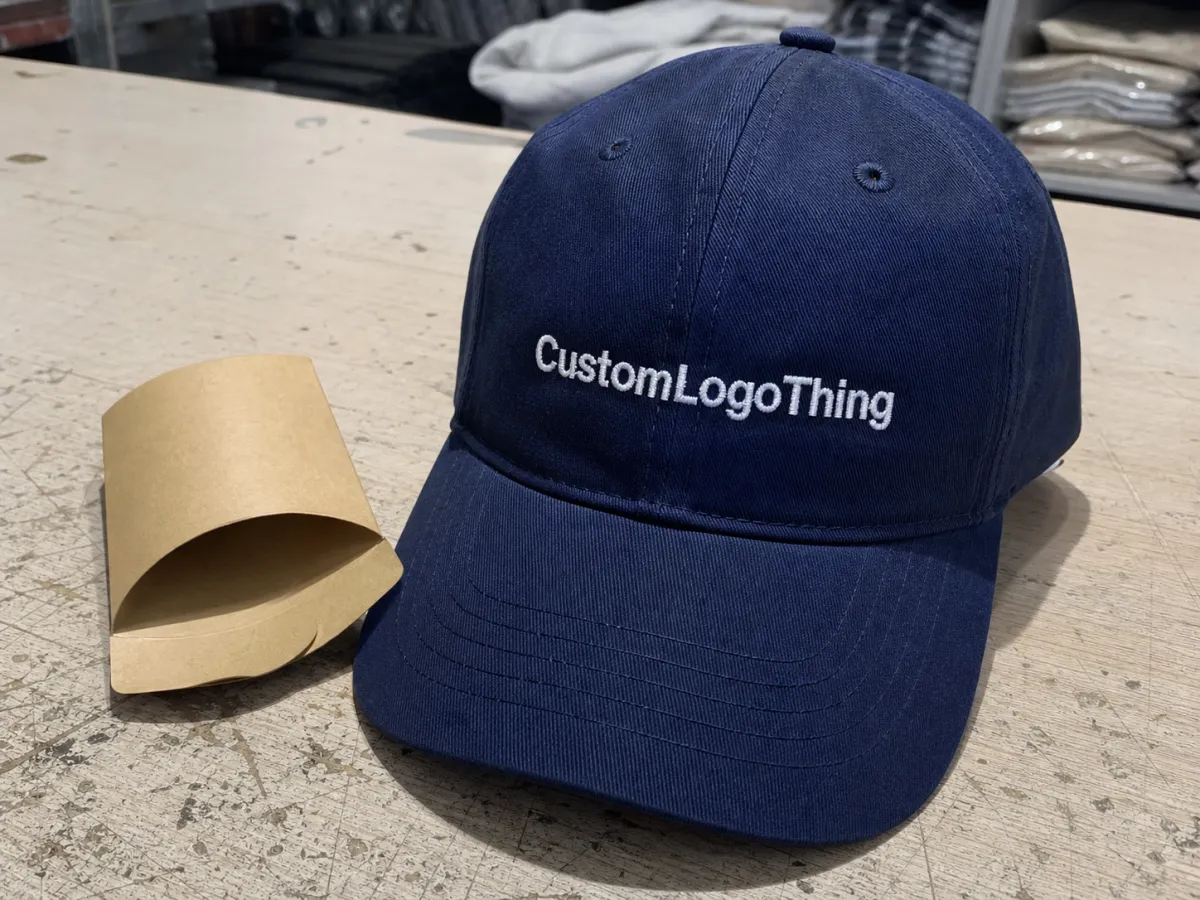
Structured six-panel caps are the safest choice for a polished, retail-ready look. They hold the front logo more cleanly because the crown keeps its shape. They also suit larger embroidery placements and give the branding a more deliberate profile. If the order is going to retailer partners, event staff, or executive field teams, this is usually the default.
Unstructured dad caps feel more casual. The lower crown and softer front panel make them popular for lifestyle branding, subscription gifts, and founder-led promotional drops. The tradeoff is that the logo can look slightly smaller from a distance, so design simplification matters more.
Trucker caps bring airflow and a sportier profile. Mesh backs help in outdoor promotions, gym activations, and sampling events where the wearer may be active for hours. They are often chosen for field teams because they look practical rather than polished, which can be an advantage in the supplement category.
| Cap style | Best use case | Brand impression | Typical decoration note |
|---|---|---|---|
| Structured six-panel | Retail partners, staff uniforms, trade shows | Clean, polished, controlled | Holds larger front embroidery well |
| Unstructured dad cap | Subscription gifts, lifestyle drops, casual merch | Relaxed, approachable | Best with simpler logos and lighter stitch coverage |
| Trucker cap | Outdoor events, sampling teams, gym promotions | Sporty, practical, visible | Works well with bold type and limited detail |
Crown height and bill shape matter more than many buyers expect. A high crown creates more front space for embroidery, but it can look louder. A lower crown feels modern, but it can compress the logo. Curved bills read more traditional; flat bills feel more streetwear. None of those choices is right or wrong. The question is whether the cap matches the brand tone and the channel.
For repeated promotions, one location often beats three. A clean front logo plus a small side mark can do enough. When the art gets too busy, the cap stops looking premium and starts looking crowded.
Embroidery, Fabric, and Closure Specs to Lock Before Quote
Before a supplier can quote accurately, the decoration spec has to be clear. The actual choices are specific: direct embroidery, patch appliques, one-location logo, side text, back-of-cap branding, and any custom label or insert work. Each change affects price, stitch time, and approval risk.
Embroidery is usually the strongest choice for caps when the logo is simple, durable, and meant to look premium under repeated wear and sunlight. A straightforward one-color logo with around 6,000 to 10,000 stitches is easier to price and easier to sew cleanly than a highly detailed mark with tiny text. Dense designs can still work, but every additional stitch adds machine time. Thread color count matters too, so clean vector files in AI, EPS, or vector PDF format reduce cleanup and digitizing risk.
Fabric choice changes the feel of the cap and the cost structure:
- Cotton twill gives a classic look and works well for embroidered front panels.
- Chino twill is similar, but often reads a little sharper for retail use.
- Performance polyester helps with sweat resistance and active wear.
- Foam-front mesh suits retro trucker styling and bold logos.
Closure choice matters more than many buyers realize. Snapback, strapback, hook-and-loop, and fitted styles all affect fit range, resale appeal, and warehouse handling. If the caps are going into kits, a single adjustable closure usually keeps fulfillment simpler. If the program is for retail resale, fitted sizing may make sense, but the size curve becomes part of the order plan.
Packaging also deserves a decision now, not later. Standard bulk packing is cheapest. Individual polybags, printed inserts, custom tissue, or retail hangtags add cost, but they can help if the cap is part of a premium bundle. If paper inserts or cartons are part of the project, FSC-certified materials are worth considering, and carton testing guidance from ISTA can help if the hats are shipping with other products. For paper sourcing, FSC is the cleanest reference point.
Pricing, MOQ, and Unit Cost Drivers for Bulk Cap Orders
Good pricing is not just a number. It is a stack of components: blank cap cost, digitizing, setup, embroidery labor, sampling, packaging, and freight. Buyers who only compare the headline unit price often miss the add-ons that move the final invoice. A quoted $5.20 cap can become a $6.10 landed item once setup and packaging are included.
Quantity changes the math quickly. A 100-piece run usually carries a much higher unit cost than 250, 500, or 1,000 pieces because the same setup is spread over fewer hats. That is why a slightly larger order can sometimes lower total spend instead of raising it. The useful question is not "What is the cheapest unit?" but "Where is the best break for this use case?"
| Order size | Typical unit range | Usually includes | Best fit |
|---|---|---|---|
| 100-199 | $7.50-$12.00 | Blank cap, digitizing, one-location embroidery, basic packing | Pilot runs, small launches |
| 250-499 | $5.25-$8.50 | Same structure with better setup spread | Affiliate kits, local events |
| 500-999 | $4.50-$7.25 | Standard stock cap, one- or two-color logo | Staff uniforms, retailer support |
| 1,000+ | $3.75-$6.50 | Lowest unit cost, tighter packing efficiency | Wholesale, repeat promotions |
Those ranges shift with style and decoration complexity. A patch appliqued logo can cost more than direct embroidery. Back text, side marks, or under-bill printing add labor. So does a complex artwork file with thin lines and many colors. If the brand can simplify the logo for cap use, the savings are real.
There are a few good ways to control spend without weakening the product:
- Use one front placement instead of multiple locations.
- Choose standard blank colors instead of a custom dye lot.
- Keep the logo in vector form and remove tiny detail that will not read on a cap.
- Limit thread changes and avoid unnecessary metallic or specialty threads.
- Use bulk packing unless retail-ready presentation is part of the sales plan.
MOQ also varies by style. Simple stock caps with one-location embroidery often start around 100 to 200 units. Custom-built styles, unusual closure types, or detailed multi-location decoration can push minimums higher. Ask whether the minimum applies per color, per style, or per artwork version. That detail decides whether a quote is truly workable.
Production Steps and Timeline From Proof to Delivery
Once the spec is frozen, the production path is straightforward, but only if the approvals stay on schedule. A typical flow goes like this: artwork review, digitizing, digital proof, sample approval if needed, production, quality inspection, packing, and shipment. Each step has a place where delays tend to show up, and most are avoidable.
The first hold-up is usually artwork. A missing vector file, unclear Pantone reference, or logo that has to be redrawn adds time immediately. The second delay is proof approval. If the buyer waits three days to answer a simple question about thread color, the schedule slips even if the factory is ready.
For a standard run, many orders move through digitizing and proofing within a few business days, then production often takes another 7-12 business days after approval, depending on order size and machine load. More complex orders, or orders with custom packaging, can take longer. Tight deadlines are possible, but only if the art is ready and the spec stops changing.
The schedule only starts once the proof is approved and the final details are frozen. A quote is not the clock. A draft proof is not the clock. The clock begins when the buyer signs off on the exact version that will be sewn.
That is why milestone check-ins help. Ask for a digital proof, then a production update if the run is large, then a pre-ship confirmation before freight leaves. If cartons, inserts, or bundled packaging are involved, ask whether the outer cartons will be packed to carrier standards or tested against shipping guidance. For mixed freight or retail carton packs, standards from ISTA are useful, and they are far more relevant than generic "strong box" language.
What a Reliable Supplier Should Show Before You Commit
A reliable supplier does not hide behind broad promises. They show the work. That means clear mockups, visible revision rules, and a production path that explains where the numbers came from. If a vendor cannot explain why one cap is $5.40 and another is $6.10, the quote is not ready.
Look for proof of stitch consistency, alignment accuracy, and color control. A sharp sample photo means more than a claim of being premium. Ask for proof on the actual cap style, not just on a flat illustration. The crown shape can change how the logo reads, and a perfect digital mockup can still hide a bad placement if the hat body is different from the one quoted.
Category experience matters as well. Supplement and wellness brands often need quick turnarounds, consistent branding across SKUs, and packaging that feels disciplined rather than loud. A supplier who understands promotional apparel and branded pack-outs is better positioned to handle those details. That is also where repeat ordering becomes easier because the second run should not require rebuilding the job from scratch.
For teams that expect repeat drops, the structure on Wholesale Programs is useful because it forces a more disciplined conversation about volume, style, and reorders. If you want broader order answers before you request a quote, the FAQ can clear up the common questions that slow buyers down.
Next Steps to Send a Clean Order Brief
Before you request quotes, gather the essentials in one message. Send the logo file, preferred cap style, quantity, target delivery date, shipping address, and any color references. If your brand uses PMS values, include them. If not, attach a reference photo so the supplier is not guessing at shade and contrast.
Choose the single most important priority before you compare vendors. Lowest unit cost, fastest turnaround, or a more premium look. You can have more than one, but one should lead. That prevents the quote review from becoming a moving target.
Then compare suppliers on the things that matter in production: spec accuracy, proof quality, timeline clarity, and revision discipline. A cheap quote with fuzzy details usually costs more after the first correction. A slightly higher quote with better control often wins once the order reaches the warehouse.
If the caps are part of a recurring promotional calendar, say so. Reorder potential changes the conversation around artwork, color consistency, and packaging. It also helps the supplier recommend a style that can be repeated without rebuilding the job from scratch.
Common Questions
What is the usual MOQ for supplement embroidered baseball caps?
Many suppliers start around 100 to 200 units, but the exact MOQ depends on cap style, decoration complexity, and whether the blank is stock or custom. Simpler one-location embroidery usually keeps the minimum lower than patch work or multi-location branding. Ask whether samples, setup, or mixed colors count toward the minimum so the order math is clear before you approve the quote.
How does logo complexity affect bulk cap pricing?
More stitches take more machine time, so dense logos and large front designs usually raise unit cost. Multiple thread colors can also add time because of extra thread changes and proofing. A cleaner vector logo with fewer fine details is usually the most cost-efficient choice for embroidered caps.
Can I approve a sample before full production starts?
Yes, and for bulk orders it is often the safest way to confirm crown shape, thread color, and logo placement. Ask whether you are approving a digital proof, a physical sample, or both, because those are not the same checkpoint. Make sure the sample approval is documented so production does not start on an unverified version.
What files should I send for a supplement cap quote?
Send a vector file such as AI, EPS, or PDF whenever possible so the logo can be digitized accurately. Include quantity, preferred cap style, color targets, and delivery deadline in the first message. If your brand uses exact color standards, share PMS values or a clear reference file to reduce proof revisions.
How long does bulk embroidered cap production usually take?
Standard timing depends on proof approval, digitizing, production load, and shipping method, so the full schedule is more than just sewing time. Simple orders move faster when artwork is ready and there are no revision delays. If you need a tighter deadline, ask early about rush options and whether your spec choices can be simplified to protect the ship date.