Hotel trucker caps Bulk Order Planning tends to look straightforward on a spreadsheet and messy in real life. The first sample may come back with a crown that sits too tall, mesh that feels too stiff, or logo placement that looks fine flat on screen but awkward on an actual head. Those are not minor issues. They are the difference between a cap that disappears into the uniform and one that gets worn reluctantly.
For hospitality buyers, the useful question is never just “How much per cap?” It is “What will these caps do during a shift, how will they be packed, and what can the supplier actually hold consistent across the full run?” A valet cap, a bell desk cap, and a shuttle driver cap can all share the same logo and still need slightly different build decisions. The property that gets those decisions right usually ends up with fewer returns, fewer replacements, and less internal debate over a product that should have been settled months earlier.
Hotel Trucker Caps Bulk Order Planning: why small details change the final bill
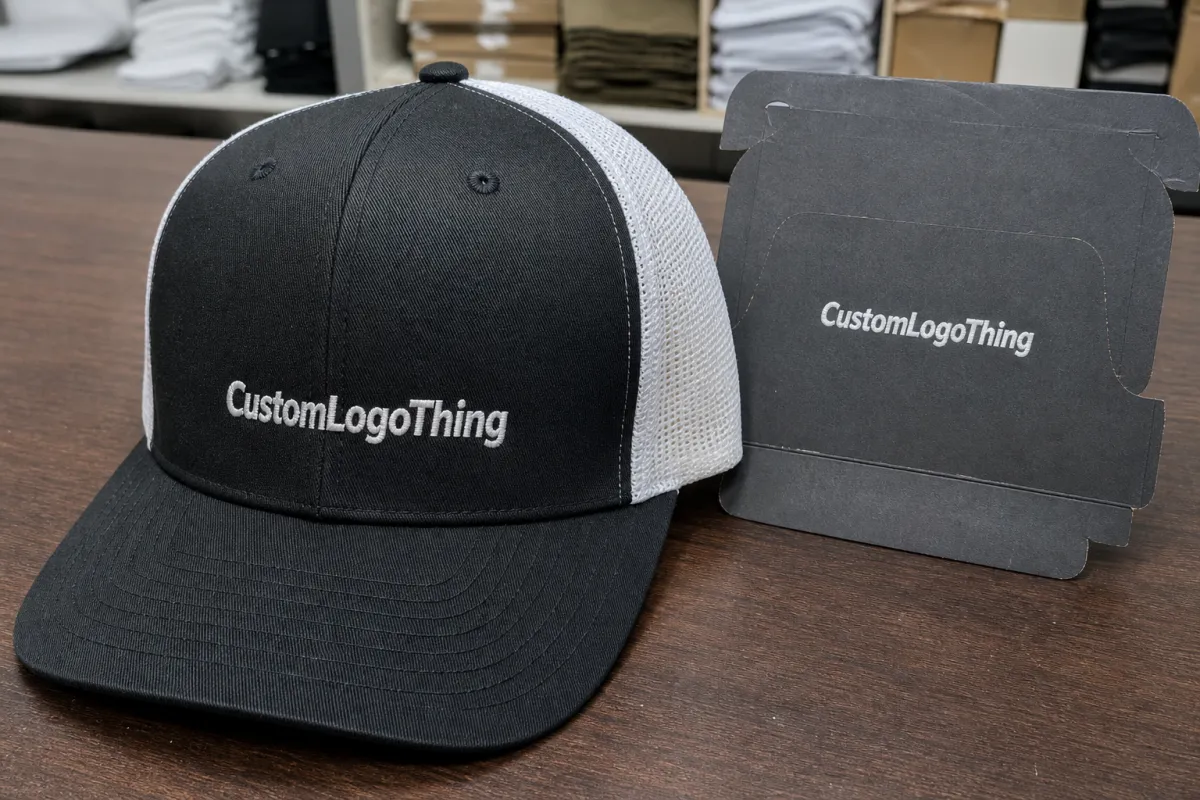
The final bill for a cap program is shaped by more than unit price. Decoration setup, carton configuration, special labeling, and packing method all matter, especially once the order moves past a small test run. A quote that looks strong at first glance can climb quickly if the order needs extra thread colors, individual polybags, mixed-size packing, or split delivery across multiple properties.
There is also a practical reason to define the use case before asking for pricing. A cap meant for outdoor arrivals needs a different balance than one worn only in the lobby. Outdoor staff usually benefit from a structured front and breathable mesh back; indoor teams may prefer a slightly softer crown so the cap does not feel rigid after an eight-hour shift. The same silhouette can serve both groups, but only if the buyer knows which compromise matters more.
Hotel buyers often underestimate how many hands touch a cap program before it reaches the wearer. Uniform managers, brand teams, purchasing, operations, and sometimes marketing all have opinions on color, logo placement, and packaging. The more departments involved, the more valuable a written spec becomes. Without one, the project starts drifting toward “close enough,” and close enough is expensive once production has begun.
- Outdoor service: structured front panels and mesh backs help with sun exposure and heat.
- Long shifts indoors: lighter crowns and smoother interiors tend to feel better across a full day.
- Mixed departments: snapback adjustability covers more head sizes and reduces inventory complexity.
- Guest-facing roles: clean stitching, balanced proportions, and a stable logo matter more than novelty details.
The best buying files are plain and specific. They tell the supplier where the cap will be worn, who will wear it, how it should be packed, and when it must arrive. That level of clarity shortens the quote cycle and reduces the odds of a rework later. It also keeps hotel trucker caps Bulk Order Planning tied to actual operations instead of aesthetic guesswork.
Build choices that fit hospitality staff, uniforms, and guest-facing service
Start with the cap body. A six-panel, mid-profile trucker cap with a structured front and polyester mesh back is still the safest baseline for many hotel programs because it holds its shape, breathes adequately, and reads cleanly at a distance. If the property has a more refined uniform program, a slightly lower crown can look less promotional and more uniform-driven. That matters in lobbies, resorts, conference hotels, and food-and-beverage settings where every accessory sits beside polished tailoring.
Material choice changes how the cap performs over time. Foam-front caps can be light and comfortable, but they are less forgiving if the logo is too large or the stitching is too dense. A structured polyester front gives embroidery more support. Cotton blends can feel softer, though they may not hold as crisp a shape after repeated wear. Mesh density matters too: a finer mesh often looks more polished, while a looser mesh can breathe better in outdoor roles.
Closure style is another point where bulk buyers can save themselves trouble. Snapbacks remain the most flexible choice for hotel orders because they fit a wide staff range and simplify stocking. Hook-and-loop closures adjust quickly, but they can look worn sooner and are not always as visually tidy. Fitted caps can look premium, yet they reduce flexibility and make replenishment harder. For a property with variable staffing or seasonal hiring, that trade-off rarely helps.
Decoration should follow the cap's purpose rather than the supplier's easiest setup. Embroidery is still the default for hospitality uniforms because it handles repeated wear well and gives the cap a durable, finished look. Woven patches work better for smaller lettering, fine crests, or complex shapes that would lose detail in thread. A heat-applied patch can be useful in some programs, but it should be chosen for the look and timeline, not because it is the cheapest line item on the quote.
There is one more practical constraint that comes up often: not every logo reads well on a trucker cap. Thin serifs, tiny lines, and overly compact text can blur once stitched or reduced to patch size. If the logo has to survive guest scrutiny from ten feet away, simplify it before production rather than asking the factory to rescue it later. That is not a design preference. It is a production limit.
Production reality: the cap style, logo shape, and decoration method have to agree with one another. If any one of those three fights the others, the sample usually exposes it.
If the caps will be worn in visible service areas, keep the finish understated and consistent. One logo size, one placement, one color path is usually better than three versions of the same cap. A small number of standard SKUs keeps the uniform program cleaner and makes replenishment less error-prone. For larger rollouts, the Wholesale Programs page is a logical place to compare structure before finalizing the order.
Logo, color, and trim specifications that keep the order consistent
Vector artwork is the first non-negotiable. AI, EPS, or a clean editable PDF gives the decorator a usable file; a screenshot does not. Once the logo moves into thread paths or patch production, every small flaw in the artwork gets amplified. A slightly fuzzy image on a presentation slide can become a poor stitch file, and that is how small type gets turned into a blurred edge on 300 caps.
Color control needs equal discipline. Confirm the cap body, mesh, visor, undervisor, sweatband, and closure separately. These parts are often sourced or dyed in different lots, so “navy” is not enough. If the brand has Pantone references, use them. If not, specify a visual target and ask for a material swatch or digital proof that distinguishes front panel color from mesh and trim. A good supplier should be able to explain how far the materials can drift without creating an obvious mismatch under daylight.
Trim details are the part many buyers forget to lock down. Ask about the label style, sweatband material, closure color, seam finish, and whether the cap needs a size sticker, retail hang tag, or private label. Those details can be minor for a small internal issue order and major for a property shop or welcome kit. If the cap ships with paper insert material that needs to meet recycled or controlled-fiber requirements, a standard reference such as FSC can help the conversation stay specific.
A useful spec sheet for hotel trucker caps Bulk Order Planning should include: cap silhouette, panel count, crown profile, closure type, logo size, logo placement, decoration method, thread or print colors, packing instructions, and ship-to details. Leaving any of those fields open invites a second round of questions after the quote, and a second round of questions often becomes a third. That is how an order that should have taken one approval cycle turns into a week of back-and-forth.
There are also line-width limits worth acknowledging. Embroidery needs enough room to stay legible, and fine lines can disappear if the logo is too busy. Patch work can hold more detail, but only up to a point. If the artwork depends on thin outlines, gradients, or small inside lettering, ask whether the design needs simplification before anyone releases the PO. The right answer is usually found by scaling the design down to actual cap size, not by looking at the logo on a computer monitor.
One practical rule saves a lot of rework: keep the decoration spec identical unless there is a real operational reason to vary it. Consistency lowers the risk of color drift, placement inconsistency, and mixed outcomes across departments. It also makes reorder planning much easier six months later, when the original purchase team may not be the one reordering.
Pricing, MOQ, and unit cost drivers for bulk cap orders
Cap pricing is rarely a single number. It is a stack of decisions: blank cap cost, decoration method, setup fees, packaging, carton configuration, freight, and whether the order is being rushed. A low unit price can be misleading if the setup charge is high or the shipping plan is complicated. Buyers who focus only on the item line often miss the landed cost.
The table below gives a practical range, not a promise. Costs vary by cap construction, decoration complexity, and sourcing region, but the shape of the pricing ladder is consistent: smaller runs carry more overhead per unit, while higher quantities dilute setup and handling costs.
| Order profile | Typical build | Approx. unit cost | Best fit |
|---|---|---|---|
| 100-249 pieces | Embroidered front, standard snapback, individual polybag | $6.50-$9.50 | Pilot run, one property, or a small department test |
| 250-499 pieces | Woven patch or simpler embroidery, mixed department distribution | $5.10-$7.80 | Front-of-house, valet, and shuttle groups |
| 500-999 pieces | Embroidery or patch, branded case packs, fewer setup changes | $4.25-$6.75 | Multi-department replenishment across one property |
| 1,000+ pieces | Standardized build, simplified packing, repeat order structure | $3.50-$5.80 | Property groups, openings, and uniform refresh programs |
The main cost drivers are predictable once you have seen enough quotes. More colors mean more setup. More special packing means more labor. Smaller quantities mean the fixed costs are spread over fewer caps. Freight can be a quiet budget killer too, especially if the shipment has to move quickly or land at multiple locations. Two quotes with the same unit price can end up very different once packing and delivery are included.
- Decoration method: embroidery is durable, but very detailed logos usually cost more to produce cleanly.
- Quantity: price breaks usually improve at 250, 500, and 1,000 pieces because setup gets diluted.
- Packing: loose bulk, polybagged units, or department-sorted cartons each change labor and carton counts.
- Shipping: expedited freight, split destinations, and tight delivery windows add real cost.
A useful buying move is to request pricing at several thresholds instead of one number. Quotes at 100, 250, 500, and 1,000 pieces show the curve and make it easier to decide whether to stock a little extra for replacements. For hotel buyers, that comparison matters more than a single headline price because the real question is which quantity gives the best blend of cost, consistency, and residual inventory.
If shipping durability matters because the order will travel through distribution centers or arrive in several cartons, test language and carton expectations against standards such as ISTA. Even a simple cap order benefits from clear freight assumptions. It keeps the buyer from discovering damage, crushed crowns, or missing cartons after the receiving team has already signed off.
Production steps and lead time from proof approval to delivery
The cleanest production path starts before the proof. The supplier should receive a written spec with the cap style, artwork, quantity, packing requirements, and delivery address. Once that file is complete, the quote becomes more reliable and the production team can reserve the right decoration method from the start instead of trying to reverse-engineer it later.
Proofing should be treated as a control point, not a formality. The proof needs to show logo size, placement, thread or print colors, cap color, closure style, and any special packing instructions. A loose mockup is not enough for a uniform order. If the proof is approved without those details, the chance of a correction rises sharply once actual production begins.
Lead time depends on the decoration method and the season. A straightforward run can move relatively quickly, but hotel programs tied to an opening, conference calendar, or seasonal staffing push should leave room for proof review, internal sign-off, and receiving. A typical run often lands in the 12-18 business day range after proof approval, though complex orders, dense embroidery, or special packing can push that longer. Shipping time sits on top of that number, not inside it.
- Artwork review: confirm file type, sizing, and whether the logo will reproduce cleanly at cap scale.
- Cap selection: lock the silhouette, panel count, mesh style, and closure before quoting.
- Proof approval: check placement, colors, and packing notes line by line.
- Production: allow 12-18 business days after approval for many standard runs, longer for complex work.
- Transit: add freight time separately, especially for remote sites or multi-property drops.
Carton handling deserves more attention than it usually gets. Ask whether caps ship loose, individually polybagged, or sorted by department. If the supplier cannot describe carton counts and pack method clearly, the order spec is not finished. That answer matters because the receiving team needs to know whether the shipment can be distributed directly or whether someone has to sort caps by hand before the first shift begins.
For larger programs, the production calendar should include an internal buffer. A few extra days can absorb artwork corrections, a late color adjustment, or a shipping delay without forcing a rushed freight charge. The buyer who plans only to the nominal due date often ends up paying more later. That is a common mistake and an avoidable one.
What to verify in a supplier before you release the order
A dependable supplier should be able to explain the whole run, not just the sample. The first proof, pre-production sample, and final shipment should line up on shape, stitch density, color tone, and placement. If those details are vague, the supplier is not yet controlling the process tightly enough for a uniform order. Beautiful renderings do not compensate for inconsistent production.
Ask how the supplier handles repeatability across the run. Color consistency is not automatic, especially when multiple material lots are involved. A good vendor can describe how they monitor shade variation, how they approve sample swatches, and what happens if a mesh back or front panel drifts outside tolerance. The same goes for decoration. Embroidery tension, patch edge finish, and placement tolerances should all be definable in plain language.
Buyers should also pay attention to the moment a supplier raises a warning. A good partner will tell you if the logo is too detailed for clean embroidery, if the requested lead time is tight, or if the packing plan adds labor before the PO is released. That kind of candor saves more money than a slightly lower quote. Silence is cheaper only until production starts.
- Color repeatability: ask how the supplier controls shade across the whole run.
- Decoration limits: confirm the smallest readable line or letter for embroidery or patch work.
- Communication: one contact, written approvals, and clear milestone updates reduce errors.
- Sample discipline: request a pre-production sample when fit, logo, or packing is critical.
It also helps to ask for carton dimensions and pack counts, not just a unit price. Freight planning gets cleaner when the buyer knows how many cartons will ship and how much space they occupy. For hotel operations, that is more than administrative detail. It affects receiving, storage, and how quickly a new uniform item can move from dock to department.
If the supplier seems tuned to the property's use case, that is a good sign. They ask about guest-facing visibility, staffing mix, and distribution before they quote. That is the behavior of a vendor who understands that hotel trucker Caps Bulk Order Planning is part product sourcing and part operational logistics.
For basic reference questions during comparison, the FAQ page can be useful while you sort through proof revisions and quantity tiers.
Next steps to finalize quantities, proofs, and shipping details
The last stage is mostly about compression: gather the details, remove ambiguity, and lock the order before production starts. Confirm the number of caps by department, decide whether the order is for one property or several, collect the logo file, and specify the packing method. That sounds administrative, but it is exactly where many avoidable errors are introduced or prevented.
Before approving the proof, compare it against the actual uniform plan. Does the logo sit where a guest will notice it without looking forced? Does the closure fit the staff mix? Are front desk, valet, housekeeping, and seasonal reserve counts all represented accurately? If the answer is uncertain, the order needs another review cycle. Approval should mean the buyer can live with the cap on day one and on reorder day six months later.
Three checkpoints usually keep the process sane: artwork, packing, and delivery. Once those are fixed, supplier quotes become easier to compare because each one is pricing the same object instead of a slightly different version. That is the practical end goal of hotel trucker caps Bulk Order Planning. Not just a lower number, but a controlled purchase that lands cleanly, fits the uniform program, and does not create extra work for operations.
Frequently Asked Questions
What is the usual MOQ for hotel trucker cap bulk orders?
MOQ depends on the cap build and decoration method, but many programs start at a modest quantity and become more efficient as the run grows. Ask for tiered pricing at 100, 250, 500, and 1,000 pieces so you can see where the best value sits for your property.
Which decoration method works best for hotel staff trucker caps?
Embroidery is the most common choice because it is durable and reads well on guest-facing uniforms. Woven or patch applications often work better when the logo has fine detail, small lettering, or a more premium presentation.
How long does a custom hotel trucker cap order usually take?
Lead time depends on proof approval, decoration complexity, quantity, and transit. A standard run often takes 12-18 business days after approval, then shipping adds its own time on top of that.
What information should I have ready before requesting a quote?
Have the logo file, target quantity, cap style, color references, packing requirements, and delivery location ready. If you need special labels, department sorting, or split shipping, include that up front so the quote reflects the full landed cost.
Can hotel trucker caps be ordered for different departments in one run?
Yes. A single run can cover front desk, valet, shuttle, and other teams if the base cap, decoration spec, and packing plan are defined before production starts. The key is to lock the distribution counts early so the cartons arrive in usable form.

