Supplement Trucker Caps Bulk Order Planning for Buyers
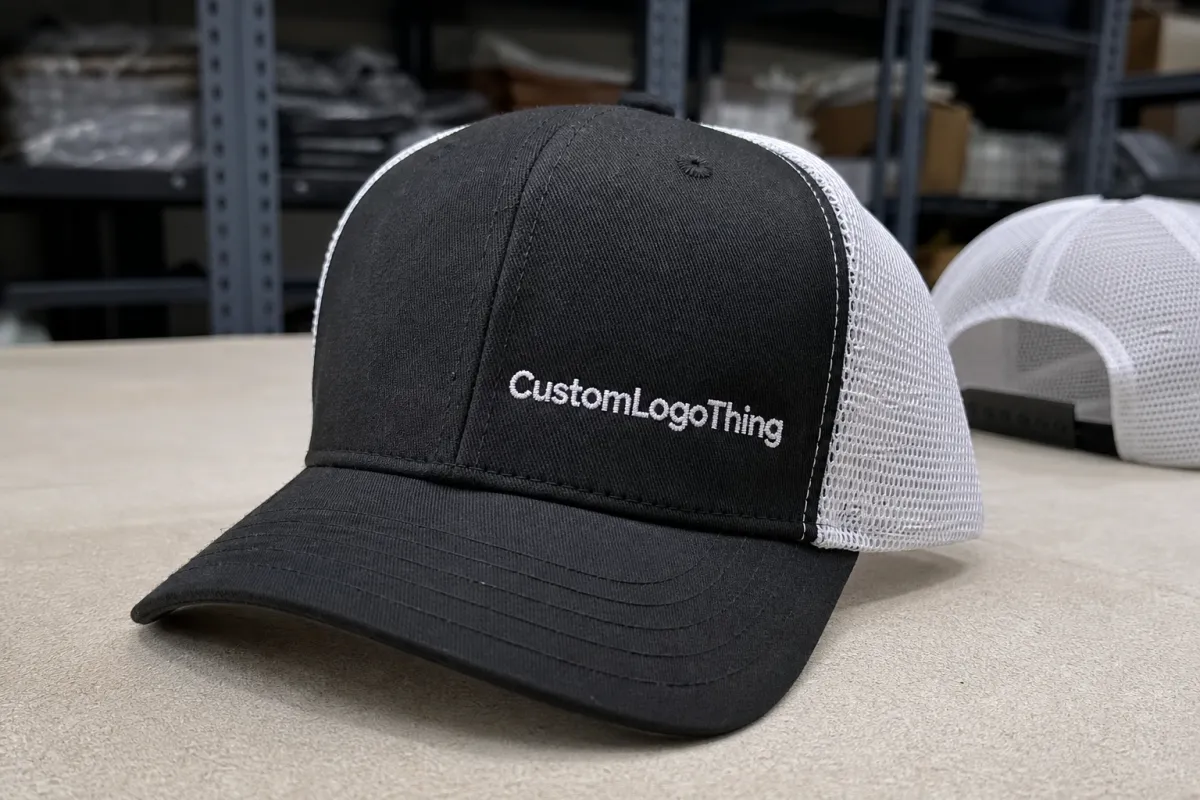
Supplement trucker caps bulk order planning for buyers starts with landed cost, not the blank cap price. Stitching, mesh quality, closure hardware, decoration, packing, and freight can change the final price more than the base cap itself. That is why the cheapest quote on paper is not always the lowest-cost order.
These caps usually serve a specific job: launch merch, expo giveaways, staff uniforms, retail add-ons, or subscription-box inserts. Each use case pushes the spec in a different direction. A giveaway cap can be simpler. A retail cap needs better shape retention, cleaner finishing, and more consistent decoration.
For 2026, buyers are asking more often for retail-style promo caps rather than disposable event swag. Smaller initial runs, cleaner front branding, recycled polyester mesh, cotton twill fronts, and better carton labeling are showing up in more quote requests. The change is practical: brands want merch that people keep wearing, but they also want fewer inventory risks.
The buyer's job is to choose the right style, in the right quantity, with the right decoration, and for the right arrival date. The fastest way to lose margin is to leave details open until after sampling or proof approval. A quote should include the spec, sample cost if any, packing requirements, and freight assumptions so comparisons are meaningful.
Decision discipline matters. When the style changes after sampling or the artwork changes after proof approval, the order often moves into extra charges and schedule slips. The cleanest bulk orders are the ones with the fewest unresolved choices.
Why Build Choices Change Margin on Trucker Caps
Two trucker caps can look similar and still produce very different unit economics. Crown structure is one of the biggest variables. Structured front panels hold shape and support embroidery or patches well. Unstructured fronts feel softer and more casual. Foam-front versions bring a retro look that can work for promos, but they are not always the best fit for retail use.
Mesh also affects both cost and perception. Fine mesh usually reads more premium, while wider mesh can be better for airflow and outdoor use. Closure choice changes price and feel as well. Plastic snapbacks are common and cost-effective, metal buckles can raise perceived value, and hook-and-loop closures are practical for giveaways.
Fabric weight matters too. Heavier fabric usually feels sturdier and holds shape better, while lighter fabric may reduce cost and pack more easily. Buyers often miss this if they only review mockups. On a shelf or in a kit, the heavier cap tends to look more controlled; in a swag bag, the lighter cap may be the smarter buy.
Decoration restraint usually helps margin and presentation. One strong front logo is often cheaper and cleaner than a crowded layout with multiple placements. If the caps are for a supplement brand, a simple retail-minded design usually performs better than trying to fill every available space.
If the order includes inserts or hang tags, those should be specified early. Buyers with sustainability requirements should also ask for paper stock details and certification support before production starts. It is easier to verify that information up front than after cartons are packed. For related branded packaging decisions, review our guide to custom hang tags bulk order planning.
A trucker cap is a small item with a narrow error margin. Once artwork is approved, spec changes are expensive and often slow.
The practical comparison is not blank price versus blank price. It is build quality, comfort, decoration risk, and landed cost against the business goal of the order.
Decoration, Fit, and Panel Specs to Finalize First
Good planning starts with a clear spec sheet, not a mood board. The key choices are panel count, crown height, visor shape, closure type, mesh color, and decoration method. The less the supplier has to infer, the lower the risk of a wrong quote or a late revision.
Panel count affects decoration space. Five-panel truckers offer a wider front area for large logos and text. Six-panel versions have a more traditional shape and may fit some heads better. That difference also changes seam placement and how a patch or embroidery lands on the front panel.
Decoration method changes both the look and the lead time. Flat embroidery is durable and familiar. Woven patches support small text and sharper lines. Silicone patches create a more tactile premium finish. Printed labels are cheaper, but they are less durable and usually better for budget promo runs than for repeated wear.
In recent buyer projects I have reviewed, the most common avoidable issue has been artwork sized for a flat screen rather than a curved front panel. A 3.5-inch logo can look balanced on a mockup and still feel oversized once stitched across a structured crown. Physical proof photos, especially straight-on and side-angle shots, catch that problem before the full run starts.
Fit is easy to underestimate because it is harder to judge from a mockup. Crown depth, sweatband feel, and front-panel stiffness all affect whether the cap gets worn. A cap that looks fine digitally can still feel too shallow, too stiff, or too flimsy in hand.
- Finalize early: panel count, crown height, visor curve, closure type, and mesh color.
- Approve carefully: logo size, thread colors, patch border, and placement near seams.
- Check comfort: sweatband feel, interior finish, and front-panel stiffness.
- Document it: keep one approved spec sheet for purchasing, artwork, and receiving.
Once the spec is frozen, treat any change as a new decision. A larger patch, a different thread color, or a different mesh shade can trigger a new proof cycle and push out the delivery date. The sample stage is where those decisions should be caught.
Pricing, MOQ, and Unit Cost Breakpoints
The smartest move is to compare landed cost, not headline cost. Setup fees, sampling, packaging, and freight can make a low-looking quote more expensive than a higher base price with cleaner terms. Ask for each line item separately so the comparison is real.
Volume matters, but only within the same spec. A 250-piece order will usually cost more per unit than a 1,000-piece order, and a 5,000-piece run may create another break. For 2026 planning, standard decorated trucker cap programs often quote around $3.25 to $6.75 per cap before freight, depending on material, decoration, and packing. Budget promo builds can land lower at higher quantities, while premium structured caps with patches, branded inserts, and individual bags can move above that range.
| Decoration option | Typical 2026 add-on per cap | Best use | Watchout |
|---|---|---|---|
| Flat embroidery | $0.25-$0.65 | Simple logos, strong brand marks | Thread count rises with detail |
| Woven patch | $0.45-$1.10 | Fine text, sharper edges, retail look | Setup and border style matter |
| Silicone patch | $0.65-$1.45 | Premium feel, bold branding | Tooling and approval take longer |
| Printed label | $0.10-$0.30 | Budget promo drops | Less durable than sewn options |
MOQ should be treated as a planning constraint, not a surprise. Lower minimums help test demand, but the per-piece price is usually less attractive. Bigger runs improve margin when the forecast supports them. If the caps are part of a launch kit, the right MOQ is the one that fits the actual need, not the factory's preferred run size.
Ask whether mixed colors share one MOQ or whether each colorway counts as its own production line. That detail can change the total quickly. Also check whether decoration complexity scales evenly with quantity. A simple one-color logo may improve with volume, while a detailed patch may not drop as much because setup remains the same.
Production Process and Lead Time From Art to Arrival
Production usually follows a straightforward sequence: inquiry, spec confirmation, artwork review, proof approval, production, inspection, and shipment. Most delays come from a break in one of those steps rather than from a factory-wide issue.
Lead time depends most on order size, decoration complexity, and approval speed. A simple embroidered cap may move faster than a multi-color patch order. A buyer who replies to proofs in one day usually beats a buyer who waits a week between comments. Internal delay is often the real delay.
Typical production windows for common decorated caps often fall around 15-25 business days after final proof approval in 2026, with longer windows for custom patches, special materials, or split-color assortments. Shipping adds its own clock. Air freight protects launch dates but costs more. Ocean freight lowers unit cost but needs more planning. Domestic ground freight helps only at the final step.
Build buffer time into event shipments and retail drops. If a patch size needs adjustment or a thread color needs retuning, there is little room to recover without a schedule cushion. The proof stage should be treated as a control point: check logo size, stitch count, closure type, mesh color, and placement before production starts.
For larger orders, carton photos or pre-ship inspection images are worth requesting. They can catch mixed counts, labeling mistakes, or carton damage before freight is booked. Sampling also needs time. Even a quick sample run can take several days, and revisions add more. Rushing the sample usually slows the full project.
How to Avoid Rework, Color Drift, and Dock Delays
Most rework problems start with ambiguity: the logo file was not final, the Pantone target was loose, or two versions of the spec were approved. Clear instructions are the cheapest form of quality control.
Color drift is easy to miss on screen and easy to spot in hand. A navy mesh that reads slightly off can make the whole cap feel wrong, and the same applies to thread color. If the brand uses a strict identity system, provide a Pantone target and ask how closely the factory can match it on the actual material. Fabric texture affects color read, so a digital proof alone is not enough.
The cleanest projects usually have one contact, one spec sheet, and one final proof. That prevents conflicting instructions and reduces the risk that one team approves a revision the production team never receives. Fragmented approvals create expensive confusion.
Quality control should go beyond the first sample. For larger orders, ask for random inspection, carton counts, and packaging verification. Check count accuracy, color splits, and outer-carton labels for the receiving dock. If traceability matters, carton-level checks are more useful than a single hero photo.
- Pantone check: confirm thread, patch, and base fabric against the same reference.
- Placement check: verify logo position on the actual panel, not just the mockup.
- Packaging check: confirm polybag, insert card, or master carton requirements before shipment.
- Dock check: confirm labels, counts, and carton marks for the receiving location.
Minor variation between lots is common in textile goods, especially when materials, thread, or patches are sourced across separate batches. The goal is consistency that still looks right to the customer and does not create inventory headaches later.
Next Steps to Lock Artwork, Quantities, and Delivery
The next step is to gather the inputs that let the supplier quote accurately. For supplement trucker caps bulk order planning for buyers, that means quantity by color, decoration method, target arrival date, shipping destination, and vector artwork. Without those details, the quote is only a placeholder.
It also helps to define the purpose of the order before requesting pricing. Is the cap for resale, a promo giveaway, or a kit with other branded items? Will it need individual polybags, branded inserts, or master-carton labeling? Is it going to a warehouse, a distributor, or a show floor? Those answers affect packing and freight. If the cap is part of a broader merch drop, compare the timeline with custom embroidered baseball caps bulk order planning so apparel, headwear, and packaging arrive together.
If the brand uses strict color rules, keep the proof review focused on those rules first. The mockup should match the actual decoration size, not just the overall idea. Small visual differences are easy to miss on screen and obvious in person, especially on front-panel logos.
For the cleanest approval path, the sequence is simple:
- Confirm the cap style, decoration method, and quantity split.
- Send vector artwork, Pantone targets, and packaging requirements.
- Review one spec sheet and one proof before approving production.
- Book the production slot once the landed cost and delivery date both work.
The real goal is a cap that arrives looking like the approved sample, on a timeline that fits the campaign, at a cost that still leaves room for margin. That is the decision buyers need to make well.
FAQ
What affects supplement trucker caps bulk order pricing the most?
Decoration method, stitch count, patch type, base material, and color complexity usually move unit cost the fastest. Freight, setup fees, sampling, and packaging can alter the landed price more than the blank cap itself. Higher quantities often reduce unit cost, but only if the spec stays unchanged.
What MOQ should I expect for supplement trucker cap bulk orders?
MOQ varies by supplier and decoration method, but buyers should expect different minimums for embroidery versus patch applications. Lower MOQs help test demand, while larger orders usually improve margin. Ask whether mixed colors share one MOQ or whether each colorway is counted separately.
How long does a bulk order of supplement trucker caps usually take?
Lead time depends on proof approval speed, order size, decoration complexity, and the shipping method. In 2026, many decorated orders need 15-25 business days after proof approval before shipping. Build buffer time before launch dates, distributor deadlines, or event shipments.
Can I mix cap colors or decoration styles in one supplement trucker cap order?
Mixing colors is often possible, but it can affect pricing tiers and minimums. Different decoration styles may require separate setup or separate production runs. Confirm the split early so the quote reflects the real order structure.
What files do I need before requesting a quote for supplement trucker caps bulk order planning for buyers?
Have a vector logo, preferred Pantone colors, target quantity, delivery destination, and ideal ship date ready. Include decoration preference, packaging needs, and any carton-label requirements. A clear spec sheet shortens quoting time and reduces revision cycles.

