Coffee roaster embroidered baseball caps Bulk Order Planning is not about picking a cute hat. It is about making a logo sit cleanly on a curved crown, survive a full shift, and land before your next roast drop. The first sample often looks better than the bulk run because the sample gets extra attention, while the production run has to be repeatable across dozens or hundreds of caps. That is the real job: create a branded item that wears well in a cafe, roastery, or trade booth and still looks right after the fifth wash and the fiftieth customer interaction.
For a coffee business, caps do more than a shirt ever will. They stay visible behind the counter, travel to events without wrinkling, and keep working after the seasonal merch table is packed away. That is why coffee roaster Embroidered Baseball Caps Bulk Order planning deserves the same discipline as bag printing or label approval. The decisions that matter are simple to say and easy to mess up: cap style, embroidery method, artwork limits, price tiers, and timing. Get those right and the order behaves. Get them wrong and the cap looks fine on a flat mockup and awkward on a real head.
A good cap proof should tell you what will be stitched, not just show you a pretty mockup.
Coffee roaster embroidered baseball caps bulk order planning: why the first sample usually looks better than the bulk run
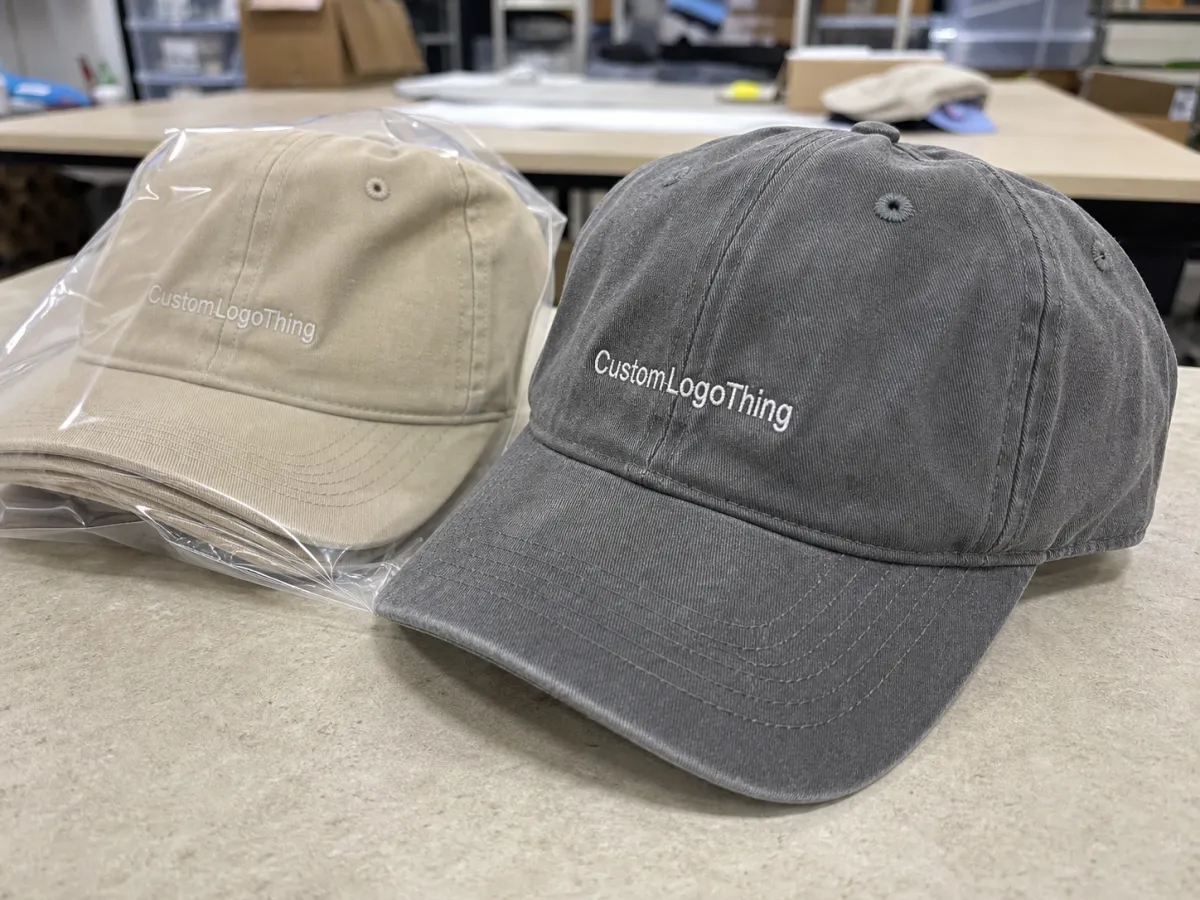
The hardest part is not the embroidery machine. It is the crown shape. A logo that looks balanced on screen can sit too low, stretch too wide, or lose legibility once it wraps around a structured front panel. Small text is the usual casualty. Thin letterforms, stacked copy, tiny icons, and long taglines all ask for trouble on a cap.
From a packaging buyer's point of view, the smartest cap order is the one that can repeat. A one-off merch item may get a pass if it is only for a pop-up. A bulk order for staff, wholesale partners, or retail resale needs consistency. That means the front logo has to stitch the same way on every cap, the thread colors have to stay stable, and the placement needs to land in the same spot after the first dozen pieces and the last dozen pieces. That is what makes coffee roaster embroidered baseball caps Bulk Order Planning different from just buying hats off the shelf.
The business logic is straightforward. A cap keeps your logo in circulation longer than many apparel items, and it does not depend on sizing the way shirts do. In a cafe or roastery, one cap can cover a shift, a delivery run, and a trade show without looking out of place. If the artwork is too detailed, though, the cap becomes a compromise. Better to simplify the design than to force a stitched version of something that belongs on a poster.
If you are ordering for staff, wholesale giveaways, or a retail line, think in terms of repeatability, not novelty. That is the real win in coffee roaster embroidered baseball Caps Bulk Order Planning. The goal is not just to make a hat. It is to make a branded item that ships on time, wears well, and does not need constant explaining.
Cap styles and embroidery details that change the final look
Cap style changes everything. A structured six-panel cap gives you the cleanest front surface and the most predictable result for a centered logo. It holds shape well, which is useful if your brand leans polished, retail-ready, or a little more formal. An unstructured dad cap feels softer and more casual, which suits a roaster with a relaxed identity or a more lifestyle-driven merch line. Five-panel caps usually give wider front space, so they are useful when the logo is broad or the wordmark needs room to breathe.
Low-profile fits matter too. A tall crown can make a small logo look lost. A shallow crown can make a wide logo look crowded. That is why the same artwork can behave very differently from one cap style to another. If your logo has a long name, a five-panel cap or a lower-profile structured cap is often the better bet.
Embroidery method matters just as much. Flat stitch is the cleanest option for most roaster logos because it handles lettering and symbols without turning them into visual noise. 3D puff adds height and works for bold initials or short words, but it is a poor fit for fine lines. Patches are the escape hatch when the artwork is too detailed for direct stitching or when you want a more retail-style finish. That said, patches add cost and can feel heavy if the cap is meant for daily wear.
Placement changes price and readability. Center front is the default because it is easiest to see. Side panel embroidery can be subtle and stylish, but the available space is limited. A back arch or small closure mark works well for secondary branding, not primary identity. For coffee roasters, earthy colors usually do the best job: washed black, olive, tan, oat, charcoal, and muted brown tones photograph well and do not fight with packaging or apron colors.
Specs to confirm before you approve artwork
Artwork approval should happen after the hard specs are clear, not before. If you do it backwards, the sample may look polished and still be wrong for production. Start with logo width. For most front cap embroidery, 4.25 to 5.25 inches across is common, but the right number depends on cap style, crown height, and how much empty space your logo needs. A tall stacked mark can fit differently than a long horizontal wordmark.
Stitch density and minimum line thickness are the next two things to lock down. Fine details below about 1.5 mm can disappear or fill in during production. Small serif fonts are especially risky. If the logo uses thin strokes, ask for simplification before digitizing. Good digitizing is not magic; it is editing the art so the stitching has a chance to look sharp.
Color references matter more than most buyers expect. If your brand lives in coffee tones, "brown" is too vague to be useful. Use Pantone references if you have them, or at least clear sample references. Black, cream, olive, rust, and muted green all shift depending on thread and fabric finish. A charcoal cap with a warm cream logo can look premium. The same logo in a bright white thread may look harsh.
Do not skip comfort specs. If the cap will be worn indoors and outdoors, confirm sweatband quality, ventilation eyelets, and closure type. Snapback, strapback, and fitted styles each change the fit experience and the retail appeal. If the order includes resale, ask about polybagging, carton counts, private labels, and hangtags. For broader packaging fundamentals, packaging.org is a useful reference for material and presentation basics.
Before you approve the proof, confirm these items in writing:
- Logo width and placement on the crown
- Stitch style, including flat stitch, puff, or patch
- Thread colors tied to clear references
- Minimum detail the artwork can safely hold
- Closure type and fit range
- Packaging spec for retail or ship-ready orders
Pricing and MOQ for embroidered baseball caps
Cap pricing is usually shaped by five things: cap style, stitch count, number of embroidery locations, thread color count, and how much custom finishing you want. A simple front logo on a stock cap is the cheapest path. Add a second placement, custom labels, or special fabric and the price moves fast. That is not a trick. That is production.
Setup charges matter too. Digitizing can run about $20-$75 per logo depending on complexity. Some suppliers roll that into the unit price after a certain quantity; others keep it separate. On smaller orders, setup can make the quote look ugly. On larger orders, it becomes a minor line item. That is why buyers should separate setup from per-unit cost before comparing offers.
Here is a practical range to use when evaluating quotes:
| Cap option | Typical MOQ | Approx. unit price | Best use | Tradeoff |
|---|---|---|---|---|
| Stock dad cap, one front logo | 50-100 | $8-$12 | Staff wear, quick promo runs | Less structured, more casual look |
| Structured six-panel cap, flat embroidery | 100-300 | $9-$15 | Retail, trade shows, polished brand use | Needs cleaner artwork and better placement |
| Five-panel cap, wider front logo | 100-250 | $10-$16 | Wide wordmarks, larger front graphics | Fewer cap shapes and fabric choices |
| 3D puff front embroidery | 100-300 | $10-$18 | Bold initials, strong shelf presence | Poor fit for fine text or thin lines |
MOQ is a tradeoff, not a punishment. Lower quantities reduce risk, which is useful if the logo is new or the color choice is not proven. Higher quantities usually drop the unit cost, especially once the order gets beyond 200 to 300 pieces. For a roaster that wants staff caps plus a small retail run, a first order in the 100 to 200 range is often the cleanest middle ground.
Here is the cheapest path that still looks decent: one front logo, one cap body color, one thread palette, and no extra decoration. The moment you add side embroidery, inside labels, or multiple cap colors, the quote climbs. Not because suppliers enjoy making things annoying, but because each change adds a setup step or a new production pass.
Process and timeline from mockup to delivery
The order flow should be boring. Boring is good. Inquiry, logo cleanup, digital proof, sample approval, bulk production, quality check, packing, and freight. If a supplier cannot explain those steps clearly, the order will probably feel chaotic later too.
Timing depends on how prepared the art file is. A vector logo with clear color references can move quickly. A low-resolution image pulled from a website usually slows everything down because the digitizer has to rebuild it. Expect digital proofs in 1 to 3 business days for clean files, and longer if the art needs repair. Sample production often takes 5 to 10 business days. Bulk production for 100 to 500 caps commonly runs 12 to 20 business days after approval, with larger orders taking longer.
Freight is its own clock. Domestic shipping might take a few days. International freight can take 1 to 3 weeks depending on method and customs. If the launch date is fixed, do not leave shipping as an afterthought. Ask for the landed timeline, not just the production timeline. Those are not the same number, and pretending they are is how launches get awkward.
What speeds an order up? A single approved logo file, one cap style, a clear quantity, and fast feedback on proofs. What slows it down? Changing thread colors after approval, adding new decoration areas, or asking for a rush without confirming freight speed. If the caps are shipping alongside retail cartons or inserts, ISTA test methods are worth understanding because transit damage is cheaper to prevent than to fix.
What a reliable cap supplier proves before you reorder
The real test is the reorder. The first run can hide a lot of problems because everyone is paying attention. A supplier earns trust by reproducing the same logo placement, same thread color, and same cap shape six months later without drift. If the second order feels like a different product, the process was never really under control.
Proof quality is a good signal. A capable supplier should show you stitch direction, placement, thread colors, and any weak parts of the artwork before production starts. If a logo is too detailed, they should say so. If the cap crown is too shallow for the design, they should say that too. Honest pushback saves money. Quiet approval usually costs money later.
Quality control should be visible, not vague. Ask how caps are counted, how cartons are packed, and whether random samples are checked before shipment. For retail or wholesale packaging, FSC-certified paperboard can be a smart choice for hangtags or inserts if you need a cleaner presentation. You can review certification basics at fsc.org. If a supplier understands that sort of detail, they probably understand the difference between "good enough" and production-ready.
For a roaster, this is not just a trust exercise. It protects seasonal restocks, staff uniforms, wholesale promo orders, and event inventory from becoming a scramble. A dependable supplier reduces variation, gives clear lead times, and catches problems before the freight bill is already paid.
If you are comparing vendors, use the same questions for each one. Ask for MOQ, setup fees, stitch limits, proof timing, sample timing, and freight estimates. If one quote is cheaper but leaves out digitizing or packaging, it is not cheaper. It is just quieter about the cost.
Next steps to lock in a clean bulk cap order
The best orders start with a complete brief, not a long email thread. Send the vector logo, choose the cap style, confirm quantity, pick the color, and set the delivery window before you ask for a quote. If the logo is detailed, the cap color is unusual, or the launch date is fixed, order a sample or at least approve a detailed digital proof before moving forward.
Compare offers on the full landed cost. Unit price matters, but freight, setup, digitizing, sample fees, and packaging can change the real number fast. A quote that looks lower by a dollar per cap can end up higher once the hidden lines show up. That is basic math, not drama.
For buyers building out staff wear and resale merch, our Wholesale Programs page is a useful place to start. If you want a faster answer on minimums, artwork, or shipping, our FAQ covers the usual questions without the back-and-forth.
In practice, coffee roaster embroidered baseball Caps Bulk Order Planning is about three things: clean artwork, sensible cap selection, and realistic timing. If you lock those in early, the rest of the order is routine. Collect specs, review the mockup, approve the sample, and move into production without last-minute changes. That is how coffee roaster embroidered baseball caps bulk order planning stays profitable instead of becoming a lesson in avoidable revisions.
How many coffee roaster embroidered baseball caps should I order first?
Start with a quantity that covers staff use, promo giveaways, and a small resale test, then scale once you know how the design and cap style sell. Smaller runs cost more per cap, so the first order should balance risk against the price drop that usually shows up around 100 to 300 pieces. If the artwork is new or untested, a moderate first run is safer than jumping straight to a large bulk order.
Which cap style works best for coffee roaster embroidered baseball cap bulk orders?
Structured caps give the cleanest front panel for logos with sharp edges and lettering. Unstructured or dad caps work better if the brand feel is softer and more casual. Five-panel styles are useful when the logo is wide or needs more front space. The right choice depends on how much room the artwork needs and whether the cap is for staff, retail, or events.
What raises the price on embroidered baseball caps in bulk?
More stitch coverage, more thread colors, and extra logo placements all push the price up. Custom cap colors, special labels, premium fabrics, and patch work also increase cost. The cheapest path is usually one front logo on a stock cap with no extra decoration. Once you add side embroidery or custom finishing, the quote moves up for a reason.
How long does production usually take for coffee roaster embroidered caps?
Artwork approval is usually the first bottleneck, not the embroidery itself. After approval, bulk production often takes a few weeks depending on quantity and complexity, with sampling and freight added on top of that. Rush timelines are possible, but they usually cost more and leave less room for revisions. If the launch date matters, confirm the full timeline before you approve anything.
What files do I need for an accurate coffee roaster cap quote?
Send a vector logo if possible, plus the cap style, quantity, color target, and decoration placement. Include the delivery deadline and shipping location so the quote reflects the real landed cost. If you have Pantone references, stitch notes, or a previous sample, include those too. The better the brief, the fewer surprises in production.