Beer frosted zipper bags Bulk Order Planning starts with the finished size. That is the first spec that affects fill volume, zipper strain, carton fit, and shelf presentation. A small sizing miss can force a redesign, even if the artwork is approved. Buyers usually lose money on vague specs, not on the logo.
The frosted finish gives the bag a matte, premium look without heavy ink coverage. That is useful for brewery merch kits, seasonal bundles, sample packs, and retail assortments that need to look intentional without full-panel printing. It also hides fingerprints and minor scuffs better than glossy film, which helps during handling and display.
For repeat programs, the value is consistency. When the dimensions, film, zipper, and print layout are locked, quotes are easier to compare, proofs move faster, and reorders stay predictable. The goal is not a fancy bag; it is a bag that can be ordered again without surprises.
Beer frosted zipper bags bulk order planning starts with size
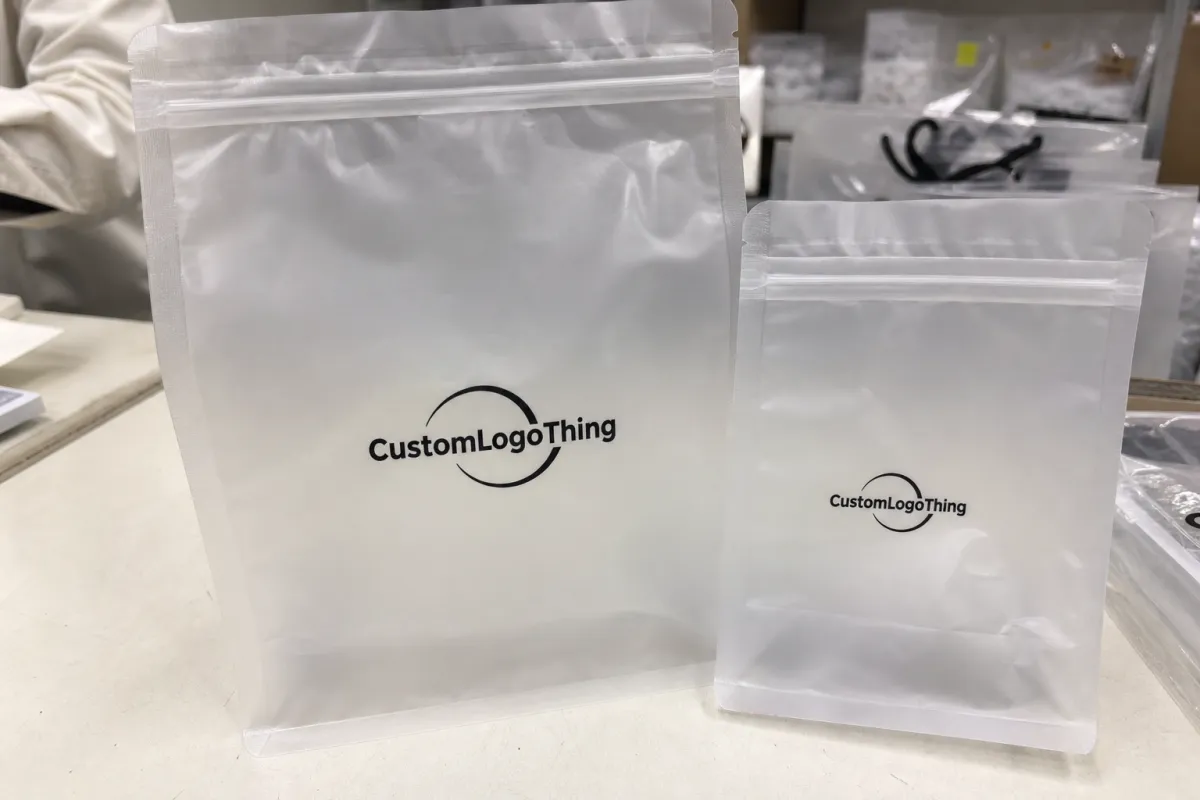
Most delays start before artwork. If the bag is too small, the zipper sits under stress and the contents look compressed. If it is too large, the product shifts and the package loses structure. Either problem creates waste on a run that should have been straightforward.
Start with what goes inside the bag. A pouch for stickers and bottle openers will not behave the same way as one for glassware, folded apparel, or mixed promo items. Weight, shape, and how often the bag will be opened all matter. The more uneven the contents, the more important it is to define the actual fill conditions early.
The frosted surface also affects how the pack reads. A lighter frost can let the contents show through more clearly, while a stronger frost hides clutter and creates a more controlled look. For beer promotions, that choice usually comes down to whether the product inside is the focus or the packaging needs to do more visual work.
Common uses include:
- Brewery merch sets with coasters, openers, stickers, and small apparel items.
- Sample packs for distributor meetings, tastings, and retail pitches.
- Giveaway kits for launches, festivals, and membership perks.
- Retail bundles that need to stack neatly and keep a consistent shelf face.
A sample that looks right on a desk and fails in a carton is not close enough. It is a reprint waiting to happen.
That is why size comes first. Match the bag to the product, then adjust the decoration around it.
Frosted film, zipper style, and closure options that affect use
Frosted Zipper Bags are usually made from PE-based film or a similar plastic structure with a matte or semi-opaque finish. Film choice changes the feel more than many buyers expect. A firmer bag holds shape better on shelf, while a softer film can be easier to pack and sometimes lowers the unit price. The right answer depends on whether the bag is meant to look structured or simply hold items together in transit.
The zipper is just as important. A press-to-close zipper is standard because it is fast and familiar. Tear notches help when first-open access matters. Hang holes support peg display. Gussets add depth for bulkier kits, but they also add cost and complexity. Flat bags are simpler and cheaper, but they leave less room for awkward items.
| Option | Best use | Presentation | Cost impact |
|---|---|---|---|
| Flat frosted zipper bag | Light merch, inserts, sample packs | Clean and minimal | Lowest |
| Gusseted frosted zipper pouch | Bulkier beer promo kits, mixed items | More structure, better shelf presence | Moderate |
| Hang-hole zipper bag | Retail display or pegboard use | Retail-friendly | Slightly higher |
| Tear-notch plus zipper | Controlled first-open access | Professional, practical | Small add-on |
Closure strength affects how the bag feels in use. A zipper that is too stiff can frustrate customers. One that is too loose makes the pack feel cheap. For a lightweight giveaway, a standard closure is often enough. For a heavier retail bundle, better engagement is worth planning for.
When comparing suppliers, ask how the zipper, film, and bag shape work together. If the answer is vague, the spec probably is too. This product should be defined clearly enough that the next order can match it.
Size, thickness, print area, and artwork specs to confirm
Before requesting pricing, confirm the finished width, usable height, and gusset depth if the bag is not flat. Include the fill weight if it is known, and say whether the bag must fit inside a carton or mailer. Quotes based on assumptions usually come back for revision.
Thickness affects both appearance and handling. In this category, buyers often compare 4 to 6 mil options, although the right choice depends on product weight, zipper style, and whether the bag will be opened once or repeatedly. Thicker film can improve perceived quality and reduce pinch marks, but it also raises cost and can change how the zipper behaves during production.
Print area is where avoidable problems show up. Keep logos away from the zipper line, seal area, and side edges. A margin of about 3 to 5 mm is a reasonable starting point, but the final safe area should match the production drawing. If the artwork is simple, more open space often looks better than crowding every edge.
Artwork should reduce questions, not create them. Vector files are the standard for logos and line art. Text should be outlined. Pantone references help when color accuracy matters. RGB files can look fine on screen and still print differently, especially on frosted material where the film changes the visual result.
- Finished size: width, height, and gusset depth if applicable.
- Fill weight: the actual load the bag needs to hold.
- Print method: one-color logo, spot colors, or full-panel graphics.
- Artwork format: AI, EPS, PDF, or layered high-resolution file.
- Placement limits: zipper line, seal line, and safe margins.
If the bags will move through multiple distribution points, ask whether they should be checked against transit stress expectations similar to ISTA guidance. That matters more once the order is going beyond handout use. A bag that survives a desk test but fails in shipping has not really been tested.
Pricing, MOQ, and unit cost drivers for bulk orders
Unit cost moves in predictable ways. Size is the biggest lever. Thickness comes next. Zipper type, print coverage, and total quantity follow. Quotes can look very different if the underlying assumptions are not the same, which is why spec matching matters before comparing numbers.
MOQ usually rises when the bag is custom in size, custom in print, or both. A stock dimension with light printing is simpler to run because setup is lower. Once the bag needs a custom footprint or tighter artwork placement, the minimum order usually increases because the production work has to be spread across fewer units.
These are broad bulk pricing ranges, not promises, because exact cost depends on the final spec sheet:
| Order range | Typical unit cost | Common use case | Buying note |
|---|---|---|---|
| 1,000-2,999 pcs | $0.28-$0.55 | Test runs, small promos | Setup cost weighs heavily here |
| 3,000-9,999 pcs | $0.18-$0.34 | Seasonal campaigns, brewery launches | Often the practical middle ground |
| 10,000-29,999 pcs | $0.12-$0.24 | Repeat retail or distributor programs | Better cost spread, longer planning window |
| 30,000+ pcs | $0.08-$0.18 | High-volume branded packaging | Strong pricing if specs stay stable |
Freight can change the landed cost more than expected, especially for larger runs or long-distance deliveries. A low base price with expensive shipping is still expensive. A cheap quote with weak sampling or unclear inspection terms is just a future delay.
For recurring beer programs, the best savings often come from reducing complexity. A simpler print layout or a standard construction can improve repeatability and reduce rework. The cheapest bag is not the best buy if it causes a second production round later.
Process, timeline, and production steps from proof to ship date
The cleanest projects follow a fixed sequence: request specs, review the quote, confirm artwork, approve the proof, sample if needed, then move to production. That order is dull, and it works. Problems show up when a team skips proofing or treats sampling as optional.
Lead time depends mostly on artwork revisions, sample approval, and shipping method. A straightforward reorder can move in roughly 12 to 15 business days after proof approval. A new custom size with revised artwork often takes 18 to 25 business days before freight. Transit adds another clock on top of that, so buyers should plan for production and shipping separately.
Typical production flow:
- Prepress review to confirm size, color, and safe zones.
- Proof approval so the print file is locked.
- Sample or prototype if the run is new or the fit is sensitive.
- Material prep and printing for the frosted film.
- Bag forming and zipper sealing for final construction.
- Inspection and packing before shipment.
The final inspection is where zipper alignment issues, print drift, seal weakness, and trim problems are caught before they become inventory problems. For event-driven programs, that checkpoint matters as much as the deadline.
Freight planning also deserves a decision instead of a hope. Air shipping is faster and more expensive. Ocean freight lowers cost but extends the timeline. Domestic courier or truck service sits between those extremes depending on quantity and destination. If the campaign has a fixed public date, the buffer needs to be built into the schedule.
Why a packaging partner matters for repeat beer programs
Repeat programs are where a packaging partner proves whether the first order was controlled or just lucky. One-off quotes are easy. Keeping the same film feel, zipper action, print placement, and finish across multiple runs takes discipline. That matters for breweries running seasonal launches, distributor kits, taproom drops, and event giveaways throughout the year.
Inconsistency is the main risk. A supplier may quote one spec the first time and quietly change the zipper or film thickness on a reorder. The unit price may look better, but the package no longer matches the original. That kind of drift is hard to spot until the product is in the field.
Good account support should answer practical questions clearly. Can the zipper handle repeated opens? Will the frosted film hide scuffs or condensation? Does the artwork need to move away from the seal? Can the next run stay consistent without starting over? Those are the questions that matter when the packaging is part of a repeated commercial program.
The best suppliers are direct about tradeoffs. If a lower-cost option weakens shelf appearance, that should be obvious. If a thicker film improves the feel but adds cost and time, that should be visible before approval. Buyers do not need a pitch; they need a spec they can repeat.
For companies managing recurring orders, the most useful partner keeps prior dimensions, proof versions, and reorder notes organized. That reduces errors on the next run and keeps the timeline from drifting. Repeat business tends to reward boring processes because boring processes are easier to reproduce.
Next steps for an accurate bulk quote and reorder plan
If speed matters, send the spec sheet first. Include finished size, target fill weight, material preference, zipper type, artwork file, quantity, and delivery destination. If the bag needs a hang hole, tear notch, or gusset, include that too. Missing details do not stay missing; they come back as delays.
For a new order, ask for a digital proof or a physical sample before production. That matters most when the artwork sits close to the zipper or seal, or when the fit depends on how the contents behave inside the bag. A quick proof review is easier than correcting thousands of units later.
For reorder planning, keep a reserve quantity. Promotions change, events expand, and a percentage of units always gets absorbed by transit damage, miscounts, or last-minute demand. A buffer of 5 to 10 percent is often enough to avoid a scramble.
Beer frosted zipper bags Bulk Order Planning works best when the bag is treated like a production item, not a decorative afterthought. Lock the size. Confirm the closure. Check the print area. Compare quotes on the same spec. Once those pieces line up, the order stops being guesswork and starts behaving like a controlled manufacturing job.
What details do you need for beer frosted zipper bags bulk order planning?
Send the finished size, target fill weight, and whether you need a flat bag or a gusseted pouch. Include the zipper style, print coverage, and any extras like hang holes or tear notches. Add the artwork file, quantity, and delivery location so the quote is based on real specs instead of assumptions.
What is a normal MOQ for frosted zipper bags with beer branding?
MOQ depends on whether the bag is stock or custom, and whether it is printed or plain. Custom size and custom print usually need a higher minimum because setup is spread across fewer units. If you need a lower MOQ, ask about stock dimensions, simpler print coverage, or standard zipper construction.
How is unit cost calculated on a bulk zipper bag quote?
Unit cost usually comes from size, film thickness, zipper style, print colors, and total quantity. Setup, sampling, and freight can change the landed cost even when the base bag price looks attractive. Comparing quotes only makes sense if the specs, quantity, and delivery terms are the same.
How long does production take after artwork approval?
Lead time depends on proof approval, sampling needs, factory schedule, and shipping method. A simple reorder usually moves faster than a new custom size with revised artwork. If timing matters, ask for the full timeline up front: proofing, production, inspection, and transit.
Can I reorder the same beer frosted zipper bags without starting over?
Yes, if the size, material, zipper, and artwork stay the same, reorders are usually faster. Keep the previous spec sheet and proof on file so accidental changes do not creep in. Reorder planning is easier when you also keep a buffer for events, promos, or seasonal demand.

