A supplement trucker Caps Unit Cost Review should start with the real cost drivers, not just the blank hat price. Small changes in decoration, mesh grade, packing, freight, or timing can move the landed number more than the cap body itself. Buyers get a better quote when they separate those pieces early instead of treating the order as one flat number.
That matters because a cap order usually has more than one job: it has to look credible, hold up in transit, and stay consistent on reorder. The most expensive run is often the one approved before the logo, placement, or packaging is fully settled, because late changes add setup time and rush charges.
Supplement Trucker Caps Unit Cost Review: What Moves the Number
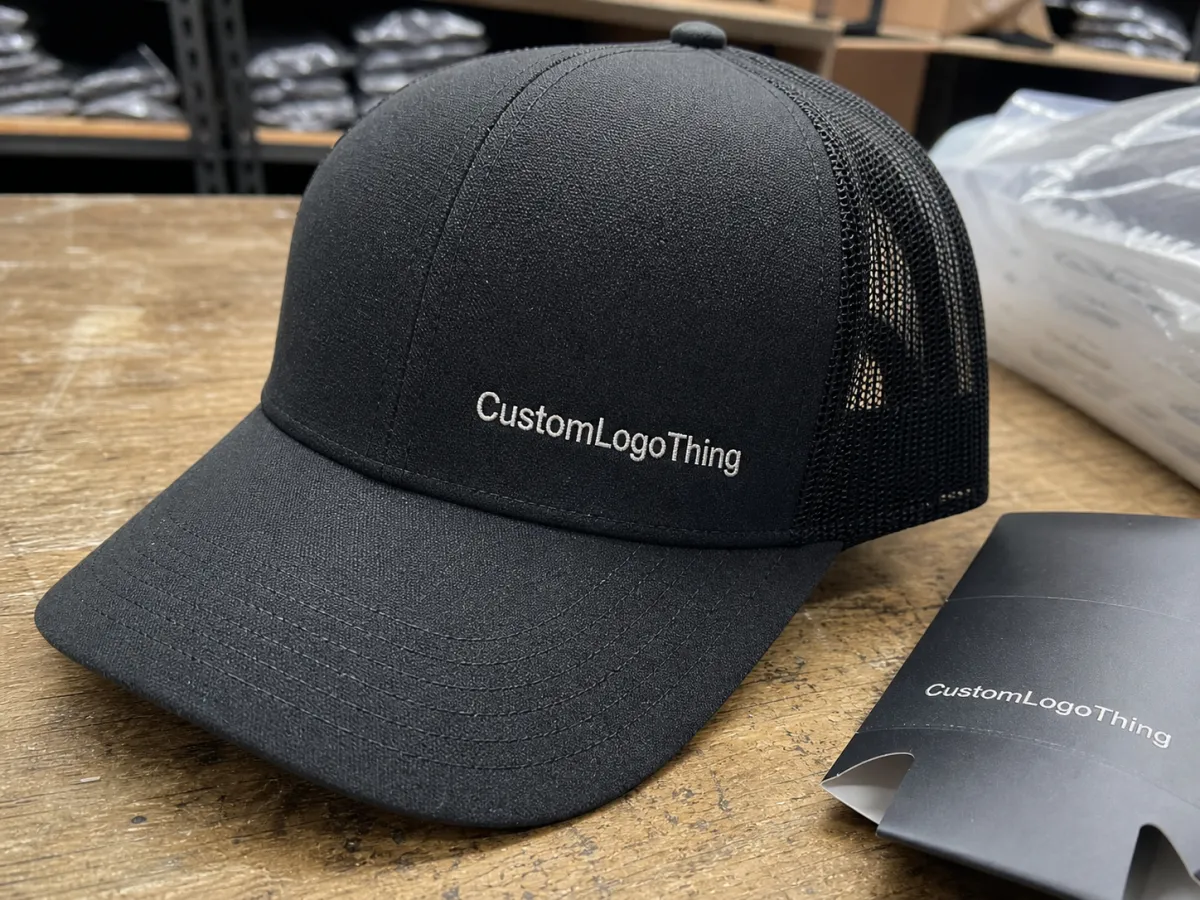
Most buyers start with the blank, but the blank is only one line in the total. A standard trucker cap can look inexpensive on paper, yet embroidery digitizing, decoration labor, carton packing, and freight can change the final unit cost quickly. The cleanest way to review pricing is to break the order into parts instead of treating it as one all-in figure.
For a supplement brand, the cap is usually doing more than covering a head. It needs to present the logo clearly, ship cleanly, and feel consistent with the rest of the product line. A useful quote should therefore focus on the buyer controls: quantity, decoration method, lead time, and packaging requirements.
Small changes add up fast. A new stitch color, a wider front logo, a switch from flat embroidery to puff, or a request for individual polybags can raise the per-piece cost in ways that are easy to miss during the first review. Ask for the numbers before artwork is finalized so the quote works as a planning tool instead of a surprise.
A low blank price does not guarantee a low landed price. Decoration, packing, and freight usually decide the final number.
Materials That Shape Fit, Breathability, and Wear
Trucker caps look simple, but the build details matter more than many buyers expect. The front panel construction, mesh backing, sweatband, brim curve, and closure style all affect comfort, perceived quality, and how well the logo displays. For a supplement giveaway, the cap usually needs to feel solid enough to keep, not disposable.
Structured fronts are the easiest surface for a clean brand mark because they hold shape and create a predictable embroidery field. Unstructured styles feel softer, but the crown can collapse more easily and weaken the visual impact of the logo. For most branded runs, a structured crown gives a better balance of appearance and repeatability.
Material choice changes both feel and production behavior. Foam fronts can create a bold retro look, but they are less forgiving with fine stitching. Cotton twill usually feels more natural, brushed fabrics can look richer, and polyester blends often hold color more consistently across larger runs. If repeatability matters, polyester-heavy builds are usually easier to keep consistent from batch to batch.
Mesh quality matters as well. A lighter mesh back gives stronger airflow and a more casual feel, while a denser mesh can look and wear more substantial. The sweatband affects comfort in real use; a softer internal band helps if the cap is meant for staff wear, event teams, or long outdoor exposure. Closure style also matters, since plastic snapbacks are common for broad sizing, while hook-and-loop and metal closures change both perceived value and cost.
The practical buyer question is simple: is this cap a low-cost giveaway, a retail bundle add-on, or a staff uniform piece? The answer changes the spec. For high-traffic events, breathable mesh and a clean structured crown usually win. For retail bundles, buyers often prefer a slightly heavier hand feel, tighter stitching, and a front panel that photographs well online and on shelf.
Decoration Specs Buyers Should Lock Before Quoting
Decoration is where the biggest price spread usually starts. Flat embroidery is often the simplest choice when the logo has clean lines and limited colors. 3D puff embroidery adds depth, but it needs bolder shapes and less fine detail. Woven patches, leather patches, and heat-applied graphics each create a different look and a different production path.
The common mistake is asking for a quote before the decoration spec is settled. Knowing only that the logo goes on the front panel is not enough. The supplier still needs placement, maximum stitch count, thread colors, patch size, and whether the artwork crosses a seam or panel join. A design that crosses a seam can require extra handling or a different production method.
Small text needs special attention. On a curved cap panel, thin letters can fill in or lose legibility if the stitch count is too high or the font is too delicate. A crisp icon, a short wordmark, or a simplified mark usually performs better than a detailed lockup. If the brand wants a premium look without making the run harder than it needs to be, one strong front mark and minimal side or back decoration usually keeps the budget under control.
Timing matters too. Digitizing, art revisions, and sample approvals add delay if they are not decided early. Setup charges may be modest on paper, but they become expensive if the artwork keeps changing. Tooling fees are less common on basic embroidery and more relevant on patches or specialty trim, but they still belong in the quote review because they affect the final landed cost.
| Decoration option | Typical added cost per piece | Best use case | Buyer watch-out |
|---|---|---|---|
| Flat embroidery | $0.35-$0.75 | Clean logos, simple branding, broad volume runs | Fine detail may soften on curved panels |
| 3D puff embroidery | $0.55-$1.10 | Bold front marks that need visual lift | Not ideal for tiny text or thin lines |
| Woven patch | $0.60-$1.20 | Detailed logos, sharper edges, premium presentation | Patch size and border style change the quote |
| Leather patch | $0.70-$1.40 | Rugged retail look and strong shelf appeal | Embossing and cut shape can add tooling fees |
| Heat-applied graphic | $0.30-$0.70 | Short runs, gradients, and color-rich art | Wear testing matters if the cap will see heavy use |
For a supplement brand, the best choice is the one that protects both appearance and production stability. If the logo is simple, flat embroidery usually gives the best price-to-value ratio. If the brand needs more shelf presence, a patch or puff treatment can justify the higher cost per piece, but only if the artwork supports it.
Pricing, MOQ, and Volume Breaks for Branded Orders
A useful quote should show how the number is built. The first line is usually the blank cap, followed by decoration, setup charges, freight, carton packing, and any special labeling or retail prep. If the quote does not separate those pieces, it is hard to compare suppliers in a meaningful way.
MOQ usually changes with decoration complexity, the number of colorways, and whether the order is packed as bulk stock or individually bagged retail units. A simple embroidered run may start lower than a leather patch build because the patch requires extra steps and sometimes different tooling. Separate colorways can also count as separate runs, which raises the effective minimum even if the total order looks large.
Volume breaks matter. In many factory programs, unit cost improves once the run reaches a size where blank purchase, decoration setup, and packing labor can be spread across more hats. That often happens somewhere between 250 and 1,000 pieces, though the exact break depends on the build. If artwork is final, colors are standardized, and the schedule stays on one production line, the price per piece usually drops in a way that is easy to see.
Ask what is included in the quote. A low starting number is not useful if freight, samples, or carton labeling are added later. Compare like for like, and ask the supplier to quote a few quantities so you can see where bulk pricing starts to make sense.
- Blank cap: shell cost by material, crown style, and closure.
- Decoration: embroidery, patch, heat transfer, or mixed methods.
- Setup: digitizing, artwork prep, or screen/plate preparation.
- Freight: carton weight, route, and destination all matter.
- Packing: bulk cartons, individual polybags, size stickers, and retail inserts.
For many buyers, the best comparison points are 100, 250, 500, and 1,000 pieces. Those tiers usually reveal where the program becomes efficient and where startup cost still dominates. If the order is small, setup charges can overwhelm the landed number. If the order is larger, the cap itself becomes the main driver again.
Rush timing also changes the price. A rush fee, split shipment, or multiple delivery addresses can raise the per-cap cost even if the blank looks cheap. The least expensive cap on the quote sheet is not always the least expensive cap on the invoice.
Production Steps and Lead Time From Artwork to Carton Pack
Good production follows a clear sequence: artwork review, proof approval, sample or pre-production check if needed, bulk decoration, final quality control, packing, and shipment. Each step has its own delay risk, and each one can be managed if the buyer knows what to watch.
Lead time depends on blank inventory, decoration queue, approval speed, and whether the order needs a physical sample before release. Straightforward runs with final vector art in hand often move faster than orders that need multiple revisions or custom packaging. If a buyer wants a realistic schedule, the best move is to approve the artwork once and keep the color standard fixed from that point forward.
Clean files save time. A vector logo, correct Pantone targets, and an exact placement note can remove several rounds of back-and-forth. If a logo has gradients, tiny type, or thin outlines, the buyer should know early whether the decoration method can hold the detail. That keeps the approval cycle short and avoids late-stage redesign.
For transit planning, the basic thinking behind distribution testing from ISTA is useful even for a simple cap program. Caps are not fragile like glass, but cartons can still crush, scuff, or pick up moisture if the pack-out is weak. If the program includes paper inserts, hangtags, or retail sleeves, FSC is an easy standard to request for responsible paper sourcing.
Communication matters here too. A reliable supplier should tell the buyer when artwork is approved, when the run enters production, when cartons are packed, and whether photos are available before dispatch. That helps the buyer plan receiving, storage, and downstream promotion.
What Reliable Cap Programs Deliver Beyond the Sample
A sample is useful, but it is not the whole job. Reliable cap programs hold crown shape, thread color, and logo placement consistent from sample to bulk and again on reorder. That repeatability matters more than a polished one-off prototype, because the buyer is usually planning future runs, not a single event order.
Quality standards should be written down in practical terms. What stitch variation is acceptable? How close can the logo sit to the seam? Are loose threads trimmed in-house before packing? What happens if a carton contains a damaged cap or a misaligned patch? The clearer the standard, the fewer arguments after production.
Packing affects the buyer experience in a real way. Bulk packing is efficient and keeps cost down, while individual polybags and size stickers can improve presentation and simplify receiving. If retail handling is part of the plan, carton labeling and tidy inner packs matter because they reduce labor on the buyer's side. That is especially true for supplement brands that ship into events, stores, or distribution centers where speed counts.
The best supplier value is not a flashy sample. It is fewer surprises, fewer remakes, and a cleaner reorder path. A good supplier knows how to keep the same cap shape, stitch profile, and packing spec on the next run without forcing the buyer to re-explain everything.
That is where trust shows up. If a supplier can quote the same program again six months later with similar materials and similar handling, the buyer has a real program, not just a one-time purchase. The review becomes more valuable over time because it helps build a repeatable buying baseline.
Next Steps to Place a Clean Reorder-Ready Cap Program
Before requesting quotes, gather the essentials: logo files, target quantity, preferred decoration, cap color, delivery deadline, and any packaging requirements. That one step saves time for both sides and gives the quote a better chance of reflecting the real build instead of a guess.
Ask for side-by-side pricing at more than one quantity. A quote at 100 pieces shows the startup pain; a quote at 500 or 1,000 pieces shows where the program settles into a better cost per piece. If the supplier can also separate blank cap cost, decoration, freight, and setup, you will have a much cleaner comparison.
Confirm exactly what is included. Freight, sample charges, setup fees, and carton or retail packing can all change the final number. If any of those items are excluded, write it down before approval. That is the simplest way to keep the landed cost honest.
For bulk buyers, the best review is a checklist, not a guess. Lock the artwork, Choose the Right decoration method, compare MOQ tiers, and ask for a written breakdown before production starts. Do that, and the order is much easier to control from proof to delivery.
What affects supplement trucker cap unit cost the most?
Decoration method usually makes the biggest swing, especially when comparing flat embroidery, 3D puff, and patch application. Quantity, freight, and packaging can move the landed price just as much as the cap blank itself, and artwork complexity often raises both setup time and unit cost.
What MOQ should I expect for custom trucker caps?
Many decorated cap programs start with small factory minimums, but more complex builds can require higher quantities. Separate colorways or decoration styles may be counted as separate runs, so it helps to ask for pricing at 100, 250, 500, and 1,000 pieces.
Is embroidery or a patch better for supplement trucker cap pricing?
Flat embroidery is often the simplest and most cost-efficient choice when the logo has clean shapes and limited colors. Patches can create a premium look, but they add material and attachment steps, while 3D puff embroidery can stand out visually yet costs more and handles fine detail less comfortably.
How long is the usual production time after proof approval?
Lead time depends on blank availability, decoration queue, and whether the order needs pre-production samples or extra approvals. Straightforward runs usually move faster than orders with multiple changes or special packaging, so rush timing should always be confirmed early.
What do I need to send for an accurate trucker cap quote?
Send the logo file, target quantity, cap color, decoration method, and any placement notes so the quote reflects the real build. Include your ship-to address and deadline, because freight and production timing both affect the final number; for a clean review, ask for more than one quantity tier so you can compare the real break point before you approve production.

