The supplement Twisted Handle Paper Bags material sample guide exists for one simple reason: a bag that looks premium on a screen can still fail the first time someone lifts a bottle, jar, or multi-pack by the handle. Packaging mistakes are rarely dramatic at the start. They begin as small mismatches between paper weight, bag size, glue coverage, and the actual product load. Then they show up in the wrong place: at the checkout counter, in transit, or in a customer’s hand.
Supplement packaging makes that risk more obvious than most categories. Many products are heavy for their size, uneven in shape, or packed in groups that shift during movement. A paper bag that can carry folded apparel may be underbuilt for a 500g powder jar or a glass bottle set. That is why samples are not a formality. They are the cheapest way to find out whether the proposed construction will survive real use.
Supplement Twisted Handle Paper Bags Material Sample Guide
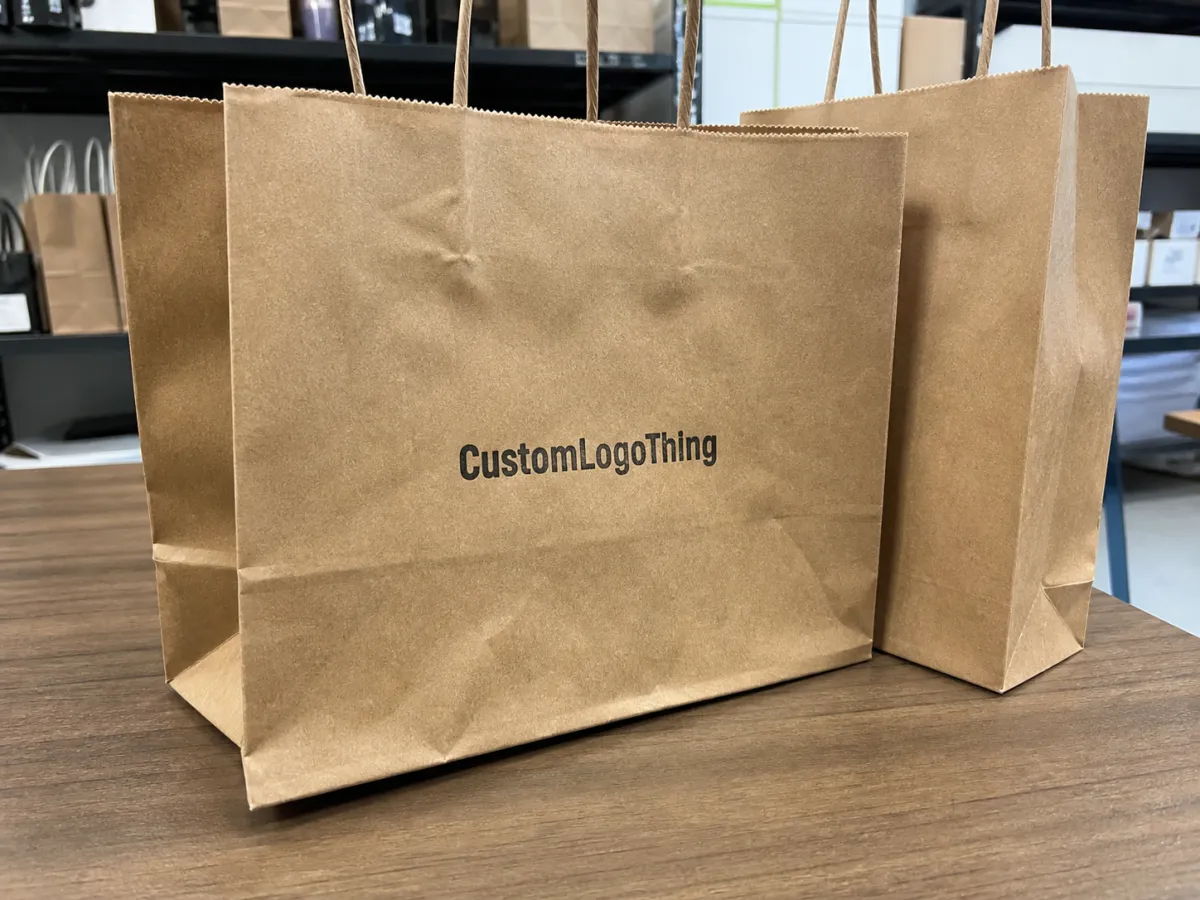
A useful sample is not about appearance alone. It should answer a narrower set of questions: does the paper hold shape, do the handles stay anchored, does the bottom stay flat, and does the printed surface still look right once the bag is filled? If it cannot answer those questions, it is only a visual reference.
Most buyers should expect three sample stages:
- Blank material swatches for judging texture, fiber direction, color base, and stiffness.
- Assembled blank bags for checking dimensions, handle attachment, and bottom support.
- Printed approval samples for confirming artwork placement, finish, and color behavior on the real stock.
The order matters more than most teams expect. Test the structure first, then the print. If the bag is too narrow or too soft, a beautiful printed sample only proves that the wrong structure was decorated well. That is an expensive misunderstanding, and it happens often because people approve the first sample they can hold.
A sample that looks convincing on a desk is not a production approval. It is only the beginning of the test.
For supplement bags, the material sample should also reflect the product category honestly. If the final use is a retail vitamin set, a glossy coated bag with sharp print may be appropriate. If the bag is meant for a clean-label or wellness brand, uncoated kraft or recycled board can support that story better. The right material choice is not just about style; it shapes how customers read the brand before they ever open the bag.
There is a practical side too. Suppliers work within machine limits. A twisted handle can be stitched, glued, or rope-attached depending on the factory’s line setup. The paper can be virgin kraft, recycled kraft, coated art paper, or a laminated board build. Each option affects cost, lead time, and the way the bag behaves under stress. A sample reveals where those trade-offs land in real life.
How Material Samples Show Strength, Finish, and Real-World Fit
Paper gsm matters, but it does not tell the whole story. Two bags can share the same gsm and still perform differently because of fiber content, board density, coating, and how the handles are attached. That is why experienced buyers do not stop at the spec sheet. They load the bag and check the result.
Kraft paper is usually the first comparison point. It feels natural, hides minor scuffs, and suits brands that want a less processed look. Coated paper creates a sharper print surface and stronger color contrast, but it can show creasing and rub marks faster if the coating is thin or the lamination is fragile. Soft-touch lamination adds a premium feel, though it can also make abrasion more visible at the corners. Each finish gives and takes in different places.
For supplement packaging, a simple test sequence tells you more than a long design meeting:
- Fill the bag with the actual product weight, not a lightweight substitute.
- Lift it repeatedly by the twisted handles and watch the attachment points.
- Shake it gently to see whether the bottom board shifts or bows.
- Place it on a flat surface and check whether it leans, bulges, or wrinkles.
- Inspect the print area for scuffing where bottles or jars contact the sidewalls.
That last point matters more than many teams expect. A supplement jar often has a harder edge than apparel or cosmetic tubes. If the inner footprint is too tight, the cap can press into the print panel, leave a mark, or distort the sidewall. That is not a cosmetic issue alone. It can also make the bag feel cheap even when the artwork is strong.
The sample should also reveal how the bag behaves at the corners and gussets. A bag can look square when empty and still lose its shape once loaded. Sidewall collapse often points to paper that is too light, a gusset that is too narrow, or a bottom board that does not spread the load evenly. In supplement packaging, these are the details that separate a polished retail bag from one that buckles before it reaches the customer.
For shipment and handling risk, testing standards such as those described by ISTA are useful, especially if the bag travels inside a master carton or is repacked later. The standards will not choose your paper, but they do remind teams that vibration, compression, and drop events are part of the product life cycle. A bag that survives a hand test should still be considered unproven until it survives movement.
Cost, Pricing, and MOQ: What Samples Save You Before Ordering
Sample pricing usually falls into three groups. A plain material swatch may be free or close to it, with shipping carrying most of the cost. An assembled blank prototype is usually modestly priced. A printed approval sample costs more because it requires setup, proofing, and sometimes a short press run that cannot be reused. None of this is unusual. The sample is a controlled expense; the wrong bulk order is not.
| Sample type | Typical cost range | Best for | What it proves |
|---|---|---|---|
| Blank material swatch | $0-$15 plus shipping | Paper selection | Texture, tone, stiffness |
| Assembled blank bag | $25-$60 | Fit and structure | Size, gusset behavior, handle feel |
| Printed approval sample | $80-$200+ | Artwork sign-off | Color, finish, logo placement |
| Revised prototype | Varies by change | After structure tweaks | Whether the adjustment actually worked |
MOQ has a direct effect on the final unit price. For Custom Paper Bags, production often becomes efficient somewhere around 3,000 to 10,000 units, depending on size, print coverage, handle build, and finish. Below that range, setup and labor carry a bigger share of the cost. Above that range, the price per unit usually improves, but only if the same spec is repeated without changes.
As a rough market range, a basic kraft paper bag with twisted handles can land near $0.18-$0.30 per unit at volume. A more finished branded bag with heavier board, full-color print, or lamination often sits closer to $0.35-$0.60 or more. Foil, embossing, matte lamination, or custom inserts can push the number higher again. Those additions are not free, even when they look small on a render.
That is why sample cost should be judged against rework cost, not against zero. Paying $50 for a correct prototype is cheaper than discovering that 5,000 bags are too narrow for a bottle neck, or that the handle reinforcement tears under load. A sample gives you the chance to spend early and avoid paying later for a batch that cannot be used.
There is also a hidden cost in color correction. If the first printed sample lands far from the desired shade, the supplier may need to re-balance ink density, change the paper base, or adjust the coating. That revision can delay the order by days or weeks. Small color decisions matter because printed paper is unforgiving. It shows every compromise.
Process and Timeline: From Request to Approved Prototype
The best sample requests are specific. Send dimensions, fill weight, product type, artwork, finish preference, and the purpose of the sample. A fit-check sample and a print-approval sample are not the same object. If the bag needs to carry a multi-bottle set, say so. If the bottle diameter matters because of the inner footprint, include that too. Missing details turn into assumptions, and assumptions become waste.
A practical sample workflow usually looks like this:
- Spec review to confirm size, paper grade, handle style, and print method.
- Dieline check to make sure the artwork sits on the correct panels.
- Prototype production for a blank or printed sample.
- Shipping to the buyer’s office, warehouse, or packaging team.
- Load testing under the real product weight and handling conditions.
Lead times vary with complexity. A blank sample can sometimes be produced in 2 to 4 business days if the stock is ready. A printed proof often needs 7 to 12 business days before ship-out, and a revised sample can add another 3 to 5 business days. International shipping adds its own delay. Buyers who need approvals from marketing, compliance, and operations usually need more time than the factory does.
Production constraints also shape the timeline. A supplier may need to change the twisted handle thickness, alter the mouth reinforcement, or adjust the bottom board if the first prototype fails the load test. Each structural change can require a new sample. That is normal, not a setback. A sample that fails early saves the order from failing later.
If the bag needs FSC certified paper, recycled content documentation, or a specific fiber claim, ask for proof during the sample stage. The same is true for terms like post-consumer waste and biodegradable packaging. Those claims depend on more than a printed label. The paper grade, adhesive, coating, and ink system all matter. For basic definitions around recycled content, the EPA explanation at epa.gov is straightforward and useful when teams need common language.
Common Sample Mistakes That Blow Up the Final Order
The most common mistake is testing the wrong thing. An empty bag can look fine while failing completely under load. A lighter substitute product can hide weakness in the bottom seam or handle attachment. A bag that passes with a narrow bottle may fail with the actual retail format. The sample should match the final use case, or it does not mean much.
Another mistake is treating hand feel as proof of strength. Soft paper can still perform well if the structure is right. Rough paper can still fail if the seams are weak. What matters is the combination: gsm, fiber mix, glue coverage, reinforcement, and handle anchoring. A good sample should be squeezed, lifted, and inspected at the seam lines, not just admired from a distance.
Color approval creates a different trap. Screen previews are helpful for layout, but they do not predict how ink sits on kraft paper or recycled stock. Uncoated surfaces mute some colors and warm others. Coated surfaces sharpen contrast but can also change the feel of the brand. A deep green that looks rich on screen may turn dull on brown kraft. A crisp white may lose brightness on recycled fiber. That is not a design failure by itself; it is material behavior.
The handle deserves more scrutiny than it usually gets. Twisted handles can look identical across suppliers and still differ in strength, width, twist tightness, and glue distribution. If the attachment area is too small, the load concentrates at the top edge and the handle can loosen over time. If the handle strip is too narrow, customers feel the discomfort immediately. The complaint arrives in one sentence: the bag was nice until I carried it.
If the sample does not prove the handle build, the final order has not been tested.
Another failure point is the finish. Lamination can improve appearance, but it changes scuff resistance, flexibility, and cost. A matte or soft-touch finish can make the bag feel upscale, but if the coating is too thin it may show wear at the folds and corners. Metallic effects, embossing, and spot UV can look strong in a mockup and still complicate production. The more finishing steps involved, the more reason to demand a real sample.
Finally, do not let branding language outrun the structure. If the bag is being marketed as eco-friendly, make sure the claim matches the paper, adhesive, coating, and print system. A paper bag with the wrong laminate is still a paper bag with the wrong laminate. Buyers and compliance teams both notice when the packaging story gets ahead of the material reality.
Expert Tips for Comparing Paper, GSM, and Handle Build
Do not compare one sample in isolation. Ask for at least two paper weights if the order is important or the product load is uncertain. A 150gsm kraft bag and a 190gsm kraft bag may look close on paper but feel very different in the hand. One may hold shape better. The other may be more cost-efficient. The only reliable answer comes from loading both with the real product.
GSM is only one part of the equation. Paper construction, coating, and fiber direction influence performance just as much. Two bags with the same gsm can behave differently under the same load if one uses a denser board or a different glue pattern. For a supplement launch, that difference can decide whether the bag feels premium or flimsy.
Use this handle checklist:
- Twist tightness should be even, not loose at one end and tight at the other.
- Attachment points should sit flat and hold after repeated lifts.
- Reinforcement strips should spread force instead of concentrating it at one seam.
- Grip comfort should stay acceptable after several carries, not only on the first lift.
Print must be checked on the exact stock that will be used in production. Ink absorption changes across kraft paper, coated paper, and recycled fiber. On uncoated stock, small shifts in density are normal. On coated stock, the same design may look brighter and more controlled. If the design relies on precise brand colors, ask for a controlled proof or an approved reference under daylight and indoor lighting. Lighting changes perception more than people expect.
Some buyers also request tighter dimensional tolerances, and that is sensible for supplement packaging. A practical production tolerance may sit around plus or minus 2 to 3 mm on bag dimensions, though the acceptable range depends on the factory and the bag style. A wider tolerance can be fine for simple retail use, but it becomes risky if the bottle or jar already fits closely. Small dimensional drift can create a large functional problem.
For certified materials, ask for documentation before approval, not after. FSC details at fsc.org are useful when the claim matters to procurement or retail compliance. If the paperwork is missing, the certificate claim is not ready. There is no advantage in discovering that after the bulk run has already started.
A simple pass-fail sheet usually works better than long email threads. List the criteria that matter: fit, handle comfort, seam strength, print accuracy, finish durability, and load safety. Mark each one clearly. That turns the supplement twisted handle paper Bags Material Sample guide into a decision tool instead of a conversation that drifts between opinions.
Next Steps: Turn the Sample into a Clean Production Brief
Once the sample is approved, lock the specification in writing. Dimensions, gsm, paper type, handle style, coating, print colors, quantity, load target, and any certification language should all be repeated in the production brief. If it is not written down, it is vulnerable to quiet changes during manufacture.
Keep the sample itself, along with marked-up photos, test notes, and the final sign-off version. Physical reference matters because reorders often happen months later, after someone has forgotten which revision was approved. A retained sample also helps if there is a dispute about color tolerance or bag height. It is easier to solve a disagreement when both sides are looking at the same approved object.
Ask for a written production confirmation before bulk work begins. It should repeat the paper stock, handle build, finish, quantity, and acceptable variation. If the supplier changes the board, handle diameter, or coating without approval, the confirmation gives the buyer something concrete to compare against. That is not overcautious. It is standard risk control.
The core rule is simple: do not move to bulk until the sample proves the bag works for the real product, the real weight, and the real shelf presentation. If the sample behaves well under load and the paperwork is clean, production can move ahead. If it only looks good in a photo, the order is still untested.
What should a supplement twisted handle paper bags material sample include?
A proper sample should show the paper stock, bag dimensions, twisted handle build, and any reinforcement at the mouth or base. If the final bag will be printed, the sample should also include the correct print method or finish so color and texture are not guessed. For heavy supplement products, the sample should be tested with the actual fill weight before approval.
How do I compare GSM for supplement twisted handle paper bag samples?
Start by comparing paper type, because 170gsm kraft and 170gsm coated stock will not feel or perform the same. Use the sample to judge stiffness, fold recovery, seam durability, and how the bag behaves under the real load. If one bag sags or distorts at the same product weight, the gsm alone is not enough.
Are sample fees refundable on bulk paper bag orders?
Sometimes, but not always. Many suppliers refund a sample fee only after a qualifying production order is placed. Custom printed prototypes and dieline changes are more likely to stay billed because they require setup time and material use. Get the refund rule in writing before payment so there is no misunderstanding later.
How long does the sample and approval process usually take?
Blank material checks can be quick if stock is on hand, while printed samples usually take longer because they require proofing and shipping. Expect extra time if the handle build needs revision, the size changes, or the color must match across multiple panels. Internal testing can add more time than the factory does, especially if several teams need sign-off.
Do I need a printed sample or a blank sample first?
Start with a blank sample if the paper grade, size, or handle strength is still undecided. Move to a printed sample once the structure works and you need to confirm artwork, finish, and color. For a large order or a customer-facing retail launch, use both and compare them under the lighting conditions the bag will actually face.

